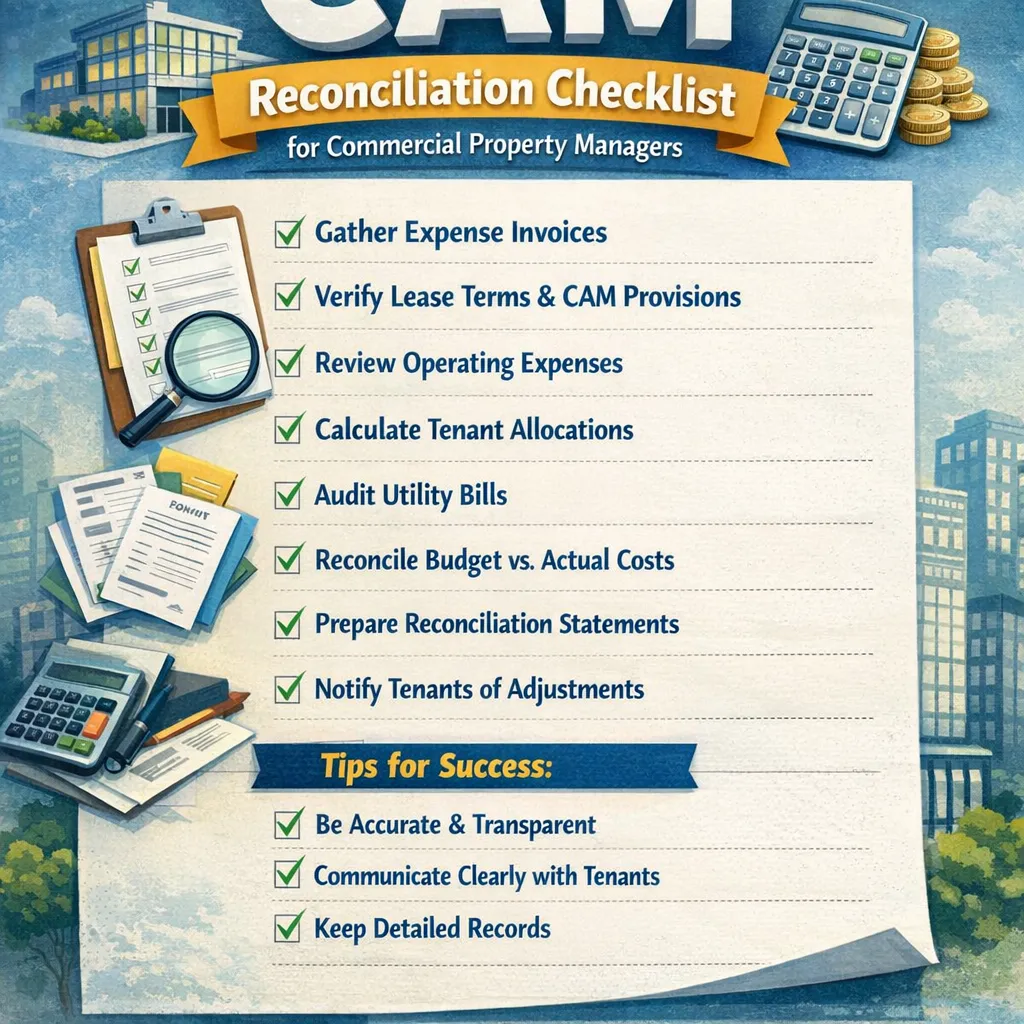

Common Area Maintenance (CAM) reconciliation is one of the most critical financial responsibilities for commercial property managers. Whether you manage office buildings, retail centers, or mixed-use properties, ensuring accurate CAM reconciliation protects your bottom line, maintains tenant trust, and ensures lease compliance.
A well-structured CAM reconciliation checklist not only improves financial accuracy but also enhances transparency between landlords and tenants. Many property managers rely on professional cam reconciliation service providers and integrated portfolio accounting services to streamline the process and avoid costly disputes.
In this comprehensive guide, we’ll walk through a detailed CAM reconciliation checklist and explain how professional accounting support can simplify the process.
What Is CAM Reconciliation?
CAM reconciliation is the annual process of comparing estimated common area maintenance charges collected from tenants against the actual expenses incurred during the year.
Throughout the year, tenants typically pay estimated CAM charges based on a projected budget. At year-end, property managers must:
- Calculate actual CAM expenses
- Compare them to tenant payments
- Determine overpayments or underpayments
- Issue refunds or invoices accordingly
Accurate reconciliation ensures lease compliance and prevents disputes.
Why CAM Reconciliation Matters
CAM reconciliation directly impacts:
1. Tenant Relationships
Transparency builds trust. Inaccurate or delayed reconciliations can damage landlord-tenant relationships.
2. Financial Accuracy
Errors in CAM calculations can lead to lost revenue or overcharges that require refunds.
3. Legal Compliance
Commercial leases define what expenses can be included in CAM. Mistakes can result in legal disputes.
4. Portfolio Performance
When managing multiple properties, inaccuracies across assets can significantly affect overall profitability — making portfolio accounting services essential for consistency.
CAM Reconciliation Checklist for Commercial Property Managers
Below is a comprehensive checklist to guide your reconciliation process.
1. Review Lease Agreements
Before starting reconciliation, carefully review each tenant’s lease to confirm:
- CAM inclusions and exclusions
- Expense caps or limitations
- Gross-up provisions
- Administrative fee percentages
- Tenant’s pro-rata share
- Audit rights and timelines
Each lease may define CAM differently, so reviewing terms is essential before calculating adjustments.
2. Verify Tenant Pro-Rata Shares
Confirm the accuracy of:
- Total rentable square footage
- Tenant-occupied square footage
- Vacancy adjustments (if gross-up provisions apply)
Incorrect square footage calculations are one of the most common CAM errors.
If managing multiple properties, portfolio accounting services can centralize and standardize square footage tracking to avoid discrepancies.
3. Gather All CAM-Eligible Expenses
Collect all actual expenses incurred during the year related to:
- Landscaping
- Snow removal
- Security services
- Utilities for common areas
- Janitorial services
- Property management fees
- Repairs and maintenance
- Insurance
- Property taxes (if applicable under lease terms)
Ensure all expenses are properly categorized and supported by documentation such as invoices and contracts.
Many property managers rely on a professional cam reconciliation service to validate expense eligibility and classification.
4. Exclude Non-Recoverable Expenses
Carefully remove expenses that are not recoverable under lease agreements, such as:
- Capital expenditures (unless amortized per lease terms)
- Tenant-specific improvements
- Leasing commissions
- Marketing costs
- Legal fees unrelated to property operations
- Penalties or fines
Failure to exclude non-recoverable expenses can lead to tenant disputes and audits.
5. Apply Gross-Up Calculations (If Required)
If the building was not fully occupied during the year, leases may allow for grossing up certain variable expenses to reflect stabilized occupancy.
Typical gross-up expenses include:
- Utilities
- Janitorial services
- Trash removal
Ensure gross-up calculations follow lease provisions precisely.
6. Allocate Expenses by Tenant Pro-Rata Share
Once total recoverable CAM expenses are finalized:
- Multiply total CAM by each tenant’s pro-rata share
- Compare to estimated payments collected
- Calculate overpayment or underpayment
Accuracy at this stage is critical.
Using automated systems through portfolio accounting services can reduce human error and ensure consistent calculations across properties.
7. Prepare CAM Reconciliation Statements
Each tenant should receive a detailed reconciliation statement including:
- Total actual CAM expenses
- Tenant’s pro-rata percentage
- Estimated payments made
- Balance due or credit owed
- Breakdown of expense categories
Transparency in reporting reduces questions and speeds up payment collection.
8. Review Management Fees and Administrative Charges
Some leases allow property managers to charge:
- Administrative fees (typically 10–15%)
- Property management fees
Confirm these charges:
- Are permitted under the lease
- Are calculated correctly
- Are applied consistently
Improperly applied admin fees are a common source of tenant audits.
9. Conduct an Internal Audit
Before distributing statements:
- Double-check calculations
- Verify expense classifications
- Confirm tenant percentages
- Review supporting documentation
An internal audit minimizes the risk of errors and strengthens your position in case of tenant inquiries.
Professional cam reconciliation service providers often perform this quality control step to ensure accuracy.
10. Distribute Statements on Time
Most leases specify reconciliation deadlines, often within 90–180 days after year-end.
Late reconciliations can:
- Limit your ability to collect shortages
- Trigger tenant disputes
- Impact cash flow
Timely distribution demonstrates professionalism and financial discipline.
11. Respond to Tenant Questions and Audit Requests
Tenants may request:
- Supporting invoices
- Clarification of charges
- Formal CAM audits
Maintain organized records to respond quickly and professionally.
Working with a reliable cam reconciliation service ensures documentation is readily available and properly formatted.
Common CAM Reconciliation Challenges
Commercial property managers often face several obstacles:
Inconsistent Lease Language
Different leases within the same property may define CAM differently.
Manual Calculation Errors
Spreadsheets increase the risk of mistakes, especially across multiple assets.
Poor Documentation
Missing invoices or incomplete records can undermine reconciliation accuracy.
Portfolio Complexity
Managing multiple properties adds layers of complexity, requiring centralized systems and professional portfolio accounting services.
Benefits of Outsourcing CAM Reconciliation
Many property managers outsource to specialized firms for several reasons:
1. Improved Accuracy
Experienced professionals understand lease language and industry standards.
2. Time Savings
Outsourcing allows managers to focus on tenant relations and property operations.
3. Reduced Disputes
Detailed, transparent statements minimize tenant pushback.
4. Portfolio-Wide Consistency
Integrated portfolio accounting services ensure standardized processes across properties.
5. Enhanced Financial Reporting
Accurate CAM reconciliation improves Net Operating Income (NOI) reporting and investor confidence.
Best Practices for Efficient CAM Reconciliation
To streamline future reconciliations:
- Standardize lease language whenever possible
- Maintain organized digital records
- Track expenses monthly instead of waiting until year-end
- Use property management accounting software
- Partner with professional cam reconciliation service providers
Proactive planning significantly reduces year-end stress.
How Portfolio Accounting Services Support CAM Reconciliation
For property managers overseeing multiple assets, portfolio accounting services provide:
- Centralized financial reporting
- Standardized expense classifications
- Automated pro-rata calculations
- Consolidated investor reporting
- Real-time expense tracking
This integrated approach improves visibility across your entire portfolio while ensuring each property remains compliant and profitable.
Final Thoughts
CAM reconciliation is more than a routine accounting task — it’s a critical financial and relationship-management process for commercial property managers.
Following a structured CAM reconciliation checklist ensures:
- Accurate expense allocation
- Lease compliance
- Timely billing
- Reduced disputes
- Improved financial transparency
As portfolios grow and lease structures become more complex, leveraging professional cam reconciliation service providers and comprehensive portfolio accounting services can significantly improve efficiency and accuracy.
By implementing best practices and maintaining strong financial controls, commercial property managers can protect revenue, strengthen tenant relationships, and enhance overall portfolio performance year after year.






















Sign in to leave a comment.