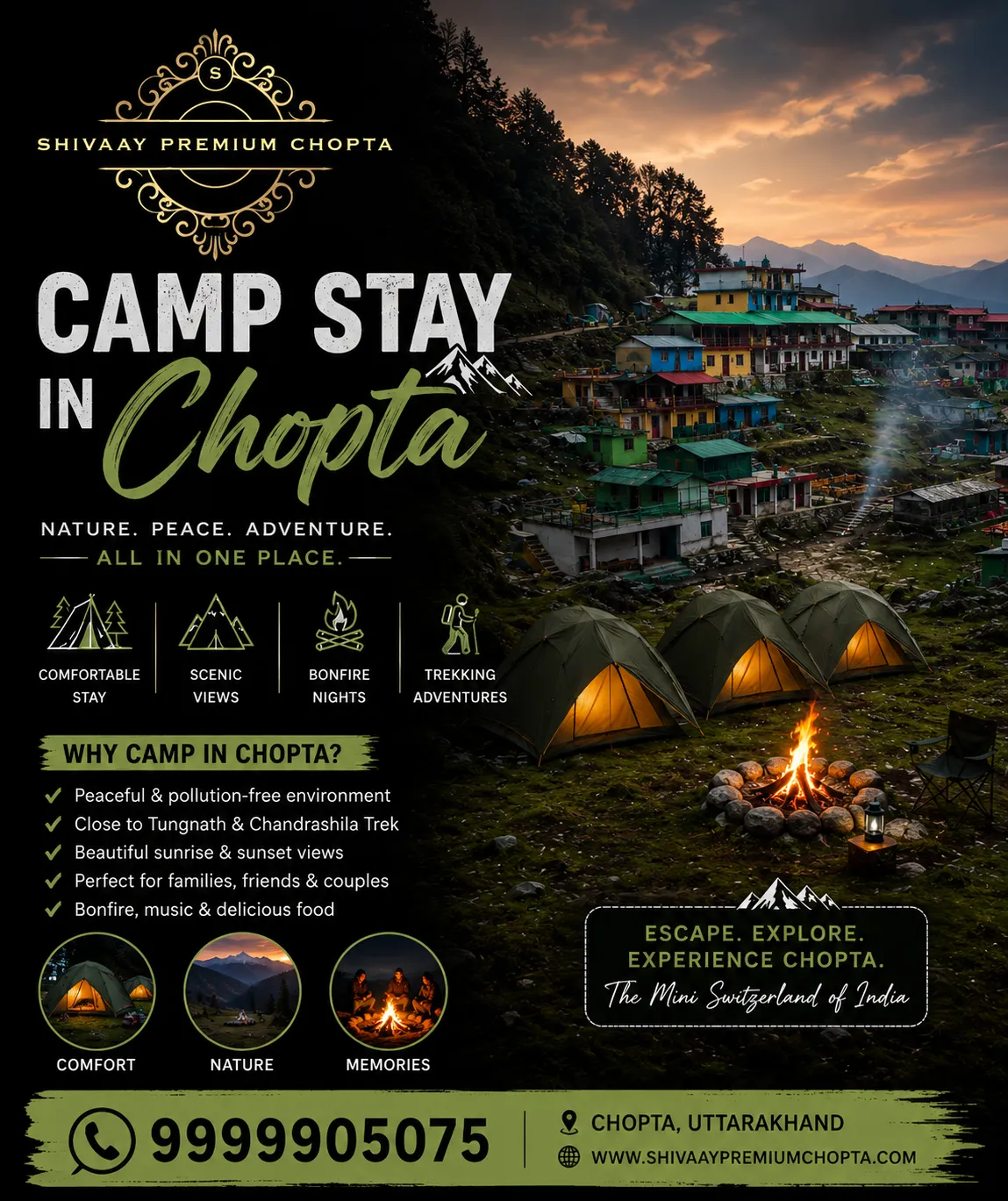

Winter transforms Chopta into a peaceful Himalayan landscape of snow-covered trails, deodar forests and clear mountain views. For travellers who want to experience Uttarakhand beyond crowded hill stations, staying in a camp can make the journey feel more personal and closer to nature. However, a winter Camp Stay in Chopta requires more preparation than an ordinary hotel holiday.
Cold temperatures, changing road conditions, limited mobile connectivity and the possibility of snowfall can affect your itinerary. Choosing suitable accommodation, packing correctly and keeping the schedule flexible are essential for a comfortable experience. This guide explains what to expect, how to prepare and which safety points to check before booking your winter stay with Shivaay Premium Chopta.
Why Choose a Camp Stay in Chopta During Winter?
Chopta is known for its Himalayan surroundings, forest scenery and access to popular trekking routes. During winter, the region becomes quieter and may receive snowfall, creating a beautiful setting for travellers interested in nature, photography and a break from busy city life.
A winter camp experience may offer:
· A closer connection with the natural surroundings
· Peaceful mornings and clear mountain air
· Opportunities for snow photography, subject to weather
· Convenient access to local walks and trekking routes
· A memorable stay for couples, families and small groups
· Evenings away from urban noise and routine
The experience can be rewarding, but it should be planned according to actual weather — not photographs or assumptions. Snowfall is natural and cannot be guaranteed for a particular travel date.
What Is the Weather Like in Chopta During Winter?
Winter conditions in Chopta can change quickly. Days may feel pleasant in direct sunlight, while evenings, nights and early mornings can be extremely cold. Wind, cloud cover and recent snowfall can make the temperature feel lower than the forecast suggests.
Travellers should expect:
· Cold days and colder nights
· A possibility of frost, ice or snow on walking paths
· Shorter daylight hours
· Occasional fog or reduced visibility
· Changes in road accessibility after heavy snowfall
· Delays caused by weather or local road conditions
Always check a reliable weather forecast shortly before departure and confirm the latest access conditions with your accommodation provider. A forecast viewed several weeks in advance should not be treated as final.
Is a Winter Camp Stay in Chopta Safe?
A Camp Stay in Chopta can be safe and enjoyable when travellers choose an established property, carry suitable clothing and follow local advice. Winter safety is not only about snowfall. The quality of the tent, bedding, washroom access, heating arrangements, staff availability and emergency planning also matter.
Before confirming your stay, ask the property these questions:
1. Is the camp currently accessible by road?
2. How far is the camp from the vehicle parking point?
3. Are warm bedding, blankets and insulated sleeping arrangements provided?
4. Are attached or common washrooms available, and is hot water provided?
5. What heating arrangement is available?
6. Is electricity available throughout the day or through backup?
7. Is mobile connectivity available nearby?
8. What meals are included in the booking?
9. Can the staff assist during unexpected snowfall or a medical concern?
10. What is the cancellation or rescheduling policy if roads become inaccessible?
Clear answers help travellers select the right stay and avoid misunderstandings after arrival.
Essential Winter Safety Tips
1. Keep Your Itinerary Flexible
Mountain weather does not always follow a fixed schedule. Avoid planning tightly connected departures, flights or important appointments immediately after the trip. Keep some buffer time for road delays or weather-related changes.
2. Travel During Daylight
Whenever possible, reach Chopta before sunset. Daylight makes it easier to assess road conditions, identify slippery areas and locate the property. Night driving in unfamiliar mountain terrain can be more demanding, particularly during fog, rain, frost or snowfall.
3. Use an Experienced Hill Driver
If you are not comfortable driving on steep or icy roads, use a driver familiar with mountain routes and winter conditions. Check that the vehicle is properly maintained and suitable for the journey. Follow local guidance regarding snow chains or other equipment when such measures are advised.
4. Walk Carefully on Snow and Ice
Fresh snow may hide uneven ground, while compacted snow can become slippery. Wear shoes with strong grip, take short steps and avoid rushing. A trekking pole can provide extra balance. Do not walk near unprotected edges or leave marked routes merely to take photographs.
5. Stay Hydrated and Eat Properly
People often drink less water in cold weather, even though dehydration can still occur. Carry water and consume warm, balanced meals. Do not skip meals before walking or trekking, as the body requires energy to stay warm.
6. Understand Safe Heating
Never use an unapproved flame, charcoal burner or gas heater inside a closed tent. Such devices may create fire and carbon-monoxide risks. Use only the heating arrangement provided or approved by the camp, and follow staff instructions about ventilation and operating time.
7. Know Your Physical Limits
Cold weather and altitude may increase fatigue. Headache, dizziness, unusual breathlessness, nausea or confusion should not be ignored. Stop exertion, inform the camp staff and seek medical assistance when needed. Travellers with heart, respiratory or other medical conditions should consult a qualified doctor before planning strenuous winter activities.
Winter Packing List for Chopta
Packing in layers is more effective than carrying one very heavy garment. Layers can be added or removed as the temperature and activity level change.
Clothing
· Thermal innerwear for the upper and lower body
· Full-sleeve T-shirts or warm base layers
· Fleece or woollen mid-layer
· Insulated winter jacket
· Windproof and water-resistant outer layer
· Warm trekking trousers
· Extra socks, preferably wool-blend or quick-drying
· Woollen cap or beanie that covers the ears
· Neck warmer or scarf
· Insulated gloves with a water-resistant outer layer
· Comfortable nightwear reserved for sleeping
Avoid cotton as the primary layer for active walks because it can retain moisture and become uncomfortable in cold conditions.
Footwear
Carry waterproof or water-resistant trekking shoes with a deep, reliable grip. Make sure they are already broken in; a new pair can cause blisters. Pack extra socks and, if possible, lightweight gaiters to prevent snow from entering the shoes.
Fashion shoes, smooth-soled sneakers and open footwear are unsuitable for snowy or icy paths.
Personal and Safety Essentials
· Personal medicines and a basic first-aid kit
· Government-issued identification
· Sunscreen and UV-protection sunglasses
· Lip balm and moisturiser
· Reusable water bottle or insulated flask
· Torch or headlamp with spare batteries
· Power bank and charging cables
· Small backpack with a rain cover
· Tissue paper, sanitiser and personal toiletries
· High-energy snacks such as nuts or energy bars
· Waterproof pouches for electronics and documents
· Cash in small denominations, as digital payments may be affected by weak connectivity
Packing Tips for Families and Couples
Families travelling with children should carry additional warm layers, familiar snacks, medicines prescribed for the child and spare clothing. Confirm the walking distance between parking, tents, washrooms and dining areas before booking. Parents should closely supervise children around snow, slopes, heating equipment and unfamiliar paths.
Couples planning a quiet winter break should also prioritise practicality. Good footwear, warm clothing and reliable accommodation matter more than an overloaded sightseeing plan. Inform a family member about your route and expected return schedule, particularly if travelling during a period of predicted snowfall.
Trekking in Winter: What Travellers Should Know
Tungnath and Chandrashila are closely associated with Chopta, but winter conditions can make these routes more difficult. Snow depth, ice, visibility and access may vary from one day to another. A clear path seen online or experienced by another traveller may not reflect current ground conditions.
Before attempting a trek:
· Check the latest route status locally
· Start early and return before darkness
· Hire an experienced local guide when conditions demand it
· Carry adequate water, food and warm layers
· Wear proper trekking shoes and recommended traction equipment
· Do not continue during poor visibility, heavy snowfall or unsafe conditions
· Follow forest, district and local-authority instructions
Reaching a summit should never be more important than returning safely.
How to Choose the Right Camp Stay in Chopta
The lowest price does not always represent the best value in winter. Compare what is included and how well the property is prepared for cold conditions.
Evaluate the following factors:
Location and Accessibility
Ask for the precise location, condition of the approach road and distance from parking. A beautiful but difficult-to-access camp may not be suitable for senior citizens, young children or travellers carrying heavy luggage.
Tent and Bedding Quality
Check whether the tent is weather-resistant and whether proper mattresses, clean linen, quilts or blankets are supplied. Request recent photographs rather than relying only on older promotional images.
Washrooms and Hot Water
Confirm whether washrooms are attached or shared, how hot water is provided and whether these facilities remain operational in very cold weather.
Meals and Drinking Water
Ask which meals are included, when they are served and whether dietary requests can be accommodated. Warm, freshly prepared food can significantly improve a winter camping experience.
Staff Support and Communication
An experienced on-site team is especially important during winter. The property should communicate openly about weather, arrival time, local routes and any change in accessibility.
Genuine Reviews and Clear Policies
Read recent reviews for cleanliness, staff behaviour, food, winter comfort and access. Also understand the payment, cancellation and rescheduling terms before making an advance booking.
Responsible Winter Travel in Chopta
Chopta’s appeal depends on its natural environment. Visitors can help protect it by following simple responsible-travel practices:
· Carry waste back or use designated bins
· Avoid single-use plastic wherever possible
· Do not play loud music in forests or near other camps
· Never disturb wildlife or feed animals
· Use marked paths to reduce damage to vegetation
· Do not light fires without property approval
· Respect local communities, religious sites and regional customs
· Use water and electricity thoughtfully
Snow may cover litter temporarily, but it does not make the waste disappear. Responsible behaviour keeps the destination cleaner and safer for everyone.
Plan Your Winter Stay with Shivaay Premium Chopta
A winter journey to Chopta can be deeply memorable when comfort, safety and flexibility are built into the plan. Shivaay Premium Chopta offers travellers a base from which to experience the region’s mountain atmosphere and seasonal beauty. Before booking, contact the team to confirm current weather, road access, accommodation facilities, meal inclusions and the arrangements available during your travel dates.
For the best experience, arrive with realistic expectations: snow cannot be guaranteed, routes may change and mountain weather can influence every plan. With appropriate layers, dependable footwear and respect for local advice, your Camp Stay in Chopta can become a peaceful and rewarding Himalayan escape.
Frequently Asked Questions
1. Is winter a good time for a Camp Stay in Chopta?
Yes, winter can be an excellent time for travellers who enjoy cold weather, quiet surroundings and the possibility of snow. Proper clothing, flexible travel plans and confirmation of road accessibility are essential.
2. Is snowfall guaranteed during a winter visit?
No. Snowfall depends on natural weather patterns and cannot be guaranteed for specific dates. Check the forecast and ask the property about current ground conditions before travelling.
3. What shoes should I wear in Chopta during winter?
Wear waterproof or water-resistant trekking shoes with strong grip. Avoid smooth-soled sneakers and casual shoes on snowy or icy paths.
4. Is a winter camp suitable for children?
It may be suitable depending on the child’s age, health, weather conditions and the camp’s facilities. Parents should confirm heating, washrooms, food, walking distance and emergency support before booking.
5. Can I visit Tungnath and Chandrashila in winter?
Access depends on snow, weather and local restrictions. Check the latest status, consider hiring a local guide and never proceed when conditions are unsafe.
6. What should I confirm before booking Shivaay Premium Chopta?
Confirm the current approach route, parking distance, bedding, washroom type, hot water, meals, electricity backup, heating arrangements and cancellation or rescheduling policy for weather disruptions.
























Sign in to leave a comment.