

There is a tendency to think of the classical guitar as an instrument that comes with its repertoire already assigned.
Nylon strings mean classical music. Steel strings mean folk, country or singer-songwriter music. Electric guitars belong somewhere else entirely.
In practice, musicians have never been quite that orderly.
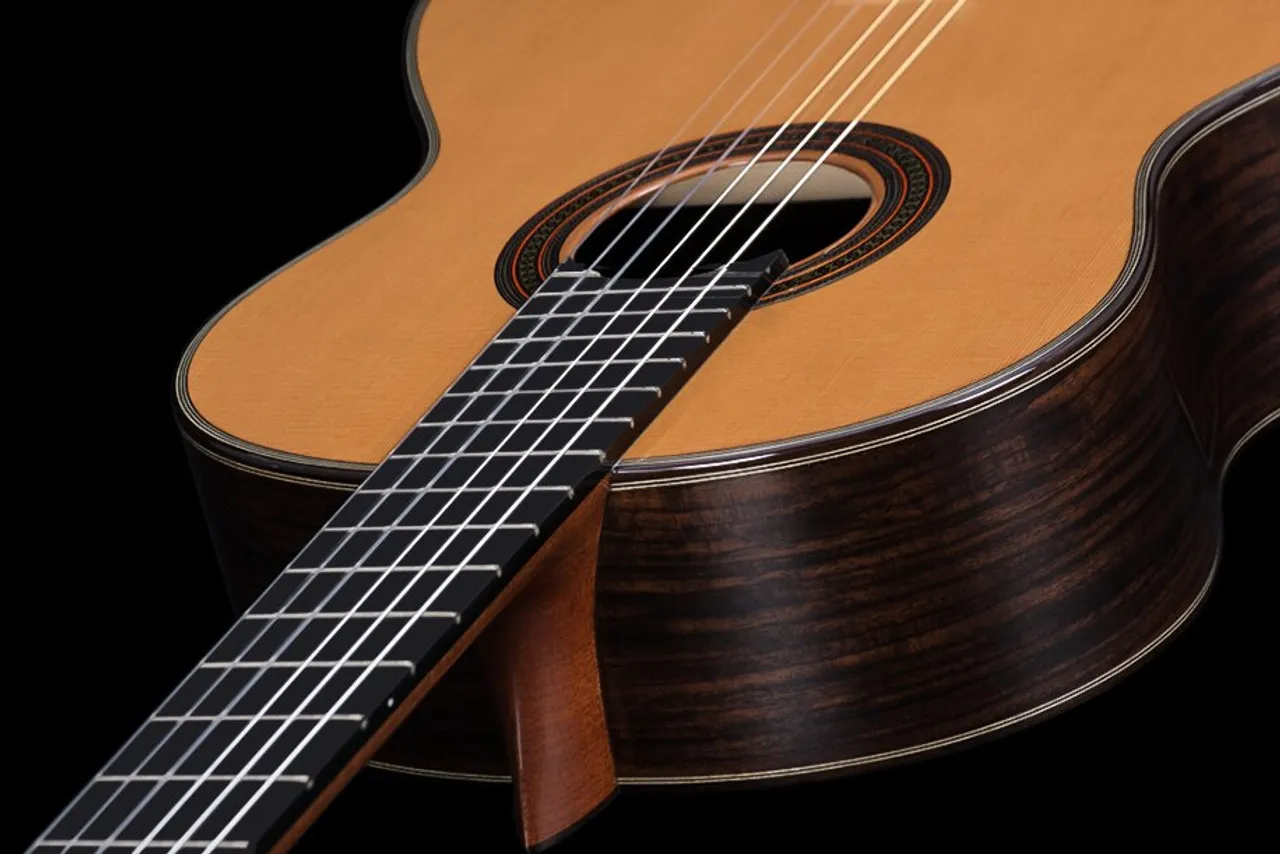
A good classical acoustic guitar is first and foremost a musical instrument. Its nylon strings, wider fingerboard and traditional construction certainly give it characteristics that make it particularly well suited to classical technique, but none of those things require the player to stay within a single musical tradition.
The more useful question is not, “What kind of music is this guitar allowed to play?”
It is, “What happens to my music when I play it on this guitar?”
The Nylon-String Sound Changes The Arrangement
If you normally play a steel-string acoustic and pick up a classical guitar, the difference is immediate.
The strings feel different beneath both hands. The fingerboard generally gives the left hand more room. The right hand encounters a different feel and response. And the instrument produces a voice that is fundamentally different from the bright, metallic attack we associate with steel strings.
That does not make one instrument better than the other.
It means they invite different musical decisions.
Take a familiar folk song and play it fingerstyle on nylon strings. A chord progression you have played hundreds of times may suddenly leave more room for an independent bass line or a melody within the chord.
Take a pop song built around heavy strumming and reduce it to the melody, bass movement and essential harmony. The song may become quieter, but it can also become more intimate.
That is one of the pleasures of moving between instruments. The guitar makes you reconsider the music rather than merely reproduce it.
Folk, Jazz And Pop All Have A Place Here
Folk music adapts particularly naturally to nylon strings because so much of the repertoire can be reduced to melody, harmony and bass.
Jazz presents a different opportunity. Nylon-string guitars have long had a place outside the conventional classical world, and the clarity available from fingerstyle playing can work beautifully with chord-melody arrangements, Brazilian repertoire and other music in which harmony and independent voices matter.
Pop music can work just as well, provided you are willing to arrange rather than imitate.
If the original recording depends on drums, bass, keyboards and layers of electric guitars, six nylon strings obviously will not reproduce the recording literally.
They shouldn't have to.
Find the part of the song that matters—the melody, harmonic movement, rhythmic idea or bass line—and build the arrangement around it.
That is musicianship, not compromise.
Spanish, Latin And Flamenco-Influenced Music
The relationship between nylon-string guitars and Spanish and Latin musical traditions is already familiar, but it is worth making an important distinction.
A conventional classical guitar can certainly be used to explore Spanish repertoire, Latin arrangements and flamenco-influenced music.
That does not make every classical guitar a flamenco guitar.
Purpose-built flamenco instruments typically make different choices in construction and setup because the music asks something different of the guitar. If flamenco becomes your primary direction, those distinctions begin to matter.
But if you are simply exploring different rhythmic and musical languages, a classical guitar gives you an enormous amount of territory to work with.
What About Strumming?
You can strum a classical guitar.
What you should not expect is for it to respond exactly like a steel-string acoustic.
That distinction matters.
If you attack nylon strings trying to force a steel-string sound out of them, you may decide that the guitar is somehow inadequate. If instead you listen to what the instrument gives you and adjust the arrangement accordingly, you begin to find its strengths.
Sometimes that means a lighter rhythmic touch. Sometimes it means alternating between the thumb and fingers. Sometimes a full six-string chord becomes more effective when reduced to three or four carefully chosen notes.
The instrument starts teaching you something about arrangement.
When An Acoustic-Electric Classical Guitar Makes Sense
The situation changes somewhat when the guitar needs to work onstage.
A classical acoustic electric guitar adds amplification to the equation, allowing a nylon-string player to work through an appropriate amplifier, PA or recording system without relying entirely on an external microphone.
That can make considerable sense for a guitarist who plays several kinds of music in performance.
But electronics do not transform a nylon-string guitar into a steel-string guitar. They simply provide a practical way of bringing the instrument's existing voice into an amplified environment.
So the same basic question still applies:
Does this particular instrument suit the way you actually play?
Where The Kremona Fiesta Fits Into The Conversation
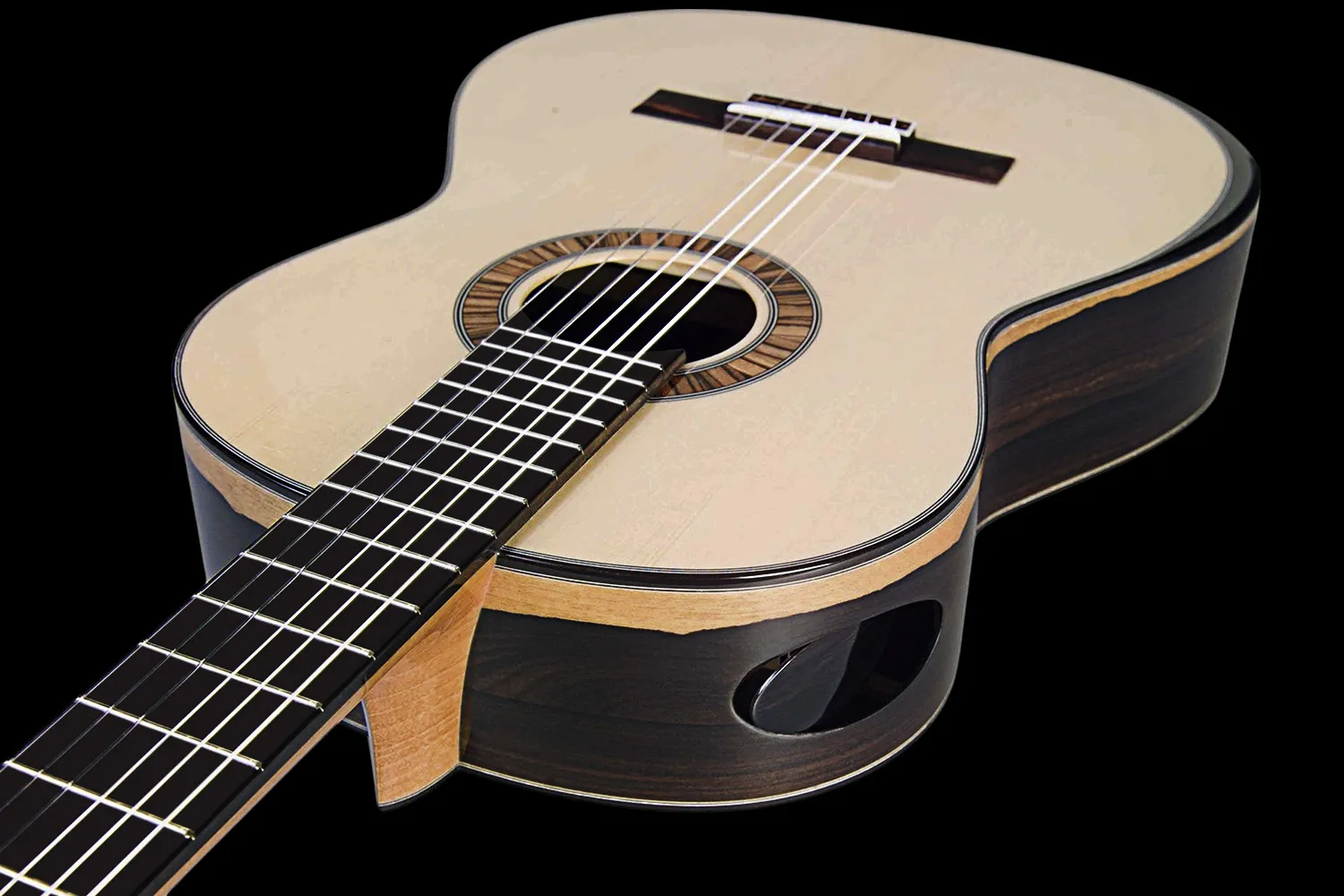
The Kremona Fiesta family is relevant because it demonstrates that “classical guitar” does not have to describe only one configuration or one use.
Depending upon the specific Fiesta model, Kremona offers traditional nylon-string and stage-oriented configurations. That distinction matters.
A player interested primarily in acoustic classical playing may have different priorities from a musician who needs a cutaway, onboard electronics or a neck that feels more familiar when moving between different kinds of guitars.
This is why we would not recommend choosing a Kremona Fiesta—or any guitar—on the model name alone.
Look at the exact instrument.
Look at its dimensions and construction. If electronics are involved, understand what system is installed. Sit with the neck if you can. Listen to the guitar acoustically. Consider where you intend to play it.
Then decide whether those choices make sense for you.
The Player Still Makes The Final Decision
At Marfione Guitars, we spend a great deal of time thinking about the relationship between an instrument and the person playing it.
Specifications matter. Construction matters. Setup matters.
But ultimately a guitar has to make musical sense in somebody's hands.
If you play classical repertoire, a classical guitar is the obvious place to begin.
If you play folk, jazz, pop, Latin music, fingerstyle arrangements or your own compositions, don't let the word “classical” tell you that you are holding the wrong instrument.
Play the music.
Listen to what changes.
You may find that the nylon-string guitar does not limit the music at all.
It simply gives you another way to hear it.
Call to Action
If you're considering a classical or nylon-string guitar and aren't sure which configuration fits the music you play, Marfione Guitars can help you work through the differences between traditional classical instruments, crossover designs and stage-oriented nylon-string guitars.

















Sign in to leave a comment.