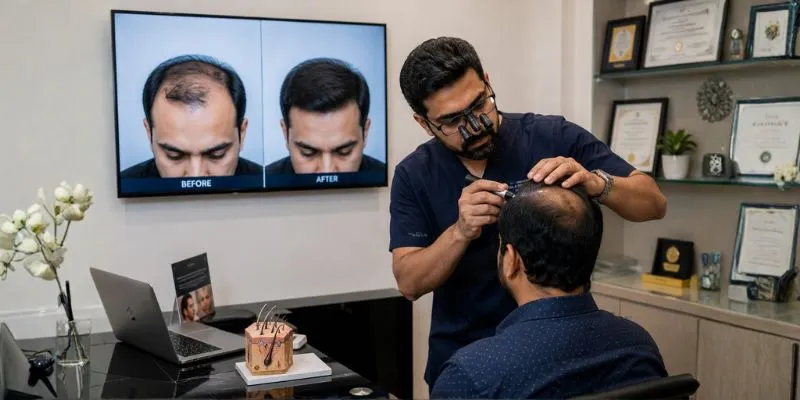

Living with baldness for several years does not necessarily mean hair restoration is no longer possible. Depending on the condition of the scalp, donor hair availability, and the extent of hair loss, a hair transplant may help restore coverage and improve the appearance of hair density.
A hair transplant procedure involves moving healthy hair follicles from a suitable donor area to areas affected by thinning or baldness. Because the transplanted follicles are selected from areas that are typically more resistant to pattern hair loss, they can continue to grow in their new location after successful transplantation.
However, the results depend on several factors. People with extensive baldness may have limited donor hair, which can affect the amount of coverage that can realistically be achieved. The quality and density of the donor area, scalp condition, age, pattern of hair loss, and individual healing response are all important considerations.
Before recommending treatment, a reputable hair transplant clinic should evaluate the scalp and donor area carefully. This assessment helps determine whether transplantation is appropriate and how available grafts can be distributed to create natural-looking coverage. In some cases, a staged approach may be considered when extensive areas require restoration.
It is also important to understand that a transplant is not simply about adding as many grafts as possible. Strategic placement along the hairline and across thinning areas can help create the appearance of better overall density while preserving the donor supply for future needs.
Other forms of hair treatment may also be recommended depending on the cause and stage of hair loss. These treatments can sometimes be used alongside transplantation to support existing hair and overall scalp health.
If you have experienced baldness for many years, a professional evaluation can help determine what level of restoration may be realistically achievable. Every person's hair loss pattern and donor capacity are different, so treatment planning should be personalized.




























Sign in to leave a comment.