

Project economics can change significantly when approvals take longer than expected. A development may be financially viable when planned, yet delays in obtaining statutory permissions, environmental clearances, building approvals or other regulatory consents can increase costs and postpone revenue. The longer a project remains unable to progress, the greater the potential impact on its financial assumptions.
Approval delays are not simply administrative inconveniences. They can affect financing costs, contractor arrangements, material prices, labour expenses and projected income. Businesses involved in construction and development should therefore consider approval timelines when assessing the commercial viability of a project. Early planning and careful contractual management can help identify risks before they become expensive problems.
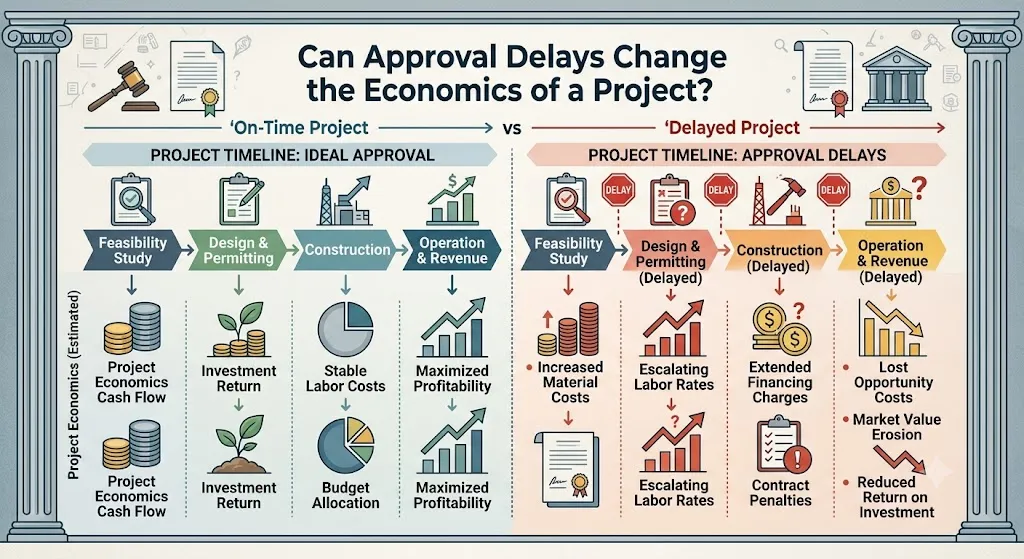
How Approval Delays Affect Project Costs
A delayed approval can prevent construction or other project activities from starting on schedule. During this period, businesses may continue to incur expenses relating to land, professional advisers, financing and project management. These costs can accumulate even when the project is not generating revenue.
Construction costs may also change during a prolonged approval period. Labour rates, material prices and contractor charges can increase over time. A budget prepared several months earlier may therefore become less realistic when work finally begins. Businesses need to consider whether their original financial projections remain suitable after a significant delay.
Financing Costs Can Increase
Many projects depend on external finance. Delays can affect the period for which borrowed funds remain committed and may increase the overall cost of financing. Where loan arrangements are linked to specific milestones, a delay in obtaining approval can also affect the timing of drawdowns and repayment expectations.
Interest expenses can become particularly important for projects with substantial borrowing. Even when interest rates remain unchanged, a longer project period can increase the total financing cost. Businesses should therefore examine how approval delays may affect their funding arrangements and whether revised financial projections are required.
Delayed Revenue Can Change Project Viability
Project economics depend not only on costs but also on expected revenue. A delayed start can postpone sales, leasing income, operational revenue or other anticipated returns. This can alter the timing of cash inflows and affect the project's overall financial position.
The impact may be greater where market conditions change during the approval period. Demand, property prices, rental values and financing conditions can shift over time. A project based on earlier market assumptions may require reassessment if approvals take substantially longer than anticipated.
Contractual Obligations May Be Affected
Approval delays can create difficulties under contracts with contractors, consultants, suppliers and investors. Agreements may contain deadlines linked to commencement, completion or specific regulatory approvals. Missing these dates may create disputes over responsibility for additional costs or delays.
Businesses should review their contracts carefully when an approval is delayed. Clauses concerning extensions of time, variations, force majeure, termination and additional expenses may become relevant depending on the circumstances. Early contractual review can help parties understand their respective rights before disagreements become more serious.
Land Costs Can Continue During Delays
Land acquisition often represents a significant part of a development budget. When approvals are delayed, businesses may continue to bear costs associated with holding the property. These can include financing expenses, taxes, maintenance and other ownership related charges.
Where land was acquired specifically for development, a prolonged approval period can affect the expected return on investment. Businesses may also need to reconsider whether the original development model remains commercially appropriate. Regular financial reviews can help identify changes before additional commitments are made.
Market Conditions May Change During Approval
The economic assumptions behind a project are rarely fixed. Property demand, construction costs, interest rates and consumer preferences can change while an application is being processed. A project approved after a long delay may therefore enter a market very different from the one considered during the original planning stage.
Developers and businesses should monitor relevant market conditions during the approval process. If significant changes occur, financial models may need to be updated. This can help decision makers understand whether the expected costs, revenues and returns remain realistic before construction or investment commitments increase.
Regulatory Changes Can Add Further Complexity
Long approval periods can sometimes coincide with changes in regulations or planning requirements. New requirements may affect design, environmental measures, building standards or other aspects of the project. Compliance with revised requirements can increase both cost and preparation time.
Businesses should monitor regulatory developments relevant to their projects. Early identification of potential changes can help reduce surprises during the approval process. Where an application has already been submitted, professional advice may also help clarify how new requirements affect the project and existing contractual commitments.
The Importance of Early Legal Assessment
Approval issues can involve several areas of law. A project may require planning permissions, environmental approvals, land related documentation and contractual arrangements with several stakeholders. Understanding the legal framework early can help businesses identify potential obstacles before they create major financial consequences.
real estate lawyers for project matters can assist businesses in reviewing property related documentation, regulatory requirements and contractual considerations connected with a development. Early legal assessment can help clarify responsibilities and identify issues which may affect the project's timetable or financial assumptions.
Approval Delays and Project Disputes
A delay can become contentious when parties disagree about responsibility. A developer may argue an approval delay was outside its control, while a contractor may claim additional costs because the site was not available as planned. Investors or other stakeholders may also have concerns about changing completion dates and financial returns.
Where negotiation does not resolve the issue, the relevant dispute resolution provisions should be examined. arbitration lawyers for project disputes can assist with disputes where an arbitration agreement applies and contractual or project issues require formal determination. The appropriate process will depend on the contract, nature of the dispute and applicable law.
Managing Delay Through Better Project Planning
Businesses can reduce the financial impact of approval delays by building realistic timeframes into project planning. Regulatory processes can involve several stages, and external dependencies may affect the expected completion date. Financial models should therefore allow for reasonable contingencies rather than assuming every approval will arrive on the earliest projected date.
Project teams should also maintain clear records of applications, communications and responses from relevant authorities. These records can help establish the timeline if questions later arise about responsibility for delay. Good documentation can also support communication with contractors, lenders and investors when project assumptions need to be revised.
Reviewing Project Economics During Delays
A project should not necessarily continue on its original financial assumptions simply because substantial investment has already been made. When approval delays become significant, businesses should reassess projected costs, expected revenue and financing requirements. This review can reveal whether the original business case remains sustainable.
Regular assessment also supports better commercial decisions. If costs have increased significantly or market conditions have changed, stakeholders may need to reconsider budgets, timelines or contractual arrangements. Reviewing the economics of the project during a delay can provide greater clarity before further expenditure is committed.
Conclusion
Approval delays can change the economics of a project by increasing costs, postponing revenue and creating uncertainty around financing and contractual obligations. The effect depends on the length of the delay, the nature of the project and the financial assumptions used when it was originally planned.
Businesses should treat approval timelines as an important part of project risk management. Early review of contracts, financing arrangements and regulatory requirements can help identify potential consequences. Regular financial reassessment is equally important when delays become prolonged. By monitoring both legal and commercial developments, project stakeholders can make informed decisions as circumstances change.



























Sign in to leave a comment.