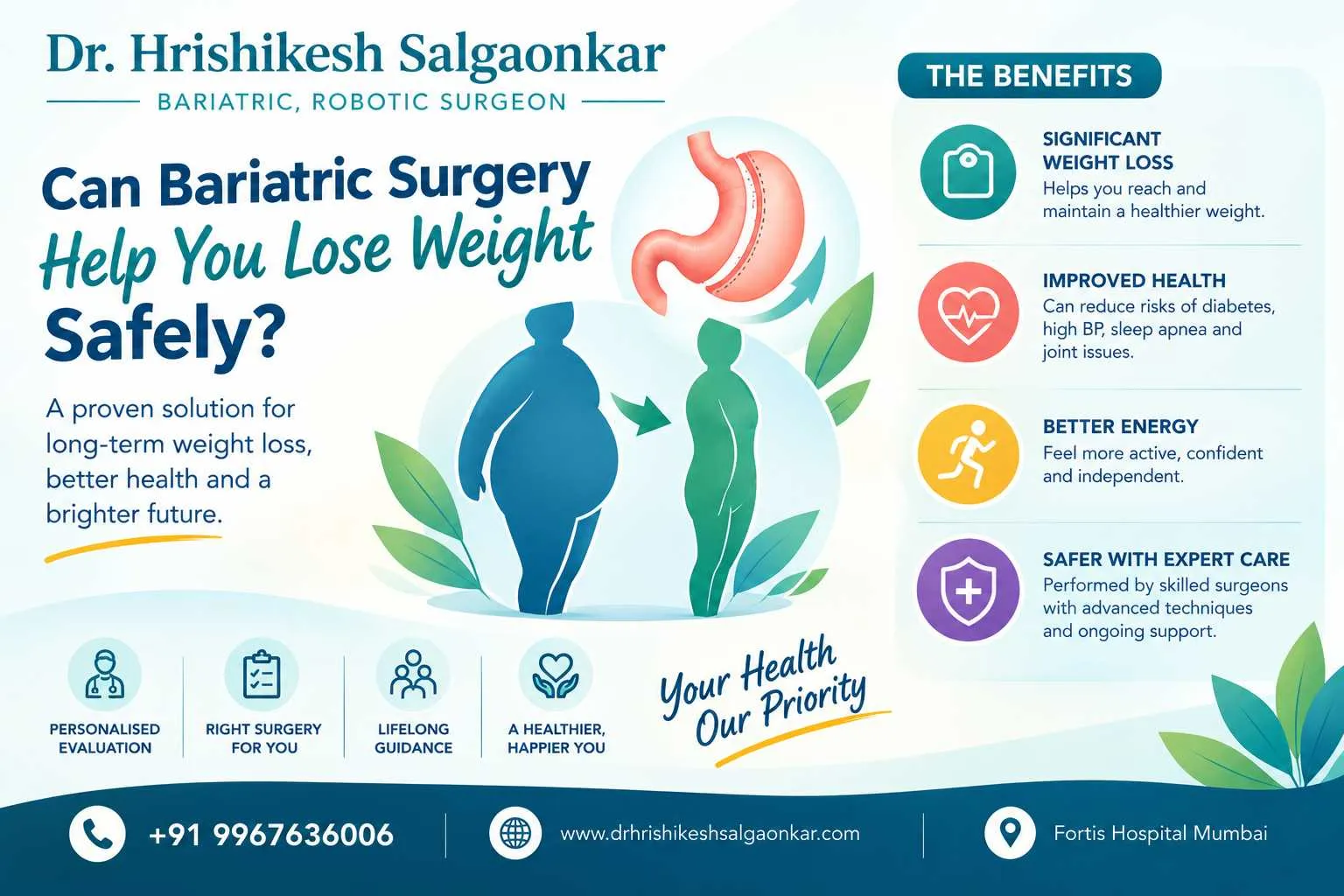


Losing weight can be difficult when diet plans, exercise routines, and lifestyle changes do not bring lasting results. Obesity can also affect daily activities and increase the risk of health problems such as type 2 diabetes, high blood pressure, and joint pain. For some people, bariatric surgery may be a suitable option after a detailed medical evaluation.
Dr. Hrishikesh Salgaonkar helps patients understand available weight-loss surgery options and the lifestyle changes involved in treatment. The aim is to choose an approach that suits the person's medical needs, weight-related health conditions, and long-term goals rather than focusing only on the number on the weighing scale.
How Can Bariatric Surgery Support Weight Loss?
Bariatric surgery changes the way the stomach holds food and, depending on the procedure, may also affect digestion and hunger signals. These changes can help patients feel full sooner and manage portion sizes more effectively. However, results vary, and surgery does not remove the need for healthy eating habits and regular follow-up care.
One option is sleeve gastrectomy, a procedure in which a portion of the stomach is removed to create a smaller, sleeve-shaped stomach. This can help reduce food intake and may lower hunger by changing certain hormone levels. Patients still need to follow dietary advice, take recommended supplements, and attend regular check-ups after surgery.
How Do You Choose the Right Treatment?
When considering a bariatric surgeon in India, it is important to understand the surgeon's experience, the available procedures, and the support provided before and after treatment. A consultation usually includes reviewing medical history, assessing weight-related health conditions, and discussing the potential benefits and risks of surgery.
Another option is Roux-en-Y Gastric Bypass, which creates a smaller stomach pouch and reroutes part of the digestive tract. It can support significant weight loss and may improve certain obesity-related conditions, including type 2 diabetes. However, it also requires long-term nutritional monitoring and may not be the right choice for every patient.
The safest approach is not necessarily the same for everyone. A qualified surgeon can explain which procedure may be appropriate, what recovery involves, and how to prepare for changes in eating habits. Patients should also discuss possible complications, expected results, and the importance of follow-up appointments before making a decision.
What Helps Maintain Results After Surgery?
Surgery is one part of a longer weight-management journey. Eating balanced meals, staying physically active as advised, attending follow-up visits, and following nutritional recommendations can support recovery and lasting progress. Emotional support and realistic goals can also help patients adjust to their new routine.
Dr. Hrishikesh Salgaonkar can guide patients through available bariatric treatment options and the commitments involved in long-term care. A personalised treatment plan and consistent medical supervision can help patients work towards better health. Every procedure carries risks, so decisions should be made after discussing individual circumstances with a qualified healthcare professional. This article is for educational purposes only and is not a substitute for professional medical advice.




















Sign in to leave a comment.