
The Pangarchulla Peak Trek is not the kind of trek where you can arrive with a new pair of shoes, some instant noodles and pure confidence. The mountain expects a little more preparation.
Pangarchulla Peak rises to around 15,069 ft (4,593 m) in Uttarakhand's Garhwal Himalayas. The trek involves steep climbs, high-altitude terrain, long trekking hours and, depending on conditions, snow and boulder sections. Official tourism information describes it as a high-altitude trek that requires good physical fitness and previous trekking experience.
So, can beginners do Pangarchulla Peak Trek?
A complete beginner with no Himalayan trekking experience should not treat Pangarchulla as an easy first trek. A fit beginner who has prepared properly and understands the demands of high-altitude trekking may be able to attempt it with appropriate guidance, but the summit day remains a serious challenge.
The important thing is to understand why the trek is difficult before deciding whether you are ready.
Pangarchulla Peak Trek Difficulty Explained
Pangarchulla gets its difficulty from several things working together.
The altitude is the first major factor. At approximately 15,069 ft, the summit is considerably higher than many popular beginner Himalayan treks. As altitude increases, the air contains less available oxygen, and physical effort can feel harder.
Then comes the terrain.
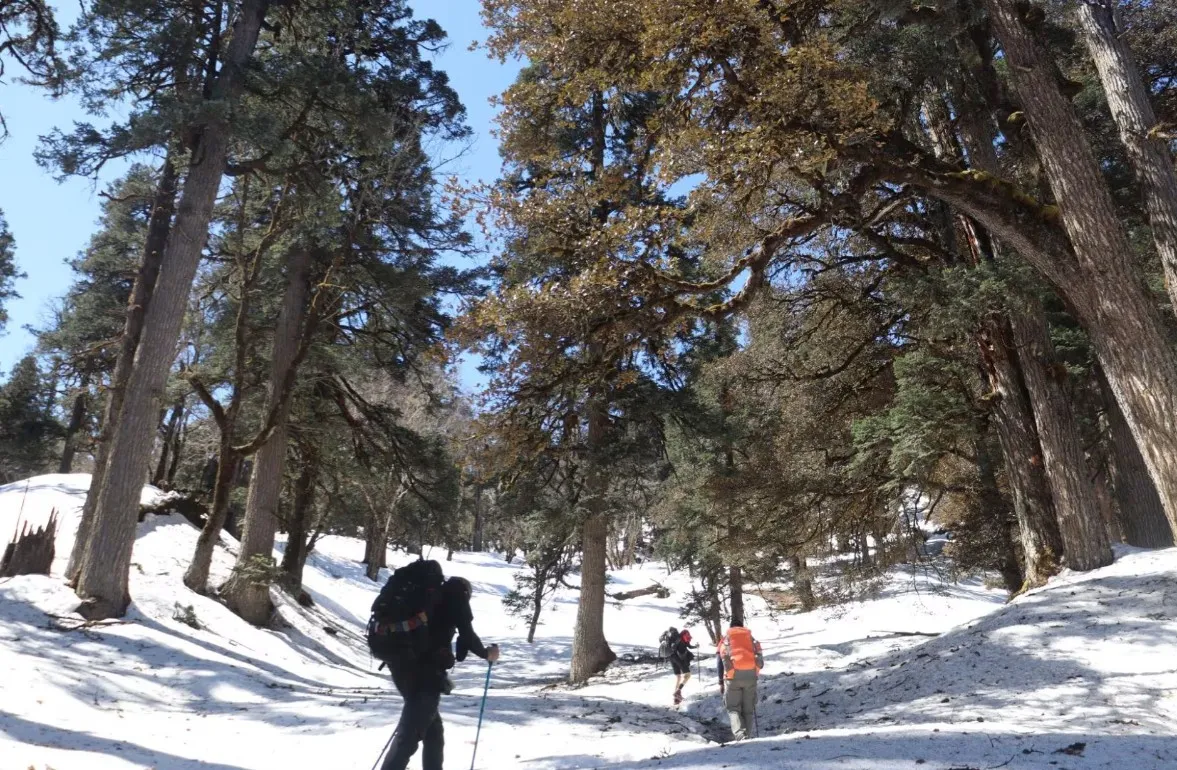
The lower sections include forest trails and open meadows, but the higher route can become steep and rocky. During snowy periods, trekkers may have to cross snow-covered boulders and steep snow sections.
The summit day is where everything comes together.
Long hours, significant altitude gain, steep terrain and changing mountain conditions can make the final climb demanding even for a fit trekker.
That is why preparation matters more here than simply having previous walking experience.
Is Pangarchulla Peak Trek Suitable for Beginners?
There are two different types of beginners.
The first is someone who has never done a Himalayan trek and has limited fitness training. Pangarchulla is not a sensible first choice for this person.
The second is someone who is new to high-altitude trekking but already has a good fitness base, regularly walks or runs, can handle long uphill sessions and has prepared specifically for the trek.
That person may approach Pangarchulla differently.
Official information recommends good physical fitness and previous trekking experience because of the steep ascents and long trekking hours.
So the real question isn't simply, “Am I a beginner?”
Ask yourself:
Can I walk uphill for several hours without completely running out of energy?
Can I handle consecutive days of trekking?
Have I trained my legs for long climbs and descents?
Can I stay calm when the trail becomes steep, snowy or uncomfortable?
If the answer to these questions is mostly yes, you're starting from a much better place.
Pangarchulla Peak Trek Route
The Pangarchulla route generally approaches the peak from the Auli–Joshimath side of the Garhwal Himalayas.
The trail moves through forests, meadows and higher alpine terrain before reaching the summit section. The exact route and camping points can vary between itineraries, so you should always check the current route details before booking.
A commonly used route includes areas around Auli, Tali, Khullara and the Kuari Pass region, followed by the Pangarchulla summit attempt. The official state tourism itinerary also lists Auli, Tali, Khullara and the Kuari Top section.
The landscape changes as you climb.
Lower sections feel more like a forest trek. Higher up, the trail opens into alpine meadows and exposed mountain terrain. Near the summit, the character of the trek changes again.
This gradual progression is one reason Pangarchulla feels like a proper mountain summit rather than simply a long walk in the hills.
Pangarchulla Peak Trek Itinerary
There is no single universal Pangarchulla Peak Trek itinerary. Different routes and trekking schedules use different camping points and numbers of days.
A practical itinerary can look like this:
Day 1: Reach the Joshimath–Auli Region
The journey generally begins with a long road transfer towards Joshimath or the Auli side. Depending on the chosen itinerary, the overnight stay may be around Joshimath or another nearby starting point.
Don,t underestimate this day. A long moutain drive followed by a trek can already leave you tired before the real climbing begin.
Day 2: Start Trekking Towards the Forest Camps
The trail moves into the Himalayan forest and gradually gains altitude.
The terrain is generally more comfortable than the summit section, but your body is already beginning to adjust to higher elevation.
Walk slowly.
There is no prize for reaching camp first.
Day 3: Continue Towards Khullara
The route climbs higher through forest and open mountain sections before reaching the Khullara area.
Khullara is an important point on many Pangarchulla itineraries because it places trekkers closer to the high-altitude summit terrain.
This is also where you should start taking the next day's summit attempt seriously.
Day 4: Acclimatisation and High-Altitude Preparation
Some itineraries include a higher-altitude acclimatisation walk around the Kuari Pass region before returning to camp.
This type of schedule gives trekkers an opportunity to climb higher during the day and return to a lower sleeping altitude.
The exact acclimatisation plan depends on the route and current conditions, so don't assume every Pangarchulla package follows the same schedule.
Day 5: Pangarchulla Summit Day
This is the big one.
A typical summit itinerary starts very early, sometimes around midnight, so trekkers can reach the summit around sunrise and return to camp the same day.
One current detailed route lists approximately 12 km and 12–16 hours for the summit day, with an altitude gain and loss of roughly 4,060 ft between Khullara and the summit.
This explains why Pangarchulla cannot be judged only by its total distance.
The number on the distance chart may look manageable.
The combination of altitude + steep ascent + terrain + time is what makes the summit day difficult.
Day 6: Descend
After the summit, the route heads back towards the lower trail and roadhead.
Descending may sound easy after reaching the top.
Your legs might disagree.
After a long summit day, downhill sections can put considerable strain on tired knees and muscles. Take your time and maintain good footing.
Day 7: Return Journey
Longer itineraries may include an additional day for the return drive towards Rishikesh or another transport point.
Shorter itineraries may compress the schedule.
Always check the exact itinerary, trek distance, inclusions and transport arrangements before booking.
How Fit Should You Be for Pangarchulla?
Fitness is probably the most important factor you can control.
You don't need to become a professional athlete before going to the Himalayas. But you should be able to sustain physical effort for several hours.
Your training should focus on cardiovascular endurance, leg strength and stamina.
Brisk walking, running, cycling and stair climbing can help improve cardiovascular fitness.
For your legs, exercises such as squats, lunges, step-ups and calf raises are useful.
But don't train only in a gym.
If possible, include long outdoor walks with uphill sections. The body needs to experience continuous movement, not just ten perfect squats followed by a comfortable chair.
How Many Weeks Should You Train?
Give yourself enough time to build fitness gradually.
Around 6–8 weeks of consistent preparation is a practical starting point for someone who already has a reasonable fitness base. If you are currently inactive, start earlier and build slowly.
Begin with shorter walks.
Increase the duration and elevation gradually.
Later, include longer walks where you remain active for several hours.
You should also practice carrying a backpack similar to what you expect during the trek. Don't suddenly carry a heavy bag on day one in the mountains.
Your shoulders, hips and legs need time to adapt too.
What Makes Summit Day So Difficult?
The summit day is difficult because several challenges arrive together.
You start before sunrise.
You climb to around 15,000 ft.
The trail becomes steeper.
Snow may cover parts of the route depending on conditions.
Boulders make foot placement more important.
And after reaching the summit, you still have to descend.
A detailed current route describes the final climb as a difficult section involving steep ascent over snow and boulders.
That is why a trekker who feels comfortable during the first few days can still struggle on summit day.
The mountain saves its main exam for the end.
Does Snow Make Pangarchulla More Difficult?
Yes, snow can significantly change the experience.
A dry rocky trail and a snow-covered trail don't require exactly the same movement.
Snow can hide rocks and create uneven footing. Hard or icy snow can also make slipping more likely, while fresh snow can make route finding and movement slower.
The exact conditions vary from year to year.
Official tourism information currently identifies March and April as the preferred months for Pangarchulla, but actual snow conditions depend on the season and weather.
This is another reason to follow current local conditions instead of relying on old photographs.
A picture from last year cannot tell you what the mountain looks like this week.
What Should Beginners Do Before Pangarchulla?
If Pangarchulla is your first serious Himalayan trek, preparation should start well before your travel date.
Build your walking endurance.
Train your legs.
Practice uphill walking.
Get comfortable with carrying a backpack.
Learn basic high-altitude trekking habits.
And, most importantly, don't rush your pace.
A slow and steady trekker often does better than someone who starts too fast and spends the afternoon wondering why their legs have resigned from the job.
What About Altitude?
Altitude deserves serious attention on Pangarchulla.
At around 15,069 ft, the trek reaches a level where altitude-related problems can become a genuine concern.
Headache, unusual fatigue, dizziness, nausea or worsening breathlessness should not simply be ignored as “normal trekking pain.”
Tell your trek leader if you feel unwell.
Don't try to hide symptoms because you are close to the summit.
A safe descent is more important than a summit photograph.
What Should You Check in a Pangarchulla Peak Trek Package?
If you're comparing a Pangarchulla Peak Trek package, don't look only at the price.
Check what the package actually covers.
Look at the number of trekking days, route, accommodation, meals, transport, permits, guide or trek-leader support, camping equipment and safety arrangements.
Also check whether the package includes the summit-day equipment required for the conditions of your departure.
Two packages can have completely different prices while offering different inclusions.
The cheapest number on the page isn't automatically the cheapest overall trip.
Can You Prepare for Pangarchulla Without Previous High-Altitude Experience?
You can prepare physically, but experience and fitness are different things.
A strong runner isn't automatically ready for a 15,000-ft mountain.
Likewise, someone who has completed several Himalayan treks may still need specific preparation for Pangarchulla's summit day.
If you have never trekked at altitude, building experience through easier Himalayan treks can help you understand how your body responds to long climbs, cold weather and altitude.
That experience becomes particularly useful when the trail gets difficult.
Final Verdict: Can Beginners Do Pangarchulla Peak Trek?
Pangarchulla Peak Trek is not an ideal first Himalayan trek for a completely unprepared beginner.
The peak reaches approximately 15,069 ft, and the route includes steep climbs, high-altitude terrain and a demanding summit day. Current official information recommends good physical fitness and previous trekking experience.
However, being new to Pangarchulla does not automatically mean you cannot prepare for it.
A beginner with strong fitness, proper training, realistic expectations and appropriate trekking support can work towards the challenge.
The smarter approach is to judge yourself against the actual demands of the trek.
Can you handle long uphill walks?
Can you manage several trekking days in a row?
Can you train consistently?
Can you respect altitude and weather instead of trying to fight them?
If yes, you're giving yourself a much stronger foundation.
Pangarchulla isn't about proving that you're tough.
It's about reaching a high Himalayan summit while having enough energy and judgment to come back safely.
Frequently Asked Questions
1. Is Pangarchulla Peak Trek suitable for beginners?
It is not generally recommended as a first Himalayan trek for an unprepared beginner. The high altitude, steep sections and demanding summit day require good fitness, and current official guidance recommends previous trekking experience.
2. How high is Pangarchulla Peak?
Pangarchulla Peak stands at approximately 15,069 ft or 4,593 m.
3. How long is the Pangarchulla summit day?
A current detailed itinerary lists the summit day at around 12 km and 12–16 hours, although actual duration can change with weather, snow, route and trekking pace.
4. What is the best time for Pangarchulla Peak Trek?
Current official tourism information recommends March and April. Snow conditions can vary between seasons, so current trail and weather information should always be checked before departure.
5. How should I train for Pangarchulla Peak Trek?
Focus on cardiovascular endurance, leg strength and long-duration walking. Brisk walking, running, stair climbing, cycling, squats, lunges and step-ups can form a useful training routine.
6. Is Pangarchulla harder than a normal beginner trek?
Yes, the high altitude and summit-day demands make it a more serious undertaking than a typical beginner Himalayan trek. The biggest challenge comes from the combination of altitude, steep terrain, snow or boulders and long trekking hours.
7. What should I check before booking a Pangarchulla Peak Trek package?
Check the exact itinerary, route, trek duration, altitude, inclusions, transport, accommodation, meals, permits, guide support, equipment and summit-day arrangements. Don't compare packages only by price.
























Sign in to leave a comment.