

Have you been wearing dentures for years and started wondering whether you could switch to dental implants? Maybe your dentures slip while you're talking, certain foods are difficult to chew, or you simply miss the feeling of having teeth that stay firmly in place. If that sounds familiar, you're not alone.
The good news is that full mouth dental implants may still be an option even after years of wearing dentures. However, the right treatment depends on your jawbone health, gum condition, general health, and personal needs.
In this guide, we'll explain how full mouth dental implants work, what happens if you've worn dentures for a long time, and what you should know before considering treatment. You'll also learn about bone loss, recovery, costs, and common misconceptions so you can have a more informed conversation with your dentist.
What Are Full Mouth Dental Implants?
Full mouth dental implants are a treatment option for people who have lost most or all of their teeth. Instead of relying on removable dentures, this approach uses dental implants placed in the jawbone to support a full arch of replacement teeth.
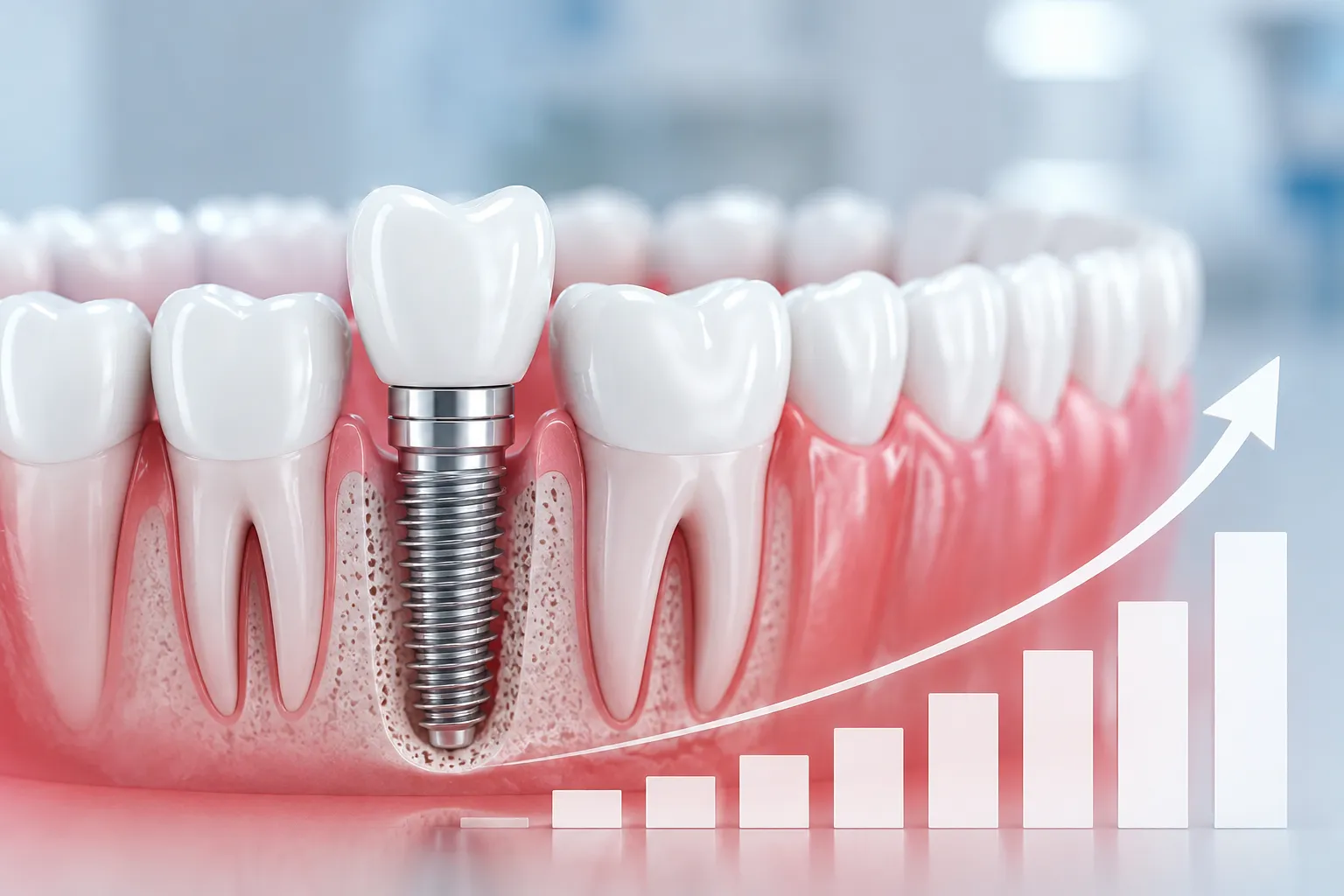
A dental implant is a small post, usually made of titanium, that serves as an artificial tooth root. Over time, the implant can fuse with the surrounding bone through a natural healing process called osseointegration.
Depending on your needs, full mouth restoration may involve:
- Implant-supported bridges: A fixed row of replacement teeth supported by several implants.
- Full-arch implant restorations: A complete upper or lower set of teeth secured to strategically placed implants.
Implant-retained overdentures: Removable dentures that attach to implants for improved stability.
The number of implants required varies by patient and treatment plan. Your dentist will consider your bone structure, bite, oral health, and the type of replacement teeth being used.
Why Do People Consider Implants After Years of Wearing Dentures?
Traditional dentures can restore the appearance of a smile and help with everyday activities. Still, they don't work perfectly for everyone.
Over time, changes in the jawbone and gums can affect how dentures fit. This may lead to discomfort, slipping, or difficulty chewing.
Here are a few reasons people explore implant treatment.
1. Dentures Keep Slipping or Moving
Loose dentures can make eating and speaking frustrating. Some people avoid certain foods or feel uncomfortable laughing in public because they're worried their dentures might move.
Implant-supported teeth attach to implants in the jawbone, providing a more stable foundation than conventional removable dentures.
2. Chewing Has Become Difficult
When dentures don't fit well, biting into foods such as apples, sandwiches, or firm vegetables can be challenging.
Implant-supported restorations can improve chewing stability, although the experience varies depending on the treatment and individual circumstances.
3. The Dentures Need Frequent Adjustments
Your jawbone changes shape over time, particularly after teeth are removed. As the bone beneath the dentures shrinks, the fit may become less predictable.
Relining, adjusting, or replacing dentures can help, but some patients explore implants as a longer-term alternative.
4. You Want a More Secure Smile
For some people, the main concern isn't just eating. It's comfortable during conversations, family gatherings, and everyday activities.
Fixed implant-supported teeth can reduce concerns about dentures slipping. However, they still require regular cleaning, professional maintenance, and careful attention to oral health.
Can Full Mouth Implants Work After Years of Wearing Dentures?
Yes, many people can receive full mouth dental implants after wearing dentures for several years. The important question is whether there's enough healthy jawbone to support the implants and whether your mouth is suitable for surgery.
When natural teeth are removed, the jawbone no longer receives the same stimulation from tooth roots. As a result, the bone may gradually shrink. This process is known as bone resorption.
Wearing dentures for a long time doesn't automatically rule out implant treatment. Your dentist will need to evaluate the amount and quality of your remaining bone.
If you're researching full mouth dental implants in Chandler, AZ, a consultation can help determine whether conventional implants, bone grafting, or another approach might be appropriate for your situation.
What If You've Experienced Significant Bone Loss?
Bone loss is a common concern among long-term denture wearers, but it doesn't always mean implants are impossible.
Depending on the findings, your dentist may discuss options such as:
- Bone grafting: A procedure that adds bone material to areas where additional support is needed.
- Strategic implant placement: Positioning implants in areas with suitable existing bone.
- Alternative implant designs: Certain implant systems may be considered for specific anatomical situations.
- Implant-supported removable dentures: An option for patients who want improved denture stability without a fully fixed restoration.
Not every option suits every patient. Three-dimensional imaging, often using cone-beam computed tomography (CBCT), may help your dental team assess bone volume and identify important anatomical structures before treatment.
What Should You Know Before Getting Full Mouth Implants?
Moving from dentures to implants involves more than simply replacing one set of teeth with another. Understanding the process can help you prepare for treatment.
1. Your Dentist Will Evaluate Your Oral Health
Your initial consultation may include an examination of your gums, remaining teeth, jawbone, and bite.
Your dentist may also review your medical history, medications, smoking habits, and conditions that could affect healing.
People with diabetes or other health conditions may still be candidates, but these factors need to be considered when planning treatment.
2. You May Need Preparatory Treatment
Some patients can proceed with implant placement after their evaluation. Others may need additional treatment first.
Depending on your oral health, this could include:
- Treating gum disease.
- Removing damaged or remaining teeth.
- Performing bone grafting.
- Improving oral hygiene.
- Managing health factors that could interfere with healing.
Your treatment plan should explain which steps are necessary and why.
3. Healing Takes Time
After implant placement, the bone needs time to integrate with the implants. This often takes several months, although the timeline varies.
Some patients can receive temporary teeth during healing, while others need a different approach based on implant stability and bone quality.
Temporary teeth aren't always appropriate for immediate use, so follow your dentist's instructions about eating and chewing.
4. Maintenance Is Essential
Dental implants aren't maintenance-free. Although the replacement teeth can't develop cavities like natural teeth, the surrounding gums and bone can still develop inflammation or infection.
Daily cleaning, professional dental visits, and monitoring help protect your investment in oral health.
Common Myths About Full Mouth Dental Implants
Several misconceptions can prevent people from exploring treatment options that might suit them.
Myth 1: Wearing dentures for 10 or 20 years means implants are impossible.
Truth: Time spent wearing dentures doesn't automatically disqualify you. Bone condition, general health, and other clinical factors matter more than the number of years alone.
Myth 2: Everyone needs bone grafting before getting implants.
Truth: Some patients have sufficient bone for implant placement. Others may need grafting or an alternative treatment plan.
Myth 3: Dental implants last forever without maintenance.
Truth: Implants can last many years, but complications can occur. Regular cleaning, dental checkups, and good home care remain essential.
Myth 4: Getting implants means you'll have natural teeth again.
Truth: Implant-supported teeth can look and function much like natural teeth, but they aren't identical. They require different cleaning techniques and may feel different from your original teeth.
Tips for Preparing for Full Mouth Dental Implants
If you're thinking about moving away from traditional dentures, a little preparation can make your consultation more productive.
- Write down your concerns. Note whether your dentures slip, cause sore spots, or make chewing difficult.
- Bring your medical history. Include your medications, allergies, and relevant health conditions.
- Ask about all available options. Compare fixed implant bridges, implant-retained dentures, and conventional dentures.
- Discuss the complete cost. Ask whether imaging, extractions, grafting, temporary teeth, final restorations, and follow-up appointments are included.
- Understand the recovery process. Find out how long healing may take and what you can eat during each stage.
- Commit to daily care. Ask your dental team how to clean your specific restoration properly.
If you're looking for an implant dentist in Chandler AZ, choose a qualified dental professional who can explain the benefits, limitations, risks, and alternatives based on your individual examination.
Conclusion: Is It Time to Explore Life Beyond Dentures?
Wearing dentures for years doesn't necessarily mean you've missed your opportunity to receive dental implants. Even if your dentures feel loose or you've experienced jawbone changes, there may be treatment options worth exploring.
The first step is a comprehensive dental evaluation. Your dentist can assess your bone health, explain whether implants are feasible, and compare fixed and removable solutions that fit your needs.
If you're considering full mouth dental implants in Chandler, AZ, schedule a consultation to discuss your goals, understand your treatment options, and learn what the process would involve for you. A personalized assessment can help you make a confident, informed decision about your smile.
Frequently Asked Questions
Can I get dental implants after wearing dentures for 15 years?
Yes, it may be possible. Your dentist will assess your jawbone, gums, general health, and other factors to determine whether implants are appropriate.
Do dentures cause bone loss?
Dentures don't directly cause all jawbone loss. The main reason bone shrinks after tooth loss is that the jaw no longer receives stimulation from natural tooth roots. However, changes in the bone can affect how dentures fit over time.
How many implants are needed for a full mouth?
The number depends on whether you're replacing the upper arch, lower arch, or both, as well as the restoration design and your anatomy. A full arch may be supported by four or more implants, but the appropriate number must be determined individually.
Are full mouth implants painful?
Implant surgery is generally performed with local anesthesia, and sedation may be available depending on the procedure and patient. Some soreness, swelling, and discomfort are common during recovery. Your dentist will provide instructions for managing these symptoms.
How long does it take to replace dentures with implants?
The process can take several months, depending on healing, bone grafting needs, implant stability, and the type of restoration. Some patients receive temporary teeth during treatment, while others require a longer staged process.
Are implant-supported dentures better than regular dentures?
They offer different benefits. Implant-supported dentures generally provide better retention and stability, while conventional dentures avoid implant surgery and may cost less initially. The suitable choice depends on your preferences, health, budget, and clinical findings.




















Sign in to leave a comment.