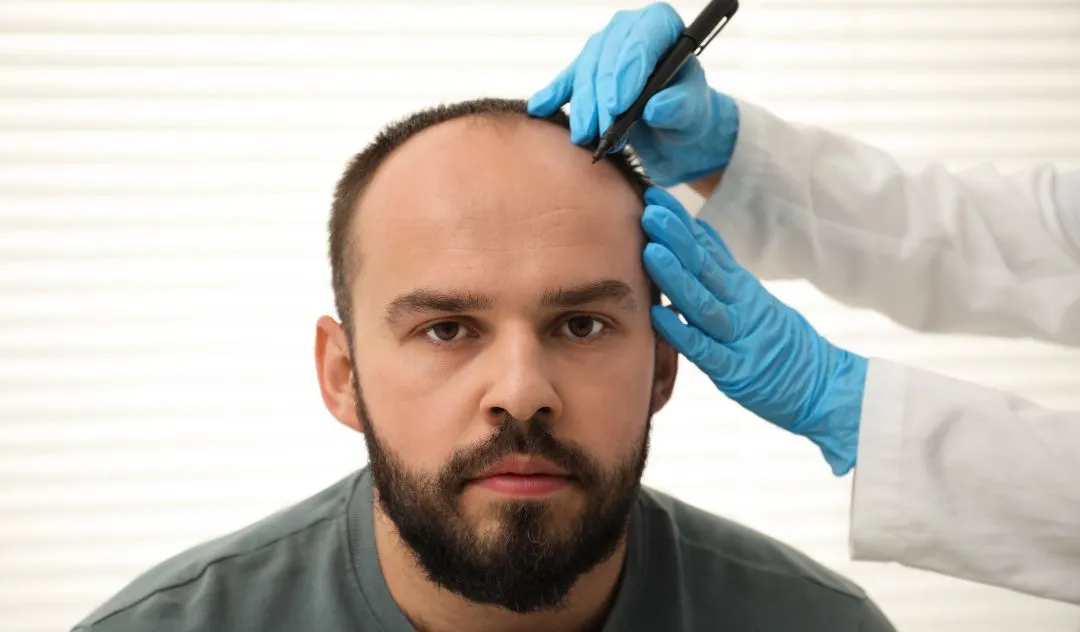


Baldness does not develop in the same way for everyone. Some people notice a slightly receding hairline, while others experience progressive thinning across the scalp or significant loss of hair on the crown and front. Because hair loss can vary considerably, many people wonder whether a hair transplant can treat every stage of baldness.
The answer depends on several factors, including the pattern of hair loss, the strength of the donor area, the quality of existing hair, age, and individual expectations. Hair transplantation can be an effective option for many people, but treatment planning needs to be personalized rather than based only on the amount of visible baldness.
Understanding the Stages of Baldness
Male pattern baldness is commonly described using the Norwood scale. This system helps doctors understand how hair loss progresses and where restoration may be required.
In the early stages, hair loss may appear mainly around the temples or frontal hairline. As baldness progresses, the hairline may move farther backward, and thinning can become noticeable around the crown. In advanced stages, larger areas of the scalp may have little or no visible hair.
Understanding the stage of hair loss helps a specialist determine whether transplantation is appropriate and how many grafts may be required.
Early-Stage Hair Loss
People with early-stage hair loss may not always need a transplant immediately. If the hairline has only recently started receding or the hair is gradually becoming thinner, a doctor may first recommend evaluating the cause and stability of the hair loss.
Early assessment can be valuable because progressive hair loss may continue after transplantation. Treating or managing ongoing hair loss may help preserve existing hair while determining whether surgery is necessary.
When transplantation is appropriate, early-stage patients may require fewer grafts because the affected area is relatively small. The procedure may focus on rebuilding the frontal hairline or filling small areas of thinning.
Moderate Hair Loss
Moderate baldness can involve a more noticeable receding hairline, frontal thinning, or the beginning of crown loss. At this stage, transplantation may be considered when there is sufficient healthy donor hair.
The surgeon generally evaluates the density and quality of hair at the back and sides of the scalp. These areas often provide the follicles used for transplantation.
Treatment planning becomes especially important at this stage. Rather than focusing only on restoring the currently visible bald areas, the doctor may consider how hair loss could progress in the future. This can help avoid using too many donor grafts too early.
Advanced Baldness
Advanced baldness can involve extensive loss across the frontal region, mid-scalp, and crown. Hair transplantation may still be possible for some patients, but the limitations become more important.
The amount of available donor hair is finite. If a large recipient area needs coverage but the donor supply is limited, achieving high density across the entire scalp may not be realistic.
A surgeon may therefore prioritize certain areas, such as creating a natural frontal hairline and improving coverage in the most visible regions. The final plan depends on donor density, scalp characteristics, hair thickness, and the patient's goals.
Can Completely Bald Areas Be Treated?
A completely bald area can sometimes receive transplanted follicles if the surrounding donor supply is adequate. However, transplantation does not create new hair follicles. It redistributes follicles from one part of the scalp to another.
This distinction is important when discussing expectations. Someone with extensive baldness and a limited donor area may not achieve the same density as someone with mild or moderate hair loss.
A consultation can help determine how much coverage may realistically be achieved and whether additional approaches should be considered.
Why Donor Hair Matters So Much
The donor area is one of the most important factors in hair restoration. Transplanted follicles typically come from areas that are more resistant to the effects of pattern hair loss.
Doctors assess donor density, hair caliber, follicular characteristics, and the size of the available donor region before developing a treatment plan.
Using donor follicles carefully is essential because removing too many grafts can reduce the appearance of density in the donor area. A responsible treatment strategy aims to balance restoration with long-term donor preservation.
Choosing the Right Hair Transplant Technique
Different transplantation techniques may be used depending on the patient's needs. FUE, for example, involves extracting individual follicular units before placing them into areas requiring restoration. DHI uses a specialized implantation device to place extracted follicles directly into the recipient area.
The technique itself does not determine whether someone will receive a good result. Proper diagnosis, graft handling, recipient-site planning, hairline design, and surgical expertise are also important.
The most suitable approach should therefore be selected after an individual assessment rather than simply choosing the technique that is currently popular.
What About Future Hair Loss?
One of the biggest considerations for people with early or moderate baldness is future progression. A transplant can restore hair in currently thin or bald areas, but it does not necessarily prevent natural hair loss from continuing elsewhere.
For this reason, younger patients may need particularly careful planning. Creating an extremely low or dense hairline without considering future loss could create an imbalance later.
A long-term restoration plan considers both the hair that is being transplanted and the hair that is likely to remain.
What Results Should You Expect?
Hair transplant results develop gradually. Transplanted follicles need time to settle and enter their natural growth cycle. Some transplanted hairs may shed during the early recovery period before new growth becomes visible.
Visible improvement generally develops over several months, while fuller results may take longer. The exact timeline differs between individuals.
It is also important to understand that natural-looking restoration is usually more important than simply adding the maximum possible number of hairs. Proper distribution and strategic placement can make a significant difference in the final appearance.
When Should You Consult a Specialist?
If you are experiencing progressive baldness, a consultation can help determine the stage and cause of your hair loss. A specialist can examine your scalp, evaluate donor availability, discuss treatment options, and explain what results may realistically be achievable.
People researching the Best Hair Transplant in Chandigarh should look beyond advertisements and consider factors such as medical qualifications, experience, treatment planning, patient evaluation, transparent communication, and realistic outcome discussions.
Final Thoughts
Hair transplantation can be considered at different stages of baldness, but the suitability and expected outcome vary from person to person. Early-stage hair loss may require a smaller restoration area, while advanced baldness can require more careful graft management and realistic expectations.
The key is not simply determining how bald someone is. The more important questions involve donor hair availability, the pattern and stability of hair loss, scalp condition, treatment goals, and long-term planning.
A thorough medical consultation is the best way to understand whether transplantation is suitable for your stage of baldness and what type of result may realistically be achieved.

















Sign in to leave a comment.