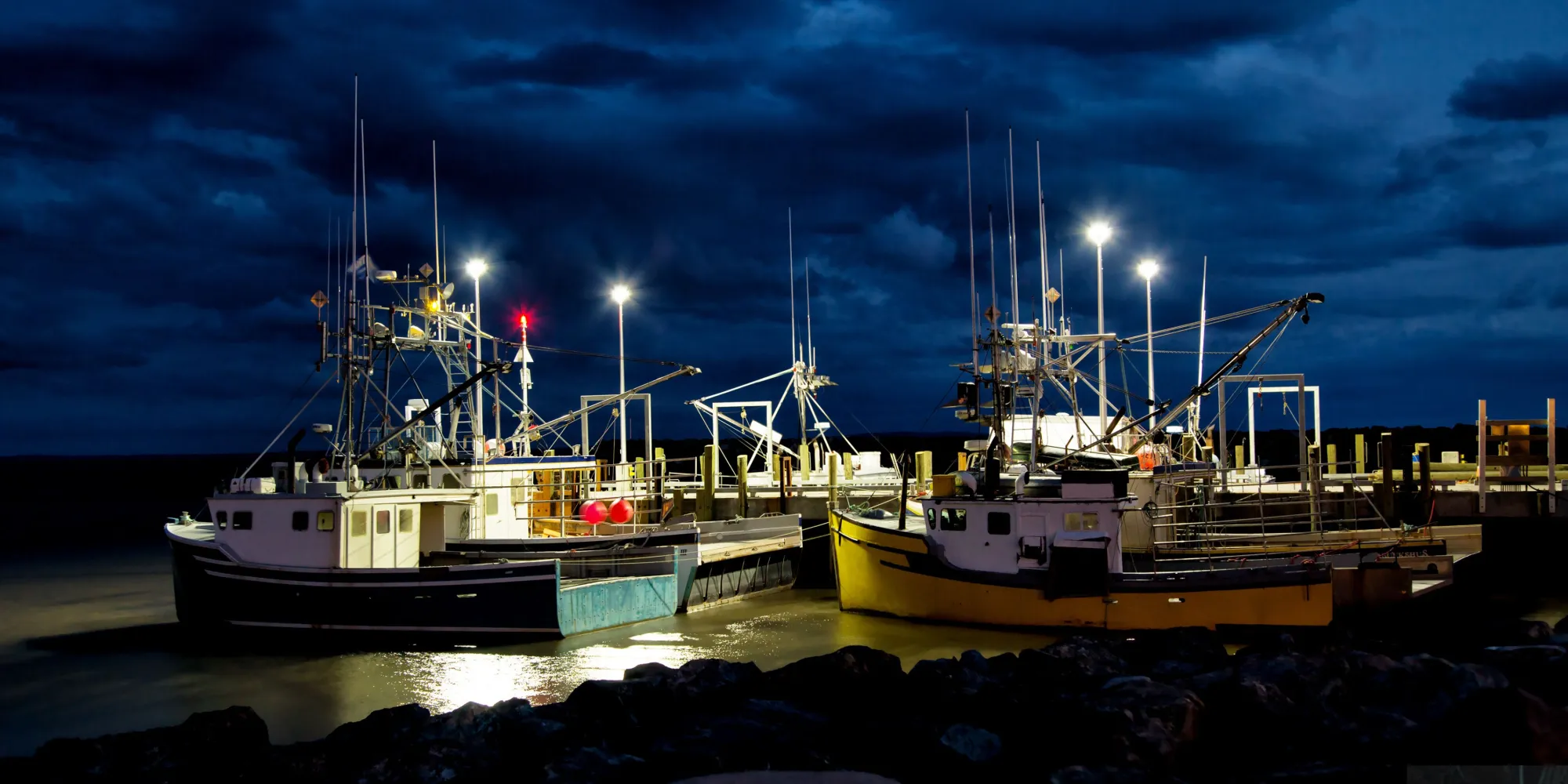

Marine electronics don't fail quietly. One minute your VHF is clear, and the next it's spitting static right when you need to call in a position. Boaters have been reporting this exact problem for years, and the cause traces back to something nobody suspects: the marine LED lights on their own boat.
The U.S. Coast Guard even issued a safety alert about it after a vessel couldn't be reached by VHF radio during a traffic incident. The same ship also had poor AIS reception. When investigators looked into it, LED lighting was the source. So if your fish finder is glitching or your radio sounds off, your LED light might be worth a second look.
The Short Answer: Yes, But Not All LED Lights Do This
Marine LED lights can interfere with a VHF radio or fish finder, but it's not a universal flaw in LED technology. It's an electrical noise problem tied to specific bulbs, wiring setups, and driver circuits. Well-built lights from established marine brands rarely cause trouble. Cheap, unbranded units are far more likely to be the culprit.
This distinction matters because it changes what you do next. You're not choosing between "LEDs" and "no LEDs." You're choosing between lights that were built with radio interference in mind and ones that weren't.
Why This Interference Happens
The Real Cause: RFI
The technical term is radio frequency interference, or RFI. Inside every LED fixture is a small driver circuit that regulates power. Poorly made drivers, especially in dimmable lights, can leak electrical noise onto nearby wiring and into the air. That noise lands right in the frequency range your VHF radio and fish finder use to receive signals.
Conducted Noise vs. Radiated Noise
There are two ways this noise travels. Conducted noise moves through wiring, sometimes through a power cable running near your electronics even if the light itself is far away. Radiated noise moves through the air, usually from a light mounted close to an antenna. One boater traced constant VHF static to a chart light's power cable running near the radio, not to the masthead light near the antenna. Knowing which type you're dealing with changes how you fix it.
Signs Your Lights Are the Problem
| Affected Device | What You'll Notice |
| VHF Radio | Static, clicking noise, garbled Channel 16 |
| AIS Receiver | Targets dropping out, noise warnings on screen |
| Fish Finder | Random dots or lines, flickering, signal loss |
| Chartplotter/GPS | Occasional position jitter (less common) |
How to Test for Interference
The Squelch Test
This is the same method the Coast Guard recommends, and it takes about a minute:
- Turn off all LED lights on the boat.
- Tune your VHF to a quiet, unused channel.
- Adjust squelch until the background noise just disappears.
- Turn the lights back on.
- Listen. If noise returns, your lights are raising the noise floor.
Checking a Fish Finder Separately
Fish finder glitches don't always come from lighting. Sometimes it's cross-talk between two transducers running close together, and sometimes it's electrical noise from shared wiring or nearby motors. Turn off the lights first. If the clutter clears, lighting was the cause. If it doesn't, the transducer setup or power wiring is more likely the source.
Are LED Light Interference & Fish Finder Interference the Same Thing?
Not always. A fish finder can act up on its own, with no lights involved, if two sonar units overlap frequencies or share a dirty power source. But when the glitching lines up with a light switch flipping on and off, marine LED lights are almost certainly involved. Testing both scenarios separately saves you from chasing the wrong fix.
Fixing & Preventing the Problem
Quick Fixes Worth Trying First
- Clip a ferrite choke onto the light's power cable.
- Run lighting and electronics on separate circuits.
- Move the light fixture farther from the antenna or transducer wiring.
- Try an RFI suppression kit before replacing anything.
When Replacement Makes Sense
If the noise won't squelch out and a ferrite doesn't help, the fixture itself is the weak link. Swap it for one built with proper shielding. In rare, stubborn cases, some boaters switch an anchor light back to incandescent just to stop the interference for good.
Choosing Marine LED Lights That Won't Cause Problems
This is where it pays to shop carefully instead of grabbing whatever's cheapest at the marina store.
What Sets the Best Marine LED Lights Apart?
The best marine LED lights carry RFI or EMC certification and meet ABYC electrical standards. Their driver circuits are built to suppress noise instead of leaking it. If a listing doesn't mention interference testing or certification at all, treat that as a warning sign, not a minor detail!
Matching Lights to Where They're Mounted
| Use Case | What to Look For |
| Masthead/nav lights | RFI-certified, kept clear of the antenna |
| Underwater/deck lights | Shielded wiring, sealed housing |
| Interior/cabin lights | Non-dimmable or RFI-tested dimmable models |
| Anchor light | Incandescent backup if AIS issues persist |
Reading a few real owner reviews before buying is one of the simplest ways to find the best marine lights for your setup, since interference problems tend to show up in feedback long before they show up in a spec sheet.
The Bottom Line
A crackling radio or a glitchy fish finder screen isn't something to just live with out on the water. Run the squelch test, check your wiring, and if a fixture turns out to be the problem, replace it with lighting built for marine electronics, not just marine décor. Take a few minutes this week to test your own setup before your next trip out, so a bad LED never gets between you and a call for help.
FAQs
1. Do all LED lights cause VHF interference?
No. Most reputable, marine-rated LEDs cause little to no interference. The issue is mainly with cheaper, poorly shielded units.
2. Can LED lights damage my fish finder?
They won't damage the unit, but they can distort the sonar display with noise, dots, or flickering.
3. What's the official test for LED interference?
The squelch test: turn off the lights, set your VHF squelch just above the noise floor, then turn the lights back on and listen for static.
4. Does distance from the antenna matter?
Yes. Lights mounted close to a VHF or AIS antenna are more likely to cause radiated interference.
5. Should I go back to incandescent lights?
Only as a last resort, and usually just for one troublesome fixture like an anchor light.




























Sign in to leave a comment.