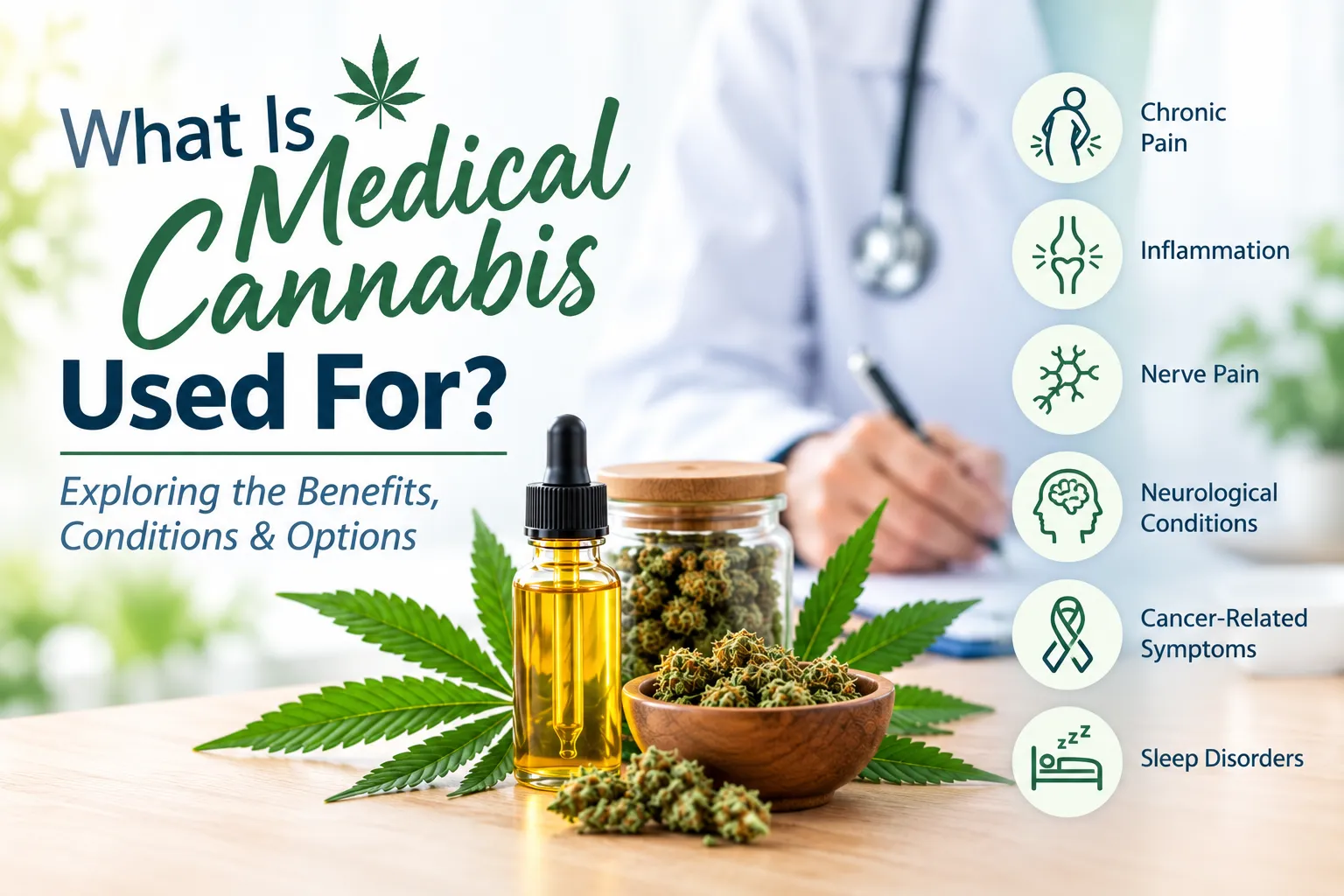

Medical cannabis has become an increasingly discussed topic in health research. Many people search for information about whether cannabis-based medicines may have a role in managing chronic pain, nerve pain, muscle spasticity, and certain other symptoms. At the same time, it is important to understand that medical cannabis is not a universal treatment and that research is still developing.
The purpose of learning about medical cannabis should be to understand the available evidence, possible benefits, limitations, and safety considerations rather than to promote recreational drug use.
What Is Medical Cannabis?
Medical cannabis generally refers to cannabis or cannabinoid-based products used for a medical purpose. Cannabis contains many chemical compounds, with THC (tetrahydrocannabinol) and CBD (cannabidiol) being two of the most widely studied.
THC is the cannabinoid primarily associated with the intoxicating effects of cannabis, while CBD does not produce the same type of intoxication. Different cannabis-based products can contain different amounts and combinations of these compounds, which means their effects can vary.
The FDA notes that only certain specific cannabinoid-based prescription medicines have been approved for particular medical uses in the United States. Many commercially available cannabis or CBD products have not undergone the same evaluation for safety, effectiveness, quality, or appropriate dosing.
Can Medical Cannabis Help With Chronic Pain?
Chronic pain is one of the most commonly discussed potential applications of medical cannabis. However, the evidence is not equally strong for every type of pain.
According to the CDC, there is currently limited evidence that cannabis is effective for most types of acute or chronic pain. Some research suggests that cannabis may provide benefits for certain types of neuropathic pain, which is pain associated with damaged nerves. More research is needed to determine how cannabis compares with other available pain-management approaches.
This distinction is important. Chronic pain can have many causes, including nerve damage, injuries, inflammatory conditions, and neurological disorders. A treatment that may help one type of pain may not have the same effect on another.
For this reason, medical cannabis should be considered within the broader context of an individual's diagnosis and overall treatment plan.
What About Nerve Pain?
Neuropathic pain can feel like burning, tingling, electric shocks, numbness, or unusual sensitivity. It can occur when nerves are damaged or affected by certain diseases or injuries.
Research has examined cannabinoids for neuropathic pain, and some studies have reported modest improvements. However, evidence remains limited, and side effects can also occur. A CDC evidence review notes that studies of cannabis for neuropathic pain have shown a small potential improvement in pain response alongside an increased risk of sedation.
This means people should not assume that cannabis will automatically relieve nerve pain. A healthcare professional can help determine the underlying cause of the pain and discuss appropriate treatment options.
Can Cannabis Help With Muscle Spasticity?
Muscle spasticity is another area where cannabinoids have been studied, particularly in people with multiple sclerosis (MS).
Spasticity can cause muscle stiffness, tightness, involuntary movements, and discomfort. According to the National Center for Complementary and Integrative Health (NCCIH), available evidence suggests that some cannabinoid-based treatments may relieve patient-reported spasticity and pain in people with MS. However, the evidence is more complicated when spasticity is measured using objective physical tests.
Research has also examined specific cannabinoid medicines such as nabiximols, which contains THC and CBD. Some countries have approved specific cannabinoid medicines for MS-related spasticity, but approval and availability vary by country.
Importantly, this research does not mean that cannabis cures multiple sclerosis. Current evidence is focused primarily on certain symptoms rather than eliminating the underlying disease.
What Are the Potential Benefits of Medical Cannabis?
Potential benefits depend heavily on the condition being studied, the cannabinoid involved, the formulation, and the individual.
Research has investigated cannabinoids in areas including:
- Certain types of neuropathic pain
- Chronic pain symptoms
- Muscle spasticity associated with multiple sclerosis
- Nausea and vomiting associated with certain cancer treatments
- Specific seizure disorders through approved CBD medication
For example, the FDA has approved specific cannabinoid-based prescription medicines for particular medical conditions, including certain severe seizure disorders and chemotherapy-associated nausea and vomiting.
These approved medical applications are different from making broad claims that cannabis can treat any disease or health condition.
Is Medical Cannabis Safe?
Safety is an important part of the medical cannabis discussion.
Cannabis and cannabinoid products can cause side effects. Depending on the product and individual, these may include dizziness, drowsiness, changes in alertness, nausea, or other unwanted effects.
CBD should not automatically be considered risk-free simply because it is not intoxicating. The FDA reports potential concerns including liver injury, drug interactions, and changes in alertness with CBD products.
Drug interactions are particularly important. CBD and THC may affect how certain medications work, which can potentially increase side effects or change the effectiveness of other medicines. Anyone taking prescription or over-the-counter medication should discuss cannabinoid use with a healthcare professional.
Pregnancy and breastfeeding are also important situations requiring special caution. The FDA advises against using CBD, THC, or marijuana during pregnancy or while breastfeeding.
Why Medical Guidance Matters
One of the biggest differences between medical use and recreational use is the focus on the patient's health condition, treatment goals, safety, and monitoring.
Before considering cannabis or cannabinoid products for a health concern, a person should understand:
- What condition is being treated
- Whether there is reliable evidence for the proposed use
- What other treatments are available
- Whether the product may interact with existing medications
- What potential side effects may occur
- Whether the product is legally available and medically appropriate in their location
Medical cannabis should not be used as a reason to delay diagnosis or replace treatments that have been recommended by a healthcare professional.
What Does Current Research Tell Us?
Current research presents a balanced picture. There is evidence of potential benefits for some symptoms and conditions, but there are also important limitations.
For chronic pain overall, the CDC describes the evidence as limited. For multiple sclerosis, NCCIH reports evidence that certain cannabinoid treatments may improve patient-reported spasticity and pain, while evidence for other outcomes is less certain.
This is why responsible medical cannabis information should avoid statements such as "cannabis cures pain" or "cannabis treats every condition." Instead, patients should look at the specific condition, available research, product type, risks, and guidance from qualified healthcare professionals.
Making an Informed Health Decision
Medical cannabis is an evolving area of healthcare research. For some people and certain symptoms, cannabinoid-based medicines may have a role as part of medical care. For others, the potential risks or lack of evidence may make another treatment more appropriate.
The most useful approach is to focus on evidence rather than assumptions. Understanding the difference between THC and CBD, learning about potential benefits and side effects, and discussing possible drug interactions with a healthcare professional can help people make informed decisions.
The Weedy Things focuses on educational information about cannabis, cannabinoids, health, wellness, and medical research. The goal is to help readers understand the subject from a health-information perspective rather than promote recreational drug use.
Frequently Asked Questions
1. Can medical cannabis help with chronic pain?
Research suggests that cannabis-based products may help some people with certain types of pain, particularly neuropathic pain. However, evidence for chronic pain overall remains limited, and results vary between individuals.
2. Is medical cannabis the same as recreational cannabis?
The terms can refer to different contexts of use, but cannabis products can contain similar cannabinoids. Medical use focuses on treating specific symptoms or conditions under appropriate healthcare guidance.
3. What is the difference between THC and CBD?
THC is the cannabinoid primarily associated with cannabis's intoxicating effects. CBD is not intoxicating in the same way. Both interact with the body's systems and can have potential effects and risks.
4. Can cannabis help with multiple sclerosis symptoms?
Some cannabinoid-based treatments may help with patient-reported pain or spasticity associated with multiple sclerosis. However, cannabis does not cure MS, and evidence varies depending on the treatment and outcome being studied.
5. Can CBD interact with prescription medicines?
Yes. The FDA reports that CBD can interact with other medicines and may change their effects or increase the risk of adverse effects. Anyone taking medication should discuss CBD use with a healthcare professional.
6. Is medical cannabis safe for everyone?
No. Safety depends on the individual, product, medical condition, medications, and other factors. Certain groups, including people who are pregnant or breastfeeding, should avoid cannabis and cannabinoid products according to FDA guidance.
7. Does medical cannabis replace conventional treatment?
Not necessarily. Cannabis-based treatment should not automatically replace established medical care. A healthcare professional can help determine whether it has an appropriate role alongside or instead of other treatments.



























Sign in to leave a comment.