Absolutely. Sometimes, a child does not need a complicated lesson to discover something new. A book, a curious mind, and two languages can be enough to turn an ordinary storytime into a doorway to bigger ideas.
With children’s books in Spanish, young readers can enjoy stories while naturally meeting new words, cultures, characters, and perspectives.
A Story Can Become a Language Adventure
Imagine opening a book and finding the same story in Spanish and English. Instead of treating language learning like a worksheet, children can follow characters, notice pictures, guess meanings, and connect words with actions. The story provides context for every new word, making it easier to understand and remember.
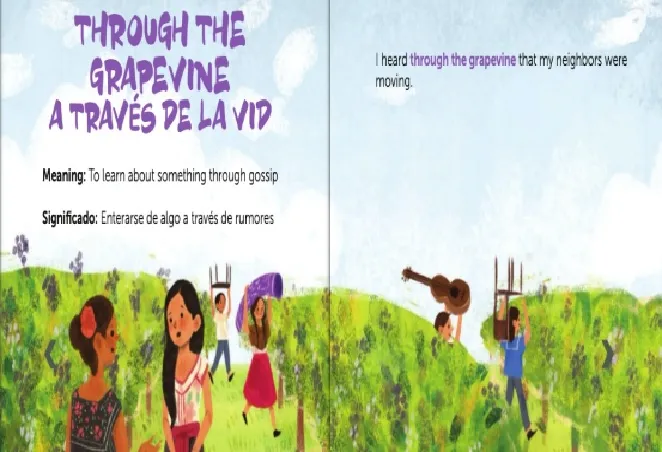
Children’s books in Spanish-English are designed around this natural process. Parallel bilingual text allows children to compare languages while colorful illustrations help connect vocabulary with meaning. As children read, they can begin to recognize sentence patterns, build comprehension, and gain confidence in both languages.
Two Languages, One Shared Story
The magic of a bilingual book is not simply that it contains two languages. It gives children a chance to experience those languages together. A familiar idea in one language can help make an unfamiliar phrase in another feel less mysterious.
This can be especially helpful for children growing up with Spanish at home, for children’s books in Spanish, for children learning Spanish as a second language, and for English Language Learners. Reading regularly can support vocabulary, fluency, pronunciation, comprehension, and speaking confidence without making reading feel like formal study.
Stories That Travel Beyond the Page
A good children’s story can take a child far beyond the room where they are reading. One book might lead them beneath the ocean to explore coral reefs. Another might introduce sports played worldwide. A folktale can bring a new culture into the conversation, while a family story can open discussions about belonging, traditions, and relationships.
The collection referenced here brings together stories about friendship, kindness, family, diversity, science, nature, healthy habits, community, and social-emotional learning. Such themes give children more than vocabulary practice. They encourage questions, empathy, curiosity, and conversations.
Pictures Give Imagination a Helpful Push
For young readers, illustrations are not simply decoration. They can act like friendly clues. A child may look at a character’s expression to understand an emotion, study a scene to predict what happens next, or use an image to work out the meaning of an unfamiliar word.
This makes picture books especially valuable for bilingual learners. Visual storytelling can strengthen observation, memory, creative thinking, and storytelling skills while helping children become more comfortable reading independently. When children can see meaning as well as words, the second language can feel much more approachable.
Learning Can Sound as Good as It Looks
Some bilingual resources add another layer to the experience through audio support. PENPal-compatible books allow children to hear pronunciation while following the printed text. Seeing and hearing language together can reinforce vocabulary, listening skills, pronunciation, and speaking confidence.
That combination also gives children opportunities to learn at their own pace. They can listen, follow along, repeat, and return to familiar words as often as they like. Alongside books, bilingual dictionaries, multilingual posters, and teaching resources can extend the learning experience at home or in educational settings.
A Bigger World Begins With Shared Reading
Perhaps the most meaningful part of bilingual reading is that it can bring people together. Parents, grandparents, siblings, teachers, and children can share stories even when they are more comfortable in different languages. Reading together creates space for questions, conversations, laughter, and language comparison.
For bilingual families, seeing Spanish represented alongside English can also help children value both languages. Stories can support cultural connections while children strengthen their literacy and communication skills. In classrooms, bilingual books can create more inclusive spaces for English Language Learners and support discussions about different cultures and perspectives.
Choose Stories That Invite Discovery
A book with two languages can do much more than teach vocabulary. It can help a child become a confident reader, a curious listener, an imaginative storyteller, and a more open-minded explorer. When engaging stories meet vibrant illustrations and themes, learning can happen naturally, one page at a time.
For families, teachers, libraries, and schools, thoughtfully selected bilingual collections can make that journey even richer. Picture books, folktales, fairy tales, nonfiction, multicultural stories, book sets, and audio-supported resources offer different ways to keep young minds engaged.
So, can one book, two languages, and a little imagination open a bigger world? Certainly, every page can introduce a new word, a new perspective, or a new question worth asking. Explore children’s books in Spanish and give young readers more opportunities to learn, imagine, and discover together.


























Sign in to leave a comment.