Can Professional Diver Watches Keep Pace With the Precision of Swiss Automatic Watches?


A diver timing a safety stop and a traveler catching a train both need steady mechanical time. One earns its reputation in a lab, the other under water and impact. That split explains why Swiss automatic watches and dive tools are often compared and why the answer is more practical than technical.
What Accuracy Means For Swiss Automatics
Swiss automatics build precision from tight regulation before casing. Testing isolates is affected by outside factors.
The COSC Baseline
In Switzerland, COSC tests movements for 15 days in different positions and temperatures. The standard for a mechanical chronometer is -4 to +6 seconds per day. That test measures the movement only, not the complete watch. It gives buyers documented proof of the rate in controlled conditions.
What Moves The Numbers In Real Life
On the wrist, rate shifts. Temperature, magnetism, shocks, power reserve, and resting position overnight all move daily deviation. A movement that averaged -2 in testing can show +6 during desk work.
How Professional Diver Watches Handle Precision Under Pressure
Dive watches start with safety. Accuracy matters, but it shares priority with sealing, legibility, and resistance.
ISO 6425 and Everyday Pressure
ISO 6425 defines a true diver. It requires at least 100 meters of water resistance, legibility in darkness at 25 centimeters, a 60-minute unidirectional bezel protected against accidental rotation, and resistance to condensation. A watch that only lists water resistance without these checks is not an ISO diver.
Shock, Magnetism, and Depth
The same norm checks rate under stress. While exposed to a magnetic field of 4,800 amperes per meter, a diver must stay within plus or minus 30 seconds per day. After two sharp hammer strikes, it must stay within 60 seconds per day. Those windows look wide next to COSC, yet they apply during punishment, not in a quiet lab.
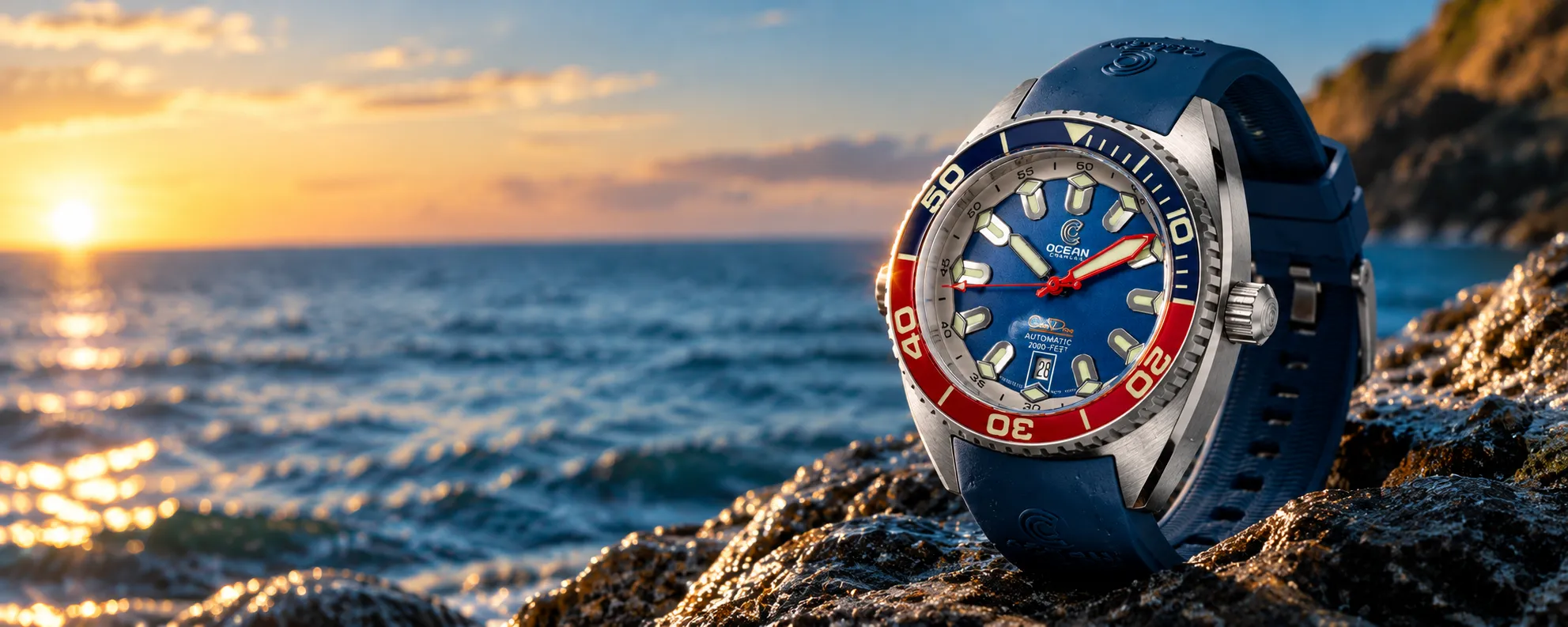
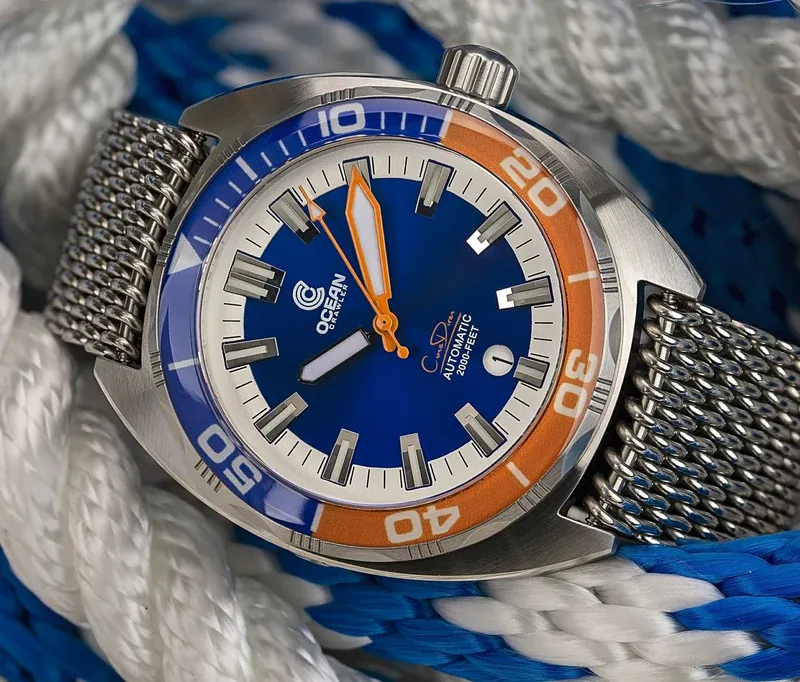
Modern dive automatics exceed the minimum. Ocean Crawler is an American company based in Rochester, New York, that specializes in self-winding and automatic mechanical watches, focused on reliability, durability, accuracy, and style. Its diver lines list true water resistance to 2000 feet or 600 meters and shock resistance to 6000 G, with movement accuracy of plus or minus 5 seconds per day in 3 positions.
Side By Side: Precision Under Different Priorities
Lab numbers favor a certified Swiss automatic. Numbers held while the watch is used favor a well-built diver.
Common reference points:
- COSC-certified movement: -4 to +6 seconds per day, tested uncased.
- Cased automatic diver: plus or minus 5 seconds per day in 3 positions, with 600-meter sealing.
- ISO 6425 magnetic limit: plus or minus 30 seconds per day.
- ISO 6425 shock limit: plus or minus 60 seconds per day.
A dive watch matches the lab window while carrying more sealing and shock protection. For daily wear with water and travel, holding plus or minus 5 seconds under those conditions often feels more precise than a better lab average that drifts when exposed.
This is where Swiss automatic watches and dive-focused automatics overlap. Both use Swiss-made automatic movements and regulated escapements. The difference is case engineering.
Can a dive watch match Swiss automatic precision?
Yes, many can when regulated with care. If precision means smallest average deviation over two weeks in controlled temperatures, a COSC papered automatic holds the title. If precision means a consistent daily rate while you swim, travel, and work, a dive automatic regulated to plus or minus 5 seconds per day lives in the same range.
Need certification for collecting? Choose the certified Swiss automatic. Need that rate plus sealing for water exposure? Choose a dive built automatically and regulated to the same window. Professional diver watches have closed the gap because better hairsprings, improved shock systems, and tighter regulation now coexist with deep water sealing.
To Sum Up
Both aim at steady mechanical time but start from opposite ends. One starts from lab certification, the other from safety testing under ISO 6425. Modern engineering lets a well-regulated dive watch hold both, keeping plus or minus 5 seconds per day while rated for deep water and hard shocks. For real-world consistency, that makes a professional tool watch a practical equal to a traditional automatic. Ocean Crawler reflects that shift by building self-winding dive watches for active use, not display, with attention to durability and daily accuracy.
FAQs
How accurate should a good automatic dive watch be?
Aim for plus or minus 5 to 8 seconds per day in multiple positions as a complete watch.
What does ISO 6425 require beyond water resistance?
At least a 100-meter rating, legibility in darkness, a 60-minute bezel, protection against accidental movement, condensation resistance, plus magnetic and shock checks.
Is COSC certification needed for good accuracy?
No. COSC documents that the movement met -4 to +6 seconds per day. A non-certified watch can be regulated to the same window.
Do dive watches lose accuracy during a dive?
Depth alone has little effect. Cold and low power reserve can shift the rate, but a fully wound watch with good anti-magnetic protection usually shows little change.
How often should I service a dive automatic?
Every 4 to 6 years for most owners, sooner with heavy use. Rinse after salt water and have gaskets checked yearly if you dive.




Sign in to leave a comment.