

Yes, you can bake with vegan butter in India as a 1:1 replacement for dairy butter in most recipes. Cookies and cakes tend to perform closest to traditional results, while pastries, frostings, and laminated doughs need a bit more technique and careful chilling.
What matters more than the "vegan" label is what's actually inside the box, the fat content, the base oil, and the ingredient list, not just whether it says plant-based.
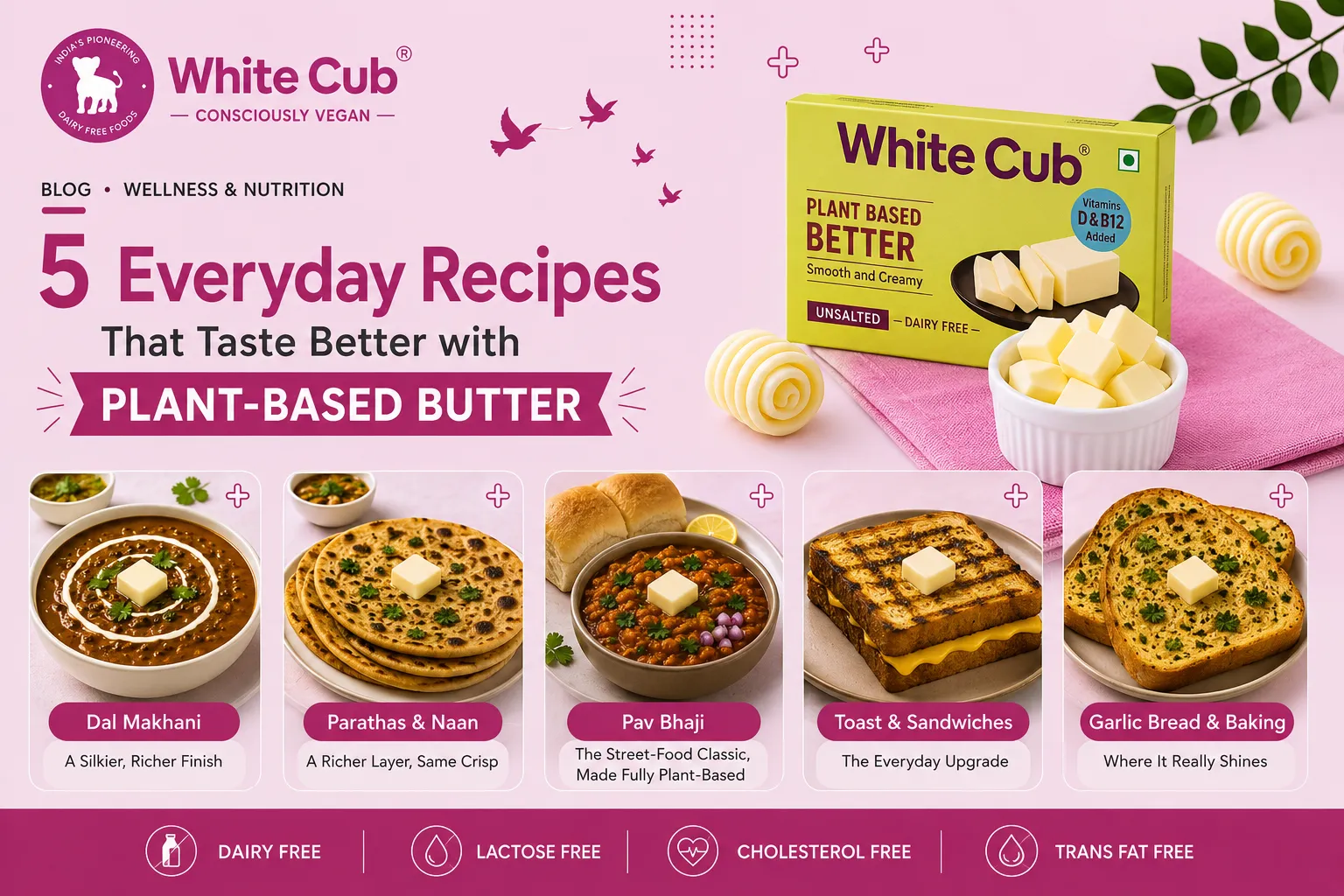
See the butter built for real Indian kitchens explore WhiteCub's Plant Based Butter.
Does Vegan Butter Work in Baking?
Yes, generally. Plant-based butter in India and elsewhere can be used as a direct, 1:1 swap for dairy butter in most baking recipes, without needing to adjust quantities.
This is true across cookies, cakes, and most everyday bakes the technique changes more than the ratio.
What to Check Before You Bake With It
Not every vegan butter performs the same way, so it's worth checking a few things before you start:
- Fat content: A higher-fat formulation generally behaves closer to dairy butter in texture and browning. Check the nutrition label rather than assuming.
- Format and consistency: Firmer, more solid butters tend to hold structure better in dough than very soft, high-water spreads.
- Ingredient list: Look for real plant oils as the primary ingredient, rather than a long list of fillers and stabilizers.
Cookies and Cakes: Where Vegan Butter Performs Closest to Dairy
This is where vegan butter for cakes and cookies genuinely shines.
High-fat plant butters, especially those built on a naturally solid base like coconut oil butter for baking, tend to produce chewy edges, a tender crumb, and a texture very close to traditional baking.
Creaming it with sugar works the same way it does with dairy butter, which makes this the easiest starting point if you're new to dairy-free butter substitutes.
Pastries, Frostings, and Lamination: Where It Gets Trickier
Vegan butter can melt at a slightly different rate than dairy butter and often holds less air, which affects two specific applications.
Frostings made with vegan butter tend to be softer than traditional buttercream, and laminated doughs including pie crusts and croissants need the butter chilled thoroughly to hold distinct layers.
A softer butter can blend into the dough instead of creating flaky separation.
Baking Adjustments to Keep in Mind
- Chill vegan butter thoroughly before laminating dough for pie crusts or croissants.
- Expect frosting to set slightly softer than dairy-based buttercream.
- Cream it with sugar the same way you would dairy butter for cookies and cakes.
- Don't assume all vegan butter performs identically formulation varies meaningfully by brand.
Can I Replace Vegan Butter With Regular Butter in Baking?
Yes, this works both directions.
If a recipe calls for regular butter, vegan butter in India can generally replace it 1:1, and vice versa. The same technique considerations above apply regardless of which direction you're swapping.
Does Vegan Butter Actually Taste Like Butter?
A well-formulated vegan butter, built on real plant oils rather than heavily processed fillers, comes close in both taste and texture especially once it's baked into a recipe rather than eaten plain, where the other ingredients help carry the flavor.
Vegan Butter Performance by Bake Type
| Bake Type | How It Performs | What to Watch For |
|---|---|---|
| Cookies | Chewy edges, good spread, close to dairy results | Chill dough slightly if it spreads too thin |
| Cakes | Tender crumb, creams well with sugar | Ensure it's at room temperature before creaming |
| Frostings | Smooth, but sets softer than dairy buttercream | Chill before piping for better structure |
| Pastries/Pie Crusts | Can work well, but needs careful lamination | Chill thoroughly between folds |
| Croissants | More technique-sensitive | Requires patience and cold, consistent lamination |
How to Bake With WhiteCub's Vegan Butter
WhiteCub's Plant Based Butter is built on a coconut oil, sunflower oil, and sesame oil base coconut oil being naturally solid at room temperature, which gives it a structural advantage for baking compared to butters built on lighter oils alone.
It contains zero palm oil and no interesterified fats, and works as a straightforward 1:1 swap in most WhiteCub vegan butter recipes, from cookies to everyday cakes.
How to Make Vegan Butter for Baking If You Want to DIY
If you'd rather make your own, the general process is straightforward.
Blend a solid plant fat, commonly coconut oil, with a neutral liquid oil, a small amount of plant milk for moisture, a pinch of salt, and an emulsifier like lecithin to help everything bind together. Then chill it until firm.
This gives you a base with similar behavior to store-bought options, though consistency can vary batch to batch. That's one reason many home bakers eventually switch to a reliable pre-made option.
Is Vegan Butter Better for You Than Regular Butter?
There are a few differences worth considering:
- Vegan butter contains no cholesterol, unlike dairy butter.
- It is naturally lactose-free, making it suitable for dairy-sensitive bakers.
- "Better" still depends on the full ingredient list check for palm oil and interesterified fats regardless of brand.
- Overall health impact also depends on portion size and the rest of the recipe, not the butter alone.
Does Vegan Butter Need to Be Refrigerated?
Yes, generally.
Like dairy butter, vegan butter should be refrigerated to maintain its texture and freshness. This is particularly important in India's warmer climate, where room-temperature storage can soften it too much for baking use.
Frequently Asked Questions
How do I make vegan butter for baking at home?
Blend a solid plant fat like coconut oil with a neutral liquid oil, a small amount of plant milk, salt, and an emulsifier like lecithin. Then chill until firm.
Consistency can vary batch to batch compared to a store-bought option.
Is vegan butter better for you than normal butter?
It depends on the full formulation.
Vegan butter generally contains no cholesterol and no lactose, but "better" also depends on checking for palm oil, interesterified fats, and overall ingredient quality, regardless of brand.
Does vegan butter need to be refrigerated?
Yes. Similar to dairy butter, it should be refrigerated to maintain texture and freshness especially relevant in India's warmer climate.
The Bigger Picture
Vegan butter in India has moved well past being a niche substitute it genuinely works for most everyday baking, from cookies to cakes, with a bit more technique needed for pastries and laminated doughs.
The label "vegan" matters less than what's actually in the box, so checking the fat content and ingredient list will tell you more than the packaging alone.
Try WhiteCub's Plant Based Better White Unsalted in your next batch of cookies, cakes, or everyday bakes.
























Sign in to leave a comment.