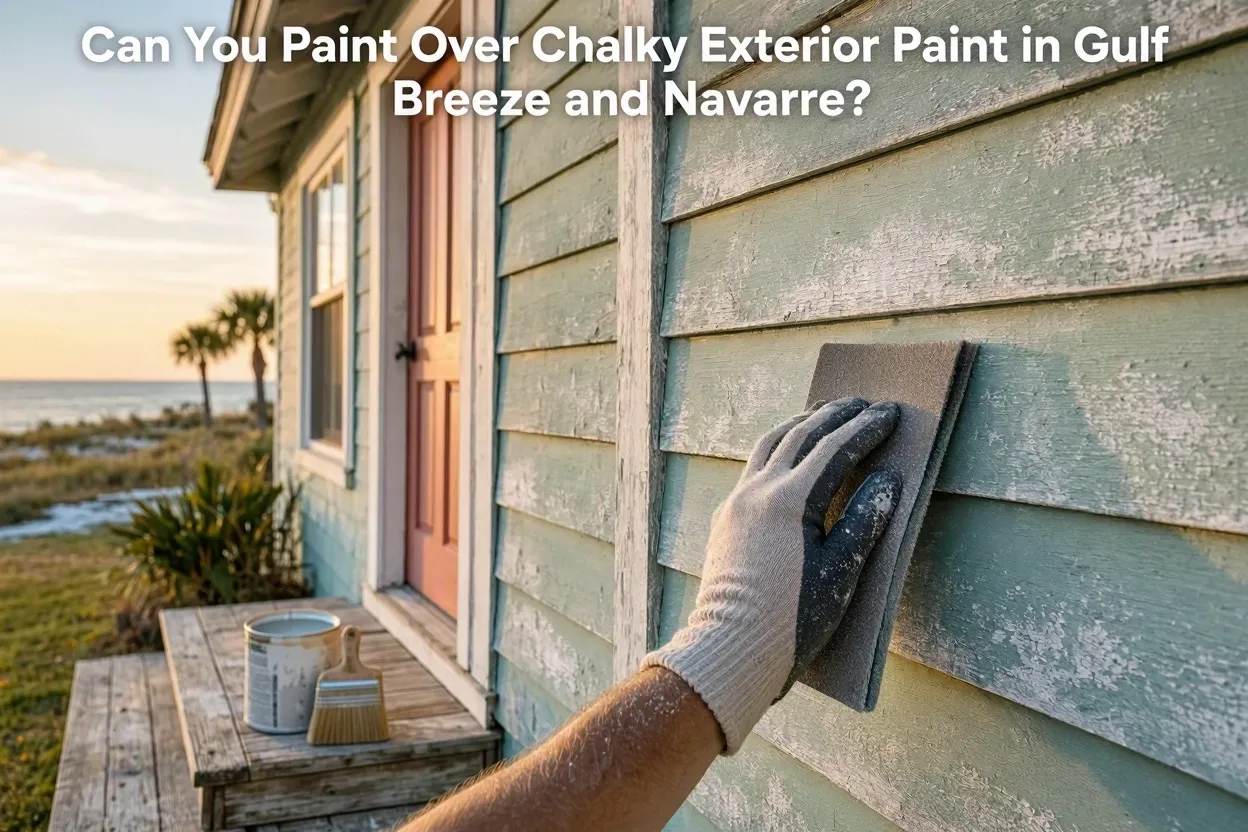

Yes, you can paint over chalky exterior paint, but only after the loose chalk is cleaned off and the surface is sound. If a light chalk film remains after washing, a primer made for chalky surfaces helps the new paint grip. If the old paint is peeling, flaking or chalked down to bare wood or siding, it needs scraping or sanding first. Painting straight over heavy chalk is one of the most common reasons new exterior paint fails early.
TL;DR
Chalking happens when sun breaks down the binder in exterior paint, leaving a powdery layer on top. Along the coast in Gulf Breeze and Navarre, strong sun and salt air speed that up. New paint applied over chalk sticks to the powder instead of the surface, then peels. Wash the chalk off, check whether any remains, prime when needed, and fix any failing paint before the topcoat goes on.
Key takeaways
- Run your hand across the siding. A colored residue on your palm means chalking.
- Clean off loose chalk before painting. New paint won't stick to powder.
- Use a primer suited to chalky surfaces if some chalk remains after washing.
- Peeling or flaking paint must be removed. Chalk is the lesser problem.
- South- and west-facing walls usually chalk first.
How to check for chalking
You don't need tools for a first look.
The rub test: Rub your palm or a dark cloth firmly across the painted surface. A white or colored powder on your hand means the paint is chalking.
The tape test: Press a strip of clear tape onto the surface, peel it off and look at it against something dark. Chalk on the tape shows how much remains.
Check several walls. The sides that get the most afternoon sun often chalk heavily while shaded sides barely chalk at all.
Why you can't paint straight over it
Chalk is loose pigment and broken-down binder sitting on the surface. Paint applied over it bonds to that powder, not to the solid paint underneath. Within a season or two, the new coat can lift, peel or blister.
So the real question isn't whether you can paint over chalky exterior paint. It's whether the surface has been cleaned and prepped enough for the new paint to bond.
Step 1: Wash the chalk off
Cleaning is the most important step.
- Pressure washing or soft washing with an appropriate cleaner removes most chalk, dirt and salt.
- Scrubbing heavily chalked areas may be needed.
- Rinse thoroughly. Leftover cleaner can interfere with adhesion too.
- Let it dry fully. Humidity along the Gulf can slow drying, so give it time before priming.
Be careful with pressure on wood siding, older vinyl and around windows. Too much pressure can damage siding or drive water behind it.
Step 2: Retest
After the surface dries, do the rub or tape test again.
- No chalk on your hand: the surface is ready for repairs and painting.
- Light chalk remaining: use a primer designed to bind chalky surfaces before the topcoat.
- Heavy chalk that won't wash off: more cleaning, or sanding in bad areas, may be needed.
Step 3: Deal with failing paint
Chalking often shows up alongside other problems. Look for:
- Peeling or flaking paint
- Cracking or alligatoring
- Bare wood showing through
These areas need scraping, sanding and spot-priming before any new paint. Chalky exterior paint on a house built before 1978 should be tested for lead before scraping or sanding.
Step 4: Choose the right topcoat
A quality exterior acrylic paint generally holds up better against UV and chalking than lower-grade products. Lighter colors also tend to show chalking and fading less than deep, saturated colors in strong sun.
Ask your painter what product and sheen they recommend for your siding and sun exposure, and how many coats are planned.
When to call a professional
DIY is reasonable for a small, lightly chalked area. Consider a pro if:
- The whole house is chalking heavily
- There's peeling, cracking or bare wood mixed in
- The house is two stories or has hard-to-reach areas
- The home was built before 1978 and prep will disturb old paint
FAQs
What causes chalky exterior paint?
Sun breaks down the paint's binder over time, leaving pigment as a loose powder on the surface.
Can I just paint over chalky paint?
Not without cleaning first. New paint applied over chalk tends to peel.
Do I need primer for chalky paint?
If some chalk remains after washing, a primer designed for chalky surfaces helps the new paint bond.
Does pressure washing remove chalk?
It removes most of it. Heavily chalked areas may also need scrubbing.
Is chalky paint a sign I need to repaint?
Usually. It means the coating is wearing out and protecting the siding less.






















Sign in to leave a comment.