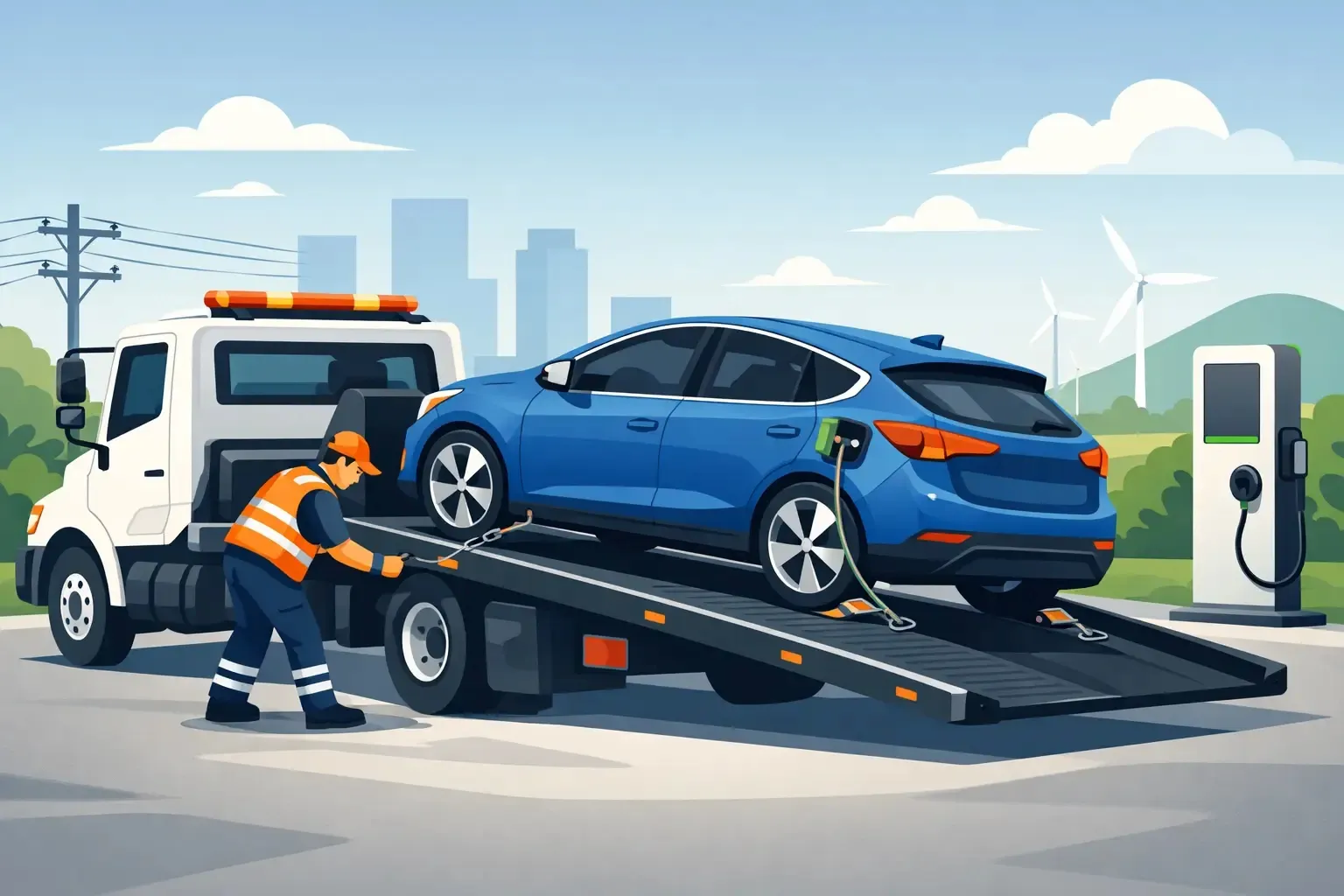

Yes, an electric vehicle can be towed, but it cannot always be handled like a gasoline-powered car. EVs have electric motors, high-voltage battery packs, and special drive systems that can be damaged by the wrong towing method. If you ever need car towing in Austin for an EV, the safest approach depends on the model, drivetrain, condition, and whether it still has power. Understanding these factors can help prevent expensive damage during a roadside emergency.
Why Towing an EV Is Different
An electric vehicle may look similar to a normal car from the outside, but its power system works differently. Many EVs use electric motors connected directly to the wheels. When those wheels turn during towing, the motor and other electrical parts may also move. This is why simply attaching a tow rope and pulling an EV with its wheels rolling on the road can cause damage.
The National Highway Traffic Safety Administration (NHTSA) warns that EVs and hybrids need extra care during towing because damage can occur when they are towed on their drive axle. It recommends checking the vehicle owner's manual for the correct towing method.
This means there is no single towing method that is correct for every EV.
Is a Flatbed Tow Truck the Best Choice?
In many cases, a flatbed tow truck is the safest option because the entire vehicle can be lifted onto the platform. With all four wheels off the road, the wheels are not turning during transportation. This reduces the risk of damaging the electric drive system.
For example, Tesla recommends a flatbed or similar transport vehicle for its Model 3 and Model Y. When a flatbed is not available, Tesla specifies the use of wheel lifts and dollies so that all four wheels remain off the ground.
However, EV owners should still check their own vehicle instructions. A towing method that works for one model may not be approved for another.
Why You Should Not Simply Tow an EV With a Rope
One of the biggest mistakes is assuming that an EV can be pulled behind another vehicle just because it can roll. Rolling is not the same as being safely transported.
If the drive wheels remain on the road, they can turn the electric motor while the vehicle is being pulled. Depending on the vehicle design, this may create unwanted electrical activity or heat and may damage components.
Ford's emergency response guides for electric vehicles specifically warn against towing with the wheels on the ground and explain that the correct drive wheels should be lifted. For all-wheel-drive vehicles, Ford recommends keeping all wheels off the ground using suitable equipment or a flatbed.
So, do not let another vehicle pull your EV with a rope or chain unless the manufacturer's instructions clearly allow that method.
What About Front-Wheel, Rear-Wheel, and All-Wheel-Drive EVs?
The drivetrain matters. A front-wheel-drive EV sends power to the front wheels. A rear-wheel-drive EV sends power to the rear wheels. An all-wheel-drive EV can send power to all four wheels.
This difference affects how the vehicle can be moved.
In general, towing professionals need to know which wheels are connected to the electric drive system before choosing equipment. For some vehicles, lifting the drive wheels may be enough. For others, especially all-wheel-drive models, all four wheels may need to be lifted.
This is one reason car towing for an EV should be arranged with a company that knows how to handle electric vehicles rather than treating the vehicle like a standard gasoline car.
What Is EV Tow Mode?
Some electric vehicles have a special setting called Tow Mode, transport mode, or a similar feature.
This setting can help the vehicle roll freely while it is being loaded onto a tow truck. It does not mean the EV can be towed long distances with its wheels on the ground.
For example, Tesla's Model 3 Tow Mode is designed to allow slow movement for loading onto a flatbed. Tesla states that the mode is intended for short repositioning or winching and places strict limits on how far and how fast the tires should rotate.
This is an important difference.
Tow Mode is generally a loading or repositioning feature, not permission for normal road towing.
Always follow the instructions for your exact EV.
What If the EV Has No Power?
An EV can lose power for several reasons. The high-voltage battery may be empty, or the smaller 12-volt system may have a problem. These are not always the same problem.
The high-voltage battery powers the main electric drive system. The 12-volt battery operates many basic electrical systems and controls. NHTSA explains that the high-voltage battery cannot be jump-started like a normal 12-volt battery, although the 12-volt battery may be jump-started in many EVs according to the manufacturer's instructions.
If the vehicle has no low-voltage power, special procedures may be needed before it can be placed into its correct towing mode.
Do not guess.
Tell the towing company that the EV has no power before the truck arrives.
What If the EV Was in an Accident?
A damaged EV requires extra caution. A crash can damage the battery pack or high-voltage electrical components even when there is no obvious fire. NHTSA warns that damaged high-voltage components should be treated as energized because they can create serious electrical hazards.
There can also be a risk of a delayed battery fire after serious damage. For this reason, an EV involved in a major crash should not be handled like an ordinary damaged car. Tell the towing company about the accident and any visible battery damage, smoke, heat, leaking fluids, or unusual sounds.
NHTSA provides vehicle-specific emergency response guides that include towing and storage information for many electric vehicles.
Do Not Tow a Flood-Damaged EV Without Professional Advice
Water damage creates another serious concern. If an EV has been in a flood or has been heavily exposed to standing water, the battery and electrical system may present safety risks. NHTSA warns that flooded EVs can create high-voltage shock hazards and possible fire risks.
Do not assume that the vehicle is safe simply because it starts normally.
Tell the towing provider about the flood exposure. The vehicle may need special handling, inspection, or storage away from buildings and other vehicles.
What Should You Tell the Towing Company?
When requesting car towing for an electric vehicle, provide more information than simply saying, "My car won't start."
Tell the dispatcher:
- The vehicle make, model, and year
- Whether it is fully electric or a hybrid
- Whether it is front-, rear-, or all-wheel drive
- Whether the battery is empty
- Whether the 12-volt system has power
- Whether the vehicle was involved in a crash
- Whether there is visible battery or underbody damage
- Whether the vehicle is stuck in a garage, parking space, or tight area
This information helps the company send suitable equipment.
If you are unsure about the drivetrain or towing requirements, provide the exact vehicle model. A professional towing operator can then determine what equipment may be required.
Ground Clearance Matters Too
EV batteries are commonly positioned low in the vehicle. This helps keep the vehicle's center of gravity low, but it can also make the underside important during loading. A steep loading angle can be a concern for vehicles with low ground clearance.
The tow operator should use the correct loading equipment and attachment points. Tesla, for example, gives specific instructions about using the proper tow eye and securing the tires correctly during transport.
Never attach a winch or tow strap to an unknown suspension, body, or battery-area component. The wrong attachment point can cause physical damage before the vehicle even reaches the repair shop.
What EV Owners Should Keep in Their Vehicle
You do not need a large emergency kit specifically for EV towing, but keeping important vehicle information available can make a roadside problem easier.
Keep access to:
- Your vehicle owner's manual
- Roadside assistance details
- Insurance information
- The EV manufacturer's support number
- Vehicle registration information
- Information about the correct towing points
If your owner's manual is stored digitally, make sure you can access it without relying on the vehicle's touchscreen. This matters because a dead 12-volt battery can make it difficult to use some vehicle functions.
Can an EV Be Towed After Running Out of Charge?
Yes, but the correct solution depends on the vehicle. Some roadside providers may offer mobile charging, while others may transport the EV to a charging station or another safe location.
If the EV cannot move under its own power, the towing method should still follow the manufacturer's instructions.
For some models, putting the vehicle into a special transport mode may be necessary before loading. If the vehicle cannot enter that mode because of a power problem, the tow operator may need dollies, tire skates, or other equipment.
Why EV Owners Should Choose the Right Tow Equipment
A standard tow truck is not automatically suitable for every electric vehicle. Before requesting car towing, ask whether the company can transport your specific EV model. This is especially important if the vehicle is damaged, has no power, has all-wheel drive, or has suffered battery damage.
The right equipment can include:
- Flatbed tow trucks
- Wheel lifts
- Tow dollies
- Self-loading dollies
- Tire skates
- Suitable winching equipment
The exact setup depends on the manufacturer's instructions and the condition of the vehicle.
Never Ignore Unusual Battery Warning Signs
If an EV has been involved in a collision or suffered underbody damage, pay attention to warning signs. Smoke, unusual heat, strange smells, leaking fluids, popping sounds, or visible battery damage should be treated seriously.
Do not touch exposed high-voltage components.
Move away from the vehicle when it is unsafe and contact emergency services when necessary. NHTSA advises treating damaged high-voltage systems as energized until properly evaluated. Safety should always come before recovering the vehicle.
Final Thoughts
Electric vehicles can absolutely be towed, but the process requires the right method and equipment. The main concern is preventing unwanted wheel movement, electric drive damage, battery hazards, and underbody damage. In many situations, a flatbed is the safest choice, but the vehicle manufacturer's instructions should always guide the final towing method.
When arranging car towing in Austin, tell the provider that you drive an EV and explain whether it has power, accident damage, flood exposure, or an empty battery. The more accurate information you provide, the easier it is for the towing professional to prepare for the vehicle.
Most importantly, never assume that an EV can be pulled like a regular car. Check the owner's manual, use trained towing professionals, and make sure the vehicle is transported in a way approved for its specific model.
FAQs
1. Can an electric vehicle be towed?
Yes, most electric vehicles can be towed, but the correct method depends on the vehicle’s make, model, and drivetrain. Following the manufacturer’s towing instructions helps prevent damage to the electric motor, battery system, and other components.
2. What is the safest way to tow an EV?
A flatbed tow truck is generally the safest option for many EVs because all four wheels remain off the ground. However, always check the manufacturer’s guidelines before towing, as requirements can vary between models.
3. Can an EV be towed with its wheels on the ground?
Not always. Some EVs should not be towed with their drive wheels rolling because this can damage the motor or drivetrain. A professional towing provider can determine the appropriate method based on the vehicle.
4. Can a dead electric car be towed?
Yes, but extra care may be necessary when the EV has a completely depleted battery. The vehicle may need to be moved using a flatbed or another manufacturer-approved method to avoid drivetrain damage.
5. Should I call a professional for electric vehicle towing?
Yes. Professional towing is recommended when you are unsure how to move an EV safely. A qualified provider can identify the vehicle’s towing requirements and use suitable equipment to reduce the risk of damage.























Sign in to leave a comment.