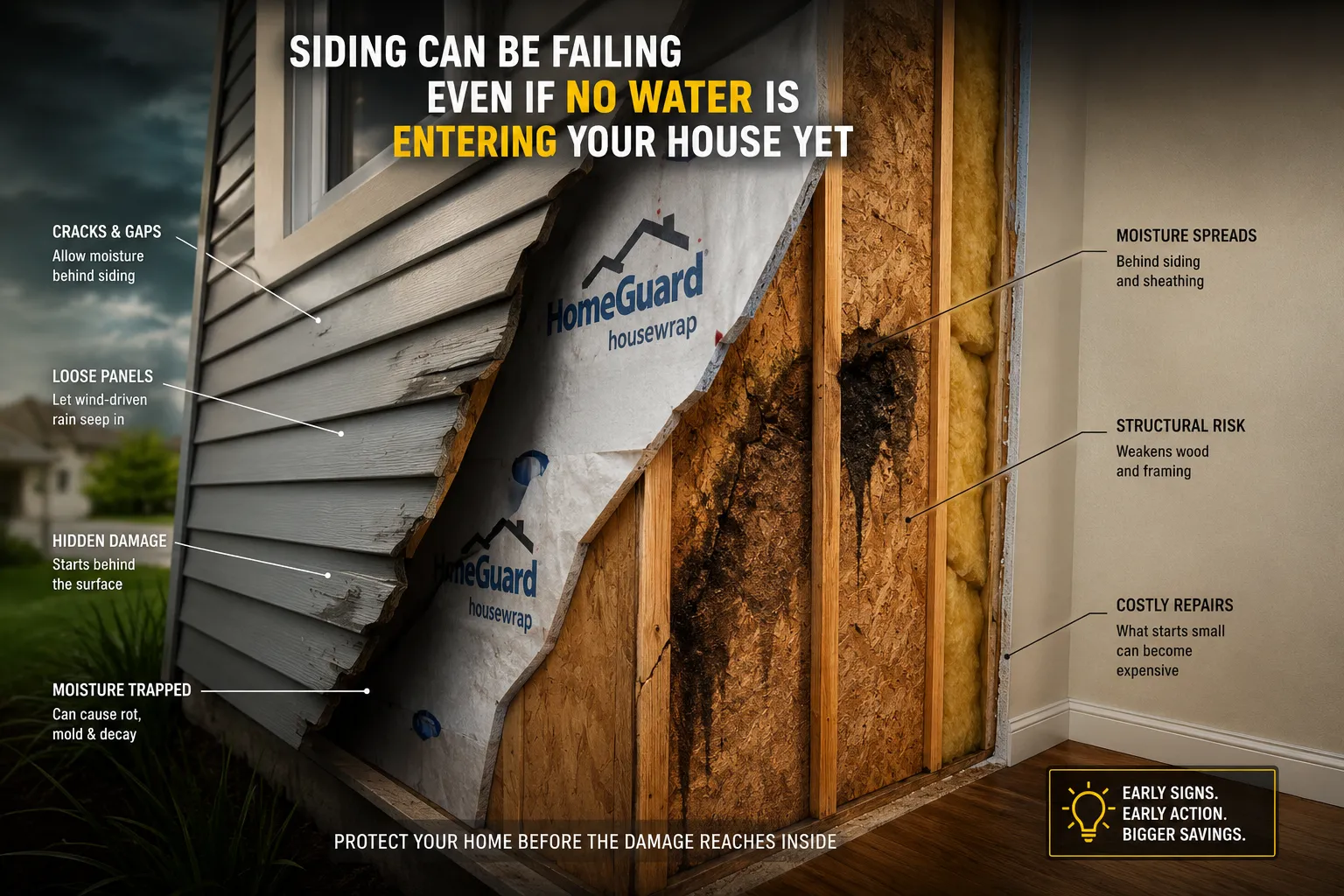

Yes, your siding can be failing long before you notice water entering your house. Many homeowners believe siding problems only become serious when they see a ceiling stain, wet wall, mold, or water dripping indoors. However, siding damage often begins on the exterior and can slowly worsen for months or even years before water reaches the inside of your home. Understanding the early warning signs of siding failure can help you avoid expensive siding repair, structural damage, and a complete siding replacement later.

Your Siding Can Fail Before an Interior Leak Appears
The main purpose of siding is not simply to make your house look attractive. Quality siding helps protect your home's exterior structure from rain, wind, moisture, temperature changes, pests, and other environmental damage. A problem can develop when the siding starts losing its ability to perform these protective functions.
Water does not always enter your living space immediately when siding begins failing. In many cases, moisture may first get behind damaged siding and affect the materials underneath. The wall sheathing, house wrap, insulation, trim, and framing can potentially be exposed before you ever notice a visible leak inside.
This means that waiting until water enters your house is not a good way to determine whether your siding is healthy. By the time an interior water problem becomes visible, the damage behind the siding may already be significant.
Small Cracks Can Be an Early Sign of Siding Failure
A small crack may not look like a major problem, especially when your siding still appears good from a distance. However, cracks can become entry points for moisture and insects. Rain driven by strong wind can reach areas that normally remain dry, allowing water to move behind the siding.
Cracks can also expand over time because siding materials repeatedly experience heating and cooling. Temperature changes cause materials to expand and contract. A small damaged area can gradually become larger and affect nearby sections.
Regular siding inspection can help identify cracks before they develop into larger problems. Homeowners should pay particular attention to areas around windows, doors, corners, rooflines, and places where different exterior materials meet.
Loose Siding May Mean Your Home Is Losing Protection
Loose siding is another warning sign that should not be ignored. Panels that move, separate, or no longer sit properly against the wall may allow wind and moisture to reach areas behind the exterior surface.
Sometimes loose siding develops because of age, installation problems, damaged fasteners, strong storms, or repeated exposure to changing weather conditions. Even if no water is entering your home yet, loose siding can indicate that the protective exterior system is no longer working as intended.
A professional siding inspection can determine whether only a small repair is needed or whether the problem is affecting a larger section of your home's exterior.
Warped or Buckled Siding Can Signal a Bigger Problem
Siding should generally maintain a consistent appearance across your home's exterior. When panels begin warping, bending, buckling, or changing shape, it may indicate that something is wrong.
Warping can happen because of heat exposure, improper installation, aging materials, or moisture-related issues. In some situations, the visible siding damage is only part of the problem. Moisture or movement behind the siding may be contributing to the change.
Even when the inside of your house remains completely dry, warped siding should be investigated. The goal is to identify the cause before the condition creates additional damage.
Fading and Surface Damage Can Reduce Siding Performance
Color fading alone does not always mean your siding is failing. However, severe fading combined with brittleness, cracking, chalking, or surface deterioration can indicate that the material is aging and losing durability.
Years of sunlight, rain, snow, wind, and temperature changes can gradually affect siding materials. Older siding may become more vulnerable to cracking and damage, even if it still looks acceptable from a distance.
This is why homeowners should evaluate siding based on its overall condition rather than appearance alone. A house can look attractive while certain areas of the siding are becoming weak.
Damaged Caulking and Gaps Around Openings Matter
The areas around windows, doors, trim, vents, and other exterior openings are especially important. Small gaps in these locations can create pathways for wind-driven rain and moisture.
Damaged or missing caulking may not immediately cause water to enter your living room or bedroom. Instead, moisture may slowly affect the materials behind the exterior surface.
Checking these areas regularly can help identify problems early. Cracked caulking, separated trim, or visible gaps should not simply be ignored because there is no interior leak yet.
Your Siding May Be Hiding Moisture Problems
One of the biggest challenges with siding damage is that the most serious problems can remain hidden. The exterior surface may cover moisture damage occurring behind it.
Water can sometimes affect sheathing and other wall components without immediately reaching the interior drywall. This creates a dangerous situation because homeowners may assume everything is fine simply because the inside of the house looks dry.
Signs such as soft areas, unusual movement, damaged trim, repeated paint problems, or sections of siding that appear different from surrounding areas may indicate that further inspection is needed.
Higher Energy Bills Can Sometimes Be a Warning Sign
Failing siding can also affect the overall efficiency of your home's exterior. Gaps, damaged sections, and problems around exterior openings may allow more outside air to influence indoor temperatures.
If your heating or cooling costs are increasing and your home feels drafty, the exterior wall system may deserve attention. While siding is not the only possible cause of energy loss, damaged exterior materials can contribute to reduced protection.
A siding professional can inspect the exterior and identify whether damaged siding, gaps, trim problems, or other issues are affecting your home's performance.
Storm Damage Can Start Problems You Do Not See Immediately
Strong wind, heavy rain, hail, and flying debris can damage siding without causing an immediate water leak. A storm may loosen panels, create small cracks, damage corners, or affect areas around windows and trim.
The problem may appear minor immediately after the storm. However, once the protective surface has been compromised, future rain and weather exposure can gradually worsen the damage.
Inspecting your siding after severe weather is an important part of protecting your home. Early siding repair can often prevent a smaller problem from becoming a major siding replacement project.
Pests Can Take Advantage of Damaged Siding
Cracks, gaps, loose panels, and damaged trim can create opportunities for insects and other pests. Even a small opening may become a pathway into areas behind the siding.
Pest activity can cause additional damage and make an existing siding problem worse. Homeowners should pay attention to unusual holes, damaged edges, insect activity, and areas where siding has separated from the wall.
Keeping your siding in good condition helps reduce unnecessary openings around your home's exterior.
When Should You Consider Siding Repair?
Siding repair may be the right solution when the damage is limited to a small area and the surrounding siding remains in good condition. Repairing cracks, replacing damaged panels, securing loose sections, and correcting problems around trim can help restore protection.
The best time to address siding damage is usually before water enters your house. Preventive maintenance and early repairs can reduce the risk of hidden moisture damage and help extend the life of your existing siding.
Ignoring a small issue because there is no visible leak can allow the problem to become more expensive over time.
When Is Siding Replacement a Better Option?
Siding replacement may be worth considering when damage is widespread, the material is reaching the end of its expected service life, or multiple areas are repeatedly developing problems.
A complete siding replacement can provide an opportunity to inspect the wall underneath, address hidden issues, and install a new exterior system designed to protect and improve your home.
For homeowners considering new siding for a house, it is important to choose materials that match the local climate, maintenance preferences, budget, and long-term goals.
Do Not Wait for Water to Enter Your House
The most important thing homeowners should remember is that an interior water leak is not the first stage of siding failure. It can be a later warning sign.
Your siding may already be experiencing problems if you notice cracks, gaps, loose panels, warping, damaged trim, deteriorating surfaces, or unusual changes in appearance. Addressing these issues early can help protect your home's exterior and potentially prevent more serious damage.
Regular inspection, timely siding repair, and professional advice can help homeowners understand the true condition of their exterior. Whether you need a small repair, maintenance, or complete siding replacement, taking action before water enters your home is often the smartest approach.
A strong, properly maintained siding system does more than improve curb appeal. It helps protect the structure of your home every day. If your siding is showing early signs of damage, do not wait for an interior leak to tell you there is a problem. Inspect your siding, identify the cause, and take the right steps to protect your house before a hidden issue becomes an expensive repair.























Sign in to leave a comment.