

How Canadian regulations, climate and ingredient choices should shape what goes on your face, plus a dry-skin routine built for long winters.
Quick Answer A trustworthy Canadian skin care company follows Health Canada’s Cosmetic Regulations, prints a full ingredient list in English and French, and formulates for cold, dry conditions. Compare Canadian skin care brands on ingredients, pH, transparency and testing, not on the maple leaf alone. For dry skin, look for a low pH facial cleanser, fragrance-free formulas, and a short routine built around glycerin, ceramides and a good moisturiser. |
Introduction
Walk into any chemist in Toronto, Vancouver or Halifax and you will see plenty of products with a red maple leaf on the box. It looks reassuring. But the label alone does not tell you much about how a product is made, what is in it, or whether it will cope with a January cold snap.
Canadian skin is under unusual pressure. Biting wind outdoors, dry central heating indoors and sharp swings in temperature all take a toll on the skin barrier. A brand that understands this will formulate differently from one that does not.
At The 77 Skin, we think shoppers deserve straightforward information. This guide explains what separates a good Canadian skin care company from a merely patriotic one, how to compare brands fairly, and how to look after dry skin through the colder months.
Why Where Your Skincare Comes From Matters
Origin is not a guarantee of quality. It does, however, shape three things worth understanding: the climate a product is designed for, the rules it must follow, and what the packaging is allowed to claim.
1. Climate: skin in a cold, dry country
Outdoor air in a Canadian winter holds very little moisture, and heated homes can make indoor air drier still. Dry air draws water out of the skin, and repeated exposure to cold and wind can weaken the outer barrier. The result is the familiar tightness, flaking and redness many of us blame on “winter skin”.
A brand that formulates with this in mind tends to include barrier-supporting ingredients, richer textures and gentler cleansers, and it avoids harsh, drying surfactants.
2. Regulation: what Health Canada actually does
Here is a point that surprises many people. Health Canada does not approve cosmetics before they go on sale. Instead, companies are responsible for making sure their products are safe and comply with the Food and Drugs Act and the Cosmetic Regulations.
In practice, that means a few useful things:
- Manufacturers and importers must notify Health Canada of each cosmetic product within ten days of first selling it.
- Products must not contain ingredients prohibited or restricted on the Cosmetic Ingredient Hotlist.
- Labels must list ingredients using standard (INCI) names, and carry mandatory information in both English and French.
- Sunscreens are treated differently. They are regulated as drugs or natural health products, so look for a DIN or NPN number on the pack.
3. Claims: “Made in Canada” is not the same as “Product of Canada”
These phrases sound interchangeable. They are not, and the Competition Bureau treats them differently.
| Claim | What it generally means | Worth checking |
|---|---|---|
| Product of Canada | At least 98% of the total direct costs of producing the product are Canadian, and the last substantial transformation took place in Canada. | Rare for skincare, as many ingredients are imported. |
| Made in Canada | At least 51% of total direct costs are Canadian, and the last substantial transformation took place in Canada. It should carry a qualifying statement, such as “made with imported ingredients”. | Look for the qualifier on the pack. |
| Designed / formulated in Canada | Not a defined origin claim. It says where the formula was developed, not necessarily where it was made. | Ask where it is manufactured. |
How to Compare Canadian Skin Care Brands
If you are weighing up several Canadian skin care brands, a short checklist keeps you focused on what matters. Marketing language is easy to copy. A full ingredient list and a clear explanation of testing are harder to fake.
| What to check | A good sign | A red flag |
|---|---|---|
| Ingredient list | Complete, in INCI names, easy to find online | Vague terms such as “proprietary blend” with no detail |
| Fragrance | Fragrance-free options clearly labelled | “Unscented” products that list parfum |
| pH information | Cleanser pH stated or described as skin-friendly | Strongly alkaline, soap-based cleansers sold as “gentle” |
| Claims | Modest wording with reasons given | “Cures”, “detoxes” or “instant” results |
| Origin wording | Clear about where products are made | Maple leaf imagery with no explanation |
| Customer support | Real contact details and a returns policy | No way to ask a question |
You can see how we present our own formulas in our full skincare range, and judge us against the same checklist.
Ingredients That Suit a Canadian Climate
Whichever brand you choose, a few ingredients earn their place in a cold-weather routine.
- Glycerin: draws water into the outer layer of the skin.
- Ceramides: replace lipids the skin loses more quickly in dry air.
- Panthenol (vitamin B5): soothes and supports barrier repair.
- Squalane: a light, non-greasy emollient that softens without clogging.
- Shea butter or petrolatum: richer occlusives that slow moisture loss on windy days.
Add to that a cleanser that does not undo the work, which brings us to pH.
Why a Low pH Facial Cleanser Makes Sense in Winter
Healthy skin is slightly acidic, usually around pH 4.5 to 5.5. Traditional bar soaps are alkaline, often around pH 9 to 10, and they can disturb the skin’s natural balance. When the barrier is already stressed by cold air, that extra disruption is rarely welcome.
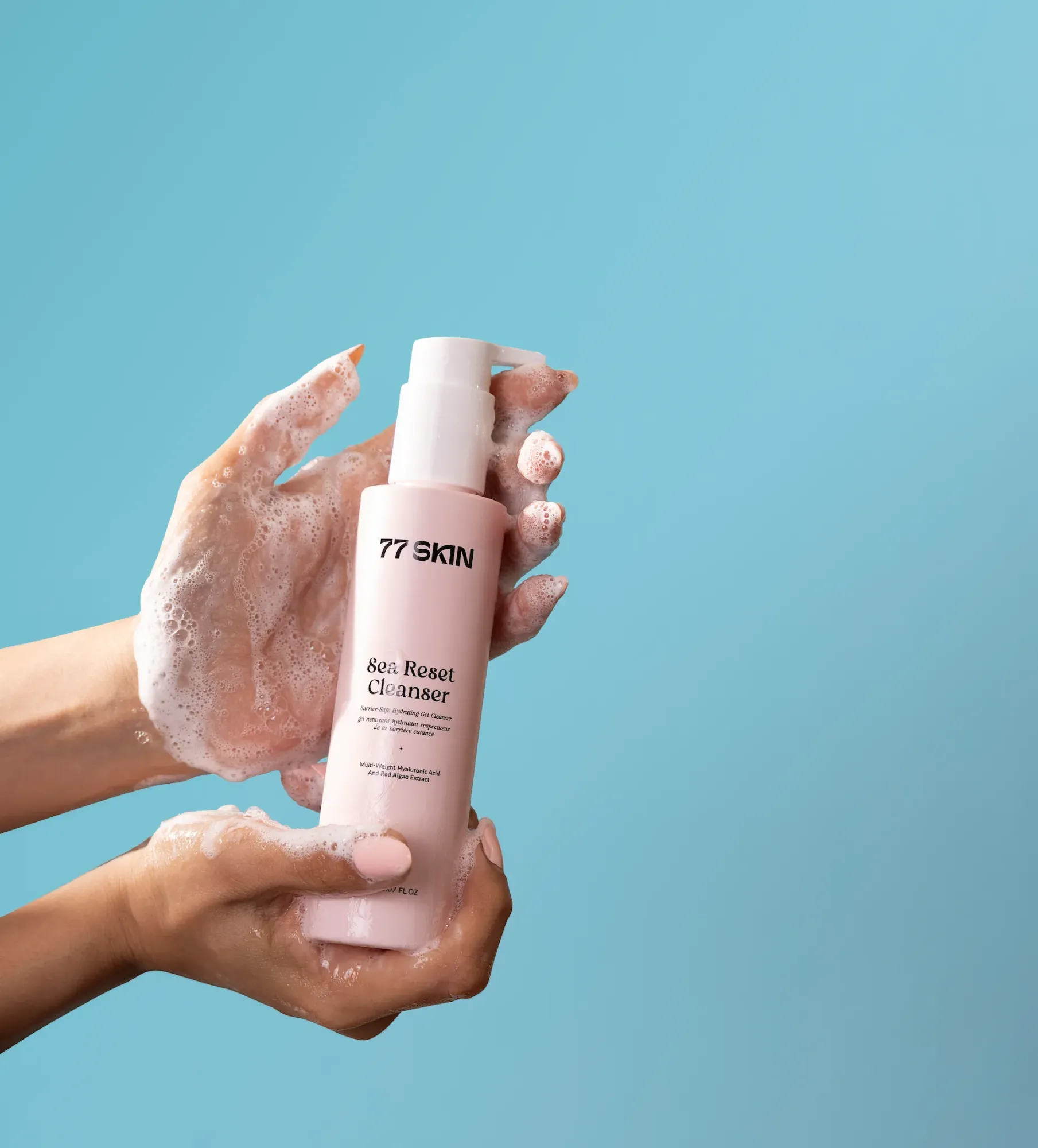
A low pH facial cleanser sits much closer to your skin’s own level. It cleans just as well, but it tends to leave dry or sensitive skin feeling comfortable rather than tight. If you want to see what that looks like in practice, our gentle cleansers are formulated with this in mind.
| Cleanser type | Typical pH* | Likely effect on dry skin |
|---|---|---|
| Bar soap | 9 to 10 | Often drying and tight-feeling |
| Many foaming gels | Around 6 to 8 | Varies by brand; can strip dry skin |
| Low pH facial cleanser | 4.5 to 5.5 | Generally gentler on the barrier |
A Skin Care Routine for Dry Skin in a Canadian Winter
The best skin care routine for dry skin is short, consistent and kind. Here is a simple framework you can adapt.
Morning
- Rinse with lukewarm water, or use a small amount of gentle cleanser if you feel you need it.
- Apply a hydrating serum to slightly damp skin.
- Moisturise. Choose a cream rather than a light lotion in winter. Our moisturisers are a good place to start.
- Finish with SPF. Snow reflects UV light, so sunscreen still matters in winter.
Evening
- Remove sunscreen and make-up with a balm or oil if you wear them.
- Cleanse for 30 to 60 seconds with a low pH cleanser and lukewarm water.
- Pat dry and moisturise within a minute or two.
- Seal in with a richer night cream or a thin layer of balm on the driest areas.
Seasonal adjustments
| Season | What changes | What to keep |
|---|---|---|
| Winter | Richer cream, humidifier indoors, lukewarm showers | Gentle cleanser, daily SPF |
| Spring | Lighten the texture gradually | Barrier-supporting ingredients |
| Summer | Lighter moisturiser, higher SPF diligence | Low pH cleanser, fragrance-free basics |
| Autumn | Reintroduce richer products before the cold arrives | Consistent routine |
Expert Tips
|
Common Mistakes to Avoid
- Choosing a brand because of the flag on the box rather than the ingredient list.
- Taking very hot showers after coming in from the cold.
- Using strong exfoliating acids on already flaky skin.
- Skipping sunscreen on grey or snowy days.
- Treating fragrance-free and unscented as the same thing.
When to Speak to a Professional
Good products can ease everyday dryness, but they do not treat skin conditions. If you have persistent redness, painful cracking, widespread itching or patches that do not improve after a few weeks, speak to your family doctor, pharmacist or a dermatologist. Eczema, rosacea and contact dermatitis all need proper assessment.
Frequently Asked Questions
What makes a good Canadian skin care company?
Look for transparency: a full ingredient list, clear origin wording, modest claims and compliance with Health Canada’s Cosmetic Regulations. Formulas suited to cold, dry conditions are a bonus.
Are Canadian skin care brands regulated differently?
Cosmetics sold in Canada must comply with the Food and Drugs Act and Cosmetic Regulations, whichever country they are made in. Companies must notify Health Canada after first sale and avoid ingredients on the Cosmetic Ingredient Hotlist. Health Canada does not pre-approve cosmetics.
Is “Made in Canada” the same as “Product of Canada”?
No. “Product of Canada” generally requires at least 98% of direct production costs to be Canadian. “Made in Canada” requires at least 51% and should come with a qualifying statement.
What is the best skin care routine for dry skin in winter?
Keep it simple: a gentle low pH cleanser, a hydrating serum if you like, a rich moisturiser and daily SPF. Use lukewarm water, pat your skin dry and moisturise while it is still slightly damp.
Do I really need a low pH facial cleanser?
Not everyone does, but it is a sensible choice if your skin is dry, sensitive or prone to tightness after washing. A cleanser close to the skin’s natural pH of about 4.5 to 5.5 is less likely to disturb the barrier.
How can I tell if a brand’s claims are trustworthy?
Check whether claims are specific and explained. Be wary of promises to “cure” or “detox” the skin, and look for a complete ingredient list you can research yourself.
Conclusion
Choosing a Canadian skin care company is about more than patriotism. It is about finding a brand that is open about its ingredients, honest about its claims and realistic about what dry, cold-weather skin needs.
Start with the checklist, keep your routine short, and give your skin a few weeks to respond. Small, steady changes usually do more than a cupboard full of products.
Want a simpler routine? Have a look at our gentle cleansers and see whether they suit your skin, or browse the skincare journal for more guides. |




















Sign in to leave a comment.