

A car breakdown can happen without warning, whether you are travelling on a motorway, driving through a busy town or heading home on a country road. A flat battery, damaged tyre, engine fault or electrical problem can leave your vehicle unable to continue its journey.
Knowing how to respond can help you protect yourself and your passengers, avoid further damage and arrange the right assistance. The first priority is always safety. Once you are in a safe position, you can assess the symptoms, contact a breakdown service and decide whether your car needs a roadside repair or professional recovery.
This car breakdown guide explains what causes a vehicle breakdown, what to do when your car stops working, how to respond to different road conditions and how regular maintenance can reduce the risk of future problems.

What Is a Car Breakdown?
A car breakdown occurs when a vehicle develops a mechanical, electrical or other fault that prevents it from operating safely or completing its journey. The problem may stop the engine from starting, cause the vehicle to lose power or make continued driving unsafe.
Some breakdowns happen suddenly. Others develop gradually through warning lights, unusual noises, poor engine performance or changes in the way the car handles.
For example, a failing battery may cause the engine to struggle when starting. A damaged tyre may make the steering feel unstable, while an engine overheating warning may indicate a problem with the cooling system.
A vehicle does not need to become completely immobile to require assistance. If a fault makes driving unsafe, stopping and arranging professional help may be the safest decision.
What Is the Difference Between a Car Breakdown and a Car Accident?
A breakdown usually involves a vehicle fault, whereas a car accident involves a collision or another road incident. However, an accident can also cause a breakdown if it damages the engine, wheels, suspension or other essential components.
| Situation | What it means | Appropriate response |
|---|---|---|
| Flat battery | The battery cannot provide enough power to start the engine | Battery testing, jump-starting where suitable or replacement |
| Punctured tyre | A tyre has lost pressure or suffered damage | Safe tyre replacement or professional assistance |
| Engine failure | The engine cannot operate correctly | Stop safely and arrange mechanical assessment |
| Vehicle overheating | The engine temperature has risen beyond its normal operating range | Stop safely, switch off the engine and seek advice |
| Collision damage | An impact has damaged the vehicle | Assess immediate danger and arrange accident recovery if needed |
| Fuel-related fault | The vehicle has run out of fuel or received incorrect fuel | Arrange suitable roadside assistance |
The correct response depends on the fault, the location and whether the vehicle remains safe to drive.
What Should You Do If Your Car Breaks Down?
If your car develops a fault while driving, concentrate on reaching a safe place rather than diagnosing the problem immediately.
The Highway Code advises drivers to move off the road where possible, warn other road users and avoid standing between the vehicle and approaching traffic. Motorway breakdowns require additional precautions.
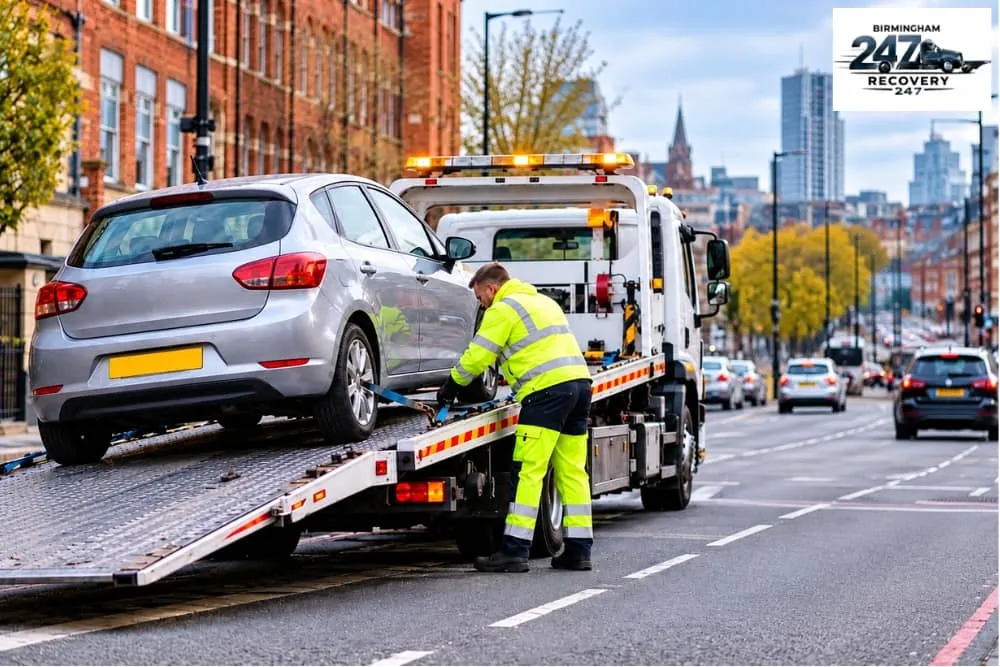
Step 1: Stay Calm and Look for a Safe Place to Stop
If you notice a loss of power, an unusual noise or a dashboard warning, assess whether you can safely move the vehicle away from moving traffic.
If possible, leave the road at the nearest suitable exit or enter a designated parking area. On an ordinary road, look for a safe lay-by, car park or other suitable stopping place.
Do not continue driving simply to reach your destination if the vehicle is showing signs of a serious fault.
Step 2: Switch On Your Hazard Warning Lights
Activate your hazard warning lights if your stationary vehicle presents a hazard to other road users.
If it is dark or visibility is poor, use your sidelights where appropriate so other drivers can see the vehicle. Avoid any action that places you in the path of moving traffic.
Step 3: Decide Whether It Is Safe to Leave the Vehicle
Your next action depends on the road, the traffic and the position of the car.
On an ordinary road, leave the vehicle only when it is safe to do so. Move away from traffic and keep passengers out of danger.
On a motorway or another high-speed road, follow the specific safety guidance below. If you cannot reach a safe place outside the vehicle, remain inside with your seat belt fastened, keep your hazard lights on and call 999 when required by the Highway Code.
Never stand between your car and oncoming traffic.
Step 4: Assess the Symptoms Without Taking Risks
Once you are in a safe place, consider what happened immediately before the breakdown.
Did the engine stop suddenly? Did a warning light appear? Did you hear a loud noise, notice smoke or smell fuel?
These details can help the breakdown operator understand the situation and send appropriate assistance. Do not open a hot coolant system, touch exposed electrical components or attempt a roadside repair in an unsafe location.
Step 5: Contact a Breakdown Service
Contact your breakdown provider and explain where you are, what happened and whether anyone needs urgent assistance.
Useful information includes:
- Your vehicle registration, make and model.
- Your exact location, road name, direction of travel and nearby landmarks.
- The symptoms you noticed before stopping.
- Whether the car is blocking traffic or standing in a dangerous position.
- Any special assistance needs, such as passengers with mobility difficulties.
On motorways, location marker posts, driver location signs and emergency telephones can help identify your position.
Step 6: Follow the Recovery Operator's Advice
A trained technician may be able to repair the fault at the roadside. If the vehicle cannot be repaired safely, the technician may arrange towing or recovery to a suitable garage or destination, depending on the service available.
Do not attempt to restart or drive the vehicle if the technician advises against it.
What Should You Do If Your Car Breaks Down on a Motorway?
A motorway breakdown presents additional risks because vehicles travel at high speeds and there may be little room to stop safely.
The safest option is to leave the motorway at the next exit or enter a service area if the vehicle can still be driven safely. If that is not possible, follow the relevant Highway Code guidance.
If You Reach the Hard Shoulder or an Emergency Area
If you cannot reach a safer exit or service area:
- Move into the left lane and stop as far to the left as possible, if you can do so safely.
- Switch on your hazard warning lights and use your sidelights if it is dark or visibility is poor.
- If it is safe and possible, leave the vehicle through the side furthest from traffic.
- Keep passengers away from the carriageway and move behind a safety barrier where available.
- Contact your breakdown service or use the emergency telephone in a designated emergency area.
- Do not attempt repairs or place a warning triangle on the motorway.
If you stop in a motorway emergency area, use its emergency telephone and follow the operator's instructions before rejoining the carriageway.
What If Your Car Stops in a Live Traffic Lane?
Do not attempt to cross moving traffic to escape from the vehicle.
If you cannot move into the left lane or leave the vehicle safely, remain inside with your seat belt fastened, keep your hazard lights on and call 999 immediately to request police assistance. Follow the operator's instructions.
Drivers who cannot follow the usual advice because of a disability should also remain in the vehicle with their seat belt fastened, switch on their hazard lights and call 999. Source: The Highway Code, Rules 277–279.
What Should You Do If Your Car Breaks Down on a Smart Motorway?
Smart motorways can include sections without a permanent hard shoulder. Some have designated emergency areas, which are marked by blue signs featuring an orange SOS telephone symbol.
If your car develops a fault on one of these roads, try to reach a service area, motorway exit or designated emergency area if it is safe to do so.
If you reach an emergency area, stop in the designated space, activate your hazard lights and use the emergency telephone. Follow the operator's advice and remain behind the safety barrier where possible.
If your vehicle stops in a live lane and you cannot reach a safe area, stay inside with your seat belt fastened, switch on your hazard lights and call 999 immediately.
Do not assume that a hard shoulder or emergency area is available on every section of motorway. Follow road signs, traffic signals and official instructions.
What Should You Do If Your Car Breaks Down on an Ordinary Road?
A breakdown on a residential street, rural lane or busy urban road requires a slightly different response.
If possible, move the vehicle into a safe parking area, lay-by or other suitable space. Avoid stopping around blind bends, narrow sections of road, junctions or locations where your car could obstruct other traffic.
Switch on your hazard warning lights when necessary and assess whether you can leave the vehicle safely. If you have to exit, keep away from moving traffic and avoid standing behind the vehicle where another driver could collide with it.
On an ordinary road, the Highway Code advises placing a warning triangle at least 45 metres behind the vehicle when appropriate and safe. Never use a warning triangle on a motorway.
If your car is blocking the road, cannot be moved or creates a danger to other road users, contact the appropriate assistance service. Call the emergency services if there is immediate danger.
What Are the Most Common Causes of a Car Breakdown?
Understanding common vehicle faults helps drivers recognise warning signs and decide when to seek professional attention. A fault's symptoms can suggest a cause, but they do not always identify the underlying problem accurately.

1. Flat or Failing Battery
The battery supplies the electrical power needed to start the engine and supports other electrical systems.
A weak battery may cause slow engine cranking, clicking noises or a complete failure to start. Leaving lights on, repeated short journeys, cold weather and battery deterioration can contribute to battery problems.
What to do: If the vehicle is parked safely, check the owner's manual before attempting a jump-start. Some modern cars require specific procedures, and incorrect connections can damage electrical systems. Arrange battery testing if the problem persists.
2. Damaged or Punctured Tyres
Tyres can lose pressure through punctures, valve problems, damaged rims or gradual air leakage. A sudden tyre failure can make steering difficult and affect vehicle stability.
Common warning signs include visible damage, a tyre pressure warning, vibration or the vehicle pulling to one side.
What to do: Slow down carefully, avoid sudden braking and steer towards a safe stopping place. Do not continue driving on a visibly damaged or dangerously underinflated tyre. Arrange a suitable replacement or professional assistance.
3. Engine Overheating
The cooling system controls engine temperature. Low coolant, leaks, a faulty thermostat, a damaged radiator or water pump problems can cause overheating.
Warning signs include a temperature gauge entering the danger zone, an overheating warning or steam coming from under the bonnet.
What to do: Stop somewhere safe, switch off the engine and allow it to cool. Never remove the coolant cap while the system is hot, as pressurised coolant can cause serious burns. Arrange professional assessment before continuing if the cause is unclear.
4. Alternator or Charging System Failure
The alternator normally charges the battery while the engine runs and supplies power to electrical systems.
A charging-system fault may cause a battery warning light, dim headlights, electrical malfunctions or eventual engine failure.
What to do: If a charging warning appears while driving, stop at a safe location and seek advice. Do not assume the car will continue running until you reach a garage.
5. Starter Motor Problems
The starter motor turns the engine during the starting process. If it fails, the engine may not crank even when the battery is charged.
A clicking sound or silence when you attempt to start the car can indicate a starter problem, although battery, wiring and other electrical faults can produce similar symptoms.
What to do: Avoid repeated starting attempts. Arrange a battery and starting-system assessment to identify the cause.
6. Fuel Problems
A vehicle may stop because it has run out of fuel, has a fuel delivery fault or has been filled with the wrong fuel.
Incorrect fuel can damage the fuel system or engine, depending on the vehicle and circumstances.
What to do: If you suspect misfuelling, do not start the engine or switch on the ignition unnecessarily. Tell the recovery provider exactly what fuel was added and whether the engine was started.
7. Clutch or Gearbox Failure
Clutch and transmission faults can affect a vehicle's ability to select gears, transfer engine power or move safely.
Symptoms may include difficulty changing gears, unusual grinding noises, slipping gears, fluid leaks or a sudden loss of drive.
What to do: Stop driving if the transmission becomes unreliable or the vehicle cannot be controlled safely. Arrange professional inspection and recovery if necessary.
8. Electrical or Sensor Faults
Modern vehicles use electronic control units, sensors and wiring to manage engine performance, braking systems and other functions.
A warning light may indicate anything from a minor fault to a problem that requires immediate attention. A dashboard warning should therefore be interpreted according to the vehicle's manual and the severity of the symptoms.
What to do: Read the warning message if it is safe to do so. Stop immediately when the vehicle indicates a serious fault or when continuing could endanger you or damage the car.
9. Brake or Steering Problems
Brake and steering faults can make a vehicle unsafe even if its engine still runs.
Warning signs include a soft or unusually hard brake pedal, grinding during braking, a sudden change in steering effort or significant steering vibration.
What to do: Stop safely and arrange professional assistance. Do not continue driving a vehicle with unreliable brakes or steering.
Car Breakdown Symptoms and What They May Mean
The following table can help you describe a problem to a recovery operator or mechanic. It is a guide to possible causes, not a definitive diagnosis.
| Symptom | Possible cause | Recommended action |
|---|---|---|
| Engine will not start | Battery, starter, fuel or ignition fault | Arrange a starting-system assessment |
| Clicking when starting | Weak battery, poor connections or starter fault | Check the cause before repeated attempts |
| Temperature warning or steam | Cooling-system fault | Stop safely and allow the engine to cool |
| Battery warning light | Charging-system problem | Stop safely and seek professional advice |
| Sudden loss of power | Engine, fuel or electrical fault | Stop if the vehicle cannot be driven safely |
| Tyre pressure warning | Low pressure or tyre damage | Stop safely and inspect only when safe |
| Difficulty changing gears | Clutch or transmission fault | Stop if control or drive is affected |
| Smoke or strong burning smell | Possible electrical, mechanical or overheating problem | Stop, switch off the engine and move away if necessary |
| Fuel smell or visible fuel leak | Possible fuel-system leak | Stop, avoid ignition sources and seek urgent assistance |
| Brake warning or reduced braking ability | Brake-system fault | Stop safely and arrange recovery |
A fault can have more than one possible cause. A professional diagnosis is the most reliable way to determine what needs repair.
Roadside Assistance vs Vehicle Recovery: Which Do You Need?
Roadside assistance and vehicle recovery serve related but different purposes.
Roadside assistance aims to resolve a problem where the vehicle has stopped. Recovery transports a vehicle that cannot or should not continue its journey.
| Service | What it involves | When it may be appropriate |
|---|---|---|
| Roadside assistance | A technician assesses the fault and attempts a suitable repair at the roadside | Flat battery, some starting problems or minor repairable faults |
| Vehicle recovery | A recovery vehicle transports the car to a garage or another agreed destination | Engine failure, serious tyre damage, transmission problems or unsafe vehicles |
| Accident recovery | A suitable recovery service handles a vehicle damaged in a collision | Collision damage, damaged wheels or a vehicle that cannot be driven safely |
| Specialist recovery | Equipment or handling suitable for a particular vehicle or fault | Certain electric vehicles, low-clearance cars or vehicles with extensive damage |
The correct service depends on the vehicle's condition, the location and the equipment available.
For example, a car with a flat battery may only need a battery test and suitable starting assistance. A car with severe engine damage may require a recovery vehicle and workshop repairs.
Can a Breakdown Service Repair Your Car at the Roadside?
Some faults can be resolved at the roadside, but not every repair is safe or practical outside a workshop.
A technician may be able to restore battery power, replace a suitable wheel or identify a simple fault. More complex electrical, engine or transmission problems may require specialist equipment and a controlled working environment.
If the technician cannot repair the vehicle safely, recovery to a garage is usually the next step.
Does Breakdown Cover Include Vehicle Recovery?
Breakdown cover is a service arrangement that provides assistance when a vehicle becomes unusable because of a covered fault. Depending on the policy, it may include roadside repairs, towing, onward travel or recovery to a chosen destination.
The level of cover varies between providers and policies. Some plans include assistance at home, while others only provide help after the vehicle has travelled beyond a specified distance from the home address.
Before choosing a policy, check:
- Whether roadside assistance is included.
- Whether recovery to a garage or chosen destination is covered.
- Whether home-start assistance is available.
- Whether there are limits on callouts or repair costs.
- Whether tyres, misfuelling and electric vehicles are covered.
- Whether passengers receive onward travel assistance.
- Whether restrictions apply to existing faults or breakdowns that occur before cover begins.
Breakdown cover is not the same as standard motor insurance. Check your existing policy to establish whether you already have any breakdown benefits.
If you do not have cover when your car breaks down, you can contact a recovery provider directly and ask for a quote. Confirm the cost, destination and any additional charges before agreeing to the service.
How Can You Prevent a Car Breakdown?
Not every breakdown can be prevented, but regular maintenance can reduce the risk of common faults and help identify problems before they become more serious.
Check Your Battery
Look out for slow starting, warning lights and signs of battery deterioration. Ask a qualified technician to test the battery and charging system when necessary, particularly if the car regularly struggles to start.
Inspect Your Tyres
Check tyre pressures against the vehicle manufacturer's recommendations. Inspect the tread, sidewalls and general condition for visible damage, uneven wear or embedded objects.
The legal minimum tread depth for most cars in the UK is 1.6 mm across the central three-quarters of the tread, around the entire circumference. Do not wait until the tyres reach the legal limit to consider replacement if their condition is poor.
Monitor Engine Oil and Coolant
Check engine oil and coolant according to the vehicle handbook. Low fluid levels or recurring losses may indicate a leak or another mechanical problem.
Never open a hot pressurised cooling system.
Respond to Dashboard Warning Lights
Learn what the main dashboard symbols mean for your vehicle. A red warning or an instruction to stop requires particular attention. Follow the owner's manual and stop safely when advised.
Do not ignore a warning simply because the car still appears to drive normally.
Follow the Servicing Schedule
Routine servicing helps technicians inspect important components and identify developing faults. Follow the manufacturer's schedule for oil changes, filters, brakes, belts and other maintenance items.
Keep Enough Fuel or Charge
Check your fuel level or battery charge before longer journeys. For electric vehicles, plan charging stops around your route and consider the additional energy needed for cold weather, traffic and detours.
Prepare for Unexpected Problems
Keep your breakdown provider's contact details accessible. A charged mobile phone, torch, suitable high-visibility clothing and other appropriate emergency supplies can help you respond more effectively.
Check your vehicle handbook for any manufacturer-specific instructions, especially if you drive an electric or hybrid car.
What Should You Keep in Your Car for a Breakdown?
A small emergency kit can make an unexpected stop easier to manage. Choose items that suit your vehicle, journeys and likely weather conditions.
Useful items include:
- A charged mobile phone and suitable charging cable.
- A torch.
- A high-visibility vest stored somewhere accessible.
- A warning triangle for appropriate roads, never for motorways.
- Drinking water and essential supplies for passengers.
- A basic first-aid kit.
- Your breakdown provider's contact details.
- The vehicle handbook and relevant emergency instructions.
Do not store emergency equipment where you must enter moving traffic or unload the boot on a dangerous roadside to reach it.

When Should You Call for Professional Vehicle Recovery?
Professional recovery is appropriate when a vehicle cannot move safely, has suffered significant damage or requires repairs that cannot be completed at the roadside.
You should arrange assistance if:
- The engine has stopped and will not restart.
- The vehicle is overheating repeatedly.
- A tyre or wheel has suffered serious damage.
- The brakes or steering are unreliable.
- The car has sustained collision damage.
- You suspect a fuel leak or another hazardous fault.
- A transmission problem prevents safe movement.
- A warning message instructs you to stop.
- The vehicle is stranded in a dangerous location.
If there is immediate danger, a fire, a serious collision or a vehicle obstructing a live traffic lane, contact the emergency services as appropriate. Do not delay an emergency call while trying to arrange routine recovery.
How to Arrange Car Breakdown Recovery
Arranging recovery is easier when you provide accurate information from the beginning.
1. Explain the Problem
Describe what happened, what the car is doing and any warning lights or unusual noises. Tell the operator whether the vehicle can move under its own power.
2. Confirm Your Location
Provide the road name, direction of travel, nearby junction or landmark and any available location marker details. On a motorway, use the relevant road signs or emergency telephone to identify your position.
3. Explain the Vehicle's Condition
Mention any collision damage, leaking fluids, damaged wheels, restricted access or special recovery requirements.
4. Confirm the Service and Cost
Ask whether the provider recommends roadside assistance or recovery. Confirm the destination, estimated charges and any additional fees before accepting a paid service.
5. Wait in a Safe Place
Follow the provider's instructions about where to wait. Do not stand beside a vehicle in a dangerous position or return to a motorway vehicle when the Highway Code advises against it.
Frequently Asked Questions About Car Breakdowns
What is the first thing to do when your car breaks down?
Your first priority is to reach a place of relative safety if possible. Use your hazard warning lights when needed, avoid obstructing traffic and follow the appropriate safety procedures for the road. Once safe, contact your breakdown provider or the emergency services if there is immediate danger.
Can I drive my car after a breakdown?
That depends on the fault. A vehicle may be safe to drive after a minor issue has been resolved, but serious overheating, brake faults, steering problems, fuel leaks or major mechanical damage can make driving dangerous. Follow the vehicle handbook and professional advice before continuing.
Should I put a warning triangle behind my broken-down car?
On an ordinary road, you may use a warning triangle when it is appropriate and safe to do so, placing it at least 45 metres behind the vehicle as advised by the Highway Code. Never place a warning triangle on a motorway.
What causes most car breakdowns?
Common causes include battery problems, tyre damage, engine faults, cooling-system failures, electrical problems and fuel-related issues. The cause varies by vehicle, its age, maintenance history and driving conditions.
Can a car breakdown service help if I do not have breakdown cover?
You can contact a recovery provider directly to ask whether it offers assistance to non-members. Availability, charges and the services offered vary, so confirm the arrangements before agreeing to the callout.
Is roadside assistance the same as vehicle recovery?
No. Roadside assistance aims to diagnose and repair a fault where the vehicle has stopped. Vehicle recovery transports a vehicle that cannot safely continue its journey or cannot be repaired at the roadside.
Should I open the bonnet if my car overheats?
You may be able to inspect the engine compartment after stopping safely and allowing the vehicle to cool, but never remove a hot coolant cap. Steam, hot coolant and engine components can cause serious burns. Seek professional assistance if you are unsure.
What should I do if my car breaks down at night?
Prioritise safety and visibility. Move to a safe place if possible, activate your hazard lights and use your sidelights where appropriate. Wear reflective clothing if available and safe to access. On motorways, follow the specific Highway Code guidance and remain away from moving traffic.
Can regular servicing prevent every breakdown?
No. Regular servicing can identify wear, fluid leaks and developing faults, but unexpected failures can still occur. Routine checks, timely repairs and preparation for longer journeys can reduce some risks.
Do electric cars need breakdown recovery?
Yes. Electric cars can suffer tyre damage, battery-related faults, charging problems and other mechanical or electrical failures. Recovery requirements may differ by model, so tell the operator that the vehicle is electric and follow the manufacturer's instructions. Do not attempt to handle high-voltage components yourself.
Key Takeaways
- Safety comes first: Move to a safe location if possible and follow the relevant Highway Code guidance.
- Motorway breakdowns require extra care: Never attempt repairs or place a warning triangle on a motorway.
- Recognise warning signs: Battery problems, overheating, tyre damage and electrical faults can all lead to a breakdown.
- Choose the right assistance: Roadside repair may resolve a minor fault, while serious problems require vehicle recovery.
- Maintain your vehicle: Regular servicing and simple checks can reduce the risk of preventable breakdowns.
- Prepare before travelling: Keep essential emergency supplies and breakdown contact details accessible.
Last Thoughts
A car breakdown can disrupt your journey, but a calm and informed response helps you manage the situation more safely. Whether your vehicle stops because of a flat battery, damaged tyre, engine fault or electrical problem, the right next step depends on the symptoms and your location.
Prioritise safety, communicate the problem clearly and seek suitable professional assistance. Regular maintenance and sensible journey preparation can also help reduce the likelihood of unexpected faults.
When a vehicle cannot be repaired safely at the roadside, professional recovery can transport it to a suitable garage or agreed destination for further assessment. Knowing when to stop driving and when to call for help protects both you and other road users.























Sign in to leave a comment.