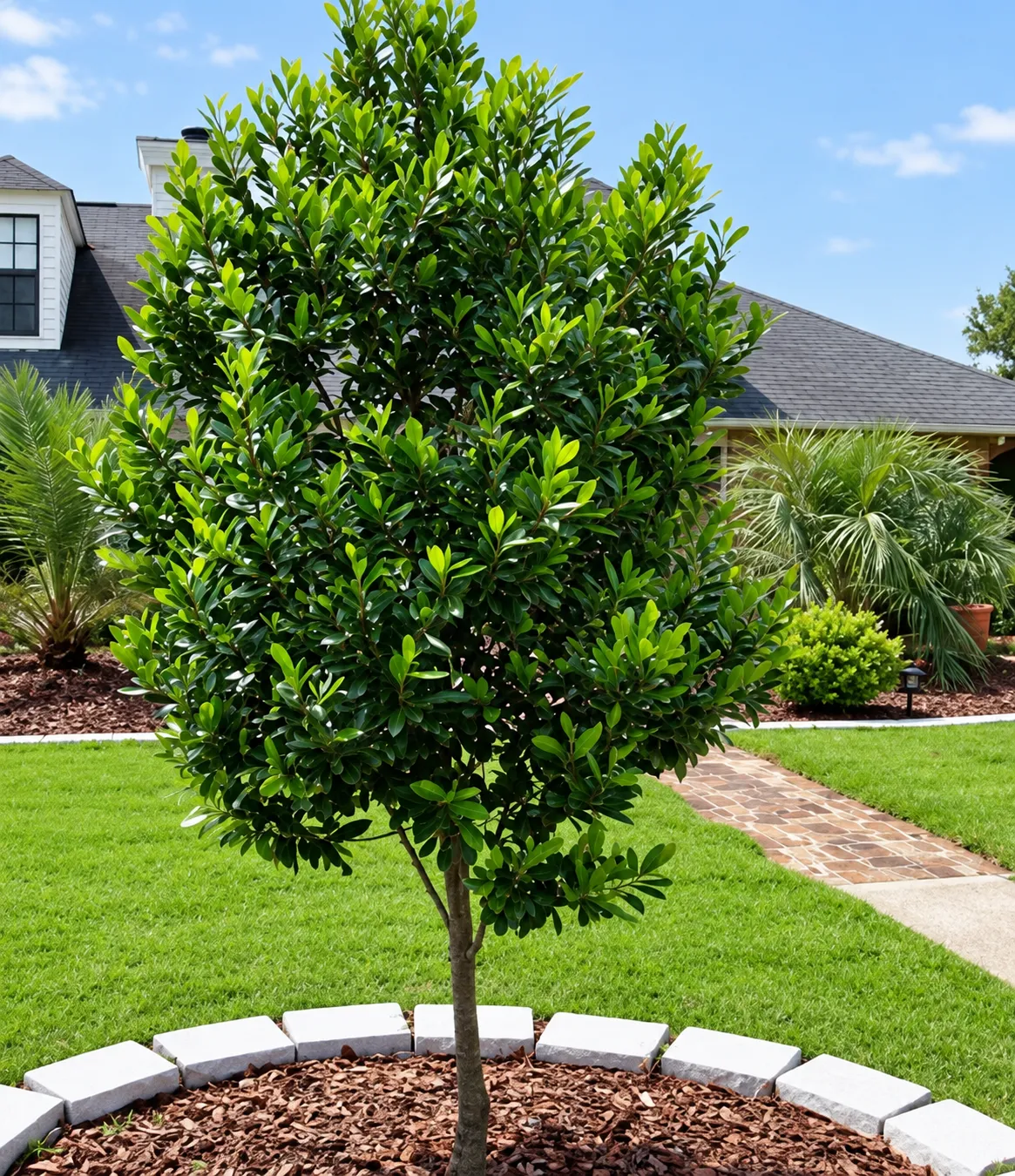

Landscaping projects often call for plants that combine dense foliage with reliable year-round performance, and few native shrubs fit that role as well as this species. Carolina cherry laurel is a broadleaf evergreen valued for its glossy foliage, adaptability, and usefulness as both a privacy screen and an ornamental specimen. Understanding its growth habits and care requirements helps homeowners and landscapers decide whether it fits a particular yard or design goal.
Natural Growth Habits
This shrub or small tree typically grows into a dense, upright form, often reaching heights between 15 and 25 feet when left unpruned, though it responds well to shaping for hedges. Its glossy, dark green leaves stay attractive throughout the year, giving it strong year-round visual appeal compared to deciduous alternatives. Small white flower clusters appear in spring, followed by dark berries that many birds rely on as a food source through fall and winter.
Ideal Growing Conditions
Carolina cherry laurel performs best in full sun to partial shade and adapts to a range of soil types, provided drainage is adequate. It tolerates both sandy and clay-heavy soils reasonably well, making it a flexible choice across different regional conditions. Once established, the plant shows solid drought tolerance, though regular watering during the first year or two after planting supports stronger root development.
Common Landscaping Uses
Because of its dense growth pattern, this shrub is frequently planted as a privacy hedge or windbreak along property lines. It also works well as a standalone specimen plant when allowed to grow into its natural form, or as a backdrop planting behind lower shrubs and perennials. Its tolerance for shearing makes it a practical option for formal hedge designs that require consistent, clean lines throughout the growing season.
Pruning and Maintenance
Regular pruning helps maintain a desired shape for Carolina cherry laurel, particularly when the plant is used for hedging rather than left to grow naturally. Late winter or early spring pruning, before new growth emerges, generally produces the best results and reduces stress on the plant. Removing dead or damaged branches throughout the year also supports overall plant health and reduces the risk of disease spreading through dense foliage.
Potential Pest and Disease Concerns
Like many evergreen shrubs, this species can be susceptible to fungal leaf spot in overly humid or poorly ventilated conditions. Adequate spacing between plants improves airflow and reduces moisture retention on foliage, lowering disease risk significantly. Scale insects and aphids occasionally appear, though they're typically manageable with routine monitoring and targeted treatment when infestations are caught early.
Comparing Alternatives for Similar Landscaping Goals
Homeowners researching dense evergreen hedging options sometimes compare this shrub to other broadleaf evergreens with similar screening capabilities, including varieties like ficus indian laurel, which is popular in warmer climates for similar privacy and hedging purposes. While growing conditions and cold tolerance differ between species, many landscapers weigh both options depending on regional climate and design preferences before making a final planting decision.
Conclusion
Choosing between hedging options like this shrub and alternatives such as ficus indian laurel often comes down to regional climate, mature size expectations, and maintenance preferences. With appropriate site conditions and routine care, this adaptable evergreen provides reliable screening and ornamental value for many years. Taking time to match a plant's requirements to a specific landscape setting ultimately leads to healthier growth and better long-term results.


























Sign in to leave a comment.