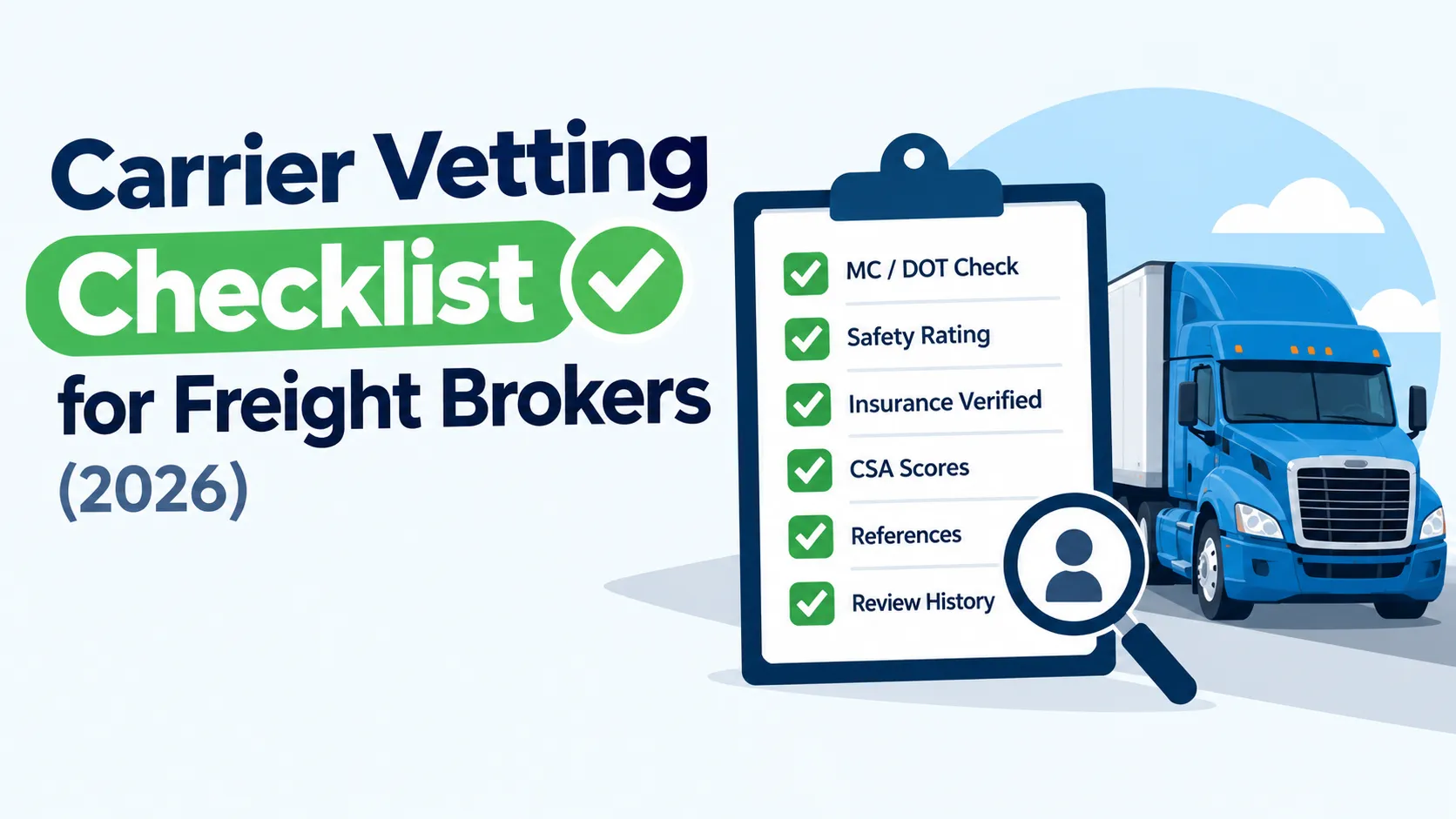

Choosing a motor carrier is one of the most important steps in protecting a freight brokerage operation. A carrier may have an active-looking profile, competitive rates, and available equipment, but that does not automatically mean it is the right carrier for a particular load.
In 2026, freight brokers can use a combination of USDOT information, MC authority, insurance records, safety data, operating history, and identity checks to build a more consistent carrier vetting process.
FMCSA's SAFER system provides company information such as identification, size, cargo, inspections, out-of-service summaries, crashes, and safety ratings where applicable. (FMCSA)
Here is a practical carrier vetting checklist for freight brokers in 2026
1. Verify the Carrier's USDOT Number
Start by confirming the carrier's USDOT number.
The USDOT number connects a motor carrier to its federal registration and safety information. Use the carrier's legal name, DBA, address, phone number, and other identifying information to make sure the company you're dealing with matches the federal record.
A quick DOT Number Lookup can help you review carrier information before moving to the next stage of your vetting process.
Check for:
- Correct legal carrier name
- DBA/trade name
- USDOT number
- Physical address
- Phone information
- Operating status
- Fleet information
- Cargo classification
- Inspection history
Broker tip: Don't rely only on a carrier's email signature or rate-confirmation information. Compare the information provided by the carrier with federal records.
2. Confirm the MC Number and Operating Authority
The next step is checking the carrier's MC number and operating authority.
A carrier that performs for-hire interstate transportation needs the appropriate operating authority. FMCSA explains that its systems show the types of interstate authority a company has and whether minimum insurance is on file.
Use an MC Number Lookup to quickly review the carrier associated with the MC number.
Verify:
- MC number
- Authority status
- Type of authority
- Carrier name
- DBA
- Operating status
- Insurance status
- Whether the authority matches the transportation service
If a carrier's authority does not match the service you're hiring it to perform, stop and investigate before tendering the load.
3. Check Insurance
Insurance verification should be a standard part of carrier onboarding.
FMCSA states that for-hire motor carriers must have the required financial responsibility on file to maintain their operating authority. Requirements vary based on factors such as carrier type, cargo, and vehicle type. (FMCSA)
Check:
- Current insurance filing
- Required coverage
- Policy status
- Insurance company
- Effective dates
- Cargo coverage
- Liability coverage
- Whether the coverage matches the load
Don't simply collect an insurance certificate and place it in a folder. Compare the information against available federal records and your company's carrier requirements.
4. Review Safety and Inspection Data
A carrier's safety history can provide additional context when you're deciding whether to move forward with a carrier.
FMCSA's Safety Measurement System uses inspection and crash information, along with other data, to identify carriers that may require intervention. (FMCSA)
Review available information for:
- Inspections
- Out-of-service events
- Crash information
- Safety rating
- BASIC-related information
- Enforcement actions
- Recent safety developments
However, don't treat a single BASIC indicator as a complete judgment of a carrier. FMCSA specifically cautions that users should not draw conclusions about a carrier's overall safety condition solely from SMS data. (CSA Compliance)
5. Look at Carrier Operating History
A carrier's operating history can help you understand how long the business has been operating and whether its current profile is consistent with its history.
Consider reviewing:
- Authority age
- USDOT history
- Previous company names
- Address changes
- Ownership or management information where available
- Changes in operating status
- Recent registration activity
A newer carrier isn't automatically problematic, but a newer authority may justify additional verification before you assign a high-value shipment.
6. Verify the Carrier's Identity
One of the most important parts of modern carrier vetting is making sure the company you're communicating with is actually the company listed in federal records.
Compare:
Carrier-provided information
→ Legal name
→ DBA
→ Phone number
→ Email domain
→ Address
→ MC number
→ USDOT number
→ Insurance information
against:
Federal and trusted data
→ Registration
→ Authority
→ Insurance
→ Safety information
→ Operating history
Any unexplained mismatch should trigger additional verification.
7. Check for Suspicious Changes
Fraud prevention should be part of carrier onboarding, not something you do only after a problem occurs.
Pay attention to sudden changes involving:
- Phone numbers
- Email addresses
- Banking information
- Physical addresses
- Dispatch contacts
- Company names
- MC/USDOT information
- Insurance details
For example, if a carrier you've worked with for years suddenly asks for payment or communication through completely different contact information, verify the change independently.
8. Review Recent Safety Data
Carrier information changes over time.
A carrier that passed your onboarding process six months ago may have different authority, insurance, safety, or registration information today.
FMCSA notes that the Company Snapshot is updated daily, while SMS data follows its own update schedule. (DataQs)
For this reason, consider performing:
Initial vetting → Before first load → Periodic re-checks → Re-check after major changes
This creates a repeatable carrier verification process instead of treating vetting as a one-time task.
9. Don't Ignore Equipment and Load Compatibility
Federal records aren't the only thing that matters.
The carrier also needs to be appropriate for the specific shipment.
Before dispatch, confirm:
- Equipment type
- Trailer size
- Weight capacity
- Commodity compatibility
- Temperature requirements
- Hazmat requirements, if applicable
- Pickup location
- Delivery location
- Driver availability
- Appointment requirements
A carrier can have valid authority and insurance while still being unsuitable for a particular load.
10. Create a Carrier Vetting Scorecard
Instead of relying on memory or individual judgment, create a standardized checklist.
For example:
| Verification Area | Status |
| USDOT verified | ☐ |
| MC number verified | ☐ |
| Authority confirmed | ☐ |
| Insurance confirmed | ☐ |
| Safety data reviewed | ☐ |
| Inspection history reviewed | ☐ |
| Carrier identity confirmed | ☐ |
| Contact information verified | ☐ |
| Equipment verified | ☐ |
| Load compatibility confirmed | ☐ |
| Recent changes reviewed | ☐ |
| Final approval recorded | ☐ |
This makes carrier onboarding easier to repeat across your brokerage team.
How Carrier90 Can Help With Carrier Vetting
Freight brokers often need to check multiple pieces of carrier information before booking a load. A carrier intelligence platform such as Carrier90 (C90.io) can make that research process more organized by bringing carrier-related information into a single lookup workflow.
Instead of starting from scratch every time, brokers can use a carrier lookup process to investigate a USDOT number or MC number, review available carrier information, and identify details that deserve additional verification.
For example, you can start with a DOT Number Lookup when you have a USDOT number, or use an MC Number Lookup when the carrier provides an MC number.
The goal isn't to replace official FMCSA records. Rather, tools such as Carrier90 can help brokers organize their initial carrier research and identify areas that should be checked more closely against authoritative sources.
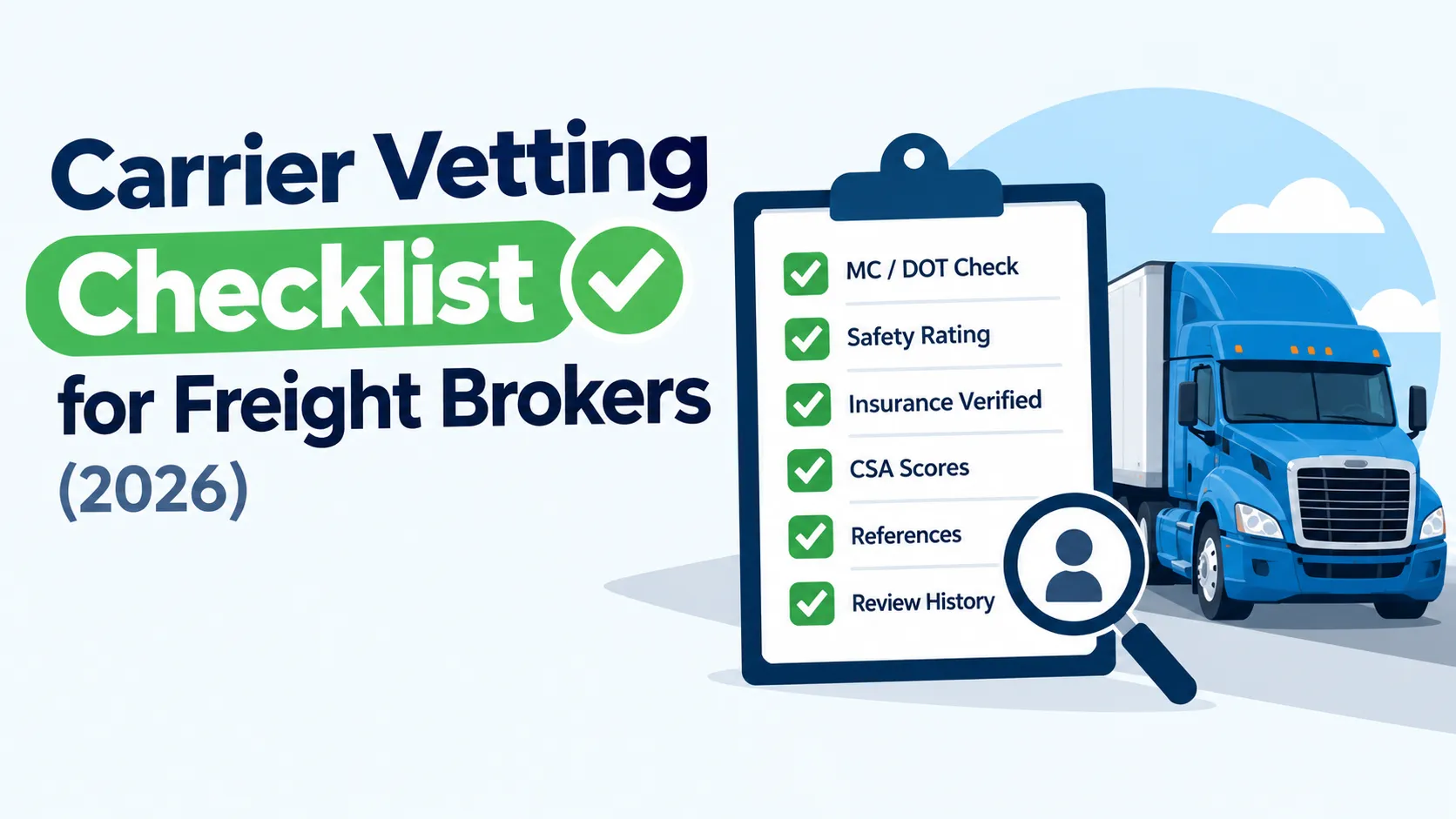
2026 Carrier Vetting Checklist
Before assigning a load, ask:
Registration
- Is the USDOT number valid?
- Does the legal name match?
- Does the carrier's address make sense?
- Is the operating status appropriate?
Authority
- Is the MC number correct?
- Is the required authority active?
- Does the authority match the transportation service?
Insurance
- Is required insurance on file?
- Does the coverage meet your requirements?
- Are the insurance details current?
Safety
- Have available safety records been reviewed?
- Have inspections been considered?
- Have crashes and out-of-service information been reviewed?
- Are there relevant enforcement concerns?
Identity
- Does the carrier's contact information match?
- Have unexpected changes been verified?
- Does the carrier's communication match its registered identity?
Load
- Is the equipment appropriate?
- Can the carrier handle the commodity?
- Are pickup and delivery requirements understood?
Final Thoughts
Carrier vetting in 2026 is more than checking whether a carrier has an MC number.
A stronger process combines DOT verification, MC authority checks, insurance verification, safety information, operating history, identity checks, and load-specific requirements.
Official FMCSA systems should remain an important source for verification, while carrier lookup platforms such as Carrier90 can help streamline the research process.
Before booking a carrier, take a few minutes to verify the numbers, compare the information, investigate inconsistencies, and document your checks. A consistent vetting workflow can help freight brokers make more informed carrier-selection decisions and reduce avoidable verification problems.

























Sign in to leave a comment.