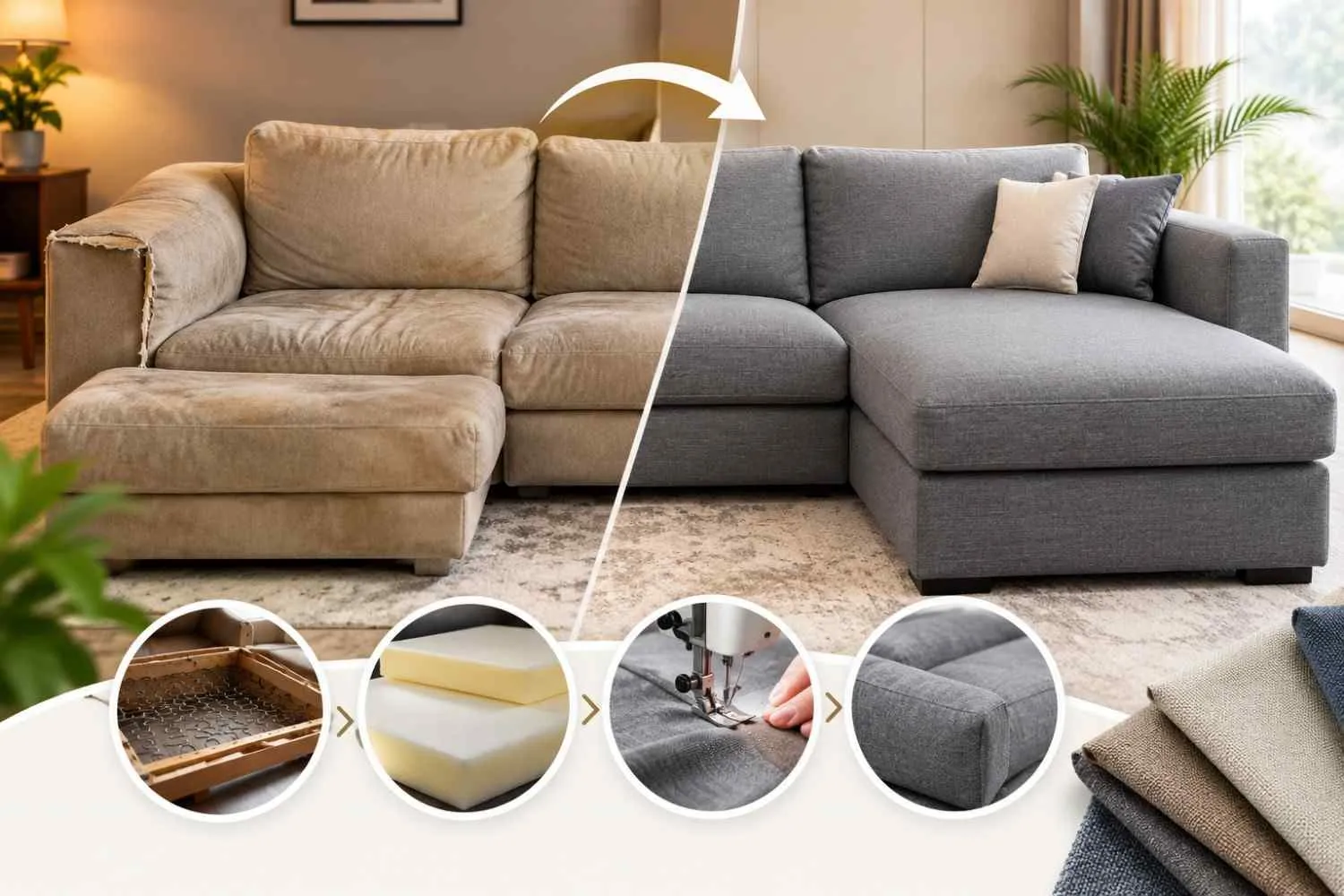


Reupholstery can fully restore a sofa that is structurally sound but worn, faded, or damaged on the surface. In a real project, a 10-year-old sofa with sagging cushions and torn fabric was stripped, repadded, and recovered — resulting in furniture that looked and felt brand new at a fraction of replacement cost. The process typically takes five to seven working days.
If you have been on the fence about whether reupholstery in Singapore is actually worth it, this case study is for you. Not a brochure. Not a price list. A real project, documented from the day the sofa arrived to the day it went home — so you can judge the results yourself.
The Sofa: What We Started With
The client brought in a three-seater L-shaped sofa purchased about a decade ago. It was a solid, locally bought piece — good bones, sturdy hardwood frame, but visibly exhausted. The fabric had faded unevenly from years of sunlight exposure through a west-facing window. One armrest had a clean tear roughly 15 cm long. Two seat cushions had lost density and sank noticeably under weight.
The client's first instinct was to replace it. A comparable new sofa in Singapore runs anywhere from SGD 1,500 to SGD 4,000 depending on size and material. Before committing to that spend, she wanted to know if restoration was a realistic option — or just wishful thinking.
Initial Assessment: Is the Frame Worth Saving?
The first step in any sofa reupholstery project is a structural inspection. Not every sofa qualifies. The key questions are:
- Is the frame solid hardwood or engineered wood?
- Are the joints intact, or are they loose and creaking?
- Is the spring or webbing system functional?
- Is the damage cosmetic or structural?
In this case, the frame passed on every count. The hardwood structure was intact with no warping. The sinuous spring system underneath still had tension. The damage — the torn armrest fabric and the flattened cushions — was entirely surface-level. This sofa was a strong reupholstery candidate.
Fabric Selection: The Decision That Changes Everything
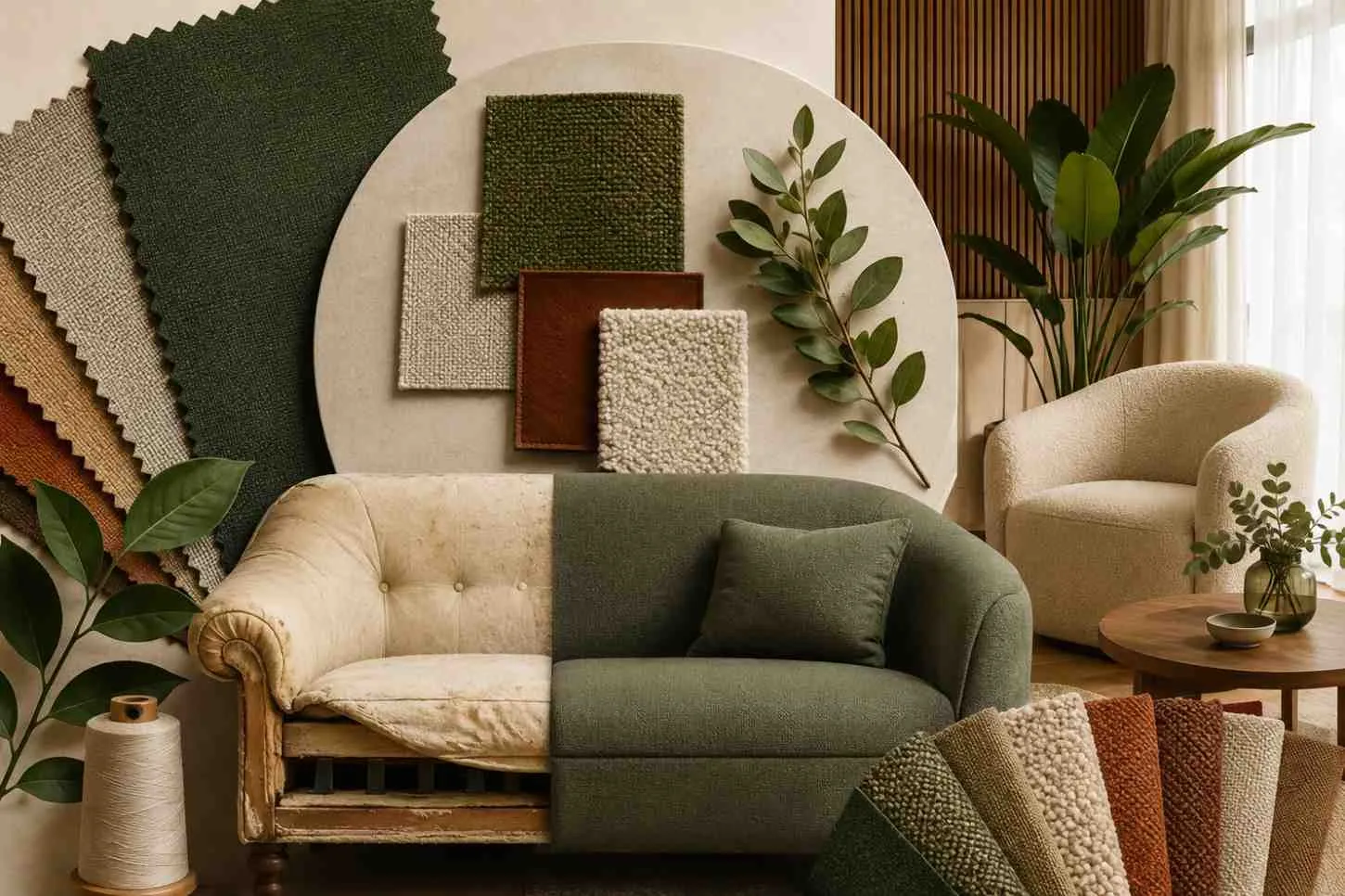
Fabric choice is where most clients spend the most time, and rightly so. The material determines how the sofa looks, how long it lasts, and how it performs in a Singapore home — where humidity, air conditioning, and heavy daily use are all factors.
The client narrowed it down to two options:
| Fabric Type | Durability | Humidity Resistance | Texture / Feel
|
|---|---|---|---|
| Performance Velvet | High | Moderate | Soft, premium |
| Water-Resistant Linen Blend | Very High | Excellent | Crisp, structured |
She chose a slate-grey water-resistant linen blend. Practical for a household with children, and visually neutral enough to work with her existing interior. A foam sample was also presented so she could test the density before it was cut for the cushions.
The Restoration Process: Step by Step
Step 1 — Stripping the Old Fabric
The original upholstery was carefully removed in sections. This step also revealed a secondary issue: some of the original padding underneath the seat base had compressed and shifted. It was replaced entirely with high-resilience foam rated at 35 kg/m³ density — a standard used in commercial furniture for longevity.
Step 2 — Frame Reinforcement
Once stripped, loose joints at the base of the armrests were re-glued and clamped. This is a small but important step that many homeowners never know happened — and it directly affects how long the sofa holds up after the job is done.
Step 3 — Padding and Shaping
New Dacron fibre was layered over the seat and back cushions to restore their original profile. The armrests received shaped foam inserts to replace the original padding that had compressed over ten years. At this stage, the sofa already looked structurally fuller — the silhouette was restored before a single piece of new fabric was applied.
Step 4 — Cutting and Sewing the New Cover
The new fabric was cut to pattern and machine-sewn into panels. For an L-shaped three-seater, this involves close to 14 to 18 individual fabric pieces depending on arm configuration and cushion count. Seams were aligned and pulled taut before stapling to avoid any puckering or uneven tension across the surface.
Step 5 — Final Assembly and Inspection
All cushion covers were zipped and fitted. The sofa was reassembled, inspected for symmetry, and the client was contacted for pickup. Total turnaround: six working days.
The Result: Before and After
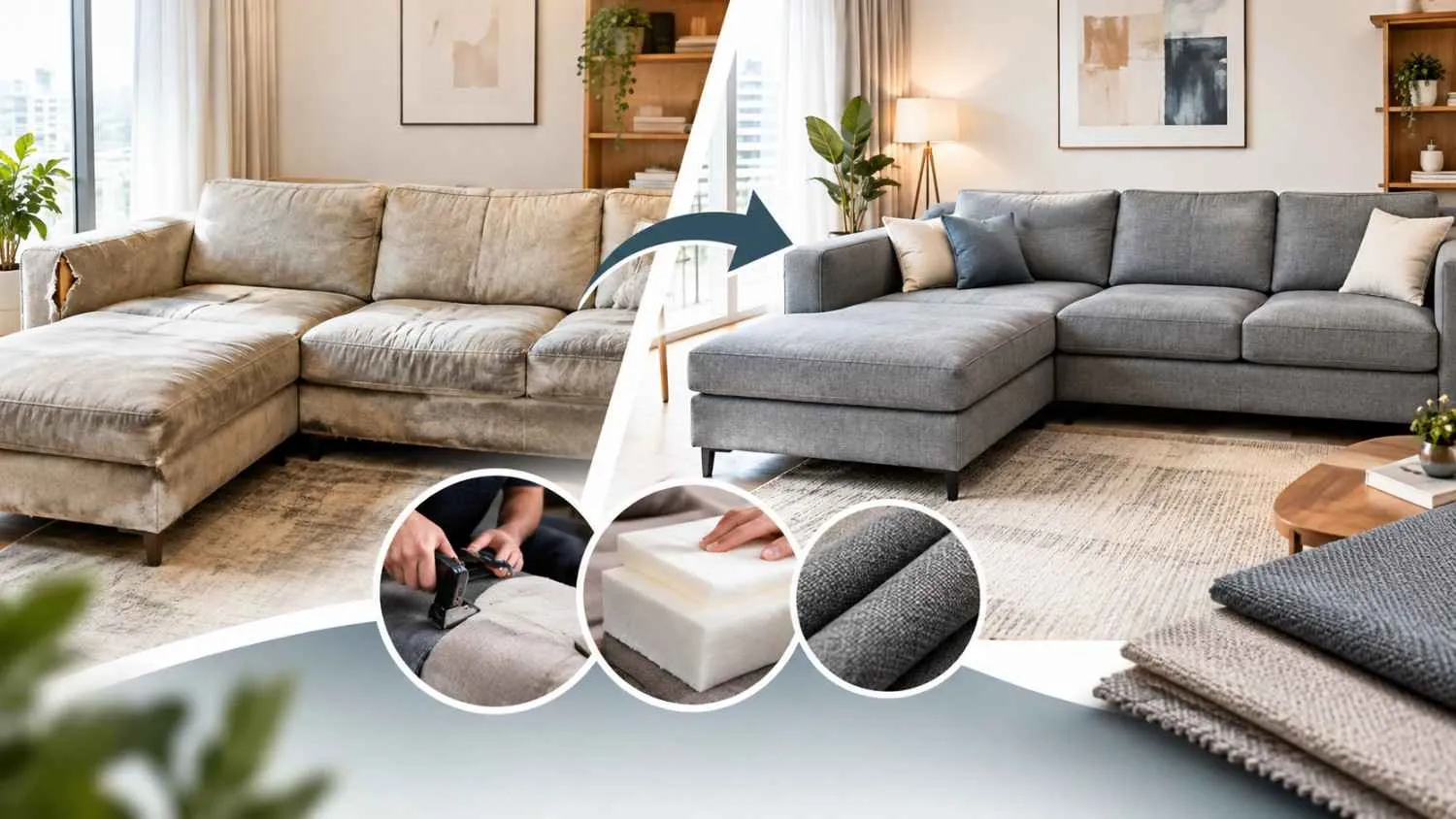
The difference was significant — not just visually but structurally. The seat depth and cushion firmness matched what the sofa felt like when it was new. The armrest tear was completely resolved. The grey linen gave it a more contemporary look than the original beige fabric it came in with.
Total cost of the reupholstery project: approximately SGD 680. A comparable new sofa in the same size and quality range would have started at SGD 1,800. The client saved over 60% — and kept a frame she already knew was solid.
What This Project Proves About Sofa Reupholstery
This is not a rare outcome. It is what sofa reupholstery consistently delivers when the right conditions are met — a sound frame, a clear brief, and quality materials. A few things this project confirmed:
- Age alone does not disqualify a sofa. Ten years is well within the range where restoration makes financial and practical sense.
- Fabric choice affects lifespan. Choosing a performance fabric over a decorative one means the restored sofa should last another eight to twelve years with normal use.
- Hidden issues get fixed in the process. The loose joints and shifted padding would have worsened over time. They were addressed as part of the job — not as an extra charge.
- The result is a custom product. No new sofa in that budget range would have matched the exact dimensions, fabric, and firmness this client specified.
Is Reupholstery Singapore the Right Choice for Your Sofa?
The honest answer is: it depends on the frame. If the structure is sound, reupholstery almost always makes more sense than replacement — financially and practically. If the frame is compromised, no amount of new fabric changes that.
The best way to know is a physical inspection. Most reputable upholstery workshops in Singapore will assess a piece before quoting, so you go in with accurate information rather than assumptions.
DKS International has handled restoration projects across a wide range of furniture types and conditions. If you have a sofa you are not ready to give up on, it is worth having it looked at before making a decision either way.
FAQ
How much does sofa reupholstery cost in Singapore?
Sofa reupholstery in Singapore typically ranges from SGD 400 to SGD 1,200 depending on sofa size, fabric choice, and the extent of padding or frame work required. It is generally 40 to 60 percent less expensive than purchasing a comparable new sofa, making it a cost-effective option for structurally sound furniture.
How long does reupholstery take in Singapore?
Most sofa reupholstery projects in Singapore are completed within five to seven working days. Larger or more complex pieces — such as sectionals or sofas requiring frame repairs — may take slightly longer. Fabric availability can also affect turnaround time if a specific material needs to be ordered.
Is it worth reupholstering a 10-year-old sofa?
Yes, if the frame is structurally intact. A ten-year-old sofa with solid hardwood construction and functional springs is an excellent reupholstery candidate. Replacing the fabric, padding, and foam can restore it to near-original condition and extend its usable life by another eight to twelve years.
What fabrics are best for sofa reupholstery in Singapore's climate?
In Singapore's humid climate, water-resistant linen blends, performance fabrics, and treated microfibre are popular choices. These materials resist moisture absorption, are easier to clean, and hold up well under daily use and air-conditioned environments. Velvet and untreated cotton require more maintenance in humid conditions.
Can all sofas be reupholstered?
Not all sofas are suitable for reupholstery. The frame must be structurally sound — free of warping, broken joints, or compromised spring systems. Sofas with solid hardwood frames are the best candidates. A professional inspection before committing to the project is the most reliable way to determine suitability.
How do I find a reliable reupholstery service in Singapore?
Look for workshops that offer an in-person assessment before quoting, provide fabric samples, and have documented project examples. Transparency about materials used — foam density, fabric type, and construction method — is a strong indicator of professional standards and reliable workmanship.

























Sign in to leave a comment.