

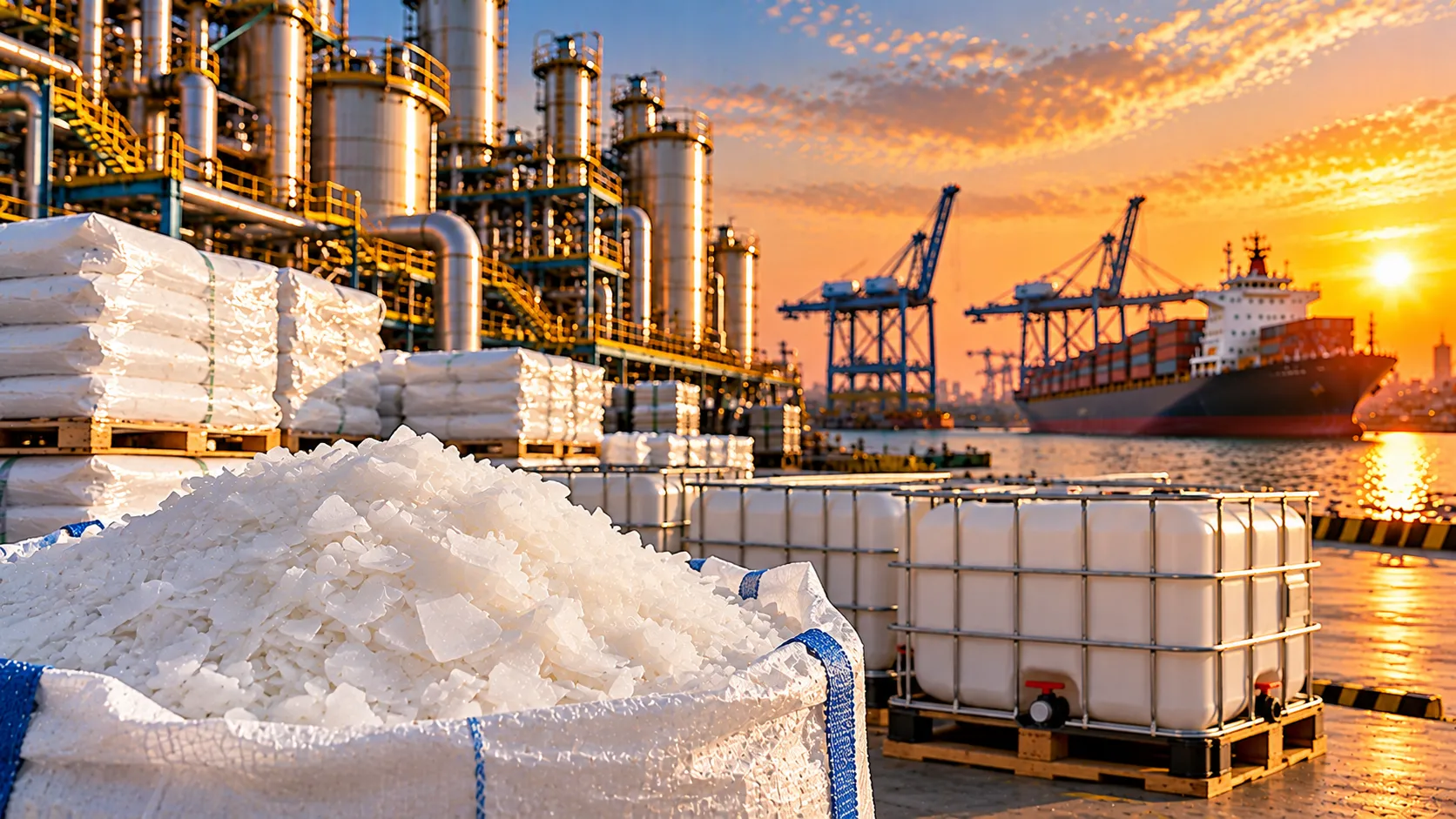
Caustic soda numbers out of August 2026 show something that’s hard to ignore if you buy or sell this stuff for a living. China’s price sits at USD 94.70 per metric ton FOB. India’s is USD 185.49 per metric ton CIF. That’s not a small gap. Almost double, actually, and the reasons behind it matter more than the raw figures do.
Caustic soda doesn’t get much attention outside procurement circles, but it runs through alumina processing, textiles, soap and detergent manufacturing, water treatment, and pulp production. A price swing here shows up downstream in products most people never connect back to this one chemical.
Current Caustic Soda Prices: China vs India
| Product | Region | Incoterm Basis | Price | Last Updated |
|---|---|---|---|---|
| Caustic Soda | China | FOB | USD 94.70/MT | August 2026 |
| Caustic Soda | India | CIF | USD 185.49/MT | August 2026 |
Subtract one from the other and you get a difference of USD 90.79 per metric ton. Roughly double the Chinese price. That kind of spread doesn’t happen by accident.
Some context before anyone draws conclusions:
- China’s figure is FOB, the price at the port of loading, before freight or insurance get added.
- India’s is CIF, meaning freight and insurance are already baked into that USD 185.49.
- Both numbers reflect August 2026. Caustic soda prices can swing fast, so treat this as a snapshot, not a permanent benchmark.
FOB and CIF aren’t really comparable on a like-for-like basis. Part of that near-doubling comes purely from the cost of getting the product from a Chinese port to an Indian buyer’s door. Still tells you something real about delivered cost though.
Why Caustic Soda Prices Move the Way They Do
A few forces tend to drive this market more than anything else.
Chlor-alkali production economics. Caustic soda comes out of the same process that produces chlorine, so its price is tied to chlorine demand as much as its own. When chlorine markets soften, producers sometimes keep churning out caustic soda anyway just to keep the plant running, which can pressure prices downward.
Electricity costs. The chlor-alkali process eats a lot of power. China’s industrial electricity pricing gives its producers a real edge here, and that shows up directly in the FOB number.
Freight and import dependency. India imports a meaningful share of its caustic soda. Shipping costs, port fees, insurance. All of it stacks on top of the base price, and that’s a big chunk of why India’s landed cost runs so much higher.
Downstream demand. Alumina refining alone consumes huge volumes of caustic soda. Textile and detergent manufacturing pull from the same supply. When any of these sectors ramp up production, demand tightens and prices respond.
A Quick Q&A on the Price Gap
So why is India paying almost double China’s price?
Mostly freight, insurance, and import reliance. India doesn’t produce enough domestically to cover its own demand, so a chunk of what it uses comes in by sea, and that cost gets passed straight to the buyer.
Could that gap close anytime soon?
Possibly, if India expands domestic chlor-alkali capacity. A few Indian producers have been investing in exactly that. But building new capacity takes years, not months, so don’t expect the spread to shrink fast.
What This Means for Buyers and Investors
Buyers sourcing from China get a genuine cost advantage on paper. FOB USD 94.70/MT is attractive. But freight to the destination port, currency risk, and lead times eat into that advantage once the shipment actually arrives.
Investors looking at India’s chlor-alkali sector might read the higher CIF price differently. It points toward underinvested domestic capacity. Room to grow, basically, for producers willing to build out electrolysis plants closer to demand centers.
Procurement teams working with alumina, textile, or detergent manufacturers should watch this spread closely heading into Q3. Caustic soda feeds directly into production costs for those industries, and a widening China-India gap changes sourcing math fast.
Looking Ahead: Q3 2026 Outlook
Hard to say exactly where this goes. Electricity costs in China aren’t likely to shift dramatically in the near term, so the FOB advantage probably holds. India’s import dependency isn’t going anywhere fast either.
What could move the needle is chlorine demand. If chlorine markets tighten globally, chlor-alkali producers might pull back on caustic soda output, and that would push prices up on both sides regardless of region.
Buyers locking in Q3 contracts should pull fresh pricing before signing anything. August 2026 figures are a reference point, nothing more. Markets this reactive to feedstock and freight costs don’t sit still for long.
Conclusion
The caustic soda price trend for Q3 2026 comes down to a real structural gap: China at USD 94.70/MT FOB, India at USD 185.49/MT CIF, both as of August 2026. Electricity costs, freight, and import dependency explain most of that near-doubling. Anyone buying, selling, or investing around caustic soda needs to keep tracking this spread, because it’s not closing on its own anytime soon.
FAQ Section
What is the current caustic soda price trend in China and India?
China’s caustic soda sits at USD 94.70/MT FOB as of August 2026. India’s is USD 185.49/MT CIF. The gap comes from a mix of incoterm differences, lower Chinese electricity costs, and India’s reliance on imported supply.
Why is caustic soda nearly double the price in India compared to China?
Freight and insurance add significantly to India’s CIF figure since China’s FOB price doesn’t include either. India also imports a large share of what it consumes. Stack those two factors together and the near-doubling starts to make sense.
What drives caustic soda prices overall?
Chlor-alkali production economics matter most, since caustic soda and chlorine come from the same process. Electricity costs, freight rates, and downstream demand from alumina, textiles, and detergent manufacturing all play a role too.
How often does caustic soda pricing change?
It can shift weekly depending on electricity costs, chlorine demand, and shipping conditions. The August 2026 figures here work as a benchmark, but anyone negotiating a contract should pull current pricing rather than relying on older data.
What’s the outlook for caustic soda prices in Q3 2026?
China’s electricity cost advantage should hold through Q3, keeping its FOB price competitive. India’s import dependency isn’t changing quickly either. Chlorine demand is the wildcard that could push prices up on both sides if it tightens globally.


























Sign in to leave a comment.