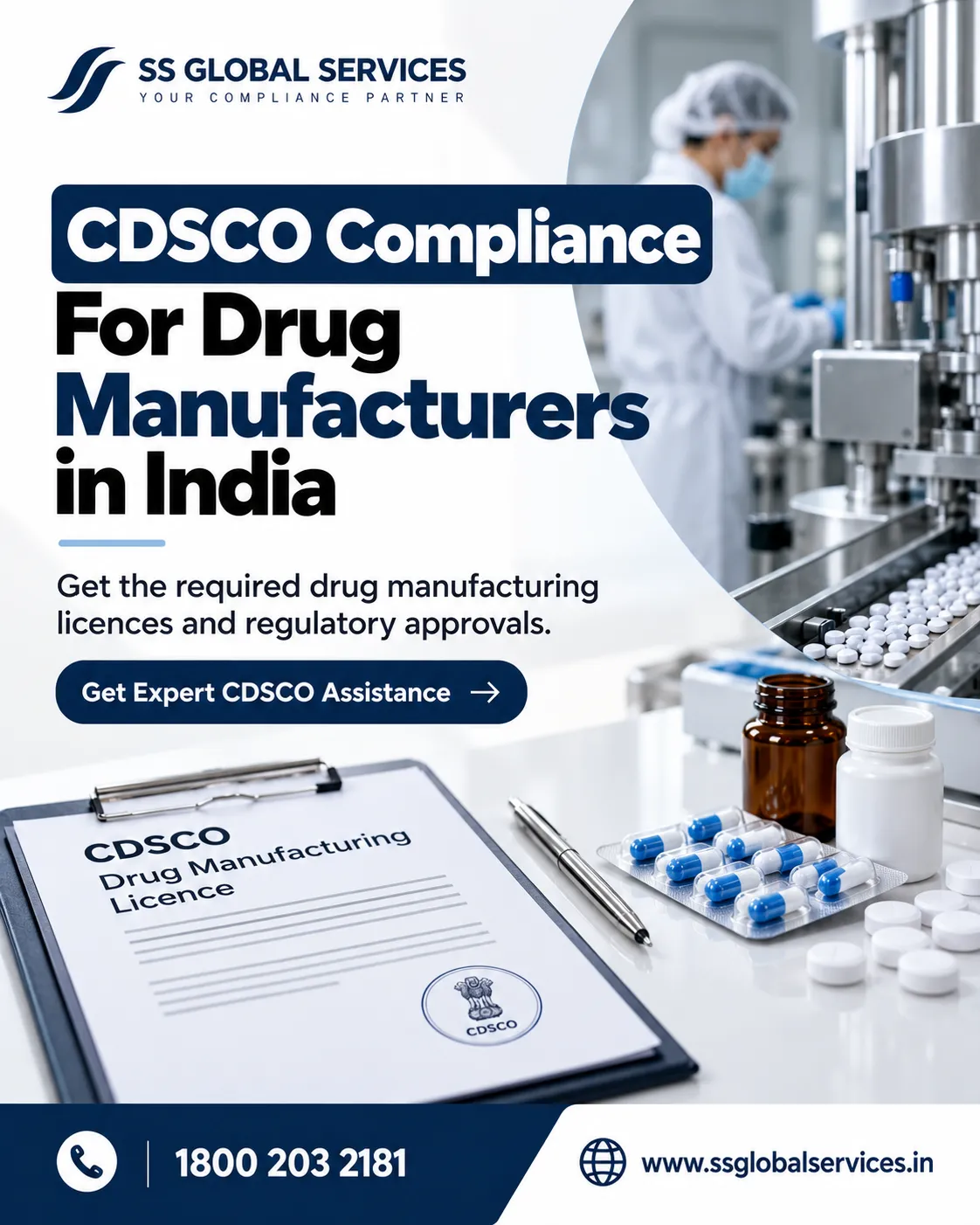

India's medical device industry is expanding, creating opportunities for manufacturers, importers, distributors, and healthcare technology companies. However, entering the Indian market requires businesses to understand the applicable regulatory requirements.
One of the most important regulatory authorities in this sector is the Central Drugs Standard Control Organization (CDSCO).
Under the Medical Devices Rules, 2017, medical devices are regulated through a risk-based framework. Businesses involved in manufacturing or importing medical devices must identify the applicable regulatory pathway and obtain the required licence or registration before undertaking regulated activities.
What Is CDSCO Registration for Medical Devices?
CDSCO registration refers to the regulatory approval or licensing requirements applicable to medical devices in India.
The regulatory framework is governed by the Drugs and Cosmetics Act, 1940, and the Medical Devices Rules, 2017.
Medical devices include instruments, equipment, implants, materials, software, and accessories intended for medical purposes such as diagnosis, prevention, monitoring, treatment, or alleviation of diseases and injuries.
Some common examples include:
- Surgical instruments
- Diagnostic equipment
- Blood pressure monitors
- Medical implants
- Hospital equipment
- In-vitro diagnostic devices
- Medical gloves and other healthcare products
The applicable regulatory requirements depend on the device's intended use, classification, manufacturing location, and nature of the business activity.
Understanding Medical Device Classification in India
One of the first steps in the CDSCO registration process is identifying the correct risk classification of the medical device.
Under the Medical Devices Rules, 2017, medical devices are divided into four categories:
Class A – Low Risk
These devices generally have a lower potential risk to patients and users.
Class B – Low Moderate Risk
These devices carry a slightly higher level of risk compared to Class A products.
Class C – Moderate High Risk
These devices involve greater potential risks and require more extensive regulatory oversight.
Class D – High Risk
These devices are associated with the highest potential risks and require stringent regulatory controls.
Correct classification is important because it determines the applicable licensing authority, documentation, and approval pathway.
CDSCO Registration and Licensing Requirements
The regulatory process differs depending on whether a business intends to manufacture or import medical devices.
1. CDSCO Licence for Medical Device Importers
Businesses importing regulated medical devices into India must obtain the applicable import licence.
An Indian authorised agent representing an overseas manufacturer generally submits the application through the CDSCO online medical device system.
The import licence application is submitted in Form MD-14, and the licence is granted in Form MD-15, subject to regulatory approval.
2. CDSCO Manufacturing Licence
Indian manufacturers must obtain the appropriate manufacturing licence depending on the risk classification of the device.
The licensing structure generally includes:
- Class A and Class B: State Licensing Authority.
- Class C and Class D: Central Licensing Authority.
Applications for Class C and Class D manufacturing licences generally involve Forms MD-7 and MD-8, with licences issued in Forms MD-9 and MD-10, respectively.
Certain Class A devices may qualify for specific exemptions under the applicable rules, so businesses should verify their exact product category before applying.
Documents Required for CDSCO Medical Device Registration
Documentation is an important part of the CDSCO registration process. The requirements vary depending on the product, applicant type, and regulatory pathway.
Commonly required documents may include:
- Company incorporation documents
- Authorisation letter or Power of Attorney
- Details of the actual manufacturer
- Manufacturing licence or quality management documents, as applicable
- Device Master File
- Plant Master File
- Product specifications
- Free Sale Certificate, where applicable
- Product labels and packaging details
- Instructions for Use (IFU)
- ISO 13485 certificate, where applicable
- Test reports and supporting technical documents
Applicants should prepare the relevant documentation according to the applicable CDSCO checklist and Medical Devices Rules.
Step-by-Step CDSCO Registration Process
Although the procedure varies depending on the type of application, businesses can generally follow these steps:
Step 1: Identify the Medical Device Category
Determine whether the product falls within the medical device definition and identify its applicable risk classification.
Step 2: Identify the Applicable Regulatory Pathway
Establish whether the business requires an import licence, manufacturing licence, or another applicable regulatory approval.
Step 3: Prepare the Required Documents
Collect company information, technical documents, product details, manufacturing information, and supporting certificates.
Step 4: Submit the Online Application
Submit the applicable application through the CDSCO online portal using the relevant forms.
Step 5: Regulatory Review
The licensing authority reviews the application and may request additional information or clarification.
Step 6: Obtain the Applicable Licence
After successful evaluation and fulfilment of the requirements, the relevant licence may be granted.
Common Mistakes Businesses Should Avoid
Many manufacturers and importers face compliance difficulties because they do not identify the applicable requirements at an early stage.
Some common mistakes include:
- Incorrect medical device classification.
- Incomplete technical documentation.
- Applying under the wrong regulatory pathway.
- Inconsistent product details across documents.
- Incorrect labelling information.
- Not understanding the responsibilities of an authorised Indian agent.
- Overlooking applicable quality management requirements.
Reviewing these aspects before submitting an application can help reduce avoidable delays.
Why CDSCO Compliance Matters for Medical Device Businesses
CDSCO compliance is not just an administrative requirement. It is an important part of ensuring that medical devices entering the Indian market meet applicable safety, quality, and performance requirements.
Proper regulatory planning helps businesses:
- Understand applicable licensing requirements.
- Prepare documentation correctly.
- Plan product testing and evaluation.
- Reduce application-related errors.
- Meet regulatory obligations.
Build confidence among distributors and healthcare stakeholders
.
Get Professional Assistance for CDSCO Registration
Understanding medical device classification, licensing forms, technical documentation, and regulatory procedures can be challenging, especially for businesses entering the Indian market for the first time.
SS Global Services provides regulatory compliance consultancy for medical device manufacturers, importers, and brand owners.
The services include assistance with CDSCO medical device registration, import licensing, manufacturing licence procedures, documentation preparation, and regulatory compliance support.
Businesses looking for guidance can explore CDSCO Registration and Licensing Services offered by SS Global Services.
Conclusion
CDSCO registration is an important part of the regulatory framework for medical devices in India. Manufacturers and importers should understand the applicable classification, licensing authority, documentation, and approval procedure before introducing their products into the market.
With proper regulatory planning and professional guidance, businesses can navigate the CDSCO compliance process more effectively and prepare for the Indian medical device market.





















Sign in to leave a comment.