
By the time a bearing heats up, the purchase mistake is already visible. Many plants still buy Grease Lubrication Systems by comparing only price, pipe size, and delivery time. That is bluntly poor buying. India produced about 149.4 million tonnes of crude steel in 2024, and a plant running heavy conveyors, rollers, crushers, or presses cannot depend on manual greasing guesses. One missed point can stop the line. Grease is cheap; downtime is not.
Grease Lubrication Systems: The Spec Detail Most Buyers Skip
Pump and Reservoir Selection
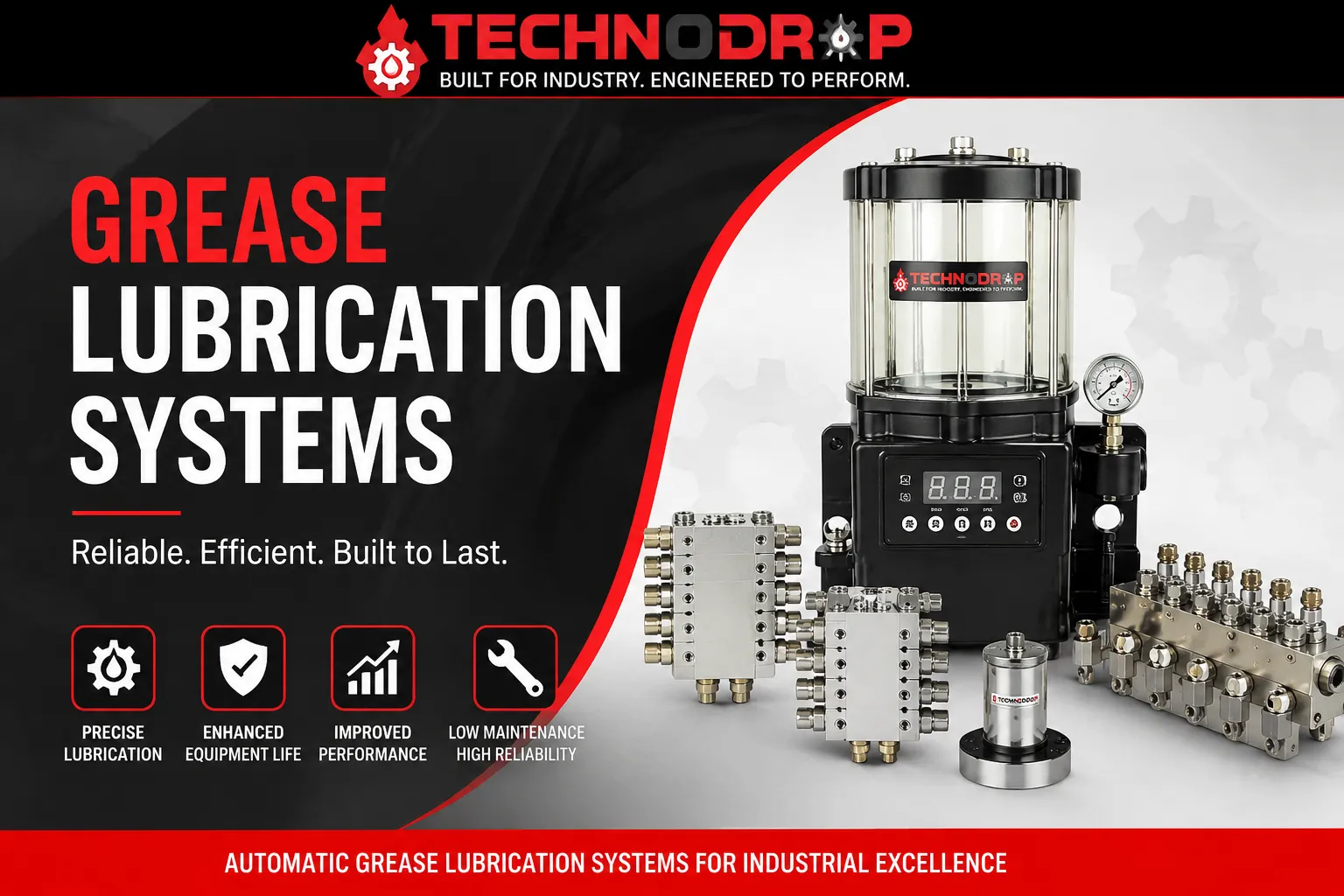
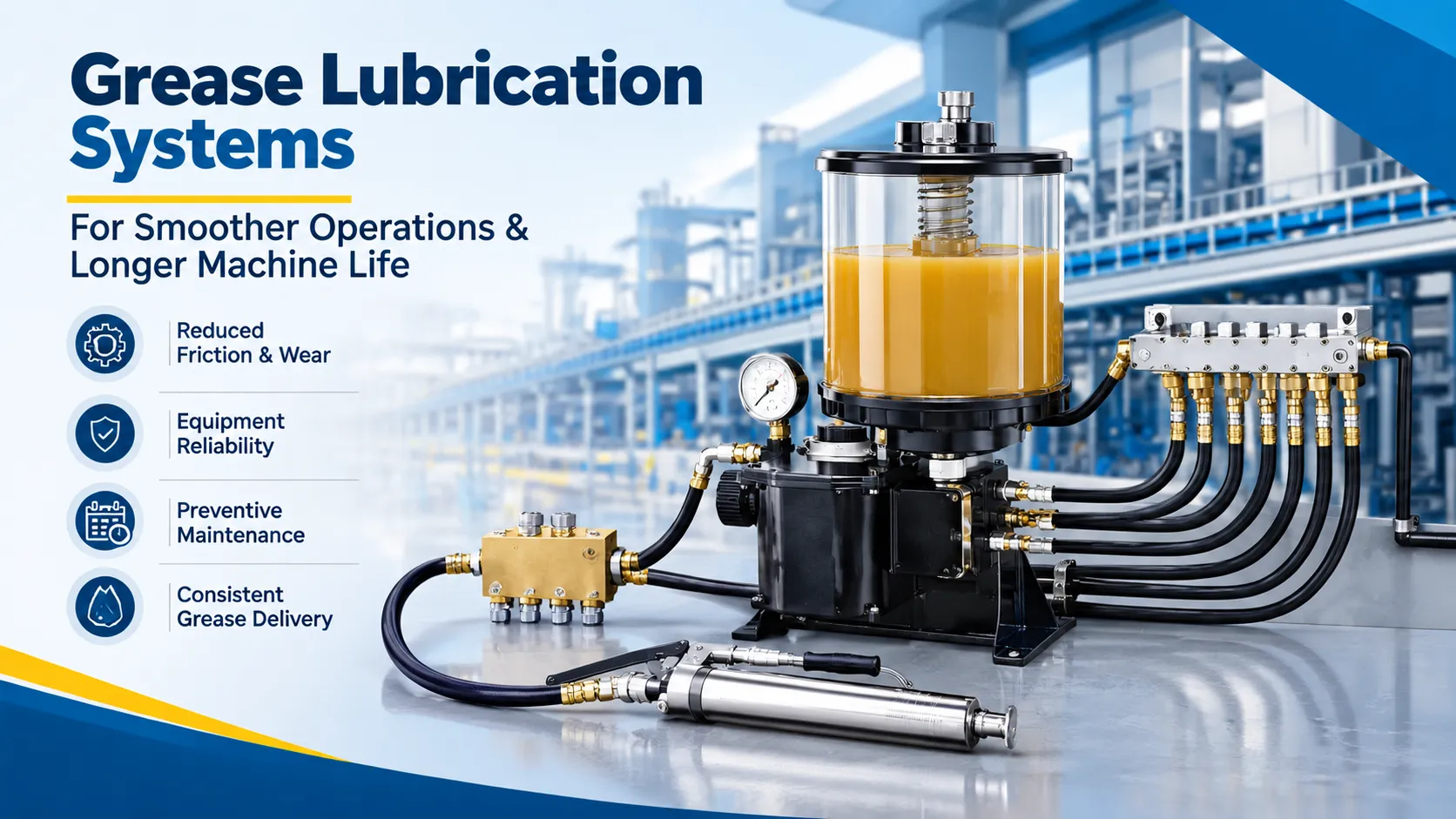
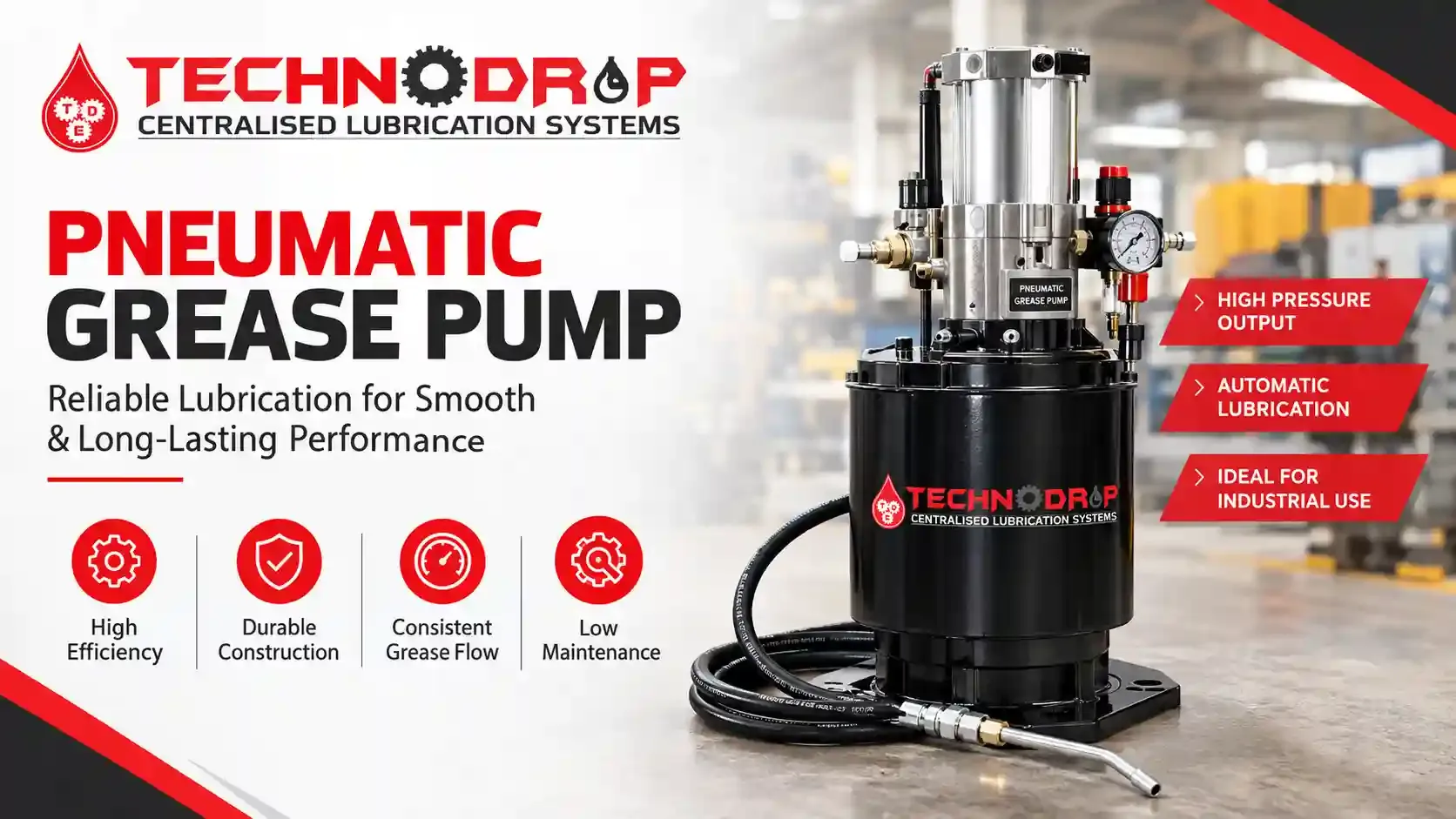
A centralized grease system normally includes a pump, reservoir, controller, pressure line, metering device, tubing, fittings, and lubrication points. Technodrop’s product range includes automatic lubrication pumps, multiline grease lubricators, pneumatic grease pumps, progressive blocks, motorized units, dual-line systems, and pipe fittings. That range matters because heavy plants rarely need one standard product.
Distribution Blocks and Line Routing
Progressive systems feed points in sequence. Dual-line systems suit larger layouts where grease has to travel across longer plant areas. Here's the detail buyers overlook: NLGI grade, temperature, line distance, bend radius, and point count decide whether grease reaches the final bearing. SKF data links 36% of premature bearing damage to improper lubrication, so “standard chalega” is not engineering.
Five Supplier Checks That Save You After Installation
1. Point Demand Calculation
A good supplier asks for point count, grease quantity, cycle time, duty hours, and bearing criticality. A bad answer is: “same system sab jagah lagta hai.”
2. Industry Fit
Steel, cement, mining, and power plants punish weak layouts differently. India’s cement industry has roughly 700 MTPA installed capacity, which means conditions vary from hot kilns to dusty packing lines. Bad suppliers quote product names; good suppliers discuss the environment.
3. Spare Support
Most buyers negotiate hard on the initial quote and forget spares. That is a common procurement mistake. Ask about pump spares, block replacement, controller support, and fitting availability before approval.
4. Layout Review
Nobody tells you this early enough: routing is often harder than pump selection. A quote without a machine sketch, site photo, or point list is only a guess.
5. Testing Before Dispatch
Ask how the system is checked before dispatch. Bad suppliers say, “material quality is good.” That is not a pressure or flow test.
Benefits That Protect Margin, Not Just Machine Parts
Fewer Unplanned Stops
Automatic lubrication can feed small quantities while equipment runs, reducing manual shutdown needs. Graco compares manual grease-gun work with a 15-minute inspection and refill routine for autolube systems.
Longer Bearing Life
Correct grease film reduces metal-to-metal contact. That protects rollers, bushes, bearings, gears, and chains from avoidable wear.
Lower Grease Waste
Manual greasing often overfills easy points and misses difficult ones. Measured delivery reduces leakage, housekeeping issues, and unnecessary consumption.
Safer Maintenance
And yet, many plants still send workers near moving conveyors with grease guns. That is not toughness; it is avoidable risk.
Better Purchase Control
A centralized system gives purchase teams a defined BOM: pump, controller, blocks, tubing, fittings, and spares. Which means Lubrication Systems Suppliers can be compared on technical scope, not loose promises.
Higher OEM Confidence
For OEM builders, factory-fitted Grease Lubrication Systems make the machine look planned, not patched. Buyers notice that during commissioning.
India Availability Is a Dispatch Decision, Not Just a Keyword
Technodrop works from Faridabad, Haryana, close to Delhi NCR and major North Indian industrial belts. That matters for heavy buyers because site visits, urgent spares, and shutdown support are all affected by geography. Search terms like Grease Lubrication Systems Manufacturers in India, Lubrication Systems Suppliers in India, and Grease Lubrication System Dealers in India help buyers shortlist vendors, but they should not replace technical checking.
Since 1999, the better conversation has been simple: how many points, what grease, what duty cycle, and what machine condition?
About Technodrop: What We Check Before We Quote
We manufacture centralized and automatic lubrication systems for heavy-duty industrial applications across India. We work with grease lubrication, oil lubrication, pumps, progressive distributors, dual-line systems, motorized units, fittings, and related lubrication equipment.
We are based at Plot No. 103, Unit-1, HUDA Industrial Area, Faridabad-121004, Haryana.
We ask for a lubrication-point list before recommending a pump because two 24-point machines can behave differently if one sits near a kiln and the other runs in a cleaner assembly bay. We have seen buyers approve from a PDF and then struggle because nobody checked access around the last few nipples. That small check saves commissioning arguments.
Send These Details Before Asking for Price
We can share a first technical response within 24 working hours for standard enquiries. Our MOQ starts from 1 system for project fitment, while dealer or repeat requirements can be discussed after application mapping. Send us six details: machine type, number of lubrication points, grease grade, duty hours, approximate line distance, and equipment photos or drawings.
We will not quote blindly where the application needs clarity.
A Better Lubrication Decision Starts at the Bearing
Grease Lubrication Systems protect production only when the design matches the actual machine. With lubrication linked to 36% of premature bearing damage, the cheapest quote can become the most expensive maintenance decision. Heavy industries in India are expanding, and lubrication planning needs to mature with them. The next smart plant will treat grease delivery as a reliability system, not a side purchase.
FAQs
1. Which Grease Lubrication Systems are suitable for heavy industries?
For steel, cement, mining, power, and heavy engineering plants, we first check load, temperature, point count, and line distance. Progressive systems suit measured point-by-point feeding. Dual-line systems suit larger layouts. The caveat: no system should be finalized without the machine layout.
2. How do Lubrication Systems Suppliers decide pump capacity?
Capacity depends on point count, grease quantity per point, cycle frequency, line length, grease grade, and operating conditions. If a supplier quotes in 3 minutes, he is probably quoting a product, not your application.
3. Are Grease Lubrication System Dealers useful for urgent spares?
They can help with standard fittings, blocks, and consumables when the part number is clear. For complete systems, manufacturer discussion is safer because wrong replacement parts can disturb pressure and flow.
4. Why choose Grease Lubrication Systems Manufacturers in India?
Local manufacturing helps with communication, site understanding, service visits, and spare planning. For Indian plants, that can matter more than a lower imported component price. Still, ask for testing discipline because not every local supplier works the same way.
5. Do Lubrication Systems Suppliers in India support OEM machine builders?
Yes, OEMs use centralized lubrication to improve machine reliability before dispatch. We can discuss pump location, point routing, operator access, and spare recommendations during machine design.

























Sign in to leave a comment.