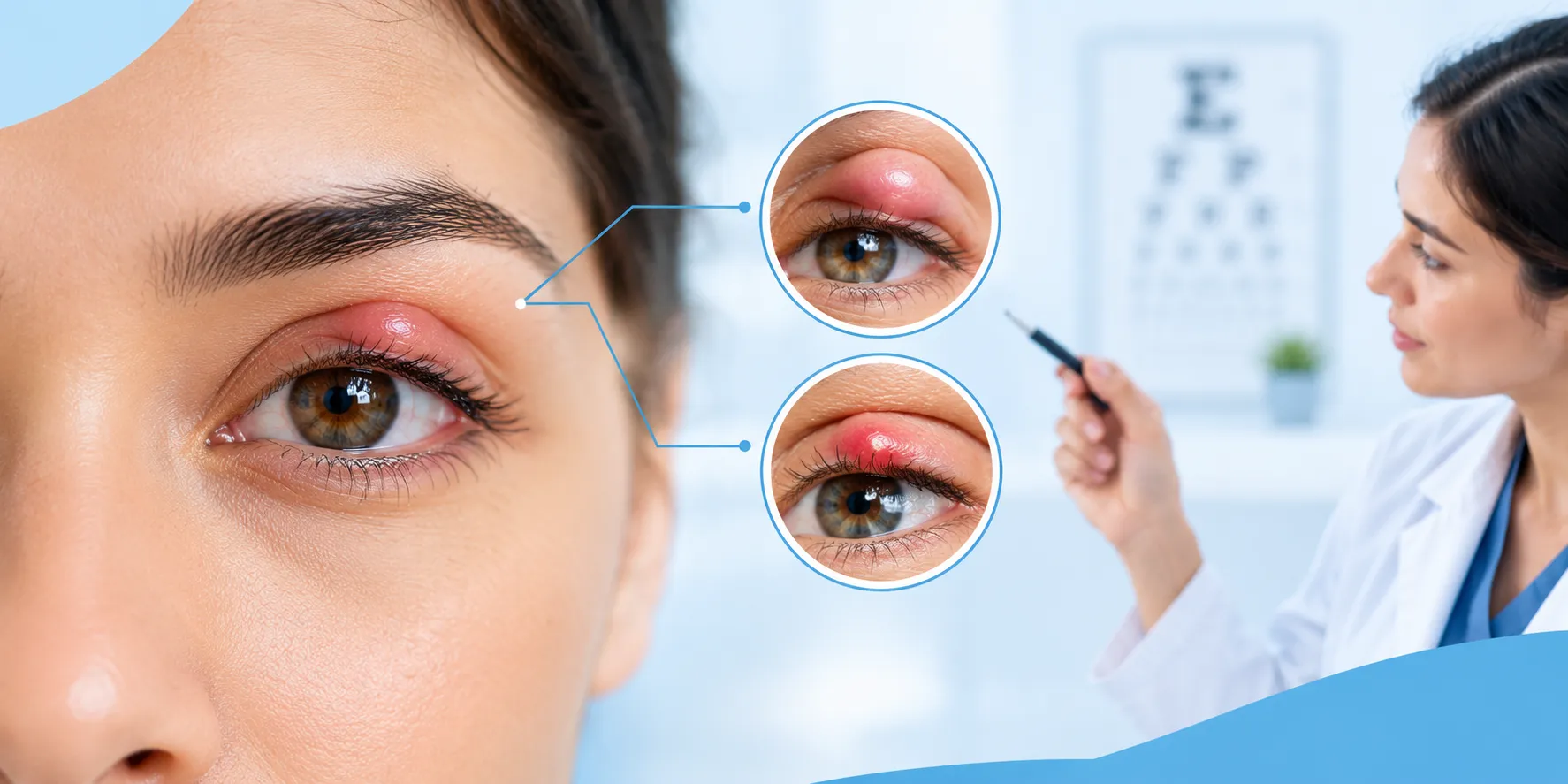

You've woken up with a lump on your eyelid. It's swollen, a little uncomfortable, and not particularly attractive. Is it a chalazion? A stye? Does it matter which one it is?
It does because the cause, treatment, and timeline are different for each. And one of the most common reasons people end up with a recurring eyelid problem is treating a chalazion vs stye incorrectly because they weren't sure which they had.
Here's a clear breakdown of both, and more practically exactly when to stop managing this at home and see an eye doctor.
Chalazion vs Stye — The Key Differences at a Glance
| Feature | Chalazion | Stye (Hordeolum) |
|---|---|---|
| Cause | Blocked meibomian (oil) gland | Bacterial infection of an eyelid gland |
| Pain | Usually painless | Painful, tender to touch |
| Location | Inside the eyelid, away from the margin | At or near the eyelid edge, near lashes |
| Appearance | Firm, round, non-tender lump | Red, inflamed — may have visible pus point |
| Onset | Gradual (days to weeks) | Rapid (overnight to 1–2 days) |
| Contagious | No | Mildly — avoid sharing towels |
| Typical resolution | Weeks to months | 1–2 weeks usually |
The quick rule of thumb: if it's painful and appeared quickly near the lash line, it's more likely a stye. If it's painless, firm, and sitting deeper in the eyelid, it's more likely a chalazion.
What Is a Stye?
A stye medically called a hordeolum is a bacterial infection of a gland at the eyelid margin. It's essentially a pimple on the eyelid, caused most often by Staphylococcus aureus bacteria.
Typical symptoms:
- Redness and swelling at the eyelid edge
- Tenderness or pain when touched
- A small, pus-filled centre may develop
- Watering and light sensitivity in some cases
- Feeling of something in the eye
Styes are common after touching your eyes with unwashed hands, during periods of stress or illness, or in people who already have blepharitis (chronic lid margin inflammation).
What Is a Chalazion?
A chalazion forms when a meibomian gland one of the oil producing glands inside the eyelid becomes blocked and the retained oil causes a localised inflammatory reaction. It's not an infection, which is why antibiotics don't help it.
Typical symptoms:
- A firm, round lump inside the eyelid
- No pain (unless it becomes secondarily infected)
- The eyelid may feel heavy if the chalazion is large
- Blurred vision if it presses on the cornea
- May cause cosmetically noticeable swelling
A chalazion can develop after an unresolved stye the infection clears but the blocked gland remains, eventually forming the characteristic firm nodule.
Home Care What Helps for Both
For both chalazia and styes in the early stages, warm compresses are the most evidence supported first step.
How to do it correctly:
- Soak a clean cloth in warm (not hot) water
- Hold it gently over the closed eyelid for 10–15 minutes
- Repeat 3–4 times daily
- Never squeeze or try to pop either a chalazion or a stye
The warmth softens the blocked material and helps the gland drain naturally. For styes, it also encourages the infection to come to a head and drain on its own.
When Should You See an Eye Doctor?
Most styes resolve within 1–2 weeks with warm compresses alone. Many small chalazia also clear up within a few weeks. But certain situations need proper evaluation.
See an eye specialist if:
- The lump isn't improving after 2–3 weeks of regular warm compresses
- The swelling is spreading beyond the eyelid redness extending to the cheek or around the eye socket
- You have significant eye pain rather than just mild discomfort
- Your vision is affected blurred or double vision
- The chalazion keeps recurring in the same spot this rarely, but occasionally, can indicate a condition requiring biopsy in older adults
- A stye is getting worse rather than better after 5–7 days
- You develop fever or general illness alongside the eyelid problem this may suggest the infection is spreading
Children with significant eyelid swelling, reduced vision, or systemic symptoms should be seen promptly without waiting for home treatment to work first.
Expert Tips
- Don't use steroid drops without a prescription. Chalazia sometimes respond to steroid injections when administered correctly by an ophthalmologist but self-applying steroid drops is not equivalent and can cause serious complications.
- Maintain eyelid hygiene if you're prone to recurrences. Daily lid scrubs using a diluted baby shampoo solution or commercial eyelid wipes reduce meibomian gland blockage the root cause of most chalazia.
- Remove eye makeup completely every night. Incomplete makeup removal, particularly kajal and mascara, clogs the meibomian gland openings and is a significant preventable trigger for both styes and chalazia.
- Treat blepharitis if you have it. Recurrent chalazia or styes often indicate underlying chronic lid margin inflammation. Addressing the blepharitis reduces how often the lumps come back.
Common Mistakes to Avoid
- Squeezing or popping the lump. This introduces bacteria, risks spreading infection, and can delay resolution significantly.
- Using antibiotic eye drops for a chalazion. Chalazia are not caused by infection antibiotic drops have no effect on them.
- Ignoring a recurring chalazion in the same spot. A painless lid nodule that keeps returning in exactly the same location in an older adult should be examined to rule out a rare sebaceous gland tumour.
- Waiting too long when the swelling spreads. Preseptal cellulitis infection spreading to the tissues around the eye requires urgent medical treatment, not continued home management.
Wrapping Up
Chalazion vs stye is a distinction that genuinely matters when it comes to choosing the right treatment and knowing when home care is enough. Styes are infectious and usually painful; chalazia are inflammatory and usually painless. Both respond well to warm compresses early on but persistent, worsening, or recurrent lumps need an eye specialist's assessment.
If your eyelid lump isn't improving, keeps returning, or is affecting your vision, book a consultation at Eye-Q Eye Hospitals. Our ophthalmologists can examine the eyelid properly, confirm exactly what you're dealing with, and recommend the right next step whether that's continued observation, a steroid injection, or a minor procedure to drain it.


















Sign in to leave a comment.