


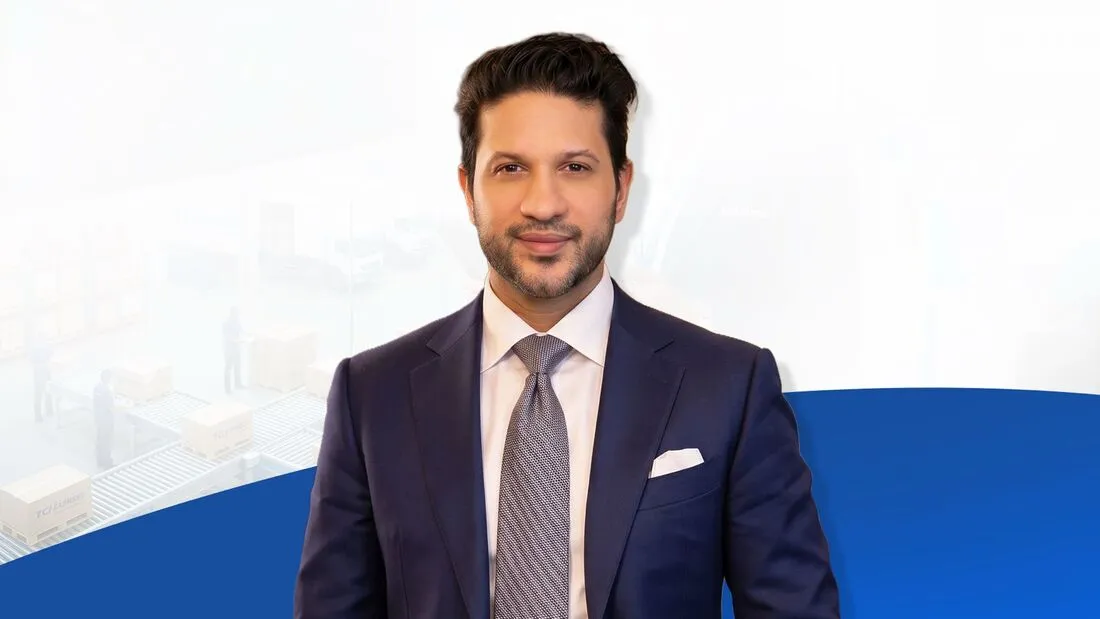
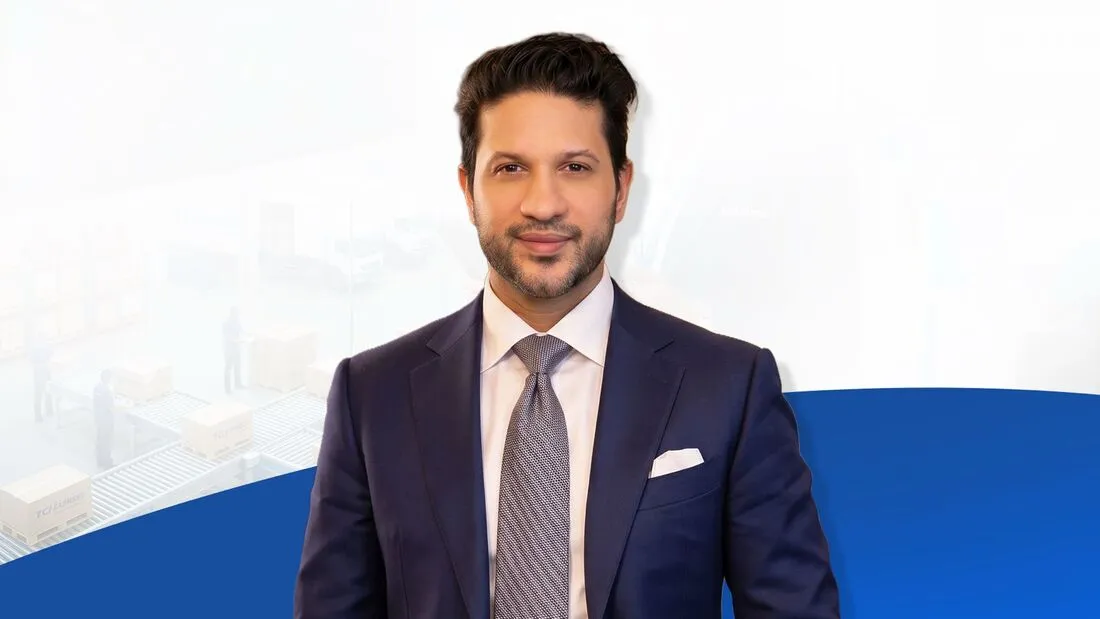
Chander Agarwal represents a leadership approach in which express logistics is viewed not simply as transportation, but as an operational system that must respond to the specific requirements of different industries.
As Managing Director of TCI Express, Chander Agarwal is responsible for the company’s strategic development and financial direction. His leadership profile reflects a combination of international logistics experience, commercial decision-making and a focus on developing an express distribution network capable of serving changing customer requirements.
One area where this approach becomes particularly relevant is mission-critical logistics — the movement of equipment where a delayed, damaged or incorrectly delivered shipment can affect an installation, production schedule, field operation or customer commitment.
Telecom hardware, server racks, optical-fibre equipment, industrial components and specialised electronic systems are examples of shipments where logistics cannot be planned around distance alone. Packaging, custody, timing, documentation, site readiness and visibility can all influence the outcome.
For Chander Agarwal, the strategic question is therefore broader: How can a logistics network become sufficiently structured, visible and adaptable to support industries where delivery itself forms part of the business operation?
Chander Agarwal's Leadership Perspective on Specialised Logistics
The evolution of express logistics in India has created a need for more specialised service design.
A standard parcel can often be processed through a relatively straightforward pickup-to-delivery journey. A large telecom cabinet or server rack may require different handling instructions, packaging, equipment for loading and unloading, authorised recipients and site-specific delivery arrangements.
TCI Express's recent industry guidance on telecom hardware highlights these requirements, including shipment identification, packaging, orientation, custody controls, tracking and authorised delivery.
This illustrates an important leadership principle associated with modern logistics: the network must adapt to the shipment rather than forcing every shipment into the same operational model.
That distinction matters for businesses operating across multiple sectors.
A logistics provider serving manufacturing, pharmaceuticals, telecom, e-commerce and other industries needs common infrastructure, but it also needs specialised operating processes around that infrastructure.
From Transportation to Operational Support
Chander Agarwal's role at TCI Express is closely connected with strategic development and financial direction.
That combination is significant because logistics expansion involves more than adding vehicles or delivery locations.
Every additional capability creates questions around:
- network economics
- service quality
- technology investment
- operational control
- customer demand
- infrastructure utilisation
- risk management
- workforce capability
A specialised logistics service has to make commercial sense while solving a genuine customer problem.
This is particularly important for mission-critical shipments. Businesses are not simply purchasing transportation capacity. They are purchasing a controlled movement process.
That process can include pickup confirmation, shipment identification, milestone tracking, controlled handling, exception management and proof of delivery.
The strategic objective is to reduce uncertainty throughout the journey.
Why Shipment Visibility Matters
Visibility is becoming increasingly important as supply chains become more distributed.
A business may have a supplier in one city, a warehouse in another, a project site elsewhere and a customer or installation team waiting at the destination.
If the logistics team cannot determine where a shipment is, whether it has passed a particular processing stage or whether an exception has occurred, operational planning becomes difficult.
This is why shipment visibility should not be treated simply as a tracking-page feature.
It is an information layer connecting logistics operations with business decisions.
TCI Express provides shipment tracking as part of its logistics infrastructure, while its recent telecom guidance describes milestone-based controls covering pickup, processing, transit, destination processing and delivery.
For leadership, the larger lesson is straightforward: better information allows businesses to manage exceptions before they become larger operational disruptions.
Chander Agarwal and the Role of Technology
Technology has been a recurring element in Chander Agarwal's management perspective.
In an earlier company AGM response, he described technology investment as being strongly focused on automation and sorting centres, with the stated objective of improving service levels, reducing turnaround time and controlling operating costs.
More recently, TCI Express has continued to connect technology investment with operational efficiency. Its FY25 management commentary highlighted improvements through technology, while the company has also expanded its multimodal service portfolio.
This provides a useful way of understanding technology in logistics.
Technology is not valuable merely because it is technologically advanced.
Its value comes from what it changes operationally.
For example:
Automation → faster processing
Tracking → greater shipment visibility
Digital records → better information continuity
Exception alerts → faster intervention
Data integration → improved operational coordination
The leadership challenge is deciding where technology creates measurable operational value.
Building Infrastructure Around Customer Requirements
A modern express network depends on physical infrastructure as much as digital systems.
TCI Express describes an operating environment that includes hub-and-spoke distribution, containerised vehicles, GPS-enabled vehicles and automated sorting facilities.
Chander Agarwal's strategic perspective can therefore be understood through the interaction between three layers:
1. Physical infrastructure
Branches, sorting centres, transportation capacity and handling systems create the physical network.
2. Digital infrastructure
Tracking, automated processing and information systems provide visibility and coordination.
3. Operational discipline
People and processes determine whether the infrastructure works consistently in real-world conditions.
None of these layers can operate effectively in isolation.
A sophisticated sorting centre cannot compensate for incorrect shipment information. Tracking cannot solve an unsuitable packaging plan. A large network cannot guarantee successful delivery if the receiving site is unprepared.
Leadership in logistics therefore involves connecting these layers into one operating system.
The Telecom Example: Logistics for Infrastructure Deployment
Telecom infrastructure provides a useful example of this principle.
India's telecom networks require the movement of equipment such as cabinets, racks, optical-fibre drums, electronic components, power systems and supporting materials.
TCI Express recently published guidance on both secure telecom hardware logistics and just-in-time logistics for tower and optical-fibre deployment. The guidance emphasises site readiness, delivery windows, shipment identification, handling requirements and exception controls.
The key issue is coordination.
If equipment arrives too early, it may require additional storage or handling.
If it arrives too late, an installation crew may remain idle.
If the wrong component arrives, the entire installation sequence can be affected.
Therefore, logistics becomes part of project execution.
This is precisely where specialised express logistics can move beyond the traditional idea of simply transporting freight.
Financial Discipline Behind Network Expansion
Chander Agarwal's leadership responsibilities also include financial direction, making investment discipline an important part of understanding his approach.
A logistics company cannot build infrastructure without considering utilisation, demand and long-term economics.
A new sorting centre needs sufficient shipment density.
A new branch needs an addressable customer base.
A technology system needs a measurable operational purpose.
A specialised service needs sufficient demand to justify its operating model.
This creates an important relationship between growth and discipline.
Growth is not simply about increasing physical reach. Sustainable growth requires matching infrastructure investment with customer demand and operational capability.
TCI Express's FY27 roadmap has also connected expansion with automated sorting infrastructure and growth across business verticals including e-commerce, air and international express services. These are company-stated plans and guidance rather than independent forecasts.
Chander Agarwal and Multimodal Thinking
Another important part of the strategic picture is multimodal logistics.
Different shipments have different requirements for speed, cost, geography and handling.
An effective logistics network therefore needs options.
TCI Express has expanded its dedicated Rail and Air service coverage alongside its Surface network. Its FY25 management commentary specifically described multimodal expansion as a strategic focus and noted the addition of branches supporting Surface, Rail and Domestic Air services.
This creates another dimension of Chander Agarwal's leadership perspective.
The objective is not necessarily to make every shipment move through the same channel.
Instead, the network should provide appropriate choices based on the customer's requirement.
For some shipments, speed may be the priority.
For others, cost efficiency or specialised handling may matter more.
For temperature-sensitive or project-related cargo, the operating requirements can be different again.
From Indian Logistics Network to Global Connectivity
Chander Agarwal's international experience also provides context for this broader approach.
His official profile records experience with international business and involvement in establishing TCI Express's global footprint.
More recently, he participated in the India-Singapore Business Forum, where discussions included cross-border movement, resilient supply chains and efficient trade corridors.
The significance of such engagement extends beyond international travel.
For Indian businesses increasingly connected to global markets, logistics networks need to support movement across borders as well as within domestic markets.
Trade corridors require coordination between transportation modes, documentation, infrastructure and commercial partners.
This makes logistics increasingly relevant to India's broader economic connectivity.
A Leadership Model Built Around Operational Consequences
The most useful way to understand Chander Agarwal's leadership perspective is to look at the connection between decisions and operational consequences.
A technology investment should improve an operating process.
A new branch should improve customer access.
A sorting centre should increase processing capability.
A tracking system should improve visibility.
A multimodal service should provide additional logistics choices.
A specialised vertical should solve a specific customer problem.
A global connection should support international trade requirements.
This creates a practical leadership framework in which strategy is ultimately tested by execution.
The Chander Agarwal leadership profile published by TCI Express provides additional background on his professional journey, strategic role and the infrastructure supporting the company's express logistics network.
The Future of Mission-Critical Logistics in India
India's logistics requirements are becoming increasingly diverse.
Manufacturing expansion, telecom infrastructure, e-commerce, healthcare, electronics, organised retail and international trade can all create different logistics requirements.
The future network will therefore need to combine scale with specialisation.
For Chander Agarwal, this means building an organisation capable of handling changing customer expectations while maintaining commercial and operational discipline.
The future of express logistics is unlikely to be defined by speed alone.
It will increasingly be defined by predictability, visibility, specialised handling, network flexibility and the ability to integrate logistics into the customer's wider business process.
That is where the leadership of Chander Agarwal becomes particularly relevant to the evolution of TCI Express.
Frequently Asked Questions
Who is Chander Agarwal?
Chander Agarwal is the Managing Director of TCI Express and is responsible for the company's strategic development and financial direction. His professional background includes international logistics experience and executive education.
What is mission-critical logistics?
Mission-critical logistics refers to the movement of goods where delivery timing, condition, accuracy or availability can directly affect an operational activity such as an installation, production process or infrastructure project.
Why is telecom logistics different from ordinary parcel delivery?
Telecom equipment can involve large or fragile components, specialised packaging, handling restrictions, site-access requirements, authorised recipients and installation schedules. TCI Express's current telecom guidance highlights these operational considerations.
How does technology support express logistics?
Technology can improve shipment visibility, automate sorting and processing, support exception management and provide operational information. TCI Express has linked technology investment with turnaround-time improvements, service levels and operating efficiency.
Why is multimodal logistics important?
Different shipments have different requirements for speed, cost, geography and handling. Multimodal networks allow logistics providers to use different transportation options according to the shipment and customer requirement.
Where can readers find more information about Chander Agarwal?
Readers can refer to the Chander Agarwal official website, the TCI Express Managing Director profile, and the company's executive profile.
Conclusion
Chander Agarwal's leadership story is closely connected with the evolution of express logistics from basic transportation towards a more integrated business infrastructure.
Mission-critical shipments demonstrate why this transformation matters.
When equipment supports a telecom rollout, a manufacturing operation or an infrastructure project, logistics becomes part of the customer's operating system. Reliability depends on the combination of infrastructure, technology, people, process discipline and strategic decision-making.
Through its continued focus on specialised services, multimodal capabilities, technology and network development, TCI Express illustrates how modern express logistics can respond to increasingly complex business requirements.
For Chander Agarwal, the strategic challenge is ultimately about building a logistics organisation that can scale without losing sight of the operational details that determine customer outcomes.





















Sign in to leave a comment.