

Logistics is often measured through numbers: delivery time, shipment volumes, kilometres travelled, network coverage and operating efficiency. Yet behind every shipment is a customer expecting something simple — that the right package reaches the right destination at the right time, with visibility throughout the journey.
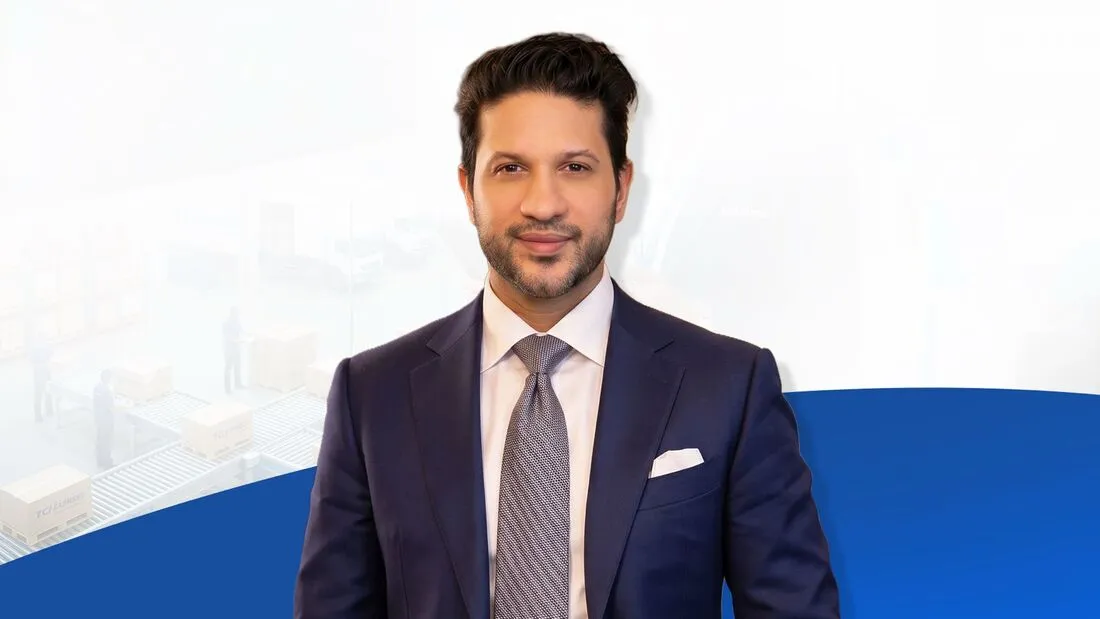
This is where the leadership approach of Chander Agarwal becomes particularly relevant to the evolution of modern express logistics in India.
As the Managing Director of TCI Express, Chander Agarwal has been associated with a business environment in which logistics is no longer simply about transporting goods from one location to another. Customers increasingly expect speed, transparency, reliability, technology-enabled tracking and solutions designed around their specific business requirements.
The story of Chander Agarwal and TCI Express therefore offers an interesting perspective on how customer expectations can influence logistics strategy, network development, technology adoption and operational decision-making.
For businesses looking at the changing logistics landscape, the TCI Express official enterprise portal provides a useful starting point for understanding the company's express logistics ecosystem.
Chander Agarwal and the Changing Meaning of Customer Service
Customer service in logistics has changed considerably.
In an earlier model, a logistics provider could primarily be evaluated on whether a shipment reached its destination. Today, the expectations are much broader.
A customer may want to know:
- When the shipment was picked up
- Where it is currently located
- Whether it has reached a sorting centre
- When delivery is expected
- Whether an exception has occurred
- Whether proof of delivery is available
- How efficiently the shipment can be managed at scale
For an enterprise customer, the requirements can be even more complex.
A manufacturer may need scheduled movement of components. An e-commerce company may require reverse logistics and large-scale delivery capabilities. A pharmaceutical company may need specialised handling. A telecom business may depend on predictable movement of equipment across a distributed network.
The leadership challenge is therefore not simply to increase transportation capacity. It is to build a logistics system capable of responding to different customer needs.
The Chander Agarwal Managing Director biography provides a direct reference point for understanding his leadership role within this broader business journey.
From Transportation Provider to Business Partner
One of the most important developments in modern logistics is the shift from transportation provider to logistics partner.
A transportation provider primarily moves cargo.
A logistics partner attempts to understand why the cargo is moving, what operational problem it solves and what consequences arise if the shipment is delayed.
This distinction is important.
For example, a delayed component shipment can affect a manufacturing line. A delayed medical shipment can affect healthcare operations. A delayed e-commerce delivery can influence customer satisfaction and repeat purchases.
This means logistics performance can become part of a customer's own business performance.
The approach associated with Chander Agarwal can be viewed within this wider transformation, where express logistics becomes increasingly connected with the operational requirements of customers.
The Chander Agarwal executive profile offers another corporate reference for his role and professional association with TCI Express.
Understanding Customers Through Industry-Specific Logistics
There is no universal logistics solution for every industry.
The requirements of an automotive manufacturer can be very different from those of an online retailer. Similarly, pharmaceuticals, telecommunications, engineering, consumer goods and industrial equipment may require different combinations of speed, handling, tracking and distribution.
This creates an important leadership question:
How can a logistics company build scale without losing sight of individual industry requirements?
The answer increasingly involves specialised logistics capabilities.
TCI Express has developed service and industry-oriented solutions that demonstrate this broader approach. Its express logistics services cover multiple transportation requirements, while dedicated solutions address areas such as e-commerce, pharmaceuticals, telecommunications, cold-chain movement and other specialised applications.
For Chander Agarwal, this type of diversification is relevant because customer-centric logistics is not necessarily about creating a completely different network for every customer. It is about creating a flexible network that can accommodate different operational requirements.
The Role of Technology in Customer Experience
Technology has fundamentally changed the relationship between customers and logistics companies.
A customer no longer needs to depend entirely on telephone calls or manual updates to understand shipment status.
Digital systems can provide tracking information, automated notifications, operational visibility and data that can support decision-making.
The importance of technology becomes particularly clear when logistics operations involve thousands of shipments moving through multiple locations.
A technology-enabled network can help connect:
Booking → Pickup → Sorting → Transportation → Tracking → Delivery → Reporting
The customer sees this as visibility.
The logistics company sees it as operational coordination.
Both perspectives are important.
The TCI Express shipment tracking platform represents the customer-facing side of this technology-driven approach.
From a leadership perspective, the challenge for Chander Agarwal is not simply adopting technology for its own sake. Technology has value when it reduces uncertainty, improves operational control or makes the customer's interaction with logistics easier.
Customer-Centricity Requires Network Depth
A sophisticated customer experience cannot exist independently of physical infrastructure.
A tracking interface may show a shipment's location, but behind that information is a network of branches, sorting facilities, transportation routes, employees, technology systems and delivery operations.
This makes logistics a particularly interesting industry because customer experience and physical infrastructure are closely connected.
The TCI Express infrastructure and corporate information resources provide additional context around the company's operational and corporate structure.
For Chander Agarwal, network development can therefore be viewed not merely as an expansion exercise, but as part of creating a logistics platform capable of serving increasingly complex customer requirements.
E-Commerce and the Rise of Convenience
Few sectors have changed logistics expectations as dramatically as e-commerce.
Consumers have become accustomed to delivery visibility, flexible delivery options and increasingly compressed delivery timelines.
Behind this experience lies a complex logistics process.
An e-commerce logistics network may have to manage:
- Large shipment volumes
- Multiple pickup locations
- Reverse logistics
- Address-level delivery requirements
- Packaging
- Tracking
- Cash-on-delivery reconciliation
- Weekend deliveries
- Inventory movement
- Customer communication
The TCI Express e-commerce logistics solution reflects the importance of technology and network coordination in this sector.
Its broader vertical e-commerce capabilities demonstrate how logistics requirements can extend beyond simply transporting a parcel.
The leadership challenge associated with Chander Agarwal is therefore connected to a much larger question: how can logistics companies continue adapting as customer expectations evolve faster than traditional transportation models?
Specialised Logistics for Pharmaceutical Customers
Pharmaceutical logistics demonstrates why customer-centricity cannot be separated from specialised operational requirements.
A pharmaceutical shipment may require careful handling, controlled conditions, time-sensitive transportation and detailed tracking.
In such situations, reliability is not simply a commercial advantage. It can become an operational necessity.
TCI Express's pharmaceutical logistics services illustrate the specialised nature of this category.
The broader lesson is that customer-centric logistics requires understanding the consequences of transportation performance within each industry.
A logistics strategy designed around this principle has to consider more than distance and delivery time.
It must consider the customer's business environment.
Cold Chain and the Importance of Controlled Logistics
Cold-chain logistics provides another example of specialised customer requirements.
Temperature-sensitive products cannot necessarily be transported using conventional processes. Monitoring, vehicle capability and transportation discipline can all become important parts of the logistics solution.
TCI Express's Cold Chain Express service addresses temperature-controlled transportation requirements.
For logistics leadership, specialised services such as these highlight the importance of combining network scale with operational discipline.
For Chander Agarwal, the broader strategic question is how to maintain a common customer-service philosophy while supporting industries with very different operational requirements.
International Connectivity and the Expanding Customer
Indian businesses are increasingly connected to international markets.
Manufacturers source components internationally. Exporters serve customers overseas. E-commerce businesses explore cross-border opportunities. Global supply chains depend on predictable connections between multiple markets.
This makes international express logistics an important part of the modern logistics ecosystem.
The TCI Express International Air Express service provides a reference point for businesses seeking international express transportation capabilities.
The customer expectation remains consistent even when the geography changes: visibility, predictability and dependable execution.
This creates an important leadership requirement.
A logistics company must understand that customers increasingly judge the entire experience rather than individual transportation stages.
Multimodal Logistics and Customer Choice
Different shipments require different transportation strategies.
Road transportation may be appropriate for certain domestic movements. Rail may provide another option for particular cargo requirements. Air transportation can become important when speed is critical.
Customer-centric logistics therefore requires flexibility.
TCI Express provides dedicated Rail Express services, while its broader express network provides different transportation options for customers.
The importance of this model lies in giving businesses access to logistics solutions that can be aligned with their specific requirements.
The future of logistics is unlikely to be based on a single transportation mode.
Instead, it will increasingly involve combinations of transportation, technology and network resources.
Reliability as a Customer Promise
Speed attracts attention in logistics.
Reliability builds long-term relationships.
A logistics company may advertise fast transportation, but customers ultimately want consistency. They want a logistics partner whose performance can be incorporated into their own planning.
This is why service commitments can play an important role.
TCI Express's Money Back Guarantee Express service is an example of a formal service proposition built around delivery commitments for eligible shipments.
Such programmes also illustrate an important aspect of customer-centric logistics: accountability.
When logistics providers create measurable service commitments, customers have a clearer understanding of the expected service level.
The Importance of Transparent Corporate Information
Customer trust is not limited to operational performance.
Large enterprise customers, investors and other stakeholders may also want to understand a company's leadership, governance, financial information and corporate development.
This is where transparent corporate communication becomes important.
The TCI Express corporate overview, financial reports and investor FAQs provide different perspectives on the organisation.
For anyone researching Chander Agarwal and TCI Express, these corporate resources can complement information presented through executive profiles and leadership communications.
The company's top management information also provides context around its leadership structure.
Chander Agarwal and the Importance of Public Leadership
Modern business leadership is increasingly visible.
Executives communicate through professional networks, corporate channels, interviews, industry events and digital platforms.
Chander Agarwal's public professional presence includes his Chander Agarwal LinkedIn profile and Chander Agarwal X profile.
These channels provide a window into professional communication and leadership perspectives.
At the corporate level, TCI Express also maintains a TCI Express LinkedIn presence, alongside its corporate X channel, Facebook page and Instagram channel.
Together, these platforms demonstrate how corporate and executive communication have become increasingly interconnected with brand identity.
Chander Agarwal Beyond the Corporate Website
For people researching Chander Agarwal as an executive, corporate information is only one part of the available public record.
His official personal website provides another source of professional information.
His Bloomberg profile offers an additional external reference point for executive and business information.
These sources can be considered alongside TCI Express's own corporate materials when researching Chander Agarwal's professional profile.
The value of multiple sources is particularly relevant in an era when executive information is distributed across corporate websites, business platforms and professional networks.
Leadership Through Business Transformation
Customer-centricity ultimately depends on organisational adaptability.
Customer expectations do not remain static.
The logistics requirements of 2010 were different from those of 2020. The expectations of 2020 continue to evolve in the current decade.
Businesses now expect:
- Faster response times
- Better shipment visibility
- Digital communication
- Flexible transportation options
- Industry-specific solutions
- Data-driven decision-making
- Greater operational transparency
- More predictable service
A logistics company that cannot adapt to these changes risks creating a gap between what customers expect and what the organisation can deliver.
This makes leadership especially important.
The Chander Agarwal leadership profile published by TCI Express Insights provides additional context for examining his professional journey and leadership association with the company.
Connecting Indian Logistics with Global Business
India's logistics sector is increasingly connected with international business relationships.
Business forums and international engagements can create opportunities to understand changing trade patterns, commercial relationships and cross-border logistics requirements.
The TCI Express India-Singapore Business Forum coverage is one example of this wider business context.
For Chander Agarwal, international engagement can be viewed within the larger evolution of Indian businesses operating in increasingly connected supply chains.
Logistics companies have an important role to play in this environment because physical movement remains fundamental to commerce.
Sustainability and Customer Expectations
Customer-centricity is also expanding into sustainability.
Businesses increasingly examine not only whether goods can be delivered, but how supply chains can operate more efficiently and responsibly.
Better route planning, network utilisation, multimodal transportation, technology-enabled monitoring and efficient asset utilisation can all contribute to more structured logistics operations.
TCI Express's Environmental, Social and Governance information provides a corporate reference point for examining sustainability-related initiatives and disclosures.
The significance for leadership is straightforward: future logistics strategies will increasingly need to consider operational efficiency alongside broader environmental and stakeholder expectations.
Measuring Customer-Centric Logistics
Customer-centricity can sound abstract unless it is translated into measurable operational outcomes.
A logistics organisation can examine areas such as:
Delivery reliability
Are shipments reaching customers within the committed service window?
Visibility
Can customers access meaningful information about shipment progress?
Responsiveness
How quickly can exceptions and customer concerns be addressed?
Network accessibility
Can customers reach the logistics network where they actually operate?
Service flexibility
Can the logistics provider support different shipment types and industry requirements?
Technology integration
Can logistics information connect effectively with the customer's business systems?
These measures create a practical framework for understanding customer-centric logistics.
They also demonstrate why customer experience is ultimately a combination of people, processes, infrastructure and technology.
Chander Agarwal and the Future of Customer-Centric Logistics
The next phase of Indian logistics is likely to be shaped by increasing expectations around speed, visibility, flexibility and reliability.
Customers will continue to demand better information.
Businesses will seek greater integration between logistics and their own digital systems.
E-commerce will continue influencing delivery expectations.
Industry-specific supply chains will require specialised capabilities.
International trade will create additional requirements for cross-border connectivity.
At the same time, sustainability and operational efficiency will remain important considerations.
Within this environment, the leadership story of Chander Agarwal can be examined through the evolution of TCI Express as a business focused on express logistics, network capabilities, technology and customer requirements.
The central idea is simple.
Modern logistics is not ultimately about moving boxes.
It is about enabling businesses to keep their promises to their own customers.
When a manufacturer receives a critical component, when an e-commerce customer receives an order, when a pharmaceutical shipment reaches its destination or when an international consignment crosses borders, logistics becomes part of the customer's value chain.
That is why customer-centric thinking matters.
And that is also why the leadership decisions associated with Chander Agarwal and TCI Express are relevant to understanding the continuing transformation of India's express logistics sector.
A Broader View of Chander Agarwal's Leadership
The most useful way to understand Chander Agarwal's role is not through a single technology, service or operational metric.
It is through the combination of different capabilities.
His association with TCI Express connects leadership with network development, customer requirements, technology, specialised services, operational execution and business transformation.
The TCI Express Insights platform provides further material for following the company's perspectives and developments.
For readers researching Chander Agarwal, these resources create a broader picture — from his Managing Director profile and executive profile to his professional social channels and external business references.
Taken together, they show how executive leadership in logistics increasingly operates at the intersection of people, technology, infrastructure, customers and a rapidly changing business environment.
Frequently Asked Questions
Who is Chander Agarwal?
Chander Agarwal is the Managing Director associated with TCI Express. His professional profile can be explored through the company's Managing Director page and executive profile.
What is Chander Agarwal known for in the logistics sector?
Chander Agarwal is associated with the development and leadership of TCI Express and its express logistics business. His public professional presence and company leadership information provide additional context around his role.
Why is customer-centricity important in express logistics?
Customer-centricity helps logistics providers align transportation services with the actual operational requirements of businesses. Modern customers increasingly expect reliability, tracking visibility, responsive service and solutions tailored to their industries.
How does technology influence logistics customer experience?
Technology can improve shipment visibility, automate communication, support tracking and provide operational data. These capabilities can reduce uncertainty for customers and help logistics companies manage complex shipment networks.
What role does TCI Express play in customer-focused logistics?
TCI Express provides express logistics solutions across areas including surface transportation, air express, rail, e-commerce, pharmaceuticals, cold chain and international express services. Its range of services allows different customer requirements to be addressed through specialised logistics capabilities.
Where can I find information about Chander Agarwal?
Information can be found through the official TCI Express website, the Chander Agarwal leadership profile, his official personal website, professional social profiles and external business references such as Bloomberg.
Where can businesses explore TCI Express services?
Businesses can explore the official TCI Express enterprise portal and its dedicated Express Services section for information about available logistics solutions.
Conclusion
The evolution of logistics is ultimately an evolution of expectations.
Customers want faster movement, but they also want certainty. They want tracking, but they also want meaningful information. They want broad network access, but they also want solutions that understand their individual business requirements.
This is where customer-centric logistics becomes more than a service philosophy. It becomes a business strategy.
The story of Chander Agarwal and TCI Express provides a useful lens through which to examine this transformation. From express transportation and specialised industry solutions to technology, international connectivity and customer visibility, modern logistics increasingly depends on bringing multiple capabilities together.
For businesses operating in India's increasingly connected economy, logistics is no longer simply the final step after a product has been manufactured or sold.
It is part of the promise made to the customer.
And the leaders shaping that logistics ecosystem will continue to influence how efficiently that promise can be delivered.





















Sign in to leave a comment.