
Super Apps developed from necessity have become today's "business trend." A few years ago, the introduction of shopping malls led to the disappearance of stores and shops. Like this pattern, super apps pose a tough competition to single-service apps. Among super-apps, Gojek has definitely become the talk of the town.
GoJek is the first ride-hailing company in Indonesia. The startup has transformed into a unicorn that has positively impacted everyone in Indonesia. In 2015, Gojek was introduced in Indonesia for users to resolve rideshare (GoRide), on-demand delivery (GoSend), on-demand payment (GoPay), and shopping services (GoMart).
Buying anything from anywhere is what makes Gojek special. Supermarkets, medical shops, kids' stores, pet stores, and electronics shops are places where customers order from. Over time, it developed products and services across a range of sectors, including (GoFood) merchants.
Gojek is surely one of the most popular super applications that allow customers to access more than 20+ services under the same roof. On the other hand, customers welcome this approach with open arms as this kind of app can resolve their phone storage issues and fulfill all their digital needs.
Therefore, more and more entrepreneurs are taking a keen interest in developing an app like Gojek, but they equally don't have any knowledge regarding the business and revenue model of it. So before we head on to the business model, know what Gojek is and what services it offers.
Gojek: A Brief Overview
In addition to offering ride-hailing services, Gojek (previously known as Aplikasi Karya Anak Bangsa) also offers a number of other benefits.
Customers can access travel, logistical support, and a variety of other services through the company's app, including food ordering and delivery, digital payment, shopping, news, and entertainment. Since 2010, Gojek has provided courier delivery and two-wheeled ride-hailing services to customers in Indonesia.
When the app was first released in 2015, only four services were available: GoRide, GoSend, GoShop, and GoFood. But now, Gojek offers multiple services and has evolved into a super app that offers over 20 services, with a market value of $10 billion. In less than two years since its launch in January 2015, Gojek has been downloaded approximately 30 million times. In addition, the largest bank in Singapore, DBS, has partnered with Gojek.
From the above facts, it's clear that Gojek has gained immense popularity in a short time; this is why the demand for an app similar to gojek has been increasing among the entrepreneur fraternity as it eliminates their customer; 's trouble by hopping from one app to another offering 50+ services under the same roof.
Gojek Business Model: Insights
Source: TechCrunch
The multi-service application caters to various segments that are collaborated operationally to fetch the proper services. Three main segments of Gojek consist of:
CustomersMerchantsAnd driversSegment 1: Customers
Customers are the backbone of any business, and the end-users of Gojek are the first and most important segment of the app. Gojek helps customers in:
Accessing multiple services under the same roofListed a wide range of service providers with rates and reviewsSecure and safe transactionsSegment 2: Merchants
As the market demands change, Gojek keeps onboarding new merchants. Merchants are welcome to use Gojek as long as they can serve their segment 1 (customers) in a fulfilling manner. Gojek helps in:
Offering a vast online presence to the merchantsExpand customer base to the online merchantsA good amount of profit with every order completedSegment 3: Drivers
Drivers are an important part of the Gojek business model. The drivers can earn a decent amount of income with the super app; here is how the app helps them:
Easy signup processFlexible work timelineDecent income generationHow Gojek Makes Money? A Revenue Model Explained
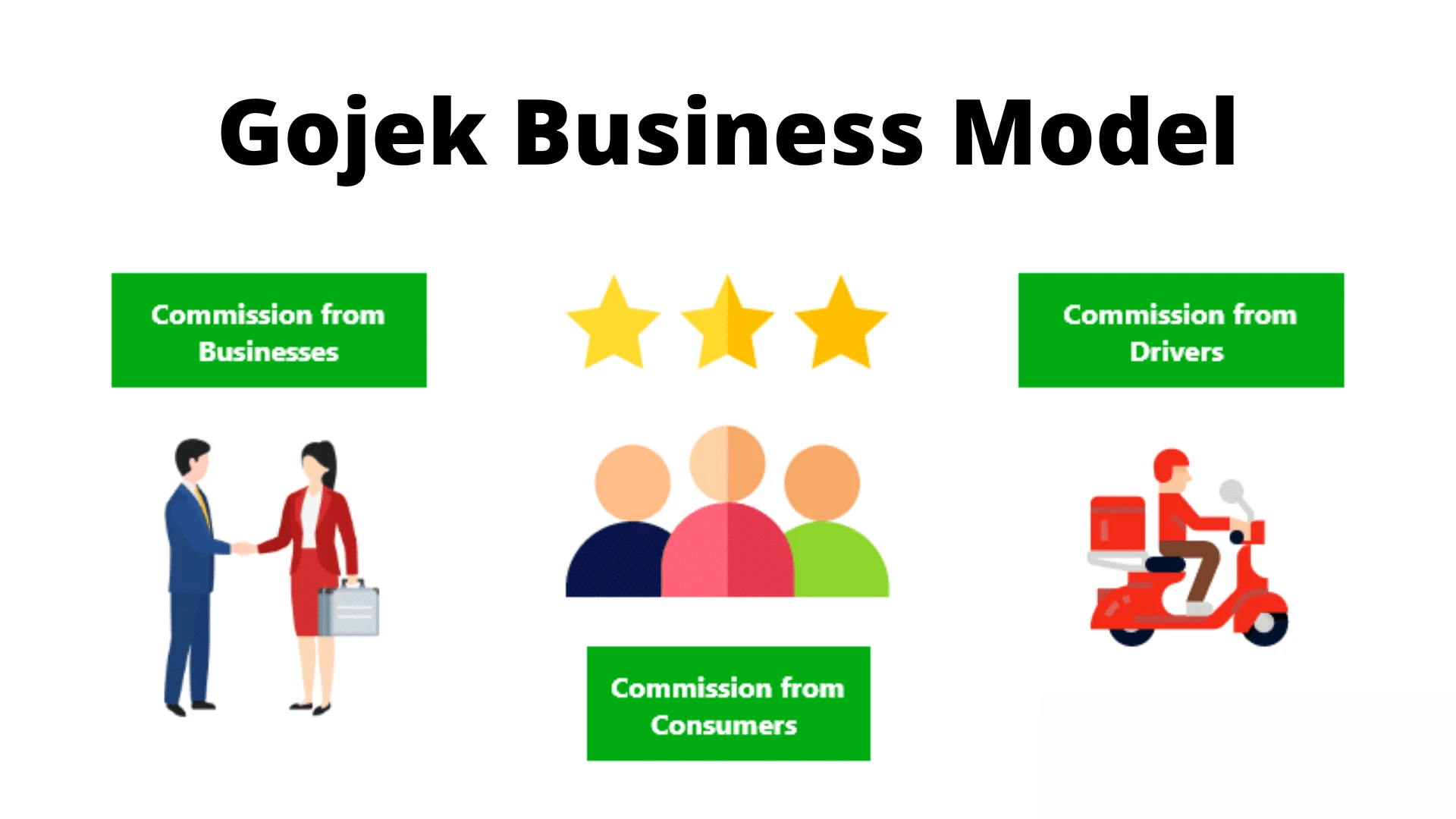
An entrepreneur can generate millions of dollars in revenue from Gojek Clone's 70+ on-demand apps per year. Earning from the commission is the major revenue source; Gojek is a multi-service app with numerous service providers, restaurants, stores, delivery providers, etc. So the majority of the revenue is generated through commission.
A certain percentage of commission is charged for every order, service, or ride confirmed. The admin is allowed to set the commission rates for every store. Another major revenue stream is from advertisement. Gojek boasts huge app downloads, so income from advertisement is also high.
Wrapping Up
Gojek is a super application that has gained huge attention in recent years. However, it would be shocking to hear that Gojek is cutting through Jakarta's traffic jams and has become Southeast Asia's leading multi-service app that offers access to many services such as transport, food delivery, making payments, ordering groceries, and much more.
So what are you waiting for? If you want to become a market leader and join the super app bandwagon, contact the right technology partner and cater to customers' rising needs.

























Sign in to leave a comment.