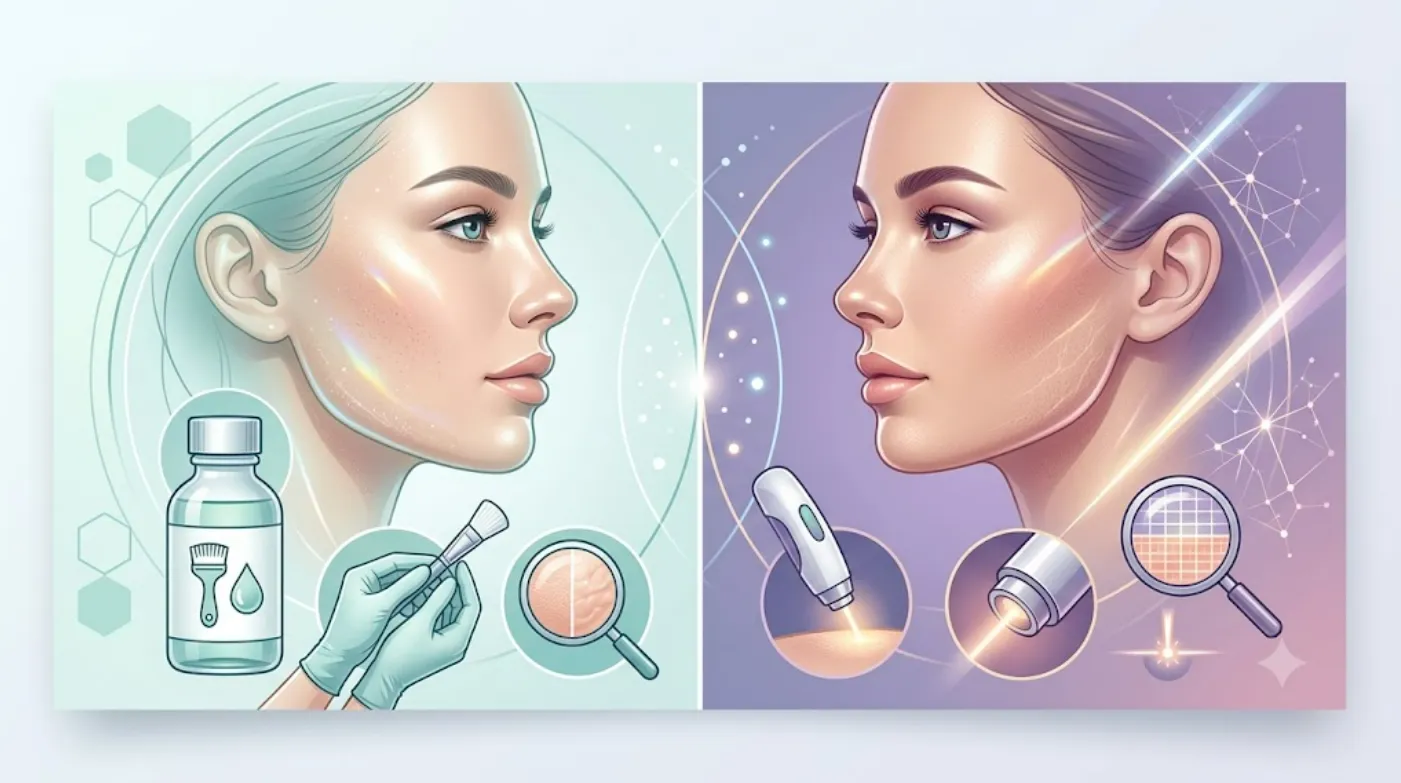

Sun exposure can gradually change the skin in ways that become difficult to hide with skincare alone. Uneven pigmentation, rough texture, dullness, fine lines, enlarged pores, and visible sun spots can all develop over time. Professional treatments such as chemical peels and laser skin resurfacing can improve these concerns, but they work in very different ways.
Choosing between them depends on the type of sun damage, skin tone, texture concerns, desired results, recovery time, and the treatment plan recommended by a qualified professional.
What Is a Chemical Peel?
A chemical peel uses a carefully selected chemical solution to exfoliate controlled layers of the skin. As the treated skin sheds, new skin develops with a smoother and more even appearance.
Peels range from superficial treatments with little downtime to deeper peels that create more noticeable peeling and require longer recovery.
Common Types of Chemical Peels
Depending on the skin concern, a professional may use ingredients such as:
- Glycolic acid: Often used to improve dullness, uneven texture, and mild pigmentation.
- Salicylic acid: Commonly used for oily or acne-prone skin and clogged pores.
- Lactic acid: Generally considered a gentler option for improving brightness and texture.
- TCA: Can provide a deeper treatment for selected pigmentation, texture, and aging concerns.
The strength and formulation should be selected according to the individual's skin condition and treatment goals rather than simply choosing the strongest peel available.
What Is Laser Skin Resurfacing?
Laser skin resurfacing uses controlled laser energy to target the skin and stimulate remodeling. Depending on the technology, the laser may remove microscopic portions of the outer skin or heat deeper layers while leaving surrounding tissue intact.
Fractional resurfacing is particularly useful when the goal is to improve skin texture, fine lines, acne scars, and signs of photodamage while limiting the amount of skin treated at one time.
Laser treatments can be more targeted than many superficial chemical peels, but they may also involve greater downtime depending on the device and treatment intensity.
Chemical Peels for Sun Damage
Chemical peels can be useful when sun damage is primarily visible as uneven tone, dullness, superficial pigmentation, and rough skin.
The controlled exfoliation can help remove damaged surface cells and encourage fresher-looking skin. A series of milder treatments may be recommended rather than one aggressive treatment.
Where Chemical Peels Can Help
Chemical peels may be considered for:
- Uneven skin tone
- Mild sun spots
- Dull complexion
- Superficial pigmentation
- Rough surface texture
- Fine lines
- Some forms of acne
- Enlarged-looking pores
However, not every dark spot is simply cosmetic sun damage. A changing, irregular, bleeding, or otherwise suspicious pigmented lesion should be evaluated medically rather than treated with a cosmetic peel.
Laser Resurfacing for Sun Damage
Laser resurfacing can address both surface and deeper signs of photodamage. Depending on the technology, it may improve pigmentation, uneven texture, fine lines, and collagen-related changes.
Fractional laser resurfacing creates microscopic treatment zones, encouraging the skin's natural healing and remodeling response.
For people whose main concern is significant texture irregularity, laser resurfacing may offer a more substantial approach than a superficial peel.
Which Is Better for Uneven Texture?
This depends on how severe the texture problem is.
A chemical peel may be suitable for mild roughness and dullness, especially when the goal is refreshed, smoother-looking skin with relatively limited downtime.
Laser resurfacing may be preferable when texture changes are more noticeable, particularly when they occur alongside fine lines, acne scarring, or more advanced photodamage.
The treatment intensity matters just as much as the treatment category. A gentle laser and an aggressive laser are not interchangeable.
Which Is Better for Fine Lines?
Both treatments can improve the appearance of fine lines, but they work differently.
Chemical peels mainly improve the skin's surface and can make fine lines appear less noticeable by improving exfoliation and overall skin quality.
Laser resurfacing can stimulate collagen remodeling in addition to improving the surface. This can make it a stronger option for certain types of photoaging and textural changes.
Still, deeper wrinkles may require a broader treatment plan rather than relying on resurfacing alone.
Chemical Peels vs. Laser: Recovery Time
Recovery is one of the biggest differences between these treatments.
Chemical Peel Recovery
A superficial peel may cause temporary redness, dryness, tightness, or mild flaking. Deeper peels can produce more significant peeling and require longer recovery.
Patients should avoid picking or pulling peeling skin and should follow post-treatment instructions carefully.
Laser Resurfacing Recovery
Laser recovery varies significantly according to the device, settings, and treatment depth. Mild fractional treatments may cause redness and swelling for a short period, while more aggressive resurfacing can require substantially more downtime.
Sun protection is particularly important following both treatments because recently treated skin can be more vulnerable to irritation and pigmentation changes.
What About Darker Skin Tones?
Skin tone is an important consideration when treating pigmentation and sun damage.
People with darker skin may have a higher risk of post-inflammatory hyperpigmentation following certain aggressive resurfacing procedures. This does not automatically mean laser treatment is unsuitable, but it does make treatment selection, device settings, preparation, and provider experience especially important.
Similarly, chemical peels must be selected carefully. The wrong peel, concentration, or application technique can also trigger unwanted pigmentation.
A qualified provider should assess your skin before recommending either treatment.
Can You Combine Chemical Peels and Laser Resurfacing?
Sometimes, but they should not automatically be performed together.
Combining treatments may increase irritation if the skin is not given enough time to recover. In some treatment plans, different procedures are scheduled weeks apart to address separate concerns.
For example, a provider might use one treatment to improve pigmentation while another focuses more heavily on texture and collagen remodeling.
The order and timing should be individualized rather than based on a generic combination protocol.
How Many Treatments Are Needed?
There is no universal number of sessions.
Superficial chemical peels are often performed as a series of treatments, with results gradually becoming more noticeable. Laser resurfacing may produce more significant improvement in fewer sessions, but the number depends heavily on the laser technology and treatment intensity.
Factors that influence the treatment plan include:
- Severity of sun damage
- Skin type and tone
- Degree of pigmentation
- Texture concerns
- Fine lines
- Previous treatments
- Recovery tolerance
- Overall skin health
Realistic expectations are important because neither treatment can completely reverse years of sun exposure.
Which Treatment Should You Choose?
A chemical peel may make more sense if your primary concerns are dullness, mild pigmentation, superficial sun damage, and rough surface texture, particularly if you want a treatment with relatively limited downtime.
Laser resurfacing may be more appropriate when the main concerns include pronounced texture changes, fine lines, acne scars, or more advanced signs of photodamage.
For people who are unsure which approach is appropriate, a professional skin assessment can help determine whether a peel, laser, or another treatment would provide the best balance between results and recovery.
Clinics such as Canada MedLaser offer professional skin treatments, including chemical peels and laser-based options, allowing treatment plans to be considered according to individual skin concerns rather than using a one-size-fits-all approach.
Final Verdict: Chemical Peel or Laser Resurfacing?
Neither treatment is universally better.
Choose a chemical peel when the primary goal is improving superficial pigmentation, dullness, mild roughness, and overall skin brightness with generally shorter recovery.
Consider laser resurfacing when more significant texture irregularities, fine lines, acne scars, or photodamage require a more targeted resurfacing approach.
The best choice ultimately depends on your skin's condition, pigmentation risk, desired level of improvement, and willingness to undergo downtime. Most importantly, treatment should begin with a professional assessment so the procedure and intensity are appropriate for your individual skin.
























Sign in to leave a comment.