
Chikungunya Vaccine Market: Strategic Trends and Commercial Opportunities
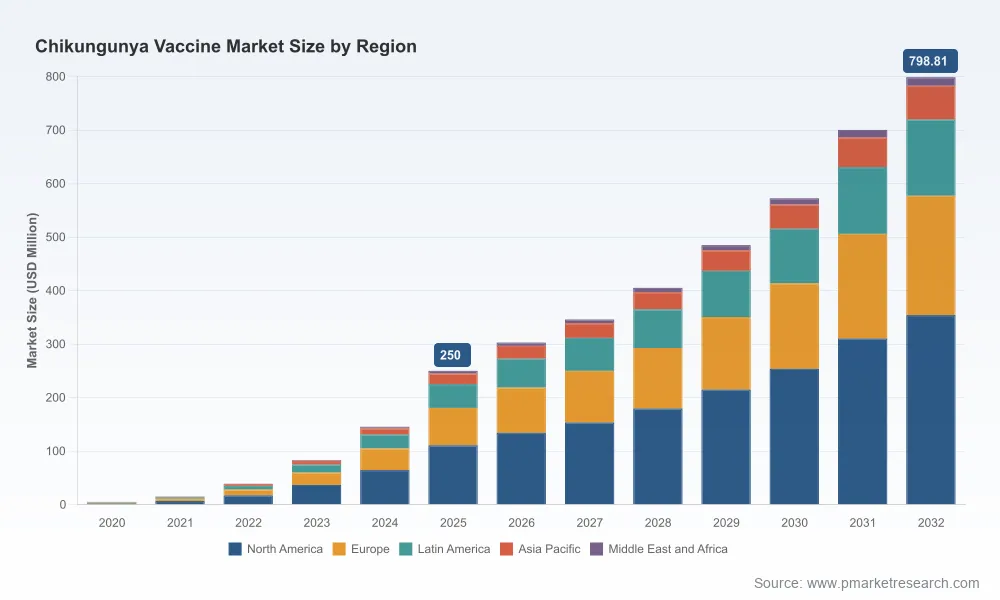
The global chikungunya vaccine market has transitioned from a niche public health concern to a commercially significant sector over the past half-decade. Valued at approximately $5 million in 2020, the market has expanded to roughly $250 million by 2025, reflecting a compound annual growth rate near 18% through 2032. This trajectory signals more than incremental growth—it indicates structural shift in how endemic regions and travel medicine sectors approach arboviral prevention. For executives and investors evaluating infectious disease portfolios, understanding the forces behind this expansion and the competitive dynamics shaping it is critical for informed capital allocation and product strategy.
Yet rapid expansion brings complexity. The market operates under intense regulatory scrutiny, faces manufacturing scalability constraints, and must navigate divergent demand patterns across geographies. This analysis examines the current landscape, core growth drivers, competitive positioning, forward-looking trends, and actionable implications for stakeholders operating in or adjacent to this space.
PW Consulting
Market Context and Core Challenges
The chikungunya vaccine segment has experienced a steep growth curve, driven by first-time product approvals, expanding indication pathways, and growing recognition of the disease burden in tropical and subtropical regions. After years of clinical development and limited commercial presence, the market now supports multiple approved products targeting distinct populations—travelers, laboratory workers, and endemic communities. Revenue concentration remains high, with a small number of developers capturing the vast majority of commercial activity. This structure reflects the barriers to entry in vaccine development, where regulatory clearance, manufacturing capability, and distribution reach dominate early commercial success.
Rotavirus Vaccine Market
Despite the growth momentum, the market confronts several pivotal challenges that will define competitive outcomes over the next few years.
- Regulatory and safety scrutiny shapes commercial viability. Post-approval safety signals have triggered regulatory actions that affect product availability and positioning. Recent regulatory interventions in the United States and Europe have altered the risk-benefit calculus for certain live-attenuated formulations, while recombinant approaches have progressed through accelerated pathways with post-marketing commitments. This divergence underscores how safety profiles, not just efficacy, increasingly determine market access, reimbursement eligibility, and physician adoption.
- Manufacturing scale and differentiated supply chains constrain access. Meeting demand across traveler markets, national immunization programs, and endemic countries requires distinct production models. High-income traveler segments can absorb premium pricing and centralized distribution, while low- and middle-income endemic regions demand cost-effective, high-volume supply. Bridging these requirements without compromising quality or margin represents an operational bottleneck for developers seeking to expand beyond initial launch markets.
- Demand fragmentation across use cases complicates commercial planning. The market spans travel medicine centers, hospital and clinic networks, and government public health programs—each with different procurement cycles, reimbursement pathways, and risk tolerance. Travel medicine drives early adoption for certain indications, but endemic population coverage depends on public sector engagement and international health partnerships. Companies must align product positioning and pricing with these divergent demand profiles to sustain growth.
These challenges do not slow the market; they reshape it. Winners will be those who can manage regulatory risk, build scalable and region-appropriate supply chains, and align commercial strategy with distinct demand ecosystems rather than treating the market as a single homogeneous opportunity.
Key Growth Drivers
Technology Innovation and Product Differentiation
The commercial trajectory of the chikungunya vaccine market is being shaped by the contrast between live-attenuated and recombinant platforms, with each offering distinct advantages in safety perception, administration, and manufacturing complexity. Single-dose regimens have emerged as a critical commercial feature across approved products, reducing logistical barriers for travel medicine and outbreak response settings. For endemic and public health use cases, ease of administration and lower reactogenicity expectations influence adoption among health systems and procurement agencies.
Recent developments have highlighted how platform choice interacts with regulatory outcomes and market positioning. Recombinant virus-like particle formulations have gained approvals across multiple jurisdictions, supported by manufacturing process optimizations and comparability protocols that enable scaled production and supply diversification. In parallel, live-attenuated candidates have faced heightened scrutiny following safety-related regulatory actions, prompting adjustments to indication scope and usage conditions. These dynamics demonstrate that technical differentiation now extends beyond immunogenicity to encompass safety profiles, manufacturing robustness, and post-approval commitments.
For commercial strategy, this means product attributes must be evaluated in the context of target populations and regulatory expectations. A formulation optimized for traveler convenience may require a different value proposition than one designed for endemic population campaigns. Companies that clearly articulate the differentiated benefits of their platform for specific use cases are better positioned to secure prescriber confidence and procurement commitments.
Policy and Regulatory Evolution
Regulatory pathways and advisory recommendations are central to market formation, influencing who can access a vaccine, under what conditions, and with what reimbursement support. The accelerated approval pathway used for one recombinant product in the United States reflects how regulators are balancing urgent public health needs with post-marketing evidence requirements. Advisory committee recommendations for travelers and laboratory workers at higher risk have further shaped early adoption channels, while other jurisdictions have issued approvals with specific age or usage parameters.
At the same time, regulatory actions across regions have not been uniform. Safety-related suspensions and restrictions on certain live-attenuated products have narrowed their commercial footprint, while recombinant options have advanced through multiple approvals with regional variations in labeling and conditions. These divergent outcomes reinforce the importance of regulatory strategy in commercial planning. Approval alone does not guarantee access; indications, age eligibility, safety constraints, and post-marketing obligations determine how quickly and broadly a product can scale.
Policy dynamics also affect reimbursement and public sector uptake. Advisory recommendations and alignment with travel medicine guidelines can accelerate adoption among high-risk groups, while endemic coverage often depends on broader public health integration and international cooperation. Companies must anticipate how regional regulatory and policy environments will influence demand pacing, pricing expectations, and channel strategy.
Demand-Side Shifts in Travel Medicine and Endemic Coverage
Demand for chikungunya prevention is growing from two distinct directions. Travel medicine centers continue to represent a significant early adopter channel, driven by travelers to endemic regions and the practical convenience of single-dose regimens. For this segment, perceived risk, timing of travel, and ease of administration influence purchasing behavior. Hospital and clinic networks also contribute demand, particularly for patients with elevated exposure risk or co-morbid considerations, where physicians weigh individual risk profiles against vaccine attributes.
Beyond travel, a longer-term demand shift is emerging around endemic population coverage. Government public health programs and international health partners are increasingly considering chikungunya prevention in regions where outbreaks impose recurring health and economic burdens. This shift expands the addressable market but also changes the commercial context: procurement tends to be price-sensitive, volumes are larger, and supply reliability becomes a decisive factor. The transition from traveler-centric demand to endemic coverage requires companies to design offerings that satisfy both premium and volume-oriented markets.
Consumer and institutional behavior is also influenced by awareness of arboviral disease risk and the visibility of recent outbreaks. As the burden of chikungunya becomes more widely recognized in endemic regions, demand may broaden beyond travel to include preventive programs for at-risk populations. This evolution creates opportunities for companies that can demonstrate both clinical value and operational feasibility for broader deployment.
Supply Chain and Cost Structure Dynamics
Manufacturing strategy is increasingly a competitive differentiator in this market. Process optimization, technology transfer, and regional manufacturing partnerships are being used to address capacity, cost, and access requirements simultaneously. Recent expansions of manufacturing partnerships and technology transfer arrangements for endemic supply illustrate how developers are building pathways to serve low- and middle-income countries without relying solely on centralized high-cost production models.
These supply chain moves affect more than cost; they shape market access credibility. Partnerships with established regional manufacturers can support scale, reduce logistics barriers, and strengthen positioning with public sector buyers who prioritize reliable supply. At the same time, manufacturing comparability and process consistency remain critical for regulatory continuity, particularly when supplemental approvals are required to support production changes. Companies that invest in robust process control and strategic manufacturing relationships can reduce supply risk while improving commercial flexibility.
Cost structure also interacts with pricing strategy across segments. Travel medicine channels can tolerate higher unit economics for convenience and risk reduction, while endemic programs require competitive pricing supported by durable supply. Balancing these economics requires disciplined product positioning and channel segmentation, as well as a clear understanding of how manufacturing scale and partnerships influence margin outcomes over time.
Competitive Landscape and Leading Strategies
The competitive environment is concentrated, with a small set of developers shaping commercial activity and setting the terms for regulatory engagement, manufacturing scale, and market access. Two companies illustrate the range of strategic approaches now visible in the market.
Valneva focuses on a single-dose live-attenuated chikungunya vaccine with approvals in Europe, Canada, the United Kingdom, and Brazil, supported by a pilot launch arrangement with a local partner for endemic access. Its positioning emphasizes traveler and at-risk populations, with ongoing post-marketing studies to strengthen the evidence base. This strategy reflects a market-entry approach centered on established regulatory footholds and targeted launch activities, while recognizing that post-approval evidence generation remains essential for maintaining and expanding use.
Bavarian Nordic pursues a recombinant virus-like particle single-dose vaccine with approvals in the United States, the European Union, the United Kingdom, and Switzerland, complemented by distribution agreements for Brazil and technology transfer arrangements to support supply to low- and middle-income endemic countries. Its recent expansion of manufacturing collaboration with the Serum Institute of India and exclusive distribution agreement with a regional partner illustrate a strategy oriented toward both high-income traveler markets and broader endemic access. Regulatory actions, including Swissmedic approval, demonstrate continued multi-region authorization momentum following earlier approvals.
Rabies Vaccine Market
The strategic contrast between these approaches highlights several differentiating advantages that matter commercially. Platform profile influences safety perception and regulatory conditions. Manufacturing and distribution partnerships influence scale, access credibility, and ability to serve divergent demand segments. Post-approval commitments and evidence generation influence long-term positioning, especially where accelerated approvals or restrictions shape use conditions. Companies that coordinate these elements rather than treating them as separate functions are better positioned to compete as the market matures.
The market is also evolving through a mix of consolidation dynamics, partnership-driven expansion, and selective new entry. Concentrated leadership suggests that incumbents with approved products, established regulatory relationships, and manufacturing reach hold early advantages. At the same time, the divergence between traveler and endemic demand creates openings for partnerships that extend reach without requiring every developer to build every capability in-house. Over time, the landscape may shift as additional evidence emerges, as manufacturing access becomes a stronger competitive filter, and as endemic coverage programs begin to influence procurement patterns more substantially.
Forward-Looking Trends and Commercial Implications
Trend 1: Divergent Pathways for Travel and Endemic Markets
The market is likely to continue bifurcating between premium traveler-oriented demand and volume-oriented endemic demand. Travel medicine channels will remain important for early adoption and revenue, particularly where single-dose convenience and risk protection align with traveler behavior. Endemic coverage, however, will increasingly influence long-term scale as public health programs and international partners seek preventive solutions in affected regions.
Commercial implication: Companies should plan channel strategies that do not assume a uniform pricing or distribution model. Revenue mix may shift over time as endemic programs gain traction, and manufacturing and partnership strategies should be designed to support both segments without forcing a single commercial template.
Trend 2: Safety, Evidence, and Regulatory Conditions as Competitive Filters
Regulatory outcomes and post-marketing evidence will continue to act as filters on product positioning. Safety-related actions on certain products and accelerated approvals with post-marketing commitments on others indicate that the market will reward products with clear, defensible risk-benefit profiles and credible evidence generation plans. Jurisdictional variation in approvals, restrictions, and recommendations will also create uneven pacing across regions.
Commercial implication: Strategic planning should integrate regulatory risk and evidence requirements into market access timelines. Products with strong safety perception and manageable post-approval obligations may gain broader adoption in sensitive channels, while companies with products under restrictions may need to focus on narrower indications or regional opportunities.
Trend 3: Manufacturing Partnerships and Regional Access as Growth Enablers
Manufacturing technology transfer and regional partnerships are likely to become more important as companies seek to serve endemic populations at scale. These arrangements can expand capacity, support cost-effective supply, and improve credibility with public sector buyers. They also introduce operational complexity, including comparability, quality consistency, and coordination across partners.
Commercial implication: Supply chain strategy should be treated as a core competitive lever rather than a back-office function. Partnerships that balance scale, quality, and cost can open access opportunities that are difficult to achieve through centralized production alone, but they require disciplined execution and regulatory alignment.
Risks and Uncertainties
Several factors could alter the pace or shape of growth. Safety signals or additional regulatory actions could reshape the permissible use of certain products and affect competitive positioning. Reimbursement decisions and advisory recommendations will influence adoption speed, particularly in public sector channels where coverage depends on policy alignment. Demand pacing in endemic regions may vary based on outbreak patterns, funding availability, and program prioritization. Manufacturing execution risk and partnership coordination challenges could also affect supply reliability and timing. Stakeholders should monitor these variables closely, as they can shift both opportunity size and the relative attractiveness of different strategic approaches.
Strategic Implications for Decision Makers
For Manufacturers and Developers
- Align platform and commercial strategy with distinct demand segments. Ensure product positioning, evidence plans, and manufacturing pathways reflect the needs of both traveler and endemic channels rather than assuming a single scaling path.
- Treat regulatory and post-marketing commitments as central to commercial viability. Proactive evidence generation and clear risk-benefit positioning can support broader adoption, especially where safety perceptions influence prescriber and procurement decisions.
- Invest in manufacturing partnerships that support scale and access without compromising comparability and quality. Regional manufacturing and distribution relationships can strengthen positioning in endemic markets while complementing high-income launch channels.
For Investors
- Focus on products and programs with defensible safety profiles, credible evidence plans, and multi-region regulatory progress. These attributes are increasingly linked to commercial durability in a market where regulatory conditions vary by jurisdiction.
- Evaluate manufacturing and access strategies as competitive differentiators. Partnerships that enable endemic supply and scalable production may create longer-term value beyond initial traveler market revenue.
- Monitor policy and reimbursement developments, particularly advisory recommendations and public sector procurement signals, as leading indicators of demand shifts and channel expansion.
For Procurement and Public Health Decision Makers
- Assess vaccine options in the context of target populations, safety profiles, and supply reliability. Different formulations and platforms may be better suited to travel-related risk reduction versus broader endemic preventive programs.
- Prioritize supply continuity and regional access when selecting products for public health programs. Manufacturing partnerships and technology transfer arrangements can improve resilience and cost-effectiveness for larger-scale deployment.
- Incorporate post-marketing evidence and regulatory conditions into procurement planning. Clear understanding of indication scope, age eligibility, and usage restrictions supports appropriate deployment and risk management.
Looking Ahead
The chikungunya vaccine market is at an inflection point where commercial opportunity is increasingly tied to regulatory nuance, manufacturing execution, and the ability to serve divergent demand segments. Growth is expected to continue as approvals expand, evidence accumulates, and endemic coverage programs begin to influence scale. At the same time, safety signals, reimbursement dynamics, and supply chain complexity will shape which strategies succeed and how quickly markets open in different regions.
For organizations operating in or evaluating this space, timely access to detailed segmentation, regulatory tracking, and competitive intelligence can make the difference between reactive positioning and proactive strategy. PW Consulting’s full market research report provides deeper breakdowns across regions, technologies, end-user channels, and company-level developments, along with customized guidance for manufacturing, investment, and procurement decisions. Engaging with that level of analysis can help decision makers translate market momentum into concrete, well-timed action.
For detailed analysis of this topic, please visit the official page: Worldwide Chikungunya Vaccine Market
Lacy Lee
Senior Marketing Manager
[email protected]
PW Consulting: www.pmarketresearch.com




























Sign in to leave a comment.