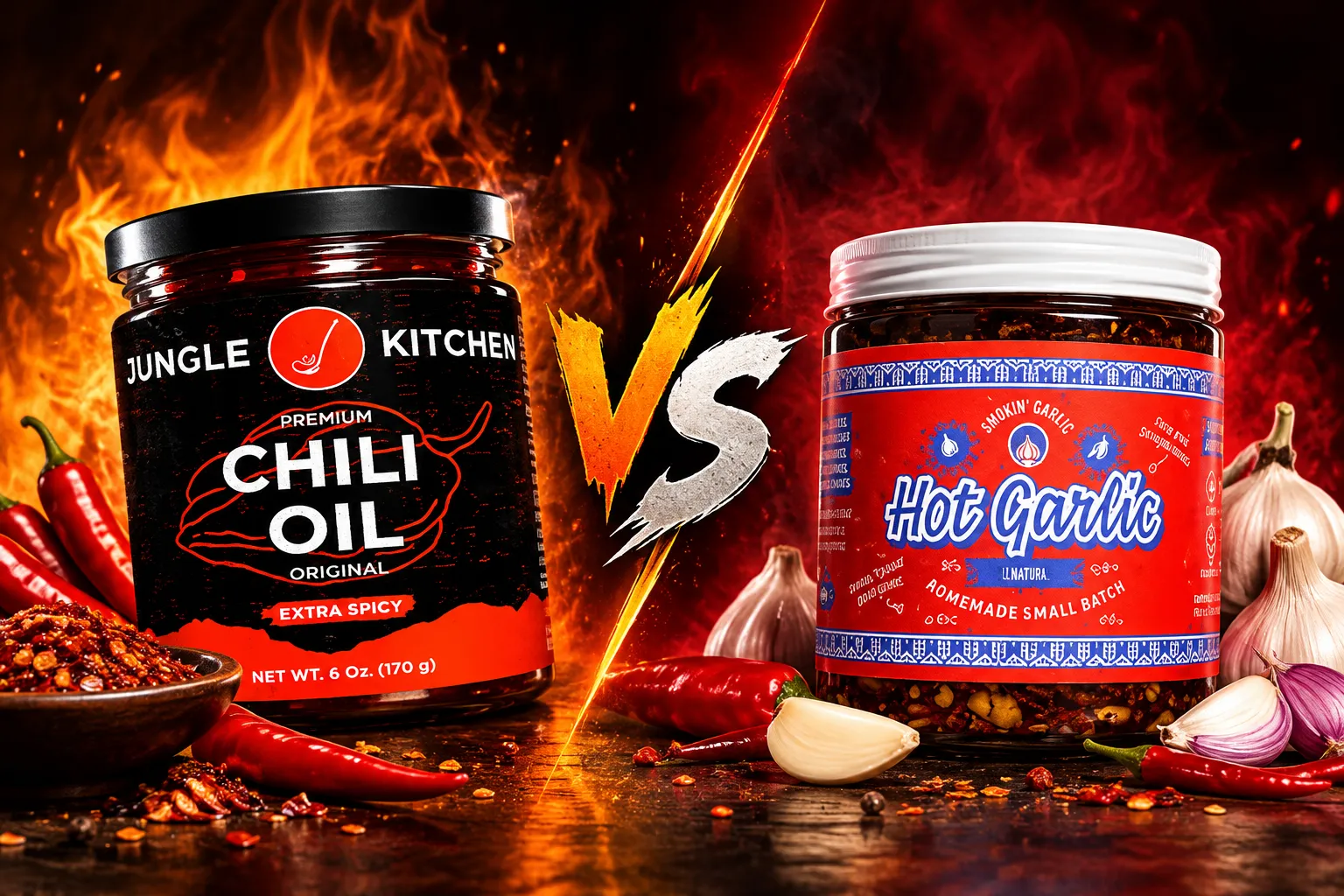

Dinner is nearly done. The noodles are glossy, the eggs have crisp edges, and the roasted vegetables have color. Then three containers land beside the plate: a crunchy jar, a red oil, and a pourable pepper sauce. All promise heat. Only one will give the dish what it lacks.
That is the real tension behind chili crisp vs chili oil vs hot sauce. Shoppers often compare them by spiciness alone, then wonder why a delicate dish turns greasy, a rich meal tastes too sharp, or a soft bowl still feels flat. The better question is not, “Which one is hottest?” It is, “What job should this condiment do?”
This guide separates texture, fat, acidity, timing, and label clues, then turns them into an easy rule for shopping the full sauce collection or finishing dinner.
Key Takeaways: What Matters Most?
- Choose chili crisp when the food needs crunch, savory depth, and a finishing flourish.
- Choose chili oil when the goal is silky coverage and pepper aroma without a chunky topping.
- Choose hot sauce when acidity, brightness, and pourable heat will balance the plate.
- Compare the label, not just the product name; recipes and heat levels vary widely.
What Defines Chili Crisp vs Chili Oil vs Hot Sauce?
The borders are useful, but they are not laws. Makers borrow across styles, so an oil may contain sediment and a hot sauce may be fermented, fruity, thick, or nearly vinegar-free. Still, each category has a recognizable center.
Chili crisp is an oil-based condiment with noticeable solids. Fried or toasted chiles, garlic, shallots, seeds, nuts, or spices create crunch and savory complexity. It acts as seasoning and texture, changing the bite rather than simply making soft food hotter.
Chili oil puts the infused oil first. It carries pepper color, fragrance, and warmth across a dish. Some versions hold flakes or aromatics, but the liquid usually does more work than the solids, making it easy to distribute without a heavy topping.
Hot sauce is usually a pourable blend led by peppers and a water-based liquid. Vinegar is common, but not universal; fruit, fermentation, sweeteners, herbs, and spices can shift the result. It often contributes more tang and less fat than oil-based condiments. The dedicated chili oil and chili crisp collection shows how broad those styles can be.
Why Do Texture, Fat, and Acid Matter?
Spice is only one part of how a condiment changes food. Crunchy solids can wake up soft eggs, rice, or noodles, while a smooth oil preserves the dish’s existing texture. Fat spreads pepper aroma and creates a rounder finish, but too much can weigh down a light meal. Acid works differently: it lifts rich, creamy, or fried foods and makes flavors feel sharper.
That is why equal spoonfuls do not deliver equal results. Chili crisp adds physical contrast, chili oil distributes warmth, and hot sauce resets the palate with brightness. Before choosing, identify what the dish already has and what it lacks. The right condiment completes the plate instead of competing with it.
Chili Crisp vs Chili Oil vs Hot Sauce: Pick a Job
Begin with the plate’s missing quality. Is everything soft? Is the seasoning sitting in isolated pockets? Does a rich bite need brightness? The answer points toward a condiment more reliably than a dramatic name.
| Condiment | Texture and base | Main job | Best timing | Natural matches | Watch for |
| Chili crisp | Oily with crunchy solids | Adds contrast, aroma, and savory depth | Usually as a finish | Eggs, rice bowls, noodles, pizza, roasted vegetables | Solids can soften if cooked too long |
| Chili oil | Mostly fluid, oil-led | Coats and carries pepper aroma | During mixing or at the finish | Dumplings, broth, noodles, greens, dipping sauces | Too much can make a light dish feel oily |
| Hot sauce | Pourable pepper blend | Adds heat, tang, and brightness | During cooking or at the table | Tacos, wings, beans, sandwiches, eggs | Strong acidity or sweetness can redirect the dish |
None is automatically more versatile. Crisp cannot “win” when broth needs invisible warmth, and oil cannot supply the crunch missing from creamy eggs. Hot sauce may cut through cheese yet fight a delicate sesame dressing. A clear job makes the shelf easier to read.
Pick Your Heat: Crunch, Coat, or Cut
The Crunch, Coat, or Cut rule turns the comparison into a quick kitchen reflex.
- Crunch: Reach for chili crisp when texture is the missing ingredient. Spoon it over food late so the solids stay distinct. Stir the jar gently first if the label recommends it, then include both oil and crisp pieces for the intended balance.
- Coat: Choose chili oil when warmth and aroma should travel across the dish. Toss it through noodles, blend it into a dip, or drizzle it over soup. It should support the food, not leave a slick.
- Cut: Use hot sauce when a rich, fatty, creamy, or sweet bite needs a sharper counterpoint. Start with a few drops, taste, and build. The pepper heat guide can explain the potential intensity of different peppers, but the finished recipe still determines how a sauce tastes.
James Beard’s line, “Food is our common ground, a universal experience.”, fits this choice. One shared meal does not require one shared tolerance. Condiments at the table let each person create the crunch, brightness, and heat that makes a plate feel personal.
When Should the Heat Hit the Pan?
Timing changes flavor and texture. Mix hot sauce into beans, marinades, dressings, or cooked sauces when its acidity should become part of the dish. Add it at the table for a brighter finish. Because styles differ, taste before pouring generously.
Chili oil can work during mixing or finishing, perfuming noodles or deepening a dip without bulk. A bottled finishing oil should not automatically be treated as high-heat cooking oil. Ingredients and refinement vary, so the label should decide whether it belongs in a hot pan.
Chili crisp usually earns its best moment after the main cooking is complete. Prolonged simmering can soften fried pieces, and very high heat may push delicate aromatics from toasted toward bitter. Fold it through just before serving for integrated flavor, or spoon it on top for maximum contrast. Anyone who prefers pepper flavor with less intensity can begin in the mild sauce collection rather than trying to tame an extreme bottle after opening it.
Add a small amount, distribute it, taste a complete bite, and adjust. Sampling the condiment alone can exaggerate its heat; tasting an untouched corner can hide it. The goal is balance, not bravery.
Same Bowl, Three Completely Different Finishes
Picture a familiar weeknight bowl: rice, roasted broccoli, a soft egg, and leftover chicken. It is nourishing but muted, and the cook reaches for something spicy. The same bowl can move in three directions.
With chili crisp, the egg and rice gain crackle while fried aromatics echo the broccoli. The condiment stays visible, creating calm and intense bites. This suits a diner bored by uniform softness.
With chili oil, the cook loosens a small spoonful through the rice. The grains become fragrant while the bowl keeps its textures. This works when the food needs cohesive warmth, not another topping.
With hot sauce, a thin zigzag wakes up the chicken and cuts through the yolk. A tangy sauce makes the bowl feel lighter; a fruity or smoky one sends it elsewhere. Browsing a realistic range, such as the medium sauce collection, keeps flavor in the decision instead of turning dinner into a tolerance test.
For mixed-household meals, keep the shared base comfortable and let each diner finish a personal portion. No one has to pretend identical heat suits every palate.
Which Label Clues Matter Before You Buy?
Start with the ingredient order. Oil listed first signals richness and coating power. Garlic, onion, sesame, seeds, nuts, or spices suggest texture and aromatic depth. Vinegar near the front often points toward sharpness; fruit or sweeteners may round the heat.
Next, check allergens, dietary statements, storage directions, and the Nutrition Facts panel. Crisps can contain peanuts, tree nuts, soy, wheat, sesame, or seafood ingredients, but no category-wide assumption is safe. The individual label is final. Refrigeration guidance also differs, so habit should not overrule package instructions.
Sodium deserves the same side-by-side attention as heat. The Centers for Disease Control and Prevention reported that 89% of U.S. adults consumed excess sodium. That finding does not make one condiment style “bad,” nor does it judge an occasional spicy meal. It makes label comparison useful when broth, cheese, cured meat, seasoning, and a condiment may all bring salt to the same plate.
Finally, read flavor and pairing clues, then choose a heat range that will be used. A nuanced bottle emptied over many meals beats a punishing one admired from a distance. Diners wanting a stronger burn can compare the focused hot sauce collection.
Smart Sauce Moves and Common Mistakes
| Do this | Not that |
| Choose by crunch, coating, or acidity. | Do not treat every red condiment as interchangeable. |
| Taste with the complete dish before adding more. | Do not judge serving heat from a bare spoon alone. |
| Add crisp late when preserving crunch matters. | Do not simmer delicate solids until they turn soft or bitter. |
| Follow the maker’s cooking and storage guidance. | Do not assume every oil belongs over high heat or in the refrigerator. |
| Compare ingredients, allergens, and nutrition labels. | Do not buy by a dangerous-sounding name alone. |
| Match intensity to the people who will eat it. | Do not confuse maximum pain with maximum flavor. |
These choices protect the character of the food. They also prevent the most common substitution mistake: replacing one style measure for measure without accounting for added oil, acidity, sweetness, salt, or solids. When experimentation is the goal, change a little at a time and note what the dish gained as well as what it lost.
Conclusion: Ready to Choose Your Perfect Heat?
The choice in chili crisp vs chili oil vs hot sauce becomes simple once heat stops being the only question. Choose crisp to create contrast, oil to carry aroma, or hot sauce to cut through richness. Then let the ingredients, timing, and a careful taste refine the answer.
For a pantry that can handle all three jobs, Hot Time Sauces brings the search together at hottimesauces.com, where readers can compare different styles and find a heat level they will genuinely enjoy. When a product question needs a human answer, thoughtful assistance is available at [email protected].
FAQs
1. Is chili crisp the same as chili oil?
Not exactly. Chili crisp is oil-based but makes crunchy solids a defining part of the experience. Chili oil usually emphasizes infused liquid, although some versions contain flakes or aromatics.
2. Can hot sauce replace chili oil in a recipe?
Sometimes, but not evenly. Hot sauce may add acidity and water while removing richness, so begin with less and taste the entire dish before adjusting.
3. Which condiment works best on noodles?
Choose crisp for texture, oil for even coating, or hot sauce for tang. The noodle sauce and toppings should determine which quality is missing.
4. Which one is usually the hottest?
There is no dependable winner. Pepper choice, concentration, recipe, sweetness, acidity, and serving amount all affect perceived heat, so compare the specific labels.
5. Does chili crisp need refrigeration after opening?
Requirements vary by formula. Follow the package directions, keep the rim clean, use a clean utensil, and do not rely on advice meant for a different product.





























Sign in to leave a comment.