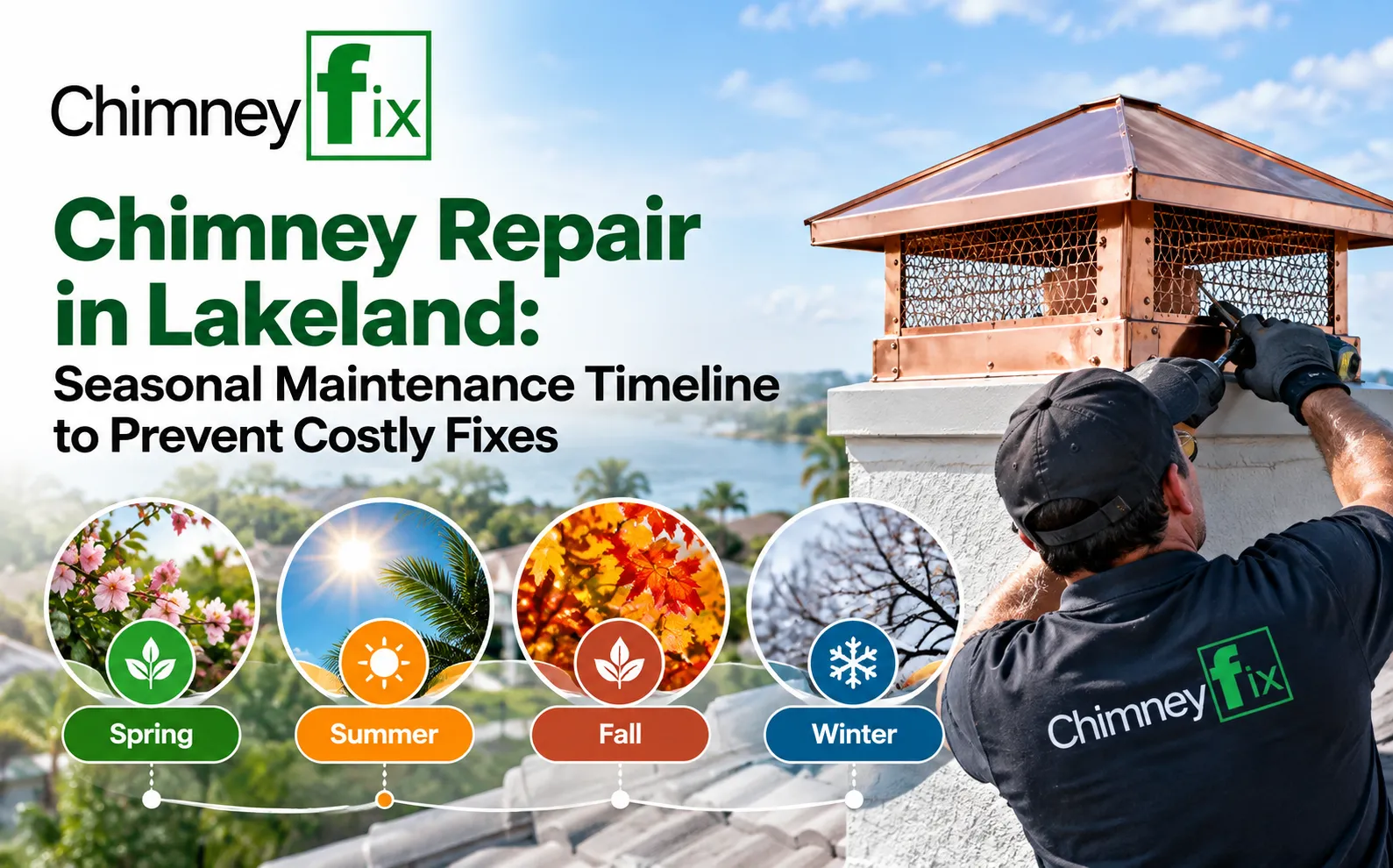

Most chimney repairs we see in Lakeland aren’t the result of one dramatic failure. They’re the result of small things left alone through several seasons: a hairline crack that widened, a bit of flashing that lifted, a cap that slowly rusted. Florida’s climate is steady and unforgiving in a way that rewards homeowners who check in a few times a year, and punishes those who check in only when something leaks.
This guide lays out a practical year-round timeline, so minor wear gets caught while it’s still a small job.
Why a Seasonal Approach Works in Florida
Northern chimneys fail on a dramatic schedule: freeze, thaw, crack. Central Florida chimneys fail on a slower, more constant one. Humidity keeps masonry damp, summer storms drive rain sideways, UV bakes exposed surfaces, and a mild winter means the fireplace gets used just often enough to create buildup without anyone paying attention.
Because the stress is spread across the whole year, the best defense is a light, repeating routine rather than one big annual event.
Late Winter to Early Spring: Assess the Damage
After the fireplace season ends, the chimney has just finished its heaviest use. This is the right time to look for what the season left behind.
Check the firebox and damper. Look for cracked firebrick, loose mortar, or a damper that sticks. These are cheap to fix now and annoying to discover next November.
Note creosote buildup. If you saw glossy or tar-like deposits, schedule a sweep before storing the fireplace for the summer, since residue left through humid months tends to harden.
Inspect the exterior from the ground. Look for new cracks, loose brick, or staining that wasn’t there last fall.
Late Spring: Prepare for Storm Season
Rain season is the main threat to the masonry, so the weeks before it begins are the best time for protective work.
- Seal or resurface a cracked crown. The crown is the first line of defense against water, and small cracks are a modest job in dry weather.
- Replace failing flashing or sealant. A lifted edge or dried-out sealant is much easier to fix before heavy rain tests it.
- Repair open mortar joints. Repointing works best when conditions are dry enough for the mortar to cure properly.
- Consider a water-repellent treatment. A breathable masonry sealer can reduce absorption, though it should be applied to sound brick, not used to cover up active deterioration.
Summer: Watch, Don’t Wait
Summer is the quiet-but-risky stretch. You probably aren’t using the fireplace, which means problems can develop unseen.
After any major storm, take a few minutes to look at the chimney from the yard. Check for a displaced cap, fresh debris on the roof, or new staining on the ceiling near the chase. A musty smell from the fireplace after heavy rain is worth taking seriously, since it can signal water entering the flue.
This is also when animals look for shelter. An uncapped or damaged flue can quickly become a nesting site, so a missing or rusted cap deserves attention even in months when no fires are lit.
Early Fall: The Pre-Burn Check
The weeks before the first cool front are the most important window, and also the busiest for local contractors. Booking early means more time to schedule repairs if the inspection finds something.
A good pre-burn visit covers the flue, damper, cap, crown, flashing, and exterior masonry. If anything needs fixing, it can be done before the fireplace is in use, rather than during the first cold week when schedules are packed.
Matching Repairs to the Calendar
Some repairs are best timed to the weather:
- Masonry and crown work: late winter through spring, when the weather is dry and mild
- Flashing and roofline repairs: before the rainy season peaks
- Cap and damper replacement: any time, but ideally before fall
- Flue liner repairs: after an inspection confirms the need, ahead of the burn season
Doing the right job in the right season isn’t just about convenience. Mortar and sealants cure more reliably in suitable conditions, which improves how long the repair lasts.
What Skipping the Routine Costs
When people research chimney repair Lakeland has available, they often ask what a typical job costs. A more useful question is what a deferred job costs. A small crown crack addressed in spring is a contained repair. The same crack ignored through a rainy season can lead to water reaching the masonry below, which then spalls, stains interior walls, and rusts the damper. What started as a minor fix becomes a multi-part project.
A Real Example
A homeowner contacted us about a ceiling stain that appeared every August and faded by winter. They’d assumed it was a roof issue and had patched shingles twice. A close look found a narrow crack in the crown that only let water in during heavy summer storms. The repair itself was modest. The expensive part had been three years of repeat roofing work aimed at the wrong target. A simple spring check of the crown would have caught it the first year.
Keeping a Simple Log
You don’t need a complicated system. A note on your phone with dates of sweeps, inspections, repairs, and anything you noticed is enough. Over a few years, it shows patterns, such as which side of the chimney weathers fastest or whether a repair is holding, and gives any contractor a clear history to work from.
For general background on masonry maintenance and chimney safety, the Chimney Safety Institute of America publishes independent guidance worth reading alongside your own records. If you’d like to see how repairs are typically scoped and scheduled, this overview of how chimney repairs are planned around the seasons explains the process for Central Florida homes.
The Bottom Line
Chimney problems in Florida rarely arrive all at once. They build quietly, season after season. A light routine of looking in spring, protecting before storms, watching through summer, and inspecting before fall keeps most issues small and inexpensive, and keeps the fireplace ready when the weather finally turns.
About the Author
This article was prepared by the ChimneyFix editorial team, drawing on field experience from CSIA-certified chimney sweeps and masonry contractors serving Lakeland, FL and Polk County. Our technicians follow NFPA 211 standards for chimney inspection and repair. Learn more about our repair services at ChimneyFix.com.


















Sign in to leave a comment.