

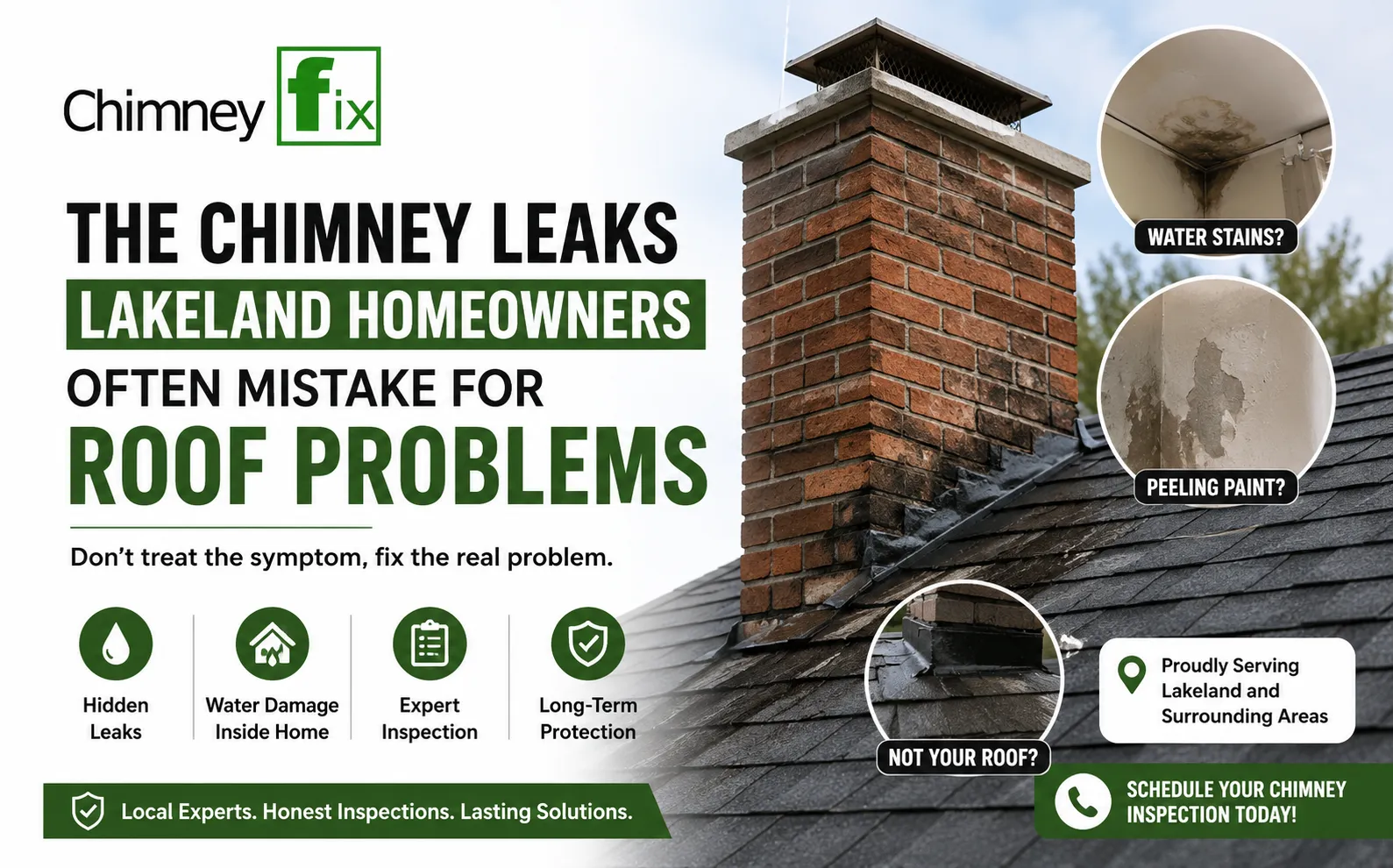
A surprising number of service calls for "roof leaks" turn out to be chimney issues, and the reverse happens too. Both problems can produce nearly identical symptoms — a ceiling stain, a damp smell, discoloration around a specific area of the house — which means homeowners frequently call the wrong type of contractor first. In Lakeland, where both roofing wear and chimney deterioration are accelerated by the same humid, storm-heavy climate, telling the two apart matters more than it might elsewhere.
Why These Two Problems Get Confused
A chimney penetrates the roofline, which means damage at that junction can look, from an interior perspective, exactly like a general roof leak. Water intrusion near a chimney could originate from:
- The roofing material itself, several feet away from the chimney
- The flashing where the chimney meets the roof (a shared responsibility zone between roofer and chimney technician)
- The chimney crown, cap, or brick, entirely independent of the roof's condition
A roofer without chimney-specific training might inspect the shingles, find nothing wrong, and conclude the leak is a mystery. A general handyman might caulk the visible gap without identifying whether the crown or flashing is the actual source. Neither outcome resolves the underlying issue.
The Location Clue Most People Miss
One of the more reliable indicators is where the stain first appears relative to the chimney's position in the house. A stain that starts directly adjacent to the chimney chase, especially one that seems to trace along the chimney's outline, points toward the chimney structure itself rather than a general roof failure. A stain that appears well away from the chimney, following the slope of the roof deck, is more likely a roofing material issue unrelated to the chimney at all.
This isn't a perfect diagnostic on its own, since water can travel along framing before becoming visible, but it's a useful first clue before bringing in a contractor.
Why Flashing Sits in a Gray Zone
Flashing is the metal seal where the chimney meets the roofline, and it's genuinely a shared responsibility area. Some roofing companies address chimney flashing as part of a full roof replacement. Others explicitly exclude it, treating it as a chimney contractor's domain. This inconsistency is a major reason homeowners get bounced between two types of contractors, each pointing at the other's scope of work.
The practical takeaway: if a leak is traced to flashing, it's worth getting confirmation from whichever contractor is doing the repair about whether they're addressing the flashing seal itself or just the surrounding roofing material, since a repair that touches one but not the other tends to fail again.
Signs That Point Specifically to the Chimney
A few indicators lean more heavily toward chimney-related sources rather than general roofing:
- Staining concentrated near the firebox or damper, rather than in a more central ceiling location, which suggests water entering through the flue opening itself (often a missing or damaged cap)
- Visible efflorescence — a white, chalky mineral deposit on interior or exterior brick — which specifically indicates water moving through masonry
- A musty smell that intensifies after rain but isn't accompanied by any visible roof damage from an exterior inspection
- Cracks visible in the chimney crown from ground level with binoculars, which rules out the roof as the source entirely
Signs That Point More Toward the Roof
Conversely, some patterns suggest the roof itself, independent of the chimney:
- Staining that appears in multiple locations unrelated to the chimney's position
- Missing or damaged shingles visible near, but not directly touching, the chimney
- Interior damage that correlates with the roof's age and general wear pattern rather than storm timing
Why a Proper Diagnostic Needs Both Perspectives
Given how often these two issues overlap or masquerade as each other, the most reliable approach involves a water test that isolates specific sections — chimney crown, chimney flashing, and general roof surface — rather than assuming the source based on symptoms alone. This kind of section-by-section testing is really the only way to conclusively separate a chimney-sourced leak from a roofing issue when both are plausible.
Homeowners dealing with a persistent chimney water leak Lakeland technicians can't immediately attribute to an obvious cause should ask specifically whether the assessment includes isolated water testing, rather than accepting a general visual opinion that guesses at the source.
What Happens When the Wrong Contractor Gets Called First
This is a common and frustrating pattern: a homeowner calls a general roofer, who patches shingles near the chimney without addressing crown or flashing issues because that wasn't their area of focus. The leak returns after the next rain. Time and money get spent on a repair that was never going to solve the actual problem, and by the time a chimney specialist gets involved, the water intrusion has often had additional months to cause interior damage.
This is precisely why identifying which type of problem you're dealing with — or getting an assessment broad enough to cover both possibilities — matters before any repair work begins.
A Practical Starting Point
For homeowners uncertain which type of contractor to call first, a reasonable approach is to note exactly where the stain appears relative to the chimney, check for any visible efflorescence or crown cracks from the ground, and mention both possibilities when scheduling an inspection rather than assuming it's automatically a roofing issue just because water is coming from "up there somewhere."
The Bottom Line
Chimney leaks and roof leaks produce similar symptoms but require entirely different repairs, and the flashing zone between them is often where responsibility gets unclear. In Lakeland's climate, where both roofing and masonry take a beating from the same seasonal storm pattern, a diagnostic approach that considers both possibilities — rather than assuming one or the other based on where water happens to be dripping from — saves homeowners from paying for a repair that was never going to fix the actual source.
About the Author
Written by the ChimneyFix team, a CSIA-affiliated chimney sweep and repair company serving Lakeland, FL and the surrounding Central Florida region. ChimneyFix technicians follow NFPA 211 standards for chimney inspection and use section-by-section water testing to isolate leak sources, distinguishing chimney-related water intrusion from general roofing issues across Polk County homes. Learn more about diagnosing a suspected chimney leak at chimneyfix.com/chimney-leak-repair.






























Sign in to leave a comment.