

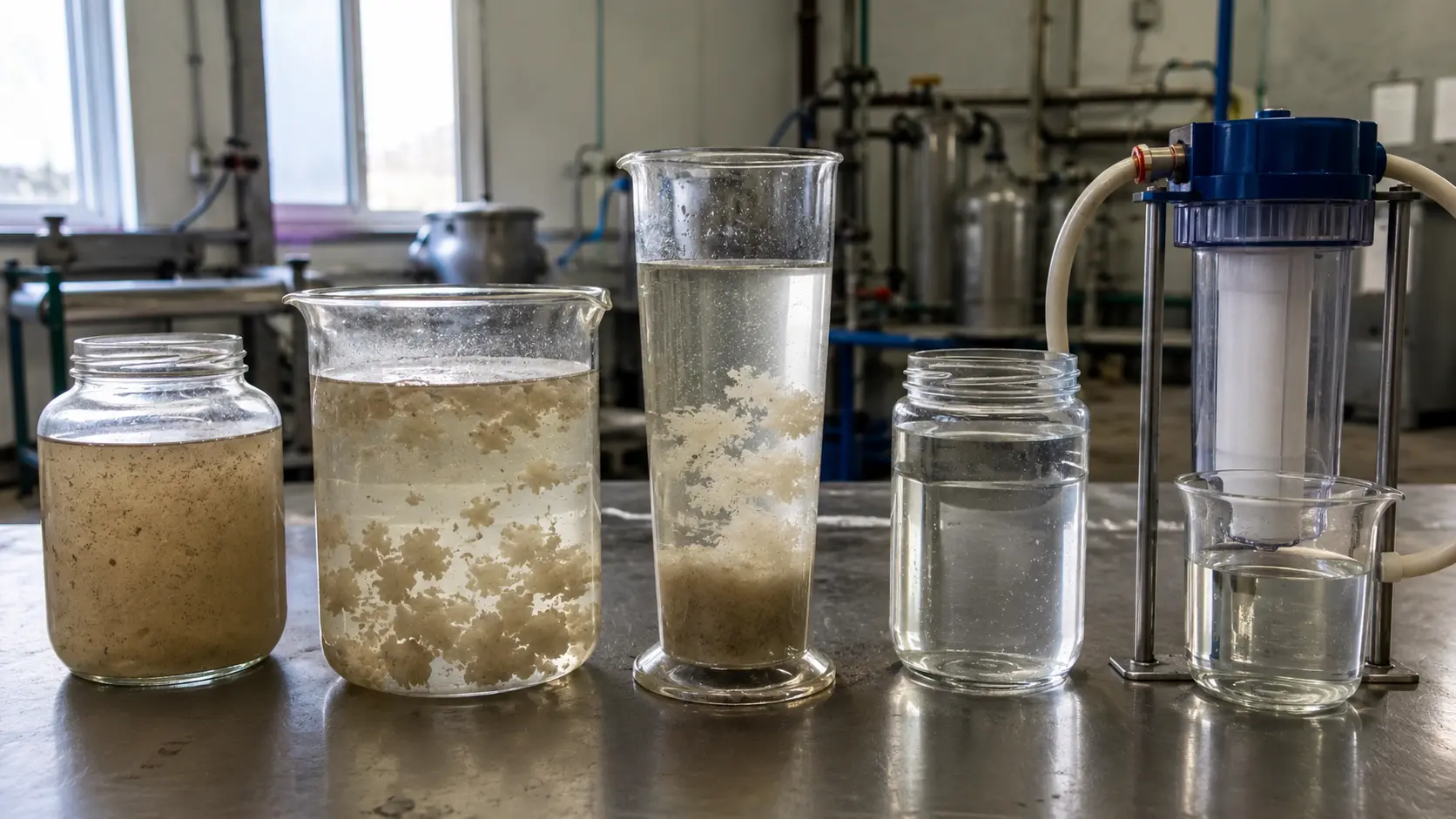
Clean water treatment often depends on materials that can capture, separate or neutralize unwanted substances efficiently. Traditionally, many treatment systems have relied on inorganic coagulants, synthetic polymers and activated carbon. But growing interest in renewable materials has researchers looking at alternatives that can perform similar functions with potentially lower environmental impact.
One material receiving considerable attention is chitosan.
Derived from chitin, chitosan is a naturally occurring biopolymer with chemical properties that make it useful for interacting with suspended particles, dyes, metals and other contaminants in water.
But how does it actually work, and where does it fit into modern water treatment?
What Is Chitosan?
Chitosan is produced by processing chitin, a structural polysaccharide found in the shells of crustaceans such as shrimp and crabs. It can also be produced from other biological sources.
What makes chitosan interesting for water treatment is its molecular structure. It contains functional groups that can interact with various substances dissolved or suspended in water.
Depending on the treatment conditions, these interactions can help chitosan:
- Bind with certain contaminants
- Promote coagulation and flocculation
- Adsorb pollutants onto its surface
- Assist in separating suspended particles
- Remove certain dyes and metal ions
Its performance isn't identical in every application. Factors such as pH, molecular weight, degree of deacetylation, contaminant concentration and water chemistry can significantly affect the results.
How Does Chitosan Remove Contaminants?
There isn't just one mechanism.
1. Coagulation and flocculation
Some contaminants are extremely small and remain suspended in water because their electrical charges prevent them from naturally settling.
Chitosan can help destabilize these particles and encourage them to join together into larger aggregates, known as flocs.
Once larger flocs form, they can be removed through sedimentation or filtration.
This can make chitosan particularly interesting as a bio-based flocculant.
2. Adsorption
Chitosan can also interact with contaminants through adsorption.
In simple terms, certain molecules or ions attach to available sites on the chitosan material.
The exact mechanism depends on the contaminant and the characteristics of the chitosan.
This is one reason researchers are exploring different chitosan-based materials rather than treating chitosan as a single, standardized product.
3. Complexation with metal ions
The functional groups present in chitosan can interact with certain heavy-metal ions.
This has led to research into using chitosan for the removal of contaminants such as lead, copper and other metal species.
However, real wastewater is rarely simple. Competing ions and variations in pH can influence how effectively chitosan binds to metals.
Why Is Chitosan Interesting for Textile Wastewater?
The connection between chitosan and textile dyeing is particularly relevant.
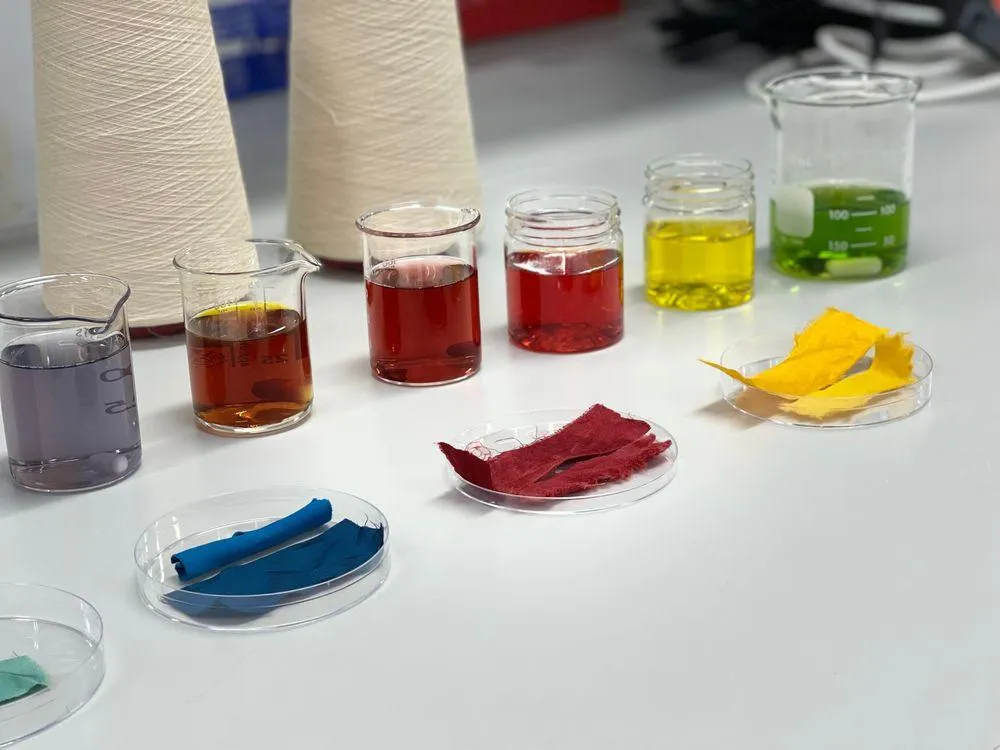
Textile wastewater can contain residual dyes, salts, auxiliaries and other chemicals. Depending on the dye and production process, conventional treatment can require several stages to achieve the required water quality.
Chitosan has been investigated as a potential material for removing certain dyes from wastewater.
Its ability to interact with charged dye molecules can encourage adsorption or flocculation, potentially helping separate color from the water.
However, chitosan isn't a universal solution for every textile dye.
Different dye classes behave differently, and treatment performance depends heavily on pH, dosage, contact time and the properties of both the dye and the chitosan.
The practical opportunity is therefore not simply “replace conventional treatment with chitosan.”
It is to determine where chitosan can improve an existing treatment process.
What Are the Most Promising Chitosan Applications?
Water treatment is only one area where this biopolymer is being explored.
Current chitosan applications include research and development involving:
- Heavy-metal removal
- Dye removal
- Turbidity reduction
- Wastewater clarification
- Membrane modification
- Antimicrobial coatings
- Adsorbent materials
- Water filtration
- Composite treatment materials
Chitosan can also be chemically modified or combined with other materials to improve particular properties.
For example, researchers can create chitosan-based composites designed to increase surface area, improve mechanical strength or target specific contaminants.
This is important because untreated chitosan has limitations.
A successful water-treatment material must not only capture contaminants, it also needs to be practical to manufacture, use, separate and potentially regenerate.

Chitosan vs. Activated Carbon
Activated carbon is already widely used for adsorption-based water treatment, so it is natural to ask how chitosan compares.
The answer depends on the application.
Activated carbon generally offers high surface area and strong adsorption performance for many organic compounds. Active carbon fibers, in particular, provide a fibrous structure that can offer accessible adsorption sites and fast mass transfer in certain applications.
Chitosan has a different advantage: its functional groups can provide specific interactions with certain contaminants, while its biological origin makes it attractive from a renewable-material perspective.
Researchers are therefore also exploring hybrid materials that combine chitosan with carbon-based adsorbents.
Rather than asking whether chitosan should replace activated carbon completely, it may be more useful to ask:
Can these materials complement each other?
In some treatment systems, that could be the more practical direction.
Could Chitosan Be Used in Nonwovens?
An interesting development is the use of chitosan with fibrous materials.
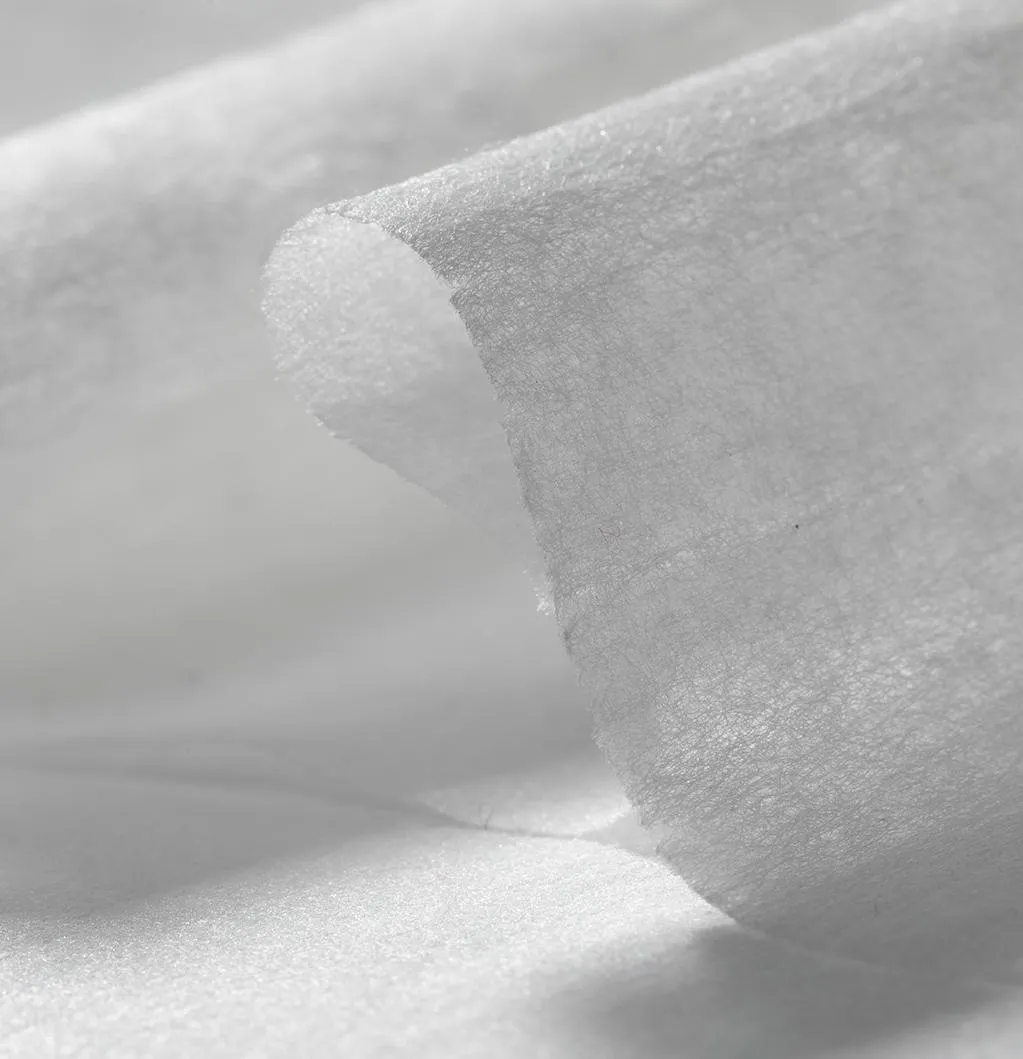
Nonwovens can provide a flexible platform for incorporating functional materials because they can be engineered with different pore structures, thicknesses and fiber compositions.
Chitosan can potentially be applied as a coating, incorporated into a composite or used to functionalize the surface of a nonwoven material.
This opens possibilities for filtration media where water passes through a structured material while contaminants interact with chitosan-based functional groups.
The challenge is balancing adsorption performance with flow rate.
A material that captures contaminants extremely well but restricts water flow too much may not be commercially practical.
Where Does Cellulose Come Into the Picture?
Cellulose-based materials are also attracting interest in sustainable water-treatment research.
Cellulose is abundant, renewable and can be processed into fibers, membranes, films and other structures.
Research involving cellulose solubility is relevant because understanding how cellulose behaves in different solvents and processing systems allows researchers to develop new regenerated cellulose structures and composites.
Combining cellulose and chitosan can be particularly interesting.
The two biopolymers have complementary properties, and researchers can modify their structures to create membranes, films, beads, fibers and other treatment materials.
The result can be a material that combines the structural advantages of cellulose with the functional chemistry of chitosan.
What Are the Limitations of Chitosan?
Despite its promise, chitosan isn't a magic solution.
Several factors need to be considered before using it at industrial scale.
Performance varies
Chitosan properties can vary according to its source and processing. Molecular weight and degree of deacetylation, for example, can affect treatment performance.
pH matters
The charge and behavior of chitosan change with pH, which can significantly influence contaminant removal.
Regeneration can be challenging
Once chitosan has captured contaminants, the spent material needs to be handled appropriately. Depending on the contaminant, regeneration or disposal may require additional processing.
Raw-material sourcing matters
Although chitosan is bio-based, sustainability depends on how the raw material is sourced, processed and transported.
Cost and scalability remain important
Laboratory results can look promising, but industrial treatment systems require materials that are affordable, consistent and easy to operate at large volumes.
Is Chitosan Ready to Replace Conventional Water Treatment?
Probably not across the board and that isn't necessarily the right objective.
Water treatment is highly application-specific. Drinking water, industrial wastewater, textile effluent and agricultural runoff can contain completely different contaminant profiles.
Chitosan may work particularly well as one component of a treatment train.
For example, a system might use conventional clarification, a chitosan-based treatment stage, filtration and an activated-carbon or membrane step.
The right combination depends on the contaminants and the required water quality.
The Future of Chitosan in Water Treatment
The most interesting development isn't simply using chitosan in its traditional form.
Researchers are increasingly investigating engineered chitosan materials, including nanoparticles, membranes, hydrogels, beads, fibers and composites.
Combining chitosan with cellulose, carbon materials or other functional components could create treatment media with more targeted capabilities.
This could be particularly valuable for industrial applications such as textile dyeing, where wastewater composition can be complex and treatment requirements are becoming more demanding.
The future may therefore involve less emphasis on finding a single material that removes everything and more emphasis on designing specialized materials for specific contaminants.
A Biopolymer With Practical Potential
Chitosan has several characteristics that make it attractive for water treatment: it is bio-based, chemically versatile and capable of interacting with a range of contaminants.
Its potential applications extend from dye and metal removal to filtration materials and composite membranes.
But its value should be judged by more than laboratory removal percentages.
For real-world adoption, chitosan-based systems need to demonstrate consistent performance, manageable costs, scalability, durability and responsible end-of-life treatment.
That is where ongoing research becomes important.
Chitosan may not replace every conventional water-treatment material, but as researchers combine it with technologies involving cellulose, carbon materials and nonwovens, it could become an increasingly useful part of the toolkit for cleaner and more resource-efficient water treatment.

















Sign in to leave a comment.