
Cho La Pass trek difficulty is one of the first things people want to understand before booking. The 17-day route from Kathmandu to Kathmandu is classed as challenging. It joins Everest Base Camp, Kala Patthar, the 5,420 m Cho La Pass and the Gokyo Lakes into one long loop. Nothing on it requires technical climbing, yet the altitude, the long days and the pass crossing ask a lot of a body. This guide explains where the difficulty comes from and how to prepare for it.
What makes the trek challenging
The route needs good physical fitness and some high-altitude trekking experience. Most days involve 5 to 7 hours of walking, and the trail rarely stays flat. You climb and descend continuously over stone steps, moraine, and occasional snow or ice.
Two days are longer than the rest. The Everest Base Camp day runs about 9 hours, and the pass day about 7. Between them sits the Kala Patthar morning, which ends with a descent to Dzongla and takes around 8 hours in total. Three hard days in a row is the real test of this itinerary.
Altitude and acclimatization
Altitude is the biggest factor in Cho La Pass trek difficulty. The trek starts at Lukla (2,860 m), reaches Dingboche at 4,410 m, and climbs on to Lobuche at 4,930 m and Gorakshep at 5,180 m. Kala Patthar, at 5,545 m, is the highest point of the trek. The pass itself sits at 5,420 m, where steady pacing and self-awareness matter more than strength.
The itinerary builds in two acclimatization days, one at Namche Bazaar (3,440 m) and one at Dingboche. At Namche you can walk to the Everest View Hotel or visit Khumjung. At Dingboche, a hike up Nangkartshang Peak (5,083 m) takes about 3 hours and gives your body a taste of higher air before the harder days. Your guide briefs the group on the signs of Acute Mountain Sickness and monitors oxygen saturation and symptoms throughout.
Talk to your doctor well in advance about medication such as acetazolamide and any vaccinations you need. Hydration, rest and a slow pace do the rest.
The Cho La Pass crossing
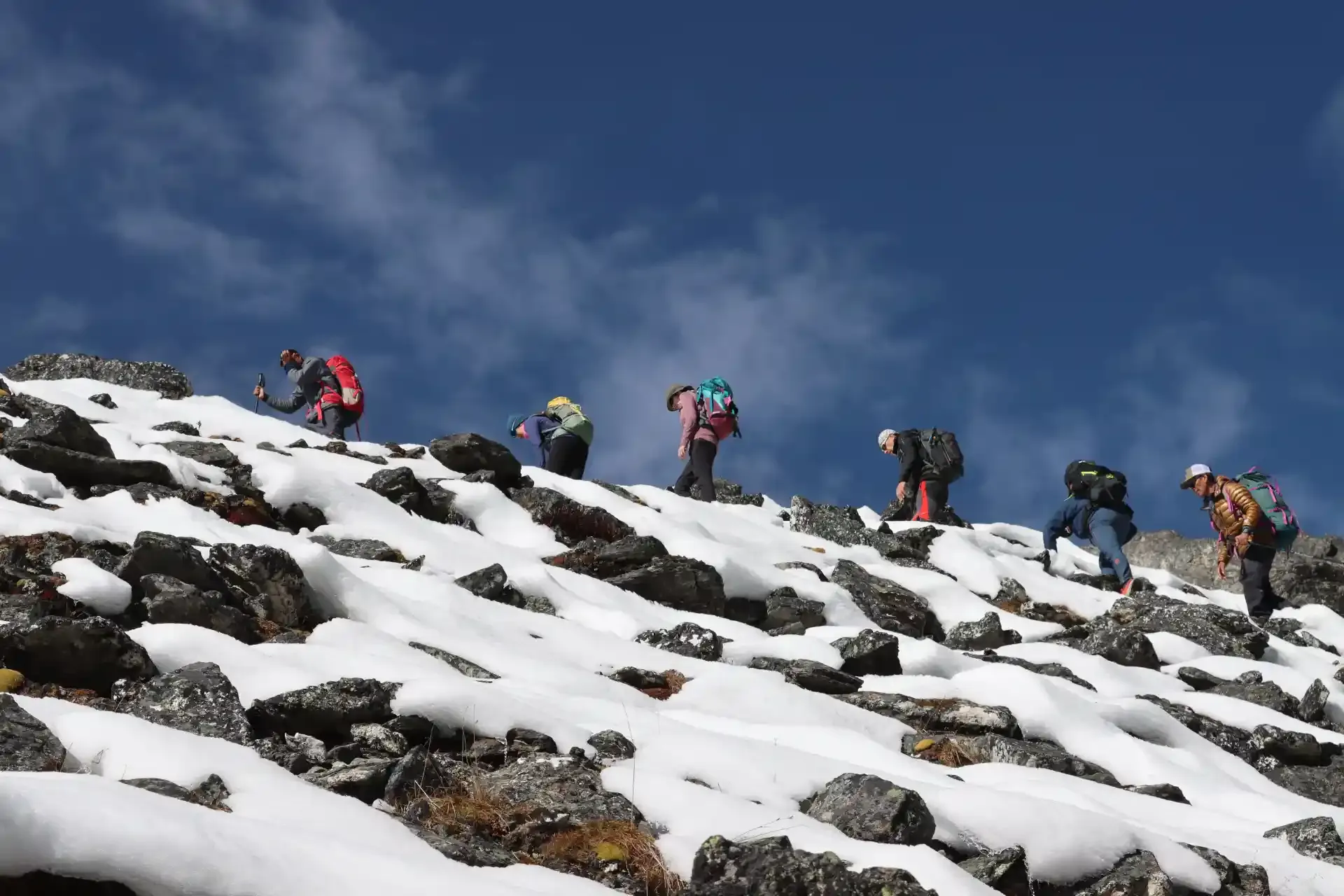
The pass is the hardest single day. You leave Dzongla (4,830 m) before dawn and cross at 5,420 m, then descend to Dragnag (4,700 m), about 7 hours in all. The early start gives you firm snow and safer travel, and it spaces the group out sensibly.
The ascent is steep and bouldery. A short glacier section follows, where traction devices help. In the shoulder seasons, expect to carry microspikes for icy patches. If wind or ice makes the pass unsafe, the guide can adjust the day.
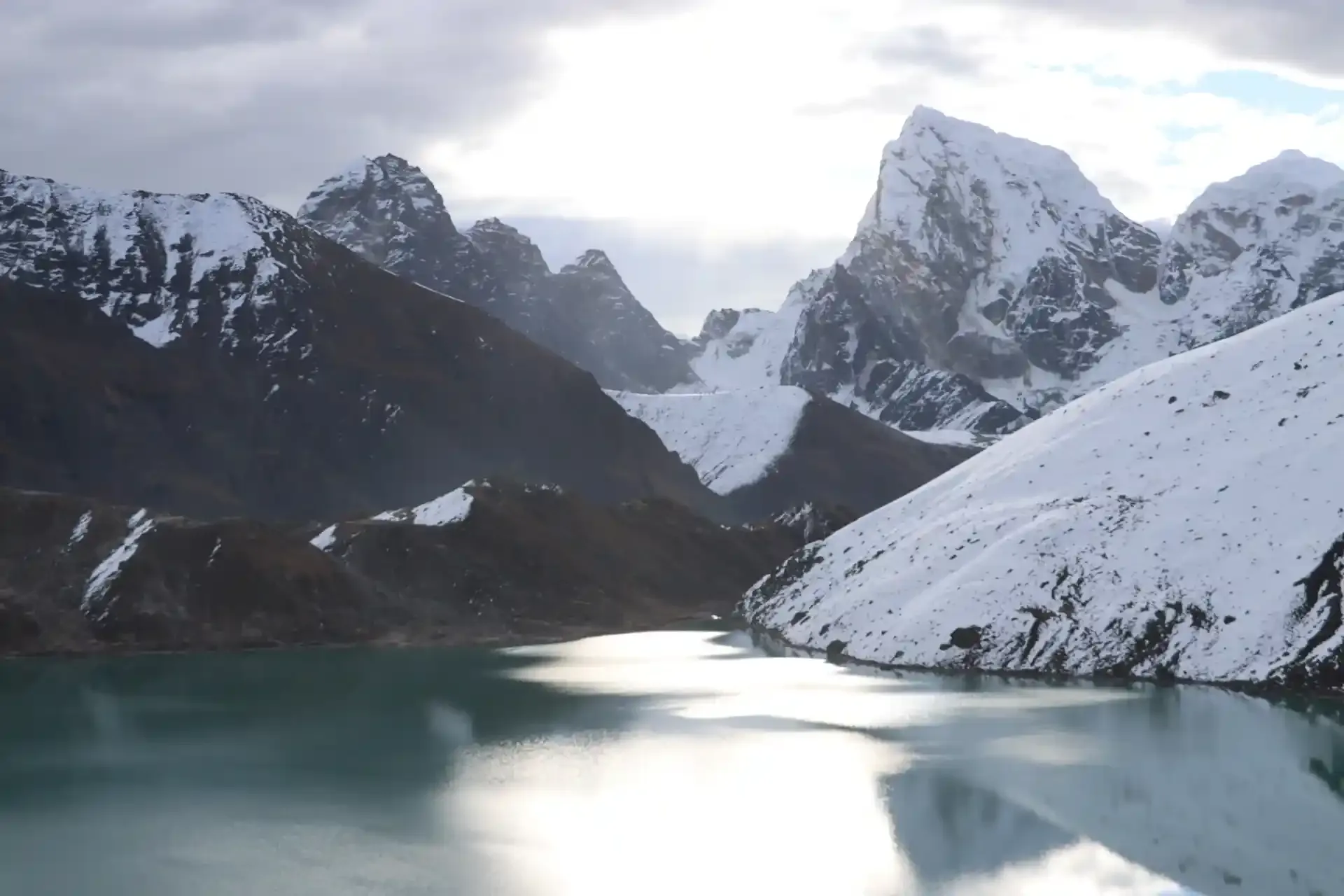
The reward is a wide view across the Khumbu and the peaks you have been walking among. After the pass, the route crosses the Ngozumpa Glacier, the longest glacier in Nepal, a scene of ice ridges and winding moraines. Then comes a 4-hour walk to Gokyo (4,800 m) and its turquoise lakes. For many trekkers, the quiet at Gokyo makes the effort feel worthwhile.
Weather and the best time to go
Seasons change Cho La Pass trek difficulty more than most people expect. March to May and September to November give clearer skies and steadier conditions. Spring brings warmer temperatures and blooming rhododendrons, and autumn offers excellent visibility.
Winter is extremely cold and icy, which makes the pass far harder. The monsoon months of June to August are wet and unpredictable, and they often disrupt flights. Lukla flights depend on weather at any time of year, and in peak season they may route through Ramechhap (Manthali). The itinerary includes a buffer day in Kathmandu to protect your international connection.
Culture along the route
The trail passes through Sherpa country, and the villages give each day a human scale. You see the sacred peak Khumbila, called the God of Khumbu, soon after Lukla. Tengboche is home to its well-known monastery, and mani walls and chortens line the paths. Walk clockwise around them, dress modestly in monasteries and ask before photographing people.
Teahouses are usually twin-share. Larger villages have hot showers and heated dining rooms, while higher lodges are more basic. Menus offer dal bhat, soups, pasta, potatoes, momos and pancakes. Order hot meals, drink plenty of fluids, and avoid alcohol and meat above Pangboche and Dingboche for safety and hygiene.
Training and preparation
Good preparation can soften Cho La Pass trek difficulty a great deal. Aim for 6 to 10 weeks of mostly uphill walking with a 5 to 8 kg daypack. Add cardio three or four times a week. Break in your boots, test your layers and practice with trekking poles so none of it is new on the trail.
Pack well-worn hiking boots, a warm down jacket with a proper layering system, waterproof outerwear, a headlamp, trekking poles, sun protection and microspikes if needed. Domestic flights allow 15 kg in total (10 kg checked and 5 kg carry-on). Your porter carries the main duffel, so keep it to 12 to 15 kg.
Insurance is mandatory, and it must cover helicopter evacuation up to 6,000 m. Seasonal medical support exists at the Himalayan Rescue Association post in Pheriche and at Everest ER at Base Camp. Cold drains camera batteries quickly, so carry spares. Drones need special permits, so ask your operator well ahead.
Charging is paid and slow at altitude, so bring a large power bank. Wi-Fi costs about 300 to 500 NPR a day in most teahouses, and it is slow and unreliable higher up. Carry enough Nepali rupees, since the ATMs in Lukla and Namche are sometimes empty.
Is it worth the effort
The 5K Treks version costs $2,000 per person. It includes an English-speaking guide, porters (one for every two trekkers), domestic flights, permits, teahouse accommodation and meals during the trek. Group discounts run from 5 percent for two people to 15 percent for six or more.
For that price you cross one of the best-known passes in the Everest region and see Everest Base Camp and Gokyo on the same trip. Few other routes in the Khumbu offer that variety.
Final thoughts
Cho La Pass trek difficulty is real, but it is also predictable. The challenge comes from altitude, a run of long days and one early morning on a steep, icy pass. Two rest days, a patient pace and steady training answer most of it. If you arrive fit and respect the mountain, the long days give way to a trek that few people forget. Start preparing early and take the route one day at a time.



















Sign in to leave a comment.