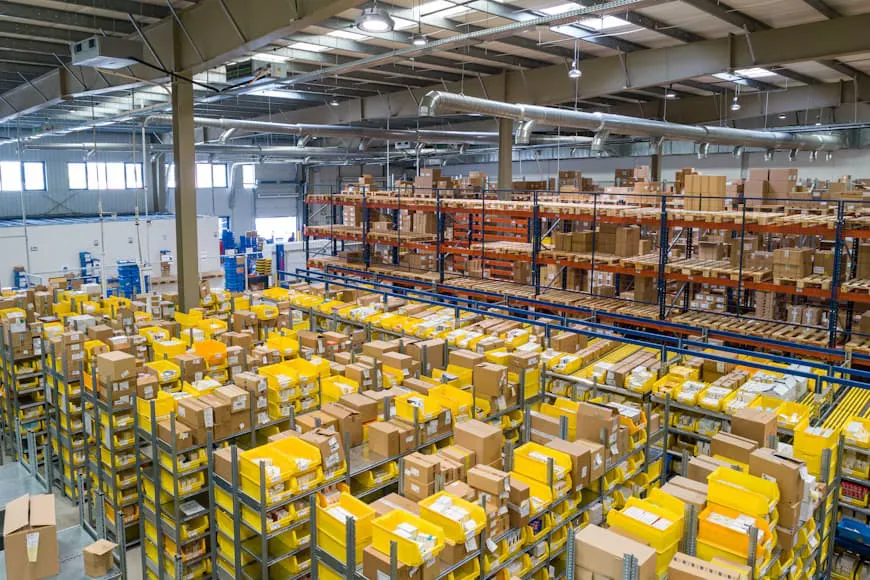

As businesses expand their product ranges, order volumes, and distribution networks, warehouse operations become increasingly complex. Manual processes that once supported a small facility may struggle to maintain inventory accuracy, efficient order processing, and reliable delivery schedules as demand grows. Choosing the right technology can help businesses manage these challenges without allowing operational costs to increase unnecessarily. A well-planned warehouse management solution supports inventory visibility, improves workflow coordination, and helps organizations build flexible warehouse operations that can adapt to changing business requirements.
Understanding the Role of a Warehouse Management Solution
A warehouse management solution helps businesses coordinate activities such as receiving, putaway, inventory tracking, replenishment, picking, packing, and dispatch. By recording stock movements and organizing warehouse tasks, the system gives employees clearer instructions and managers better visibility into daily performance. Depending on its capabilities, it may also connect with purchasing, order management, transportation, and accounting systems. This creates a more coordinated operating environment in which decisions are based on consistent information. Selecting the right solution requires understanding current operational challenges as well as the business's expected growth over the coming years.
Why Warehouse Requirements Change Over Time
A warehouse handling a limited number of products may initially depend on spreadsheets and manual procedures. However, increasing order volumes, additional storage locations, and more demanding delivery expectations can make these methods difficult to maintain. Employees may spend more time searching for stock, correcting discrepancies, and coordinating tasks manually. Growing businesses need systems that can accommodate greater transaction volumes without introducing unnecessary complexity. Evaluating future requirements early helps decision-makers choose technology that supports expansion while avoiding the cost and disruption of replacing unsuitable systems too soon.
Identifying Essential Warehouse Management Features
Accurate Inventory Tracking
Inventory accuracy is one of the most important foundations of effective warehouse operations. Businesses need reliable information about product quantities, storage locations, stock movements, and availability for fulfillment. Without accurate records, employees may pick incorrect items, replenish products unnecessarily, or promise orders that cannot be completed. A suitable system should record inventory transactions consistently and support regular cycle counting and discrepancy investigation. Businesses can explore inventory tracking practices to understand how structured tracking supports better control across warehouses and distribution locations.
Efficient Receiving and Putaway
Receiving is the first major warehouse activity after products arrive at a facility. Incorrect quantities, unidentified items, and delayed data entry can create problems that affect every subsequent process. A capable warehouse management solution helps employees verify incoming deliveries, record discrepancies, and assign products to appropriate storage locations. Putaway recommendations can consider available capacity, product characteristics, handling requirements, and picking frequency. Standardized receiving procedures reduce uncertainty and make inventory available more quickly. Businesses should ensure the system supports their actual receiving workflows rather than forcing employees to rely on separate records or manual workarounds.
Picking, Packing, and Dispatch Control
Order fulfillment involves several connected activities that must be completed accurately and within required timeframes. Poor picking instructions, inefficient travel paths, and inconsistent packing checks can increase labor requirements and shipping errors. Warehouse management technology can organize picking tasks, guide employees toward the correct locations, and support verification before orders are dispatched. The appropriate features depend on order volume, product characteristics, and fulfillment methods. Businesses should examine how the solution handles single-item orders, multi-line orders, urgent shipments, and batch picking to determine whether it can support present and future operational demands.
Evaluating Integration and System Compatibility
Connecting Warehouse and Business Applications
Warehouse operations rarely function independently from the rest of a business. Purchasing teams need receiving information, sales teams require reliable availability figures, and finance departments may depend on accurate inventory valuations. When these functions operate through disconnected applications, employees often duplicate information or reconcile inconsistent records manually. A warehouse management solution should integrate effectively with the systems responsible for orders, procurement, inventory, and financial reporting. Businesses assessing dedicated warehouse capabilities can use this distinction to determine whether their existing business software provides sufficient control for detailed warehouse execution.
Supporting Real-Time Operational Visibility
Delayed data can make it difficult for managers to identify inventory shortages, order backlogs, or receiving problems before they affect service levels. Real-time updates help teams understand current stock positions and monitor activity throughout the warehouse. This visibility becomes especially important when several departments depend on the same inventory information. Businesses should evaluate how frequently the system updates records, how it handles failed transactions, and whether managers can identify exceptions quickly. Reliable reporting allows operational decisions to reflect actual warehouse conditions rather than information that may already be outdated.
Planning for Scalability and Business Growth
Handling Increasing Order Volumes
A warehouse management solution should accommodate growth in order numbers, product lines, users, and inventory transactions. Systems that perform adequately under light workloads may become less effective when activity increases significantly. Businesses should ask how the solution handles peak demand, concurrent users, additional facilities, and more complex fulfillment rules. Scalability also involves maintaining usability as operations expand. Clear workflows, manageable configuration requirements, and suitable reporting tools help organizations grow without creating unnecessary administrative burdens. Evaluating realistic growth scenarios before implementation can reduce the risk of selecting a system that quickly reaches its practical limits.
Supporting Multiple Warehouses
Businesses expanding into additional regions may need to manage inventory across several facilities while maintaining centralized visibility. The system should support location-specific stock records, transfers, replenishment rules, and operational reporting. Managers may also need to compare warehouse performance and identify where inventory should be positioned to satisfy demand efficiently. Multi-warehouse support is particularly valuable when products can be fulfilled from different locations depending on availability or delivery requirements. Organizations should confirm that the solution can manage the complexity of their distribution network without requiring separate, disconnected systems for each facility.
Improving Efficiency Through Warehouse Automation
Identifying Suitable Automation Opportunities
Automation can help reduce repetitive work, improve transaction consistency, and increase throughput in suitable warehouse environments. Potential applications include barcode scanning, automated replenishment triggers, task assignment, conveyor integration, and connections with automated storage equipment. However, introducing automation before addressing inefficient processes can simply make existing problems happen faster. Businesses should first review workflow bottlenecks, error rates, and labor-intensive activities. A practical warehouse automation assessment can help identify where technology is most likely to improve productivity and deliver meaningful operational value.
Maintaining Flexibility as Technology Evolves
Warehouse technology continues to develop, and business requirements may change as new fulfillment methods or equipment become available. Organizations should evaluate whether a system can support additional integrations, updated workflows, and future automation projects. Flexible architecture can help businesses expand capabilities without replacing the entire platform. Decision-makers should also review software update policies, support arrangements, data access, and configuration options. Planning for future requirements does not mean purchasing every available feature immediately. Instead, it means selecting a solution that can accommodate realistic development without creating unnecessary technical or financial commitments.
Considering Implementation Costs and Return on Investment
Looking Beyond the Initial Purchase Price
The total cost of a warehouse management solution can include licensing, implementation, system integration, data migration, employee training, support, and ongoing maintenance. Additional expenses may arise from hardware, process redesign, or temporary operational disruption during deployment. Businesses should compare these costs with expected benefits such as improved inventory accuracy, reduced order errors, faster processing, and better use of labor and storage capacity. A structured financial assessment helps decision-makers understand the investment over its expected lifespan. It also reduces the risk of choosing a system based solely on an attractive initial price.
Measuring Long-Term Business Value
Return on investment should reflect measurable improvements in warehouse performance rather than assumptions about automation or software capabilities. Businesses can establish baseline figures for picking accuracy, order processing time, inventory discrepancies, labor productivity, and fulfillment costs before implementation. These indicators can then be reviewed at regular intervals to assess progress. The evaluation should also consider improvements in customer service, operational visibility, and the ability to accommodate growth. Tracking performance over time helps organizations identify where additional training, configuration changes, or process improvements are needed to achieve the expected benefits.
Preparing Employees for Successful Adoption
Even a capable warehouse management solution may fail to deliver its full value if employees do not understand how to use it correctly. Implementation planning should include practical training, clear process documentation, and communication about how daily responsibilities will change. Employees should have opportunities to test workflows and raise concerns before the system becomes central to warehouse operations. Managers should also identify internal users who can support colleagues and help resolve routine questions. A phased rollout, where practical, can reduce disruption and allow the organization to correct issues before expanding the system across additional teams or facilities.
Measuring Warehouse Performance After Implementation
Continuous performance monitoring helps businesses determine whether their warehouse management solution is meeting operational objectives. Useful indicators include inventory accuracy, picking error rates, order cycle time, dock-to-stock time, fulfillment costs, and on-time dispatch performance. These measures should be reviewed together because improvements in one area may create pressure elsewhere. For example, increasing picking speed should not compromise order accuracy or workplace safety. Regular operational reviews help managers identify bottlenecks, adjust resource allocation, and refine workflows. As the business grows, performance targets should also evolve to reflect new volumes, customer expectations, and distribution requirements.
Conclusion
Choosing the right warehouse management solution requires a clear understanding of operational needs, integration requirements, future growth plans, and total ownership costs. Businesses should prioritize accurate inventory tracking, efficient fulfillment workflows, scalable architecture, employee adoption, and measurable performance improvements. The most effective solution is one that addresses current challenges while remaining flexible enough to support changing requirements. With careful planning and technology support from Avectous, organizations can improve warehouse visibility, strengthen operational consistency, and build a reliable foundation for long-term business growth.


























Sign in to leave a comment.