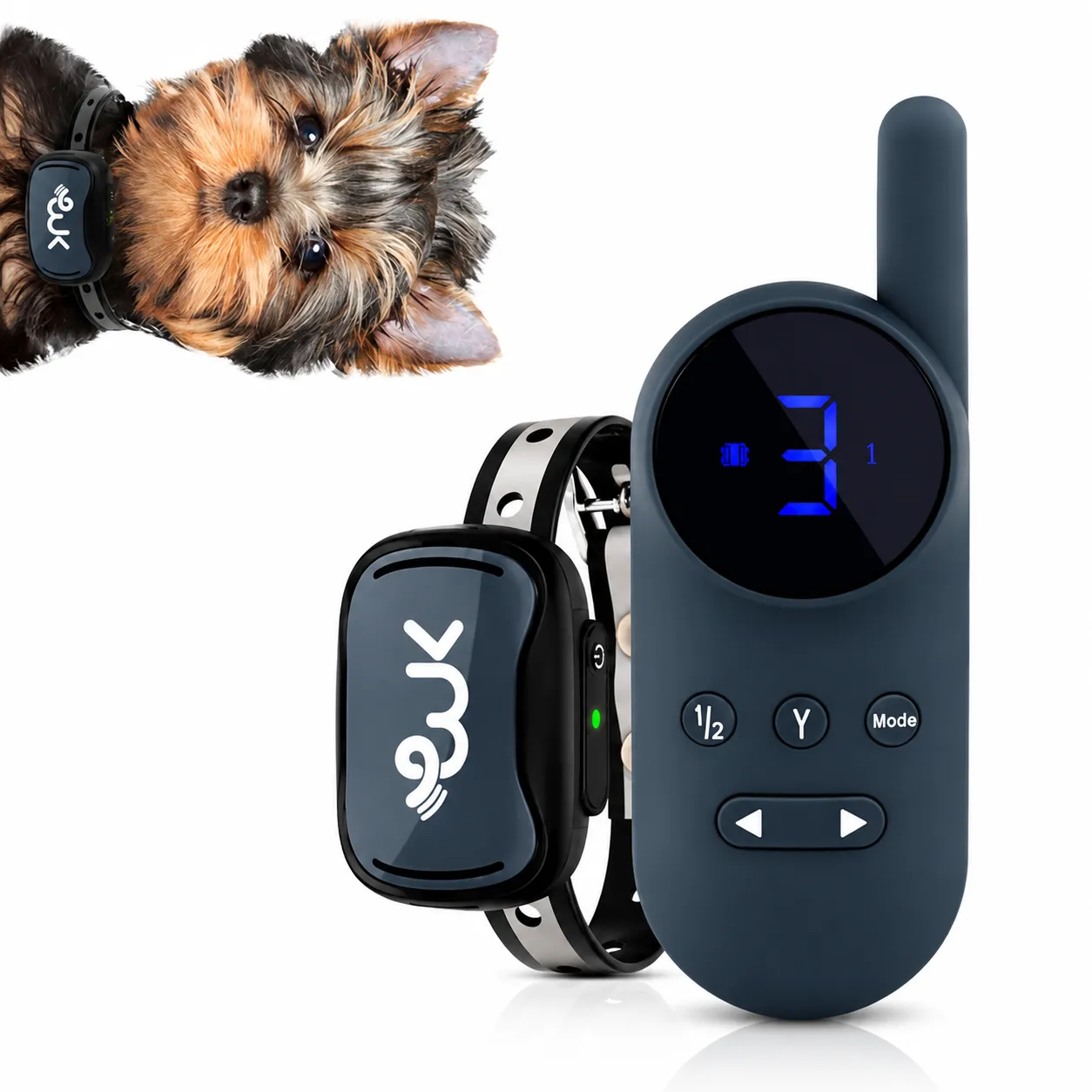

Living with a toy breed comes with a unique set of challenges that owners of large dogs rarely understand. Whether you share your home with a five-pound Chihuahua, an adventurous Yorkshire Terrier, or a stubborn miniature Dachshund, you know that a tiny body can hold a massive amount of attitude.
When nuisance behaviors like excessive barking, bolting through open doors, or lunging at the leash begin to disrupt your daily life, finding a safe training solution becomes a top priority. However, selecting the Best shock collar for small dogs is incredibly stressful when most options on the market look like they belong on a Labrador Retriever.
At Wiggle Kingdom, our team specializes exclusively in the behavioral needs of dogs under 15 pounds. We speak with concerned pet parents every single day who want to establish boundaries but are terrified of putting standard training technology on their fragile companions. Here is what actually works when evaluating micro-equipment for toy breeds, and why understanding canine anatomy is your most important tool.
The Anatomical Reality of Toy Breeds
The biggest mistake owners make is assuming that generic pet gear can simply be scaled down by pulling a strap tighter. Toy breeds have extremely fragile cervical anatomy. Their windpipes are supported by delicate C-shaped cartilage rings, and they possess very little muscle or fat to act as a protective buffer.
When a small dog wears a heavy, oversized receiver, gravity pulls the hardware downward. Every time the dog trots, jumps, or shakes their head, that heavy block of plastic swings like a pendulum against their throat. Over time, this repetitive mechanical trauma can weaken the cartilage, contributing to a chronic, irreversible respiratory condition known as tracheal collapse.
For this reason, standard equipment is inherently dangerous. When you decide to invest in a remote system, you must prioritize specialized hardware. Purchasing a purpose-built Small shock collar designed specifically for petite necks makes the difference between successful communication and accidental injury.
Mandatory Safety Specifications
Protecting a delicate neck means becoming incredibly strict about product specifications before you make a purchase. A safe receiver designed for a miniature breed must check a very specific set of boxes to ensure physical safety:
- Sub-Two-Ounce Weight: The receiver should feel practically weightless in the palm of your hand, ideally weighing 1.5 ounces or less. If a brand claims their collar safely fits dogs from 10 to 100 pounds, walk away immediately.
- Scaled-Down Contact Points: Standard metal probes are designed to push through the thick coats of Huskies and Retrievers. On a tiny dog with paper-thin skin, rigid prongs will bruise the dermal layers. Look for shortened, rounded, or conductive silicone probes that rest flush against the skin without penetrating it.
- Slim, Flexible Straps: The collar band must be thin, easily adjustable, and lack massive plastic buckles that add unnecessary bulk and restrict neck mobility.

Rethinking Stimulation: The Sensory Approach
Beyond the physical footprint of the hardware, protecting your small dog requires a fundamental shift in how you communicate. Toy breeds have highly sensitive nervous systems. They do not require—and should never receive—high-level static corrections to break their focus.
Modern equipment built for miniature frames prioritizes gentle sensory redirection over painful discipline. High-quality micro-systems rely heavily on auditory tones and highly adjustable micro-vibrations. A mild vibration feels very similar to a cell phone buzzing in your pocket. It is surprising enough to interrupt a dog mid-bark or stop them from chasing a squirrel, but it applies absolutely no pain.
This sensory-first approach allows you to guide your dog's attention back to you without triggering a fear response or causing them to panic. Training should never be a physical battle; it should be a calm conversation based on mutual respect.
A Safer Standard for Toy Breed Training
At Wiggle Kingdom, we saw the glaring safety gap in the pet tech market and decided to fix it. We engineer our Training systems exclusively for dogs under 15 pounds because we refuse to compromise on anatomical safety.
By shrinking the hardware to a featherlight profile, utilizing skin-safe contact points, and focusing entirely on painless vibration and tone cues, we ensure that toy breed owners can communicate clearly and safely. Protecting your tiny dog’s delicate neck does not mean you have to abandon your training goals. It simply means choosing technology that respects their fragile size and sets them up for a lifetime of happy, off-leash adventures.























Sign in to leave a comment.