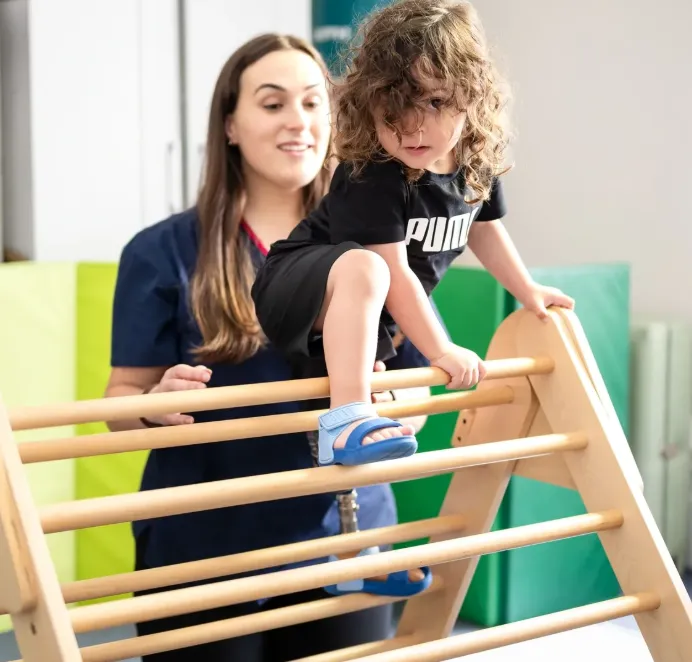

Every child develops differently. For some children, everyday movements such as standing from the floor, climbing a step, maintaining balance, or walking across a room can require extra support. The right equipment can make these activities safer while helping children build confidence and independence during therapy.
How Paediatric Equipment Supports Therapy
Good Paediatric Equipment should do more than make exercises easier. It should help a physiotherapist create meaningful movement opportunities that match a child's current abilities and goals.
For example, a child working on balance may benefit from supported standing equipment, while another child may need adjustable seating or positioning equipment to maintain a stable posture during activities. The equipment should be selected according to the child's physical needs, environment and therapy objectives.
Paediatric Mobility Aids for Greater Independence
Paediatric Mobility Aids can provide children with the support they need to explore their surroundings more confidently. Walkers, gait trainers and other mobility solutions can help children practise controlled movement while reducing unnecessary physical strain.
A physiotherapist may introduce a mobility aid when a child is learning to take their first independent steps, improving walking endurance, or developing better coordination. The aim is not simply to provide support, but to encourage active participation and progression.
Disability Support Equipment for Kids
For children with physical disabilities, appropriately selected Disability Support Equipment Kids use can improve participation in therapy and daily activities. Positioning supports, specialised seating and other adaptive solutions can help children maintain functional alignment and engage with their surroundings.
A practical example is a child who becomes tired quickly while sitting. The right seating support may help maintain a comfortable position, allowing the child to focus on reaching, playing or interacting rather than constantly correcting their posture.
Strengthening Tools for Children’s Physio
Strength development should feel purposeful and age appropriate. Strengthening Tools Children Physio programs use can include resistance bands, therapy balls, stepping equipment and other simple resources.
Rather than repeating exercises without context, therapists can incorporate strengthening into activities children enjoy. Reaching for an object while standing, stepping over low obstacles or pushing against resistance can turn a physical exercise into a functional movement challenge.
Therapy Blocks for Paediatric Physio
Therapy Blocks Paediatric Physio sessions can be particularly useful for practising stepping, weight shifting, balance and lower-limb strength. Different heights can create graded challenges, allowing the therapist to adjust an activity as the child progresses.
For instance, a child who initially needs support to step onto a low block may gradually work towards higher steps as strength, coordination and confidence improve.
Equipment Should Support the Child, Not Define Them
The best paediatric physiotherapy equipment is carefully matched to the child rather than selected simply because it is available. At Paediatric Physiotherapy Centre, equipment can be incorporated into goal-focused therapy that considers movement, confidence, participation and functional independence.
When equipment is introduced thoughtfully, even a simple block, mobility aid or strengthening tool can become part of a child's progress towards doing more independently.





















Sign in to leave a comment.