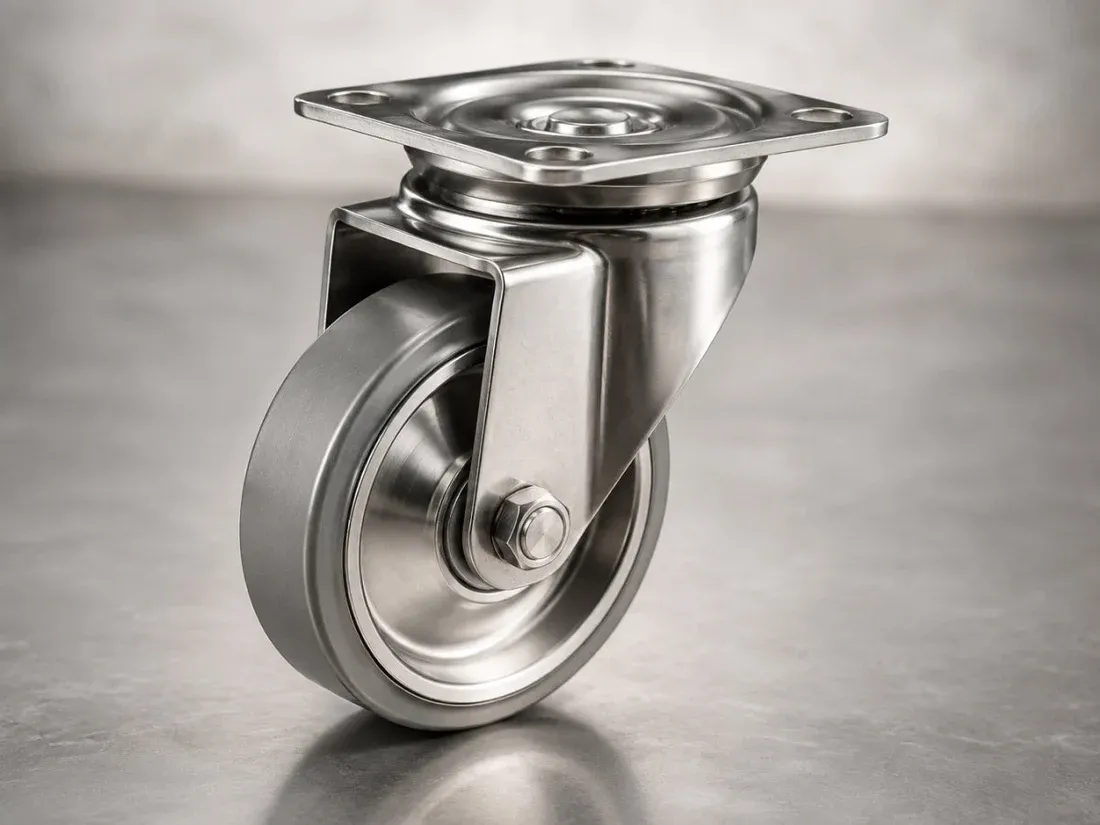

Selecting the right wheels for industrial, commercial, or mobile equipment is more important than it may seem. The right castor can improve movement, reduce physical effort, protect floors, and support safer day-to-day operations. Among the many options available, stainless steel castor wheels are a popular choice for environments where durability, corrosion resistance, hygiene, and reliable performance are essential.
At Ezy Steel, we understand that choosing the correct castor is not simply about finding a wheel that fits. Factors such as load capacity, wheel material, operating conditions, floor type, and required mobility all influence the best choice. This guide explains what to consider when selecting stainless steel castor wheels for your equipment.
What Are Stainless Steel Castor Wheels?
Stainless steel castor wheels are wheel assemblies designed to allow equipment, carts, trolleys, racks, and other mobile structures to move easily. The stainless steel components provide excellent resistance to moisture, corrosion, and demanding working conditions.
Depending on the design, castors may be fixed or swivel. Fixed castors move in a straight line, while swivel castors rotate to provide greater manoeuvrability. Some models can also include brakes, allowing operators to secure equipment when it is stationary.
The combination of a durable stainless steel structure and an appropriate wheel material makes these castors suitable for a wide range of industrial and commercial applications.
Why Choose Stainless Steel Castor Wheels?
One of the main reasons businesses choose stainless steel castor wheels is their ability to perform in challenging environments. Ordinary metal components may deteriorate when regularly exposed to moisture, cleaning chemicals, or humid conditions. Stainless steel offers improved corrosion resistance, making it a practical option where equipment needs long-term reliability.
Other benefits include:
- Corrosion resistance: Suitable for damp and moisture-prone environments.
- Durability: Designed to withstand regular movement and operational demands.
- Easy maintenance: Stainless steel surfaces are generally easy to clean.
- Reliable mobility: Quality castors can make heavy equipment easier to move.
- Hygienic properties: Useful for environments where cleanliness is important.
- Versatile applications: Suitable for industrial, commercial, and institutional equipment.
However, not every stainless steel castor is suitable for every application. Selecting the right specification is essential for achieving the expected performance.
Consider the Load Capacity
Load capacity should be one of the first factors you evaluate. Before purchasing stainless steel castor wheels, determine the total weight of the equipment and its maximum expected load.
Remember that the load is normally distributed across multiple castors, but you should not assume that every wheel will always carry exactly the same amount of weight. Uneven floors, movement, turning, and loading conditions can affect how weight is distributed.
Choosing castors with an appropriate safety margin can help reduce premature wear and improve operational reliability.
Select the Right Wheel Material
The stainless steel frame or mounting structure is only one part of the castor. The wheel itself can be manufactured from different materials, and each option can perform differently depending on the environment.
For example, polyurethane wheels can provide good floor protection and relatively quiet operation, while other wheel materials may be better suited to high-temperature, heavy-duty, or specific industrial applications.
When selecting stainless steel castor wheels, consider:
- The type of flooring
- Expected load
- Frequency of movement
- Temperature conditions
- Exposure to water or chemicals
- Noise requirements
- Required rolling resistance
Matching the wheel material to the working environment can make a significant difference in performance and service life.
Swivel or Fixed Castors?
The choice between swivel and fixed castors depends on how your equipment needs to move.
Swivel castors can rotate through a wide range of directions, making them useful for equipment that needs to turn or manoeuvre in confined areas. They are commonly used on carts, trolleys, and mobile workstations.
Fixed castors travel in a straight direction and can provide stability when equipment follows a defined route.
For some applications, combining swivel and fixed castors can provide a useful balance between directional control and manoeuvrability.
Do You Need Castor Brakes?
Brakes are another important consideration. If equipment needs to remain securely positioned after being moved, stainless steel castor wheels with brakes may be appropriate.
A braking mechanism can help prevent unwanted movement when a trolley, cart, rack, or workstation is stationary. This can be particularly useful in busy workplaces where equipment needs to be moved regularly but securely positioned during use.
Consider whether you need:
- No brake for unrestricted movement
- A wheel brake for stopping wheel rotation
- A swivel lock for controlling the castor's rotation
- A combination braking system for additional control
The best option depends on the equipment design and workplace requirements.
Think About the Operating Environment
Where the castors will be used is just as important as what they will carry. Stainless steel castor wheels are often selected for environments where corrosion resistance and easy cleaning are important.
For example, they can be useful in areas exposed to moisture, regular cleaning, or demanding working conditions. However, you should always check the manufacturer's specifications to ensure the castor materials are compatible with the chemicals, temperatures, and operating conditions involved.
If your equipment will frequently travel over uneven surfaces, thresholds, or rough flooring, choose a castor designed to handle those conditions rather than selecting purely based on appearance or size.
Check Mounting and Dimensions
A castor must physically fit the equipment before it can perform effectively. Check the mounting method, mounting plate or stem dimensions, wheel diameter, overall height, and available clearance.
A larger wheel may roll more easily over obstacles, while a smaller wheel can sometimes provide a more compact design. The correct wheel diameter depends on the equipment and the surfaces over which it will travel.
Always compare the castor's specifications with the equipment before ordering.
Maintenance Tips for Stainless Steel Castor Wheels
Even durable castors benefit from regular maintenance. Periodically inspect the wheels, mounting hardware, bearings, and swivel mechanisms for signs of wear or damage.
Remove dirt and debris that could interfere with wheel movement. Check that mounting bolts remain secure and replace damaged components when necessary.
Regular inspections can help identify problems before they affect equipment mobility or workplace safety.
Final Thoughts
Choosing the right stainless steel castor wheels involves more than selecting a wheel based on size or appearance. Load capacity, wheel material, castor type, braking requirements, floor conditions, operating environment, and mounting dimensions should all be considered.
For businesses looking for dependable steel and industrial solutions, Ezy Steel focuses on practical products designed around real-world applications. By understanding your equipment's requirements and selecting castors according to their intended environment, you can improve mobility, durability, and overall equipment performance.
Whether you are upgrading existing equipment or designing a new mobile system, taking the time to choose the appropriate stainless steel castor wheels can provide better long-term value and more reliable operation.























Sign in to leave a comment.