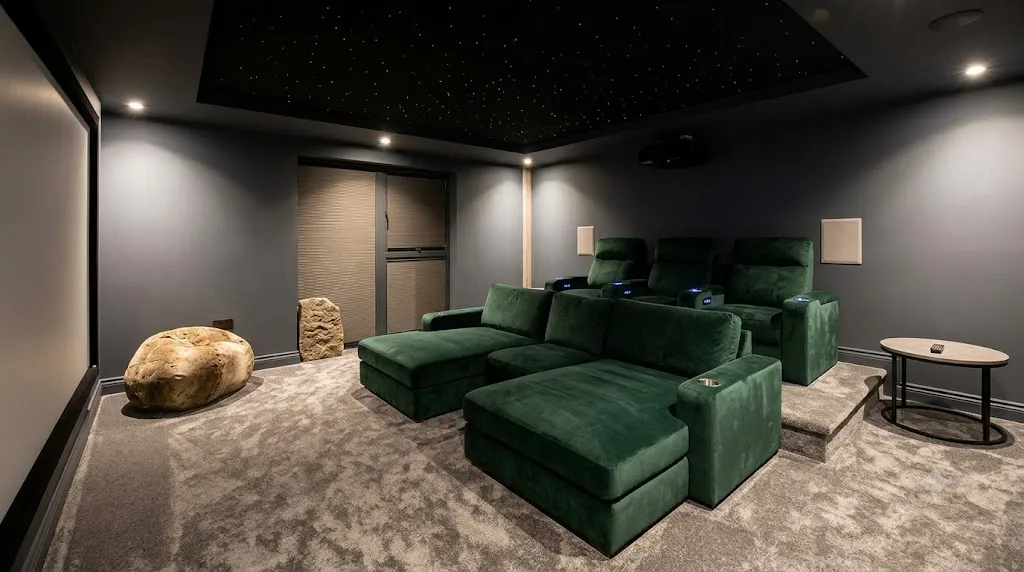

When you're settling in for a film night or a gaming marathon, the right sofa can transform your entire viewing experience. Cinema room sofas aren't just oversized couches, they're specialised seating designed to optimise long hours of entertainment with integrated comfort, technology, and convenience features. From power recline mechanisms to built-in cup holders and USB charging, these sofas combine ergonomic support with the extras that make home entertainment truly immersive. Whether you're outfitting a dedicated home cinema or upgrading your living room, understanding what makes a cinema sofa exceptional is key to choosing one that will serve your family for years to come.
Why Cinema Room Sofas Matter for Your Home Entertainment
A quality cinema room sofa does far more than provide a place to sit. It's the centrepiece of your home entertainment system, designed to keep you comfortable during extended viewing sessions that might stretch for hours. Think about traditional seating, after a couple of hours, you're shifting position, your back aches, and you're hunting for somewhere to set your drink. Cinema sofas solve these problems by combining sustained comfort with practical conveniences.
These sofas provide exceptional support through deep, plush cushioning paired with power recline mechanisms that allow you to adjust your position at the touch of a button. Integrated cup holders, pull-out trays, and hidden storage compartments eliminate the need for extra side tables cluttering your space. Many cinema room sofas now include USB ports and wireless charging capabilities, so your phone or tablet stays powered throughout your viewing session.
Beyond the basics, some models feature ambient LED lighting around the base and cup holders, making it safer to navigate your cinema room in the dark. Premium options even include integrated mini-fridges, cooling cup holders, or vibrating 4D seat mechanisms that add sensory effects to your entertainment. These aren't luxuries, they're thoughtful features that enhance the atmosphere and make longer viewing sessions genuinely enjoyable rather than a test of endurance.
Key Features to Look For in a Quality Cinema Sofa
When you're evaluating cinema sofas, several features consistently separate the excellent options from the mediocre ones. Start with the recline mechanism, look for motorised power recline with smooth, responsive controls. The best models offer multiple recline positions, allowing you to find your ideal angle whether you're watching a tense thriller or a relaxing comedy.
Headrest adjustment is equally important. Whether motorised or manual, a good headrest lets you position your head comfortably without straining your neck. You'll want to adjust your eye level to roughly the lower third of your screen, this positioning reduces neck and eye strain during extended viewing.
Built-in functionality separates cinema sofas from regular recliners. Cup holders should be deep enough to secure various drink sizes and ideally feature easy-access designs that don't interfere with armrest comfort. Pull-out trays provide surfaces for snacks or remotes, whilst storage compartments hidden in the arms or base keep cables, blankets, and other essentials within arm's reach.
USB ports and wireless charging pads are increasingly standard, and for good reason, they keep your devices powered without needing additional outlet access. Some higher-end models include cooling cup holders or compact mini-fridges, maintaining your drinks at the perfect temperature. Don't overlook lighting either: discreet LED strips around the base and cup holders create atmosphere whilst providing practical visibility when moving around your cinema room.
Comfort and Ergonomic Design
Comfort isn't just about softness, it's about intelligent design that supports your body correctly. Premium cinema sofas feature high-density foam cushioning that's firm enough to provide proper support but plush enough for genuine comfort. The cushioning should maintain its shape and support over years of use, which means quality matters.
Lumbar support is essential, particularly for longer viewing sessions. Your lower back naturally curves inward, and a good cinema sofa supports this curve with targeted firmness that prevents slouching and strain. Similarly, neck support prevents the forward head posture that causes discomfort during extended viewing. When you sit in a quality cinema sofa, your spine should feel naturally aligned from your tailbone through the crown of your head.
The depth of the seat is equally important. You want enough depth to fully recline comfortably whilst maintaining proper support when upright. Test the recline range to ensure it suits your body type and preferred viewing position.
Materials and Durability
Your choice of upholstery material affects both comfort and maintenance requirements. Performance fabrics, engineered synthetic materials, offer excellent stain resistance and durability, making them ideal for family rooms where spills happen. They typically require only spot-cleaning and occasional light brushing, and they hold up well to regular use without showing wear patterns as quickly as natural fabrics.
Leather provides a more luxurious feel and is genuinely durable when properly maintained. Real leather breathes better than synthetics and develops a rich patina over time. But, it demands more careful upkeep. Weekly dusting removes surface particles, and periodic gentle cleaning with pH-balanced products maintains its condition. Never use harsh chemicals, heat, or abrasive cloths on leather, they cause cracking, fading, and permanent damage. Direct sunlight and heat sources will fade leather and degrade its flexibility, so position your sofa away from windows and heating vents.
Whichever material you choose, quality construction matters. Look for tight, even stitching, smooth seams, and consistent fabric application. These details indicate a sofa built to last through years of regular use.
Types of Cinema Sofas Available
Cinema sofas come in several configurations, each suited to different needs and spaces. Fixed sofas are the traditional option, they don't recline but offer substantial seating capacity and a structured look. These work well if you prefer a more formal cinema room aesthetic or have limited space for movement.
Reclining sofas are the popular choice for home cinemas. They're typically two-seater configurations where each seat reclines independently, perfect for couples or small families. The motorised mechanisms are smooth and reliable in modern designs, with intuitive controls that even visitors can operate without explanation.
Loveseats bridge the gap between fixed and fully reclining options, offering modest recline without the bulk of larger pieces. They're excellent for smaller cinema rooms or secondary viewing spaces.
Modular corner sofas and custom corner sofa configurations provide flexibility and suit various room layouts. These sectional designs allow you to maximise seating whilst working with your room's dimensions. Modular corner sofas are particularly popular because you can add or remove sections as needs change, perfect if you're not quite ready to commit to a full custom build or want expandable seating.
For the ultimate experience, some enthusiasts invest in specialist 4D vibrating cinema seats that synchronise movement and vibration with on-screen action. These create an incredibly immersive experience, though they're typically reserved for dedicated home cinemas rather than multipurpose living rooms.
Choosing the Right Size and Configuration for Your Space
Getting the dimensions right is crucial, an undersized sofa leaves wasted space, whilst an oversized one overwhelms the room and may not fit through doorways. Start by measuring your cinema room carefully, considering viewing distance from the screen. For optimal viewing, your seating position should place the screen's centre at roughly your eye level when reclined. A general rule suggests sitting at a distance equal to one-and-a-half to two times the screen's diagonal measurement.
Consider how many people you'll typically seat. A two-seater recliner suits couples and small households. Larger families or those who entertain frequently might prefer a sectional configuration or combining multiple pieces. Custom corner sofas offer maximum seating in awkwardly-shaped rooms, whilst modular corner sofas let you test configurations before committing to a permanent setup.
Door access and installation logistics matter too. Measure doorways, hallways, and any angles the sofa must navigate. Some cinema sofas arrive as complete units, whilst others come in sections that assemble on-site, this flexibility can be the difference between installation success and a very expensive problem. If you're considering a bespoke cinema sofa, discuss access routes with the manufacturer before ordering.
Installation, Maintenance, and Long-Term Care
Proper installation sets the foundation for years of reliable performance. Position your cinema sofa away from direct sunlight and heat sources, window light causes fading and UV damage, whilst heating vents or fireplaces cause material degradation and cracking, particularly in leather. Ensure adequate ventilation around the sofa so moisture doesn't accumulate, which can promote mildew in fabric upholstery.
Regular maintenance keeps your cinema sofa looking fresh and functioning smoothly. Weekly dusting with a soft brush removes dust and prevents it from settling into fabric. For leather, use a pH-balanced leather cleaner and conditioner appropriate to your leather type, applying it every three to six months depending on use and climate.
Address spills immediately to prevent stains from setting. Blot rather than rub, rubbing spreads the spill and grinds particles into the fabric. Use appropriate cleaning products for your upholstery type: performance fabrics usually tolerate standard fabric cleaner, whilst leather requires specialist products.
The mechanical components, recline motors, USB ports, and integrated lighting, need occasional attention. Check that all controls respond smoothly and contact the manufacturer if mechanisms become sluggish or unresponsive. Keep the remote clean and replace batteries regularly to prevent operational issues. Vacuum or gently brush the base and crevices where dust accumulates around mechanisms. Follow the manufacturer's guidance for any integrated technology like cooling systems or vibration features.
With attentive care, a quality cinema room sofa will provide comfortable, reliable service for a decade or more, making it one of the best investments in your home entertainment setup.
Conclusion
Cinema room sofas represent a smart investment in comfort, functionality, and entertainment enjoyment. By prioritising ergonomic design, quality materials, and integrated features, you're choosing seating that genuinely enhances hours of viewing pleasure. Whether you opt for a simple two-seater recliner or a bespoke modular corner sofa configuration, the right choice combines your space constraints, seating needs, and budget into one piece that transforms your home cinema experience. Take time to test options, verify dimensions, and understand maintenance requirements before purchasing. Your future self, settled in comfortably for a film night, will thank you for the effort.
























Sign in to leave a comment.