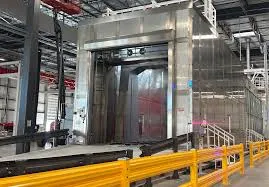

In environments where cleanliness is essential, even a small amount of dust or an unwanted particle can create problems. Pharmaceutical laboratories, food processing facilities, hospitals, electronics manufacturing units, and scientific research centres all need carefully controlled spaces to protect their products, equipment, and working conditions. One important feature that helps maintain these environments is the cleanroom swing door.
Unlike an ordinary door in a home or office, a cleanroom door is designed to support strict cleanliness requirements while allowing people, carts, and equipment to move between different areas. Its construction, surface finish, sealing system, and opening mechanism all contribute to the overall performance of a controlled environment.
Think of a cleanroom as a carefully maintained kitchen where every surface must remain clean and ingredients must be protected from contamination. Even if the kitchen is spotless, leaving a door open for too long can allow dust and unwanted particles to enter. A properly selected door helps reduce this risk and makes it easier to manage movement between spaces.
Understanding how cleanroom swing doors work, where they are used, and which features matter most can help facility managers, architects, and business owners make better decisions. This article explores their purpose, construction, advantages, applications, and practical considerations when choosing a suitable system.
What Are Cleanroom Swing Doors?
A cleanroom swing door is a specially designed door that rotates on hinges to open and close. Depending on its design, it may swing in one direction or both directions. These doors are installed in controlled environments where ordinary doors may not provide the required combination of cleanliness, durability, and ease of maintenance.
The main difference between a standard door and a cleanroom door lies in the details. Cleanroom doors are commonly designed with smooth surfaces, durable materials, carefully finished edges, and sealing arrangements that help limit the movement of unwanted particles between areas.
Some models include vision panels that allow people to see through the door before opening it. Others feature automatic closing mechanisms, protective plates, or specialised hardware selected for the needs of the facility.
Not every cleanroom has the same requirements. A room used for packaging food may have different needs from a laboratory manufacturing sensitive electronic components. Therefore, door selection should reflect the cleanliness level, traffic volume, room layout, and operational procedures of the facility.
Why Cleanroom Swing Doors Matter
A cleanroom is more than a room that looks tidy. It is an environment where contamination, airflow, temperature, humidity, and other conditions may need to be controlled. Doors play an important role because they form part of the boundary between these spaces.
Helping Reduce Contamination
Dust, fibres, skin particles, and other contaminants can enter a controlled area whenever people or equipment move through an opening. A suitable cleanroom door system helps reduce this risk by providing a well-fitted barrier when closed.
Smooth, non-porous surfaces are particularly useful because they are generally easier to clean than rough or absorbent materials. When combined with appropriate cleaning procedures, these surfaces help staff maintain the required hygiene standards.
However, a door alone cannot guarantee a contamination-free environment. Proper cleaning, suitable clothing, air filtration, staff training, and controlled entry procedures remain essential.
Supporting Air Pressure Control
Some cleanrooms operate at a higher or lower air pressure than neighbouring rooms. This difference helps control the direction in which air moves when openings occur.
For example, a facility may maintain positive pressure in a clean production area to help prevent less-clean air from entering. Other environments, such as certain containment laboratories, may use negative pressure to limit the escape of potentially hazardous material.
A correctly specified door, including its seals and closing mechanism, can support the intended pressure-control strategy. The complete room design must account for the door, ventilation system, gaps, and frequency of opening.
Making Movement More Convenient
Employees often need to move between rooms while carrying tools, trays, containers, or supplies. A swing door provides a straightforward way to enter and exit without requiring a complicated operating system.
In busy facilities, the right door design can improve movement and reduce unnecessary interruptions. Its opening direction, available clearance, and closing speed should be considered carefully to avoid obstructing staff or equipment.
Common Materials Used in Cleanroom Swing Doors
The material used to manufacture a door influences its durability, cleanability, resistance to chemicals, and suitability for a particular environment.
Stainless Steel
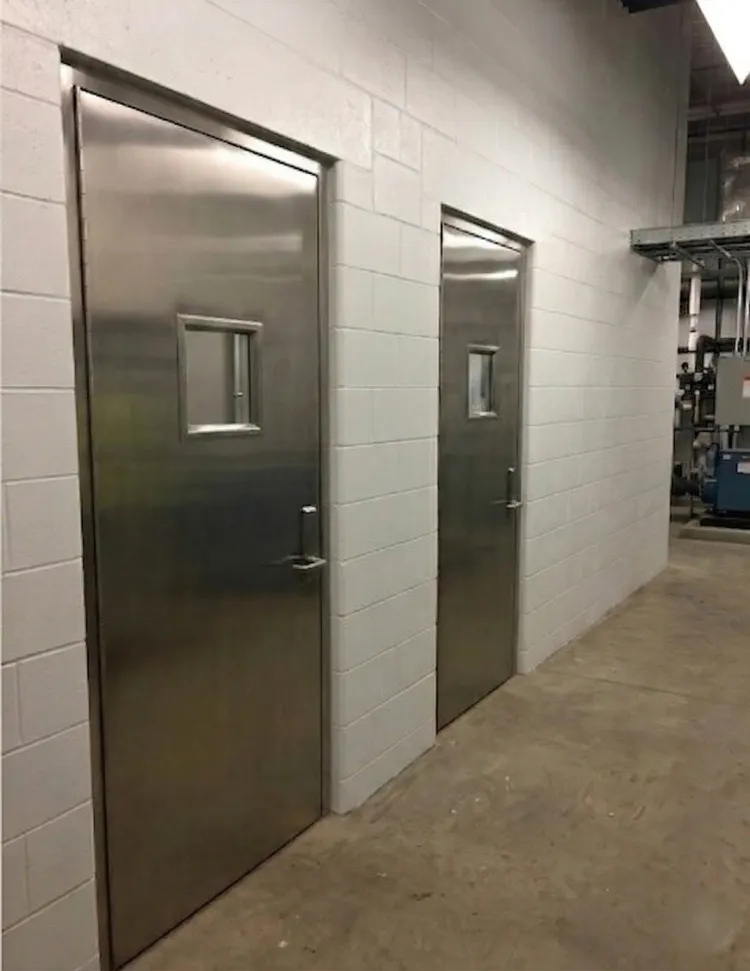
Stainless steel cleanroom doors are frequently considered for demanding environments because they offer strength, durability, and good resistance to corrosion when the appropriate grade is selected.
Their smooth surfaces can be cleaned effectively, making them useful in facilities where hygiene is a major concern. They may be suitable for pharmaceutical production, food processing, laboratories, and other controlled areas.
The correct stainless steel grade depends on exposure to cleaning chemicals, moisture, and other substances. Even stainless steel requires appropriate care to maintain its finish and performance over time.
Powder-Coated Metal
Powder-coated metal doors feature a protective finish applied to the door surface. This coating can provide a clean appearance and help protect the underlying material.
These doors may suit cleanroom environments where the specified coating can withstand routine cleaning and normal operating conditions. Facility managers should confirm that the finish is compatible with the cleaning agents used at their site.
Damaged coatings need attention because exposed areas may become more difficult to maintain, depending on the underlying material and surrounding conditions.
Other Suitable Panel Materials
Some cleanroom doors use specially constructed metal panels or other materials selected for their strength, weight, and cleaning requirements.
The important consideration is not simply whether a material looks smooth. Its edges, joints, hardware connections, and overall construction must also support cleaning and the facility's contamination-control objectives.
For this reason, the complete door assembly should be assessed rather than selecting a door based on its panel material alone.
Important Features to Consider
Cleanroom swing doors are available in different configurations. Understanding the most useful features makes it easier to choose a system that fits the intended application.
Smooth and Easy-to-Clean Surfaces
A smooth finish helps cleaning teams remove dust and surface contamination more effectively. Doors with unnecessary grooves, exposed joints, or difficult-to-reach areas may require additional effort during routine cleaning.
Look for a design that allows staff to reach commonly touched areas and clean around the frame and hardware without excessive difficulty.
The surface must also withstand the cleaning products used in the facility. A finish that deteriorates after repeated exposure can create maintenance problems and make hygiene management more challenging.
Effective Sealing
Cleanroom door seals help reduce unwanted air movement through the gaps between the door and its frame. Their importance depends on the room's pressure requirements and the overall ventilation design.
Seals must be suitable for the operating environment and should be inspected regularly. Worn, damaged, or poorly fitted seals may reduce performance and should be replaced when necessary.
It is worth remembering that seals do not make every swing door completely airtight. Where very low leakage is required, the facility may need a more specialised door construction and a tested system designed for that purpose.
Vision Panels
A cleanroom swing door with a vision panel allows people on either side to check for approaching staff or equipment before opening the door.
This can improve safety in busy corridors and production areas. Vision panels may also allow supervisors to observe activity without repeatedly entering a controlled space.
The glazing, frame, and joints should be suitable for the environment and easy to clean. The size and position of the panel should provide useful visibility without interfering with the door's structural or hygiene requirements.
Protective Plates and Durable Hardware
Doors in manufacturing areas may be exposed to frequent contact from carts, trolleys, and containers. Protective plates can help reduce damage in areas where impacts are likely.
Hinges, handles, closers, and other fittings should be durable and compatible with the cleaning procedures used at the facility. Hardware that loosens, corrodes, or becomes difficult to clean can affect both usability and maintenance.
Automatic Closing Mechanisms
An automatic closer returns the door towards its closed position after someone passes through it. This is useful in environments where staff may otherwise leave doors open during busy periods.
The closing action should be smooth and appropriate for the intended traffic. A door that closes too quickly may create a safety concern, while one that closes too slowly may interfere with pressure control or operating procedures.
Some facilities may require access-control systems or interlocking arrangements between doors. These features should be designed around the facility's specific workflow and safety requirements rather than added without planning.
Where Are Cleanroom Swing Doors Used?
Different industries rely on controlled environments for different reasons. The door system must support the activities taking place inside each facility.
Pharmaceutical Manufacturing
Pharmaceutical production involves processes where contamination can affect product quality and regulatory compliance. Cleanroom swing doors can help maintain boundaries between production areas, material transfer spaces, and supporting rooms.
Their design may need to accommodate frequent cleaning, controlled access, and pressure differences between adjoining spaces. The exact requirements depend on the manufacturing process and the applicable standards.
Hospitals and Medical Facilities
Certain hospital areas require careful control of cleanliness, including selected sterile preparation spaces, laboratories, and specialised treatment environments.
Doors in these locations should be easy to clean and suitable for regular disinfection. Where staff move equipment or supplies frequently, suitable clearances and durable hardware can also improve everyday operation.
The door specification should reflect the actual use of the room rather than assuming that every hospital area requires the same type of cleanroom construction.
Food and Beverage Processing
Food production facilities need to manage hygiene risks while allowing staff and materials to move efficiently. A suitable door can help separate processing areas and support established cleaning procedures.
Materials should withstand the site's cleaning methods, moisture exposure, and any relevant chemical requirements. In areas subject to frequent washdowns, the entire assembly must be appropriate for the level of water exposure.
Electronics and Semiconductor Manufacturing
Sensitive electronic components can be affected by particles that may be difficult to see with the naked eye. Controlled environments help reduce the presence of unwanted contamination during manufacturing.
In these settings, doors may be selected according to particle-control requirements, airflow arrangements, material compatibility, and the movement of personnel and equipment.
Research and Testing Laboratories
Laboratories may use controlled spaces for experiments, sample preparation, testing, and specialised research. Depending on the work performed, the door may need to support cleanliness, containment, controlled access, or a combination of these objectives.
The appropriate design should be established through a review of the laboratory's processes and safety requirements.
Cleanroom Swing Doors vs. Sliding Doors
Swing doors are not the only option available for controlled environments. Sliding doors are also used where space, traffic patterns, or operating requirements make them suitable.
A swing door rotates around hinges, so it needs clear space along its opening path. Its relatively straightforward design can make it practical for many standard doorways.
A sliding door moves sideways instead. This can be useful where a swinging panel would obstruct a corridor or interfere with nearby equipment. Depending on the model, sliding systems may also provide specialised sealing or automated operation.
Neither option is automatically better for every cleanroom. The choice depends on available space, traffic levels, cleaning access, required leakage performance, safety considerations, and the facility's budget.
For example, a small laboratory with moderate foot traffic may work well with a conventional swing door. A busy material-transfer area with limited clearance might benefit from a sliding system.
How to Choose the Right Cleanroom Swing Door
Selecting a door should begin with a clear understanding of the room rather than a focus on appearance alone.
1. Identify the cleanliness requirements. Determine the type of controlled environment, its applicable classification, and the contamination risks that must be managed.
2. Review airflow and pressure conditions. Establish whether the door must support positive pressure, negative pressure, or another ventilation arrangement. Confirm any required leakage performance with the design team.
3. Consider daily traffic. Estimate how frequently the door will open and whether staff will carry supplies, push carts, or move large equipment through it.
4. Choose suitable materials. Match the door surface, frame, seals, and hardware to the cleaning chemicals, moisture levels, and environmental conditions.
5. Check the available space. Confirm the opening dimensions, swing direction, clearance, and accessibility requirements. The door should not create avoidable congestion or safety hazards.
6. Plan for maintenance. Select components that can be inspected, adjusted, and replaced when required. A practical maintenance plan helps preserve performance over the life of the door.
7. Confirm relevant standards. Ask the project team or supplier to identify the standards and performance requirements that apply to the particular facility. Compliance should be verified for the actual installation rather than assumed from a product description.
Businesses evaluating specialist door solutions can also consult Newport Company to explore suitable options for their facility's requirements.
Installation and Maintenance Best Practices
Even a well-designed door may underperform if it is installed incorrectly. The frame must be fitted securely, the door should align correctly, and the hinges and closing mechanism must operate as intended.
Installation should account for the surrounding wall construction, floor finish, required clearances, and the room's pressure-control design. Where performance testing is required, it should be carried out as part of the facility's commissioning process.
Once installed, the door should be included in the routine maintenance schedule.
Cleaning teams should follow approved procedures and use compatible cleaning agents. They should pay particular attention to handles, edges, vision panels, seals, and other frequently touched or difficult-to-reach areas.
Maintenance personnel should inspect hinges, closers, seals, protective plates, and hardware for visible wear or damage. Problems such as poor alignment, unusual movement, loose fittings, or failure to close fully should be addressed promptly.
Where a door forms part of a validated or regulated facility, repairs and replacements may also need to follow documented procedures. Any changes that could affect airflow, containment, or cleanliness should be reviewed by the appropriate technical team.
Common Mistakes to Avoid
Several avoidable mistakes can reduce the effectiveness of a cleanroom door installation.
One is choosing a door solely because it is inexpensive. The initial purchase price does not reflect the complete cost of installation, cleaning, maintenance, and future replacement.
Another mistake is overlooking the surrounding frame and joints. A suitable door panel cannot compensate for poorly finished interfaces or gaps that undermine the intended performance.
Ignoring traffic flow can also create difficulties. A door that opens into a crowded walkway may increase the risk of collisions, while an unsuitable opening direction can make routine work less convenient.
Finally, some facilities assume that installing a specialised door is enough to achieve cleanroom compliance. In practice, the door must work as part of a wider system involving ventilation, filtration, cleaning, monitoring, staff procedures, and suitable building construction.
A coordinated approach helps avoid expensive changes later and produces a more reliable result.
Conclusion
Cleanroom swing doors are an important part of environments where cleanliness, controlled access, and reliable daily operation matter. Their smooth surfaces, appropriate materials, effective seals, and practical opening mechanisms can help support contamination-control measures while allowing people and equipment to move between rooms.
However, selecting the right door involves more than choosing a particular style. Businesses must consider cleanliness requirements, airflow, pressure differences, traffic patterns, cleaning methods, available space, and applicable standards.
With careful planning, professional installation, and regular maintenance, a suitable cleanroom swing door can contribute to a safer, more efficient, and easier-to-maintain facility. By evaluating the complete door assembly and its role within the wider cleanroom design, facility managers can make an informed investment that supports both operational needs and long-term performance.


















Sign in to leave a comment.