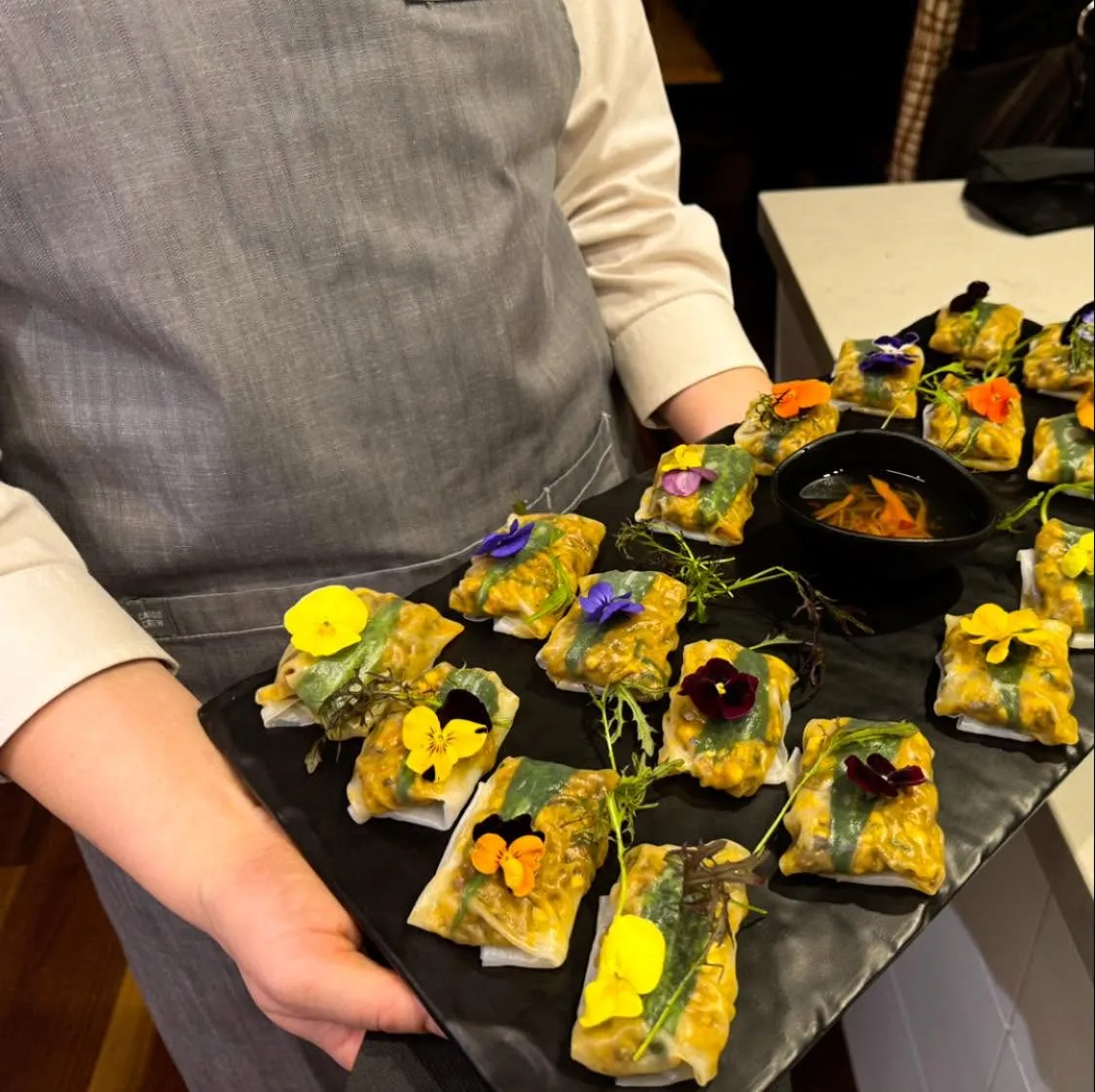


Cocktail events sit somewhere between a drinks function and a full meal. Guests are standing, moving between conversations and eating at different times, so the menu has to work without relying on a dining table or a fixed meal period.
For cocktail party catering in Melbourne, the starting point should be the way guests will actually eat, rather than simply selecting a collection of attractive canapés.
The right menu considers:
- How long guests will be at the event.
- Whether food replaces a meal or accompanies drinks.
- How easily each item can be eaten while standing.
- How the menu progresses from the first bite to the last.
What Makes Food Suitable for a Cocktail Party?
The best cocktail food is easy to pick up, requires minimal attention to eat and remains appealing while guests are socialising. This makes size, structure and presentation important before flavour combinations are even considered.
Design around one hand
Guests may be holding a drink in one hand, which makes awkward plates and cutlery-heavy dishes difficult to manage.
Look for food that:
- Can be eaten in one or two bites.
- Does not require extensive cutting.
- Can be carried easily from a service point.
- Has enough structure to avoid spilling or dripping.
- Can maintain its appearance during a busy function.
This does not mean every item needs to be tiny. A more substantial bite can work well when it is designed for standing service.
If a guest needs to stop talking, find a table and use both hands to eat something, it probably needs reconsideration for a cocktail format.
How Do You Build Variety Without Making the Menu Feel Random?
Variety works best when each food category has a clear role. Simply adding more flavours can create a menu that feels crowded without giving guests meaningful choice.
A useful menu balance might include:
| Food role | Examples of what to consider |
| Fresh | Seafood, vegetables, salads or chilled bites |
| Rich | Pastry, cheese, slow-cooked meats or creamy components |
| Crisp | Fried or toasted elements served close to service |
| Substantial | Larger savoury bites that provide greater satiety |
| Sweet | Small desserts or individual finishing bites |
Texture is particularly important. If every item is soft, rich or pastry based, the menu can become tiring even when the individual dishes are well prepared.
Seasonal Australian produce can also give the selection a natural sense of variety without requiring an excessive number of dishes.
How Should the Menu Change for Weddings, Corporate Events and Birthdays?
The occasion affects what guests expect from the food, so the menu should reflect the character and schedule of the event.
For wedding celebrations
Wedding catering in Melbourne generally calls for food that feels polished and works around the rhythm of the reception. If guests are moving between ceremony, photographs, speeches and entertainment, food service needs to fit those transitions rather than compete with them.
For business functions
With corporate lunch catering in Melbourne, practicality is more important. The food should be easy to eat and allow conversations and presentations to continue, as guests may have a timetable to adhere to.
For birthday celebrations
Birthday party catering can be more relaxed and personal. Familiar favourites sit alongside more distinctive options, with the menu reflecting the atmosphere rather than a formal dining structure.
The same menu should not automatically be used for all three occasions.
What Details Should You Give Your Caterer?
Guest numbers are important, but they do not tell the catering team everything they need. The most useful brief describes how the event will operate.
Share:
- Start and finish time.
- Whether the food replaces a meal.
- Expected guest arrival pattern.
- Venue layout.
- Available kitchen facilities.
- Dietary requirements.
- Whether guests will be standing throughout.
- Any speeches, presentations or scheduled breaks.
These details help shape the menu around the event instead of treating the food as a separate component.
For an experienced catering team, this information can also highlight practical issues early, such as dishes that may be difficult to serve in the available space or food that needs closer attention during service.

Conclusion
A strong cocktail menu does not need dozens of different items. It needs the right combination of food that is easy to eat, varied enough to stay interesting and substantial enough for the event's purpose.
For cocktail party catering, expert caterers like Big Flavours consider the occasion, guest experience and practical service requirements when developing menus. Whether the event is a wedding, business function or private celebration, discussing how guests will eat can be just as important as deciding what they will eat.


























Sign in to leave a comment.