
Coffee’s journey from cherry to cup contains dozens of critical decision points, but many people forget to account for the one that determines whether all their upstream efforts will pay off in a flavorful cup of coffee versus a muddy one: drying. While many buyers and roasters are rightly focused on origin, varietal, and processing technique, this critical step often determines if months of hard work will be wasted or not.
What Is a Drying Curve?
A drying curve is a plot of moisture content over time, as green coffee beans are dried from their initial 50–60% moisture (after pulping/washing) to the stable 10–12% needed to safely package the beans for storage or export. The curve itself is rarely a straight line, with good drying processes featuring multiple points an initial rapid drop in moisture, a crucial but often overlooked slower period to prevent case hardening, and a final gradual taper

Fast drying runs the risk of creating beans with uneven drying rates: beans where the outer shell is desiccated and tough, but still contain plenty of water locked inside, resulting in off-flavors from fermentation or mold later on. This case hardening is one of the most common sources of quality defects during improper coffee drying, and is particularly insidious in that it can be nearly impossible to detect simply by looking at the beans. Slow drying in high humidity, meanwhile, is a recipe for bacterial or microbial spoilage or musty/stinker defects that can ruin an entire lot of coffee. The moisture content curve dictates everything about the final quality of coffee, and experienced quality control specialists can frequently predict cupping results based on how a particular lot was dried.
Why Moisture Matters for Flavor, Not Just Storage
It’s easy to think of moisture removal as primarily a storage concern: keeping beans dry and free from microbial action until they can be processed. What many forget is the fact that moisture levels affect flavor: aromatic compounds are often trapped inside the bean’s cellular structure, needing to be released and broken down during roasting to achieve desirable flavors. Excessive heat during drying can destroy volatile compounds before they ever reach the roaster, while uneven moisture encourages enzymatic or microbial activity during storage, introducing off-flavors like phenolic, moldy, or even fermented notes. Once these compounds are locked into the cell structure of the bean, they can be exceedingly difficult to remove, with little or nothing available to the roaster to overcome these defects.
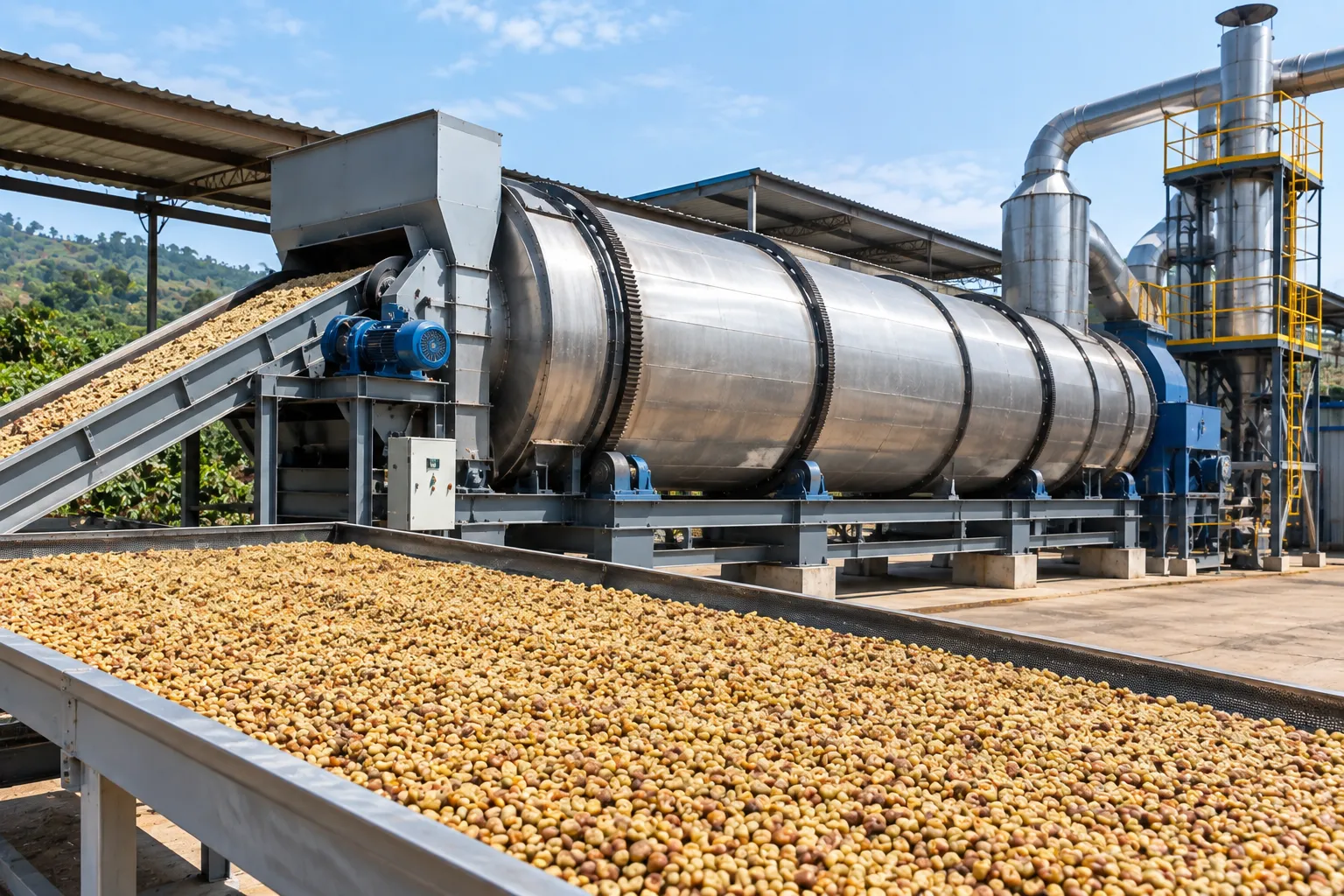
Because of this, many industrial-scale processors have moved away from sun-drying in favor of engineered drying systems that allow precise control over temperatures and airflow without the variables of weather or worker error. Sun-drying patios and raised beds can yield exceptional results when the right conditions are present, but they require highly skilled labor to rake the beans constantly and cover them during rain, and the weather cannot always cooperate with the necessary 3+ days of consistently dry, warm conditions needed for proper drying. A well-engineered coffee bean dryer can provide the same benefits of slow, even, uniform heating and cooling, but without relying on the caprices of nature or the skill of individual workers while maintaining the capacity to process large volumes of beans at a time, without sacrificing the careful control of the process.
Why Gentle, Uniform Drying Is Superior
Several engineering considerations contribute to a dryer’s ability to produce gently, uniformly dried beans while protecting their delicate flavor compounds.
Uniform airflow is critical: beans will dry at different rates depending upon their position in a given batch, requiring careful control of temperature and airflow to ensure that each part of a given batch of beans reaches the target endpoint simultaneously.
Indirect heating also prevents imparting additional unwanted flavors onto the beans from the combustion products of the dryer itself, a crucial consideration when dealing with specialty-grade coffee where undesirable flavors represent a significant loss of potential revenue.
Phased temperature stepping during the drying process also helps prevent cracking of the bean’s parchment layer, which compromises the bean’s integrity and accelerates staling and insect damage during storage.

And finally, actual moisture content monitoring rather than time-based controls allows tighter control of the drying curve, permitting adjustments to temperature and airflow as needed during the process since natural process coffee and washed parchment coffee begin at vastly different levels of moisture and have significantly different drying characteristics that a uniform time-based process cannot account for.
These same principles apply whether one is talking about a small batch specialty processor or a large-scale commercial operation: in either case, the ability to control the conditions under which beans are dried are critical to achieving the desired results. For processors looking to choose between batch and continuous drying methods, comparisons between rotary dryers and continuous belt dryers are a good starting point, since the former’s tumbling action can provide uniform drying without the manpower investment of a manual batch dryer.
Choosing Between Batch, Belt, and Rotary: Finding the Right Curve for Your Coffee Dryer
Many coffee processors find themselves deciding between belt or rotary dryers for their continuous processing needs
Not all processors have the same needs, and choosing the wrong approach can lead to either wasted expenditures on equipment that is too large for one’s needs or an inability to properly process the required volumes due to inappropriate equipment choices.
Batch dryers are appropriate for specialty-grade processors aiming to carefully control the conditions under which their coffee is dried, with appropriate measures for small-volume operations that want to maintain traceability and lot-specific control over their coffee throughout processing.

Belt dryers, by contrast, are appropriate for mid-size operations that want to maintain some level of consistency without the investment of a full rotary dryer. These utilize belts to transport coffee through a series of temperature zones, allowing uniform but gradual heating of the beans during the drying process. Finally, rotary dryers provide continuous processing at high volumes without requiring the same degree of manpower as a batch dryer, using rotating drums to provide uniform heat distribution across a batch of beans.
The choice between batch, belt, and rotary dryers is dictated primarily by the processor’s expected volumes and the degree of control necessary to achieve uniform moisture content and flavor consistency in the processed coffee.
Energy Efficiency and Sustainability Considerations
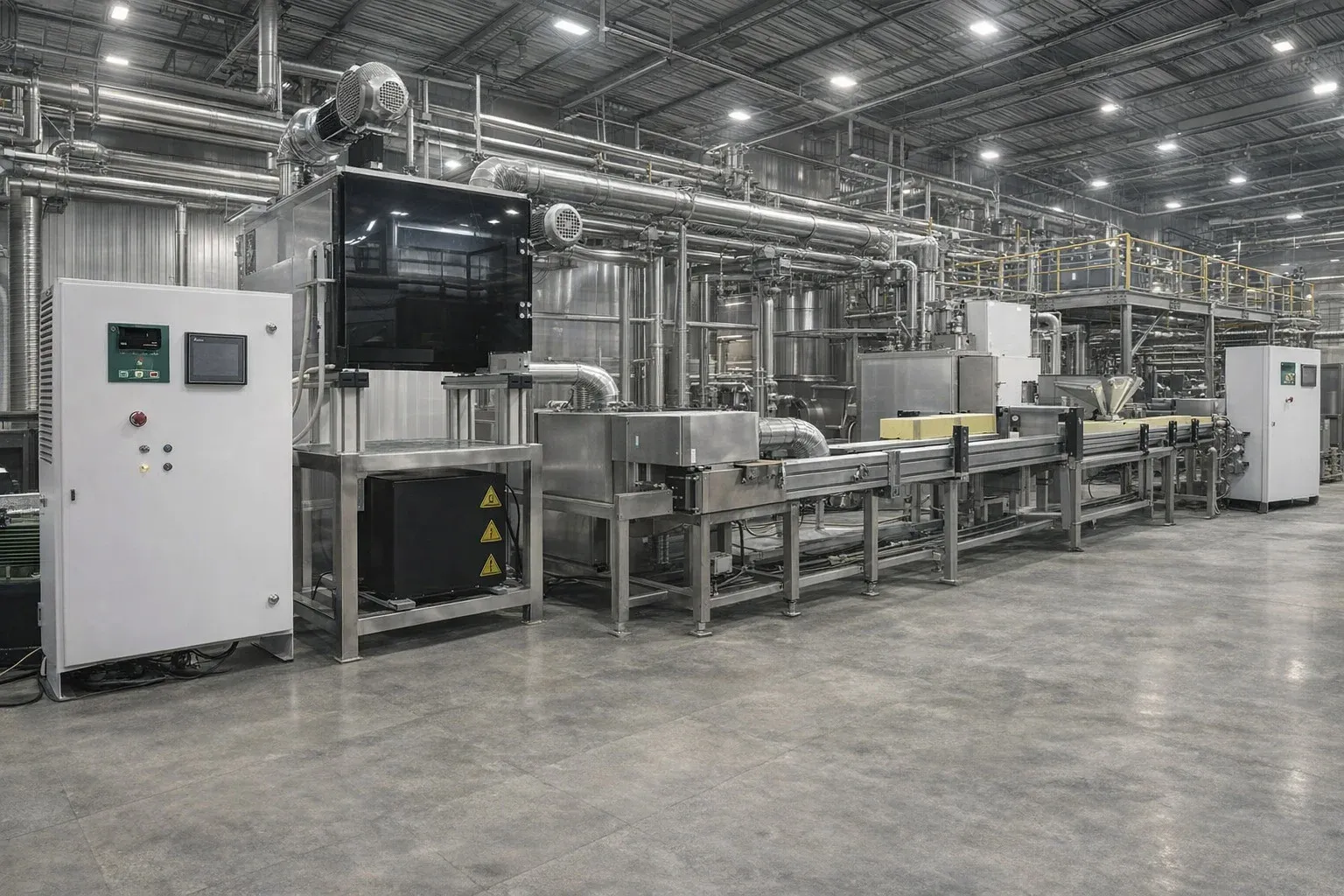
With rising fuel and electricity costs, coffee processors are under increasing pressure to reduce energy expenditures while maintaining the quality of their product. Partial air recirculation systems, which recapture waste heat from the dryer’s exhaust, are one approach to this challenge, reducing the amount of energy that must be expended to heat the air sent into the dryer. Coupled with PLC and SCADA system integration, automated maintenance alerts that identify developing issues before they cause expensive downtime, and remote access to monitoring and control systems, modern dryers provide unparalleled flexibility and control over the drying process, reducing energy expenditures while maintaining product quality.
For a broad overview of the principles of controlled heat application and air flow relevant to a wide range of food processing, industrial drying and dehydration systems offer a good overview of the principles involved that can be applied to coffee processing as well.
Conclusion
The moisture content curve of coffee during the drying process determines if the beans will be fit for making a flavorful cup of specialty coffee. By controlling the application of heat and airflow during the drying process, processors protect the integrity of the bean’s flavor compounds and physical structure, ensuring that the final product will meet the expectations of specialty coffee buyers.





























Sign in to leave a comment.