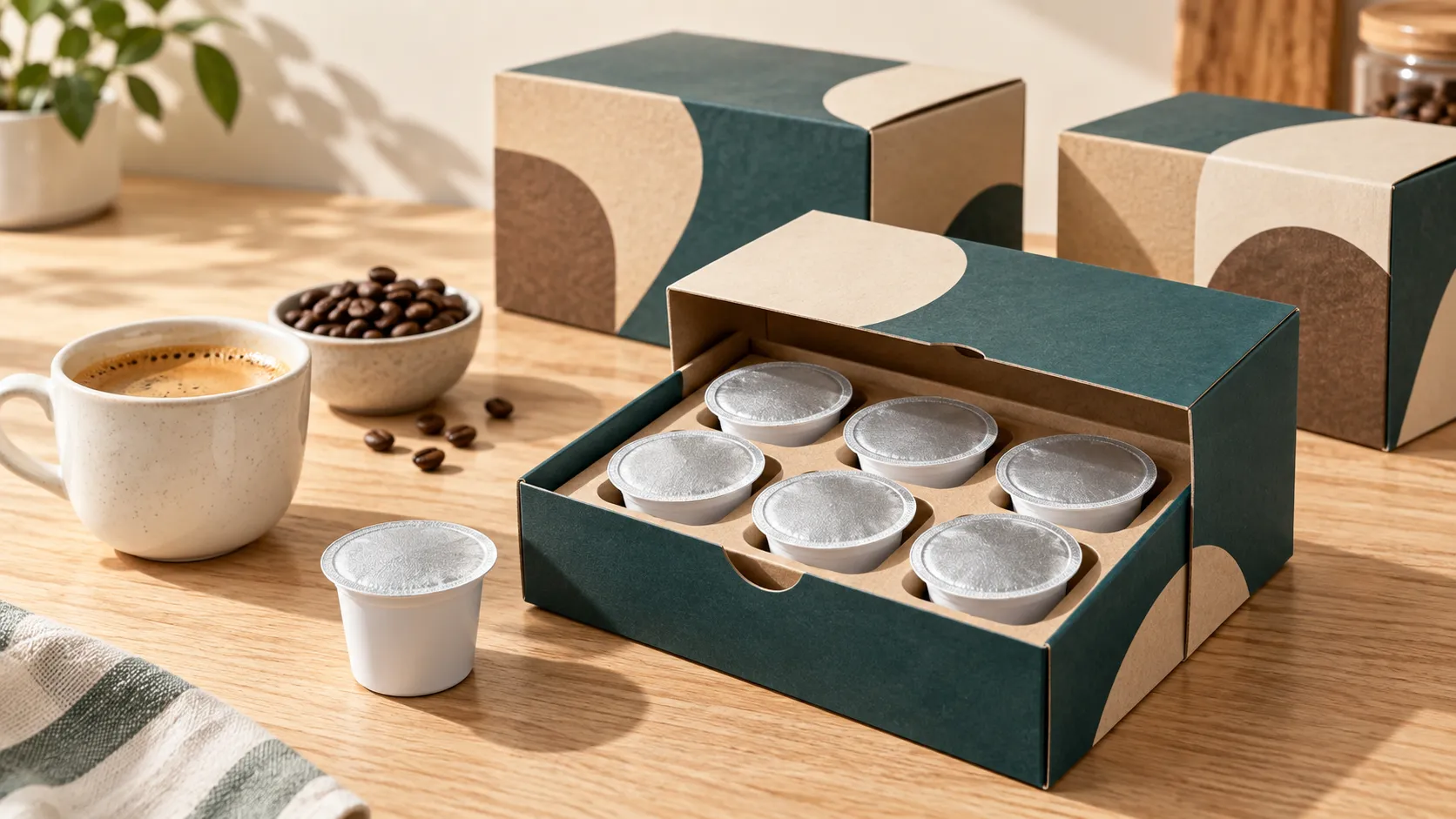

You wake up, grab a pod, and drop it into your machine. Thirty seconds later, coffee fills your mug. That whole routine depends on something most people never think about: the box the pods came in. Coffee pod packaging does the quiet work of keeping every pod fresh, safe, and ready to brew. At Packagly, we build packaging that protects pods through shipping, storage, and store shelves so the coffee inside tastes just as good as the day it was roasted. This article covers what makes coffee pod packaging work, which materials hold up best, and how design choices turn a simple box into a brand asset.
Why does one bag of pods taste better than another, even from a similar roast? A lot of that comes down to how well the packaging kept air, light, and moisture away. Let's break down what goes into pod boxes that actually do their job.
What Happens When Packaging Fails
Ground coffee inside a pod breaks down fast once air reaches it. Oils that carry flavor start to fade, and within a short time, the cup tastes flat instead of rich. A report from the Coffee Science Foundation found that oxidation is one of the leading causes of flavor loss in packaged coffee, with ground coffee affected faster than whole beans due to its larger surface area. This is exactly why coffee pod packaging needs an airtight design, not just a nice-looking label.
Shipping adds another layer of risk. Pods packed loosely in a weak box can shift during transport, which sometimes cracks the pod's own seal. A torn outer box also lets in humidity, which speeds up staleness even if each pod still looks fine from the outside. Solid coffee pod packaging acts as a first line of defense before the pod's own seal even comes into play.
Matching Material to Machine and Market
Different pod formats call for different packaging setups. A single-serve box sold in a grocery store needs sturdy print quality and stackable shape, while a subscription box mailed straight to a customer's door needs to survive rough handling by couriers.
| Packaging Type | Common Use | Why It Works |
|---|---|---|
| Foil-sealed tray box | Retail shelf display | Blocks light and air, stacks neatly |
| Recyclable paperboard sleeve | Subscription or online orders | Lightweight, lowers shipping cost |
| Rigid capsule case | Café or gift sets | Adds a premium unboxing feel |
| Bulk case pack | Wholesale or office supply | Protects large pod counts in transit |
We often walk roasters through this table before picking a direction. A café chain selling pods at the counter may want a rigid case that matches their in-store look, while an online-only brand may care more about a lightweight sleeve that keeps shipping costs down. Coffee pod packaging should fit the exact way customers will receive and use the product.
Design Details That Sell Before the First Sip
People judge coffee quality by the box before they ever taste what's inside. A clean label with a clear roast level, right down to a simple dark, medium, or light icon, helps buyers pick the right pod fast. Research from the Paper and Packaging Board found that a large share of grocery shoppers say packaging appearance directly shapes how much they trust a food brand's quality claims. That statistic shows why coffee pod packaging design carries real weight in a buying decision, not just visual appeal.
Through our pod packaging design service, we help roasters choose fonts, colors, and finishes that match their roast style. A bold espresso blend might use dark matte finishes with gold foil accents, while a flavored seasonal pod might use bright, playful colors to stand out during holiday shopping. Machine compatibility icons, printed clearly on the box, also cut down on customer confusion and return requests.
Getting the Size Right Reduces Waste
Too much empty space inside a box means pods shift and bump against each other. Too little space means the box is hard to pack and pods risk getting squeezed during filling. Either mistake raises the chance of a cracked seal reaching the customer.
We size coffee pod packaging around exact pod counts, whether that is a ten-count sampler or a ninety-count bulk case. A snug fit lowers the need for extra filler material, which cuts packaging waste and trims shipping weight at the same time.
Meeting Shopper Demand for Greener Choices
Coffee drinkers increasingly check the box for recycling symbols before checking the price. Brands that ignore this risk losing customers to competitors who packed the same coffee in a greener box. Kraft paperboard, soy-based inks, and compostable sleeves all give roasters a way to answer that demand directly.
Coffee pod packaging built from these materials can match the strength of standard boxes while giving buyers a reason to feel good about their purchase. It is a straightforward way to stand apart in a crowded coffee aisle.
Small Extras That Keep Customers Coming Back
A printed brewing guide, a QR code linking to a rewards program, or a short note thanking the buyer for their order all add a personal touch. None of these cost much to include, but they change how a customer feels when they open the box.
Coffee pod packaging gives roasters a direct line to the person about to drink their coffee. That short moment before the first pod goes into the machine is a chance to remind buyers why they picked this brand over the one next to it.
Conclusion
Coffee pod packaging protects flavor, prevents damage during shipping, and gives roasters a real chance to build trust with every box that reaches a customer's door. Picking the right material for the sales channel, sizing boxes to fit pod counts snugly, and adding recyclable options all help keep coffee fresh while meeting what today's buyers expect. Small design touches, from clear roast labels to a short thank-you note, turn a simple box into a brand moment worth remembering. A packaging partner who understands coffee helps roasters get every one of these choices right from the start.
FAQs
What makes coffee pod packaging different from packaging for whole bean coffee?
Pods need tighter seals because ground coffee inside them oxidizes faster than whole beans. The outer box also needs to protect the pod's own foil seal from cracking during shipping. This means pod packaging often uses different materials and stricter sizing than a standard coffee bag.
How can I reduce packaging costs without hurting pod freshness?
Right-sizing boxes to match your exact pod count cuts down on wasted material and filler costs. Choosing lightweight but sturdy materials, like coated paperboard, can also lower shipping fees. Working with a packaging partner to test different options helps find savings without sacrificing protection.
Are recyclable coffee pod boxes as strong as standard packaging?
Many kraft and recyclable paperboard options now match the strength of traditional cardboard boxes. Improvements in material engineering have closed much of the old performance gap. Roasters can often switch to greener packaging without seeing more damage during shipping.
How do I choose the right box size for a subscription coffee service?
Subscription boxes should be sized to prevent pods from shifting during transit, since packages face more handling than in-store deliveries. A snug fit with minimal empty space reduces the risk of cracked seals. Testing a sample shipment before a full launch helps catch sizing issues early.
Can custom coffee pod packaging help a small roaster compete with bigger brands?
Yes, a well-designed box can make a small roaster look just as professional as a large one on store shelves. Clear branding and thoughtful design often matter more to shoppers than company size. Many packaging suppliers also offer lower order minimums, making custom boxes accessible for smaller businesses.

























Sign in to leave a comment.