

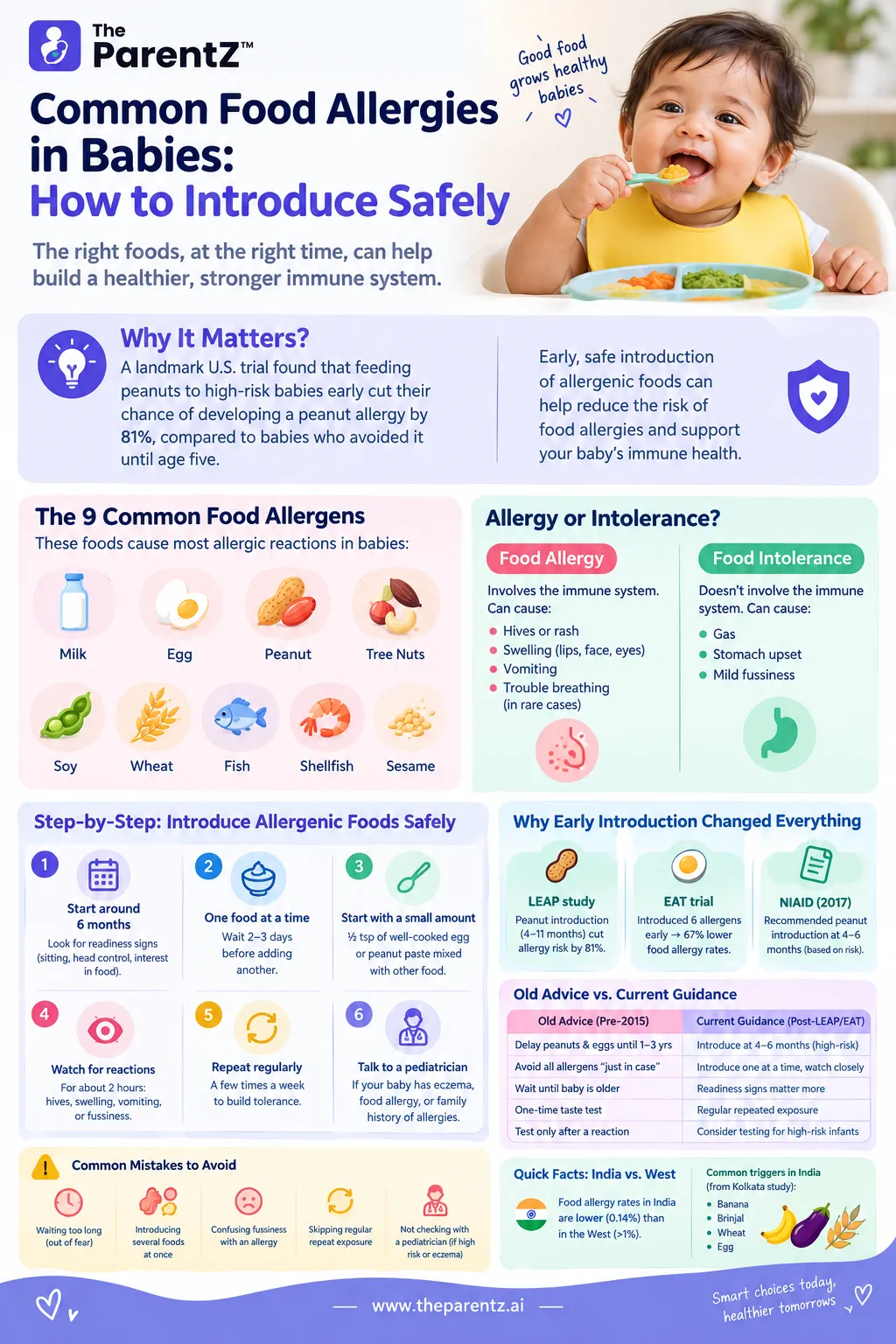
A landmark U.S. trial found that feeding peanuts to high-risk babies early cut their chance of developing a peanut allergy by 81%, compared to babies who avoided it until age five. That single finding flipped decades of advice upside down — and it's exactly why so many parents now search for guidance on baby first solid food for 12-month-old babies instead of just guessing.
Introducing solids isn't just about rice cereal and mashed banana anymore. It's about timing, texture, and knowing which foods carry allergy risk — and which ones actually help lower it.
So what exactly counts as a food allergy versus a normal reaction? A food allergy happens when a baby's immune system mistakes a harmless food protein for a threat and reacts — with a rash, vomiting, swelling, or in rare cases, trouble breathing. It's different from mild fussiness after a new taste, which is usually just a baby figuring out something new.
Most parents feel two things at once when solids start: excitement and nervousness. That nervousness is fair. Between old advice ("wait until age one for eggs"), new research (introduce early!), and grandparents insisting on their own rules, it's confusing to know who's right. Add in worry about choking or an allergic reaction, and mealtime stress becomes real.
This is exactly where clear, current guidance helps. Parents don't need to memorize research papers — they need a simple plan for how to choose safe and nutritious first foods, one that reflects what pediatricians actually recommend today, not advice from twenty years ago.
What Counts as a Common Food Allergy in Babies?
Nine foods cause most allergic reactions in babies: milk, egg, peanut, tree nuts, soy, wheat, fish, shellfish, and sesame. Think of these as the usual suspects — not because they're dangerous by nature, but because a baby's immune system is more likely to overreact to them early on.
How Is a Food Allergy Different From Food Intolerance?
An allergy involves the immune system and can show up fast — hives, swelling, vomiting within minutes to two hours. An intolerance (like trouble digesting milk sugar) causes discomfort, like gas or an upset stomach, but doesn't involve the immune system and isn't usually dangerous.
Why Early Introduction Changed Everything
For years, doctors told parents to delay allergenic foods until age one or later, assuming that would prevent allergies. Research proved the opposite. The Learning Early About Peanut (LEAP) study found that introducing peanut between 4 and 11 months, in high-risk infants, led to a dramatic drop in allergy at age five compared to avoidance.
By 2017, the National Institute of Allergy and Infectious Diseases formally recommended introducing peanut-containing foods around 4 to 6 months, based on a baby's eczema and egg-allergy risk. A related study, the EAT trial, tested six allergens together and found a 67% drop in food allergies among children who followed early introduction, compared to those who waited.
Does Early Introduction Work for All Allergens?
Mostly, yes. Egg and peanut have the strongest evidence, but doctors now generally recommend introducing common allergens one at a time around 6 months, alongside other first foods, rather than avoiding them out of caution.
Food Allergies in India: What the Data Actually Shows
Here's something that surprises a lot of parents: food allergy rates in India are far lower than in the West. A large India study across Bengaluru and Mysore found probable food allergy in just 0.14% of children, compared to over 1% in more urbanized regions like Hong Kong.
That doesn't mean allergies don't happen here — a Kolkata hospital study found banana, brinjal, wheat, and egg among the more commonly reported triggers locally, different from the peanut-heavy pattern seen in the US and UK. Local diets shape local allergy patterns, which is exactly why Indian parents shouldn't blindly follow Western "top 9 allergen" lists without context.
Step-by-Step: Introducing Allergenic Foods Safely
- Start around 6 months, once your baby shows signs of readiness — sitting with support, good head control, and interest in food.
- Introduce one new allergen at a time, waiting 2 to 3 days before adding another, so you can spot which food caused any reaction.
- Offer a small amount first — a half teaspoon of well-cooked egg or a thin peanut-flour paste mixed into a familiar food.
- Watch for reactions for about two hours: hives, swelling around the mouth, vomiting, or unusual fussiness.
- Repeat the food regularly once tolerated — a few times a week — since occasional exposure doesn't build the same tolerance.
- Talk to a pediatrician first if your baby has eczema, an existing food allergy, or a strong family history of allergies.
Real Example: A Typical Introduction Week in an Indian Home
A 6-month-old in Chennai might start with mashed rice and moong dal, move to a thin layer of ragi porridge by week two, then try a small amount of well-cooked egg yolk by week three — spacing each new food out and watching for any rash or stomach upset before adding the next.
Common Mistakes Parents Make
- Waiting too long to introduce allergens out of fear, which research shows may actually raise allergy risk
- Introducing several new foods on the same day, making it impossible to identify the trigger if a reaction happens
- Confusing normal fussiness or spit-up with an allergic reaction
- Skipping regular repeat exposure after the first successful try
- Not checking with a pediatrician when there's a strong family history of allergies or existing eczema
Bringing It All Together, the Right Way
Introducing solids doesn't need to feel like walking through a minefield. The science has moved past fear-based delay and toward smart, early, one-at-a-time exposure — and that shift alone has already reduced allergy rates in places where it's been widely adopted. The Parentz built its first-foods guides around this exact approach, so Indian parents get advice that reflects both global research and local food realities, not outdated caution.
FAQs
When should I introduce peanuts to my baby?
Around 4 to 6 months for high-risk infants (with eczema or egg allergy), and around 6 months for others, mixed into a smooth food like dal or yogurt — never as whole nuts, which are a choking hazard.
What are the first signs of a food allergy in babies?
Hives, swelling around the lips or eyes, vomiting, or sudden fussiness within two hours of eating. Severe reactions with breathing trouble need emergency care right away.
Is it safe to introduce multiple foods at once?
It's better to introduce one allergenic food at a time, spaced two to three days apart, so you can clearly tell which food caused any reaction.
Are Indian babies less likely to develop food allergies?
Research suggests lower rates overall compared to Western countries, though local allergens like banana, brinjal, and wheat show up more often here than nuts do.
Should I delay solids if my baby has eczema?
No — current guidance actually recommends earlier introduction of allergens for babies with eczema, ideally after checking with a pediatrician first.
































Sign in to leave a comment.