
You've decided to launch a loyalty program. Great move. Customer retention is one of the smartest investments a business can make, and a well-run loyalty program can turn one-time buyers into lifelong fans.
But here's the part most businesses skip over: the vendor selection process. Choosing the wrong loyalty program service provider can quietly drain your budget, frustrate your customers, and set your whole retention strategy back by months, sometimes years. And the scary part? Most businesses don't realize they made the wrong choice until the damage is already done.
Let's walk through the most common mistakes companies make when picking a provider, so you can dodge them before they cost you.
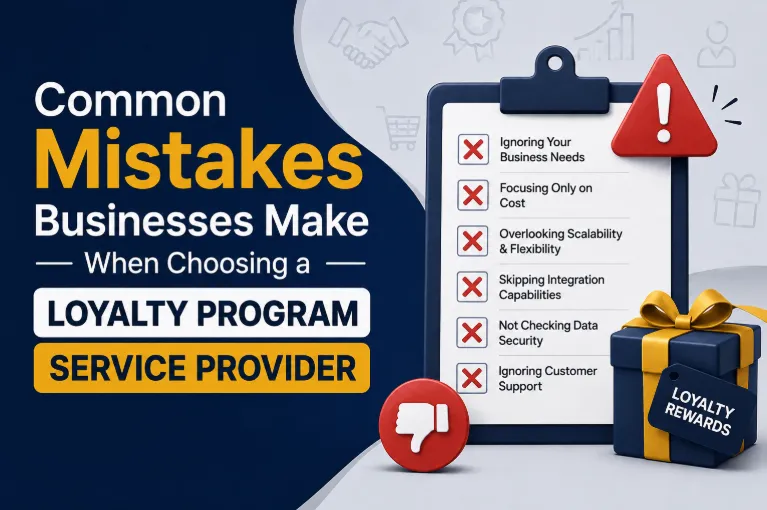
Choosing on Price Alone
It's tempting to go with the cheapest option, especially when you're trying to keep overhead low. But with loyalty programs, low cost often comes with low capability.
Vendors offering rock-bottom pricing tend to cut corners somewhere. Maybe their platform doesn't scale when your customer base grows. Maybe their support team disappears after the contract is signed. Maybe the integrations you need aren't included in the base plan and suddenly you're paying for expensive add-ons anyway. That's why partnering with a reliable loyalty program service provider from the start, one that's transparent about pricing and built for the long haul, saves you far more than a cheap deal ever could.
A loyalty program is a long-term investment. Treating it like a one-time purchase based purely on the sticker price is a mistake that tends to compound over time.
Not Defining What "Success" Looks Like Before Signing
A lot of businesses walk into vendor conversations without a clear picture of what they actually need the program to do. They end up buying a solution shaped around the vendor's strengths rather than their own business goals.
Before you even start evaluating providers, sit down and get specific. Are you trying to reduce churn? Increase average order value? Boost referral traffic? The answers to those questions should drive every vendor conversation you have.
If a provider can't show you, in concrete terms, how their platform helps you hit those specific goals, that's a red flag worth paying attention to.
Overlooking Integration Capabilities
This one catches businesses off guard more than almost anything else. A provider might have a beautiful platform with great features, but if it doesn't integrate cleanly with your existing CRM, e-commerce platform, or POS system, you're going to end up with data silos and manual workarounds that nobody wants to deal with.
Loyalty Incentive Programs only work when your customer data flows freely across your systems. If a customer earns points in-store but those points don't show up in your app until three days later, that's not a loyalty experience. That's a frustration experience.
Always ask potential vendors for a detailed breakdown of their integration ecosystem. Ask specifically about your existing tools. And if they give you vague answers, keep asking until you get specifics.
Ignoring the Customer-Facing Experience
It's easy to get caught up evaluating backend dashboards and admin features. Those things matter, but they're not what your customers are going to interact with every day.
The customer-facing side of a loyalty program needs to be simple, clear, and genuinely enjoyable to use. If members have to read a FAQ just to understand how to earn points, or if redeeming rewards requires jumping through five different hoops, you'll see engagement drop off fast.
Ask vendors for live demos of the customer experience, not just the admin panel. Better yet, try to find reviews from actual end users, not just businesses using the platform. The perspective from both sides tells a much fuller story.
Not Asking About Data Ownership and Analytics
Your loyalty program is going to generate a significant amount of customer data. Purchase patterns, engagement trends, redemption behavior, the kind of data that can genuinely change how you market to and serve your customers.
Many businesses sign contracts without fully understanding who owns that data, and what level of access they actually have to it. Some vendors hold your customer data hostage or make it incredibly difficult to export if you decide to switch providers down the line.
Ask upfront: Who owns the data? What analytics tools are built into the platform? Can you export your full customer history if you leave? These aren't aggressive questions. They're the questions of someone making a smart business decision.
Underestimating the Importance of Ongoing Support
The onboarding process might go smoothly. But what happens six months later when something breaks, or when you want to add a new reward tier, or when you need to troubleshoot a syncing issue during a major sale?
A lot of businesses evaluate providers on their sales team's responsiveness and then discover post-launch that actual customer support is a different story entirely. Look for vendors with clear SLAs (service level agreements), dedicated account managers, and a track record of being reachable when things go wrong.
Talk to existing clients if you can. Ask them specifically about their support experience after they went live. That answer will tell you more than any sales pitch ever will.
Picking a Provider That Can't Grow With You
Your loyalty program might start small, a few thousand members, a handful of reward options. But if things go well, it's going to grow. And the provider that works fine for 5,000 customers might start creaking under the weight of 50,000.
Scalability isn't just about server capacity. It's about whether the platform can handle more complex reward structures, multi-location setups, international customers, or new channels like a mobile app. Ask vendors directly about businesses that have scaled significantly on their platform and how the experience held up.
Conclusion
Picking the right loyalty program partner isn't something you want to rush. The mistakes above are common precisely because businesses are eager to get their programs live and skip the due diligence that makes the difference between a program that actually drives retention and one that quietly underperforms.
Take your time. Ask the hard questions. Evaluate vendors not just on features and price, but on fit, flexibility, and the quality of the relationship you're going to have with them long after launch. The businesses that get this right don't just build better loyalty programs. They build stronger customer relationships that pay dividends for years to come.























Sign in to leave a comment.