

The biggest mistake people make when shopping for the best electric vehicles for range and value is brutally simple: they shop for a spreadsheet, not a car they will actually live with. Three things usually go wrong before anything good happens. First, buyers obsess over the highest advertised range. Second, they ignore charging speed and charging access. Third, they compare sticker prices while pretending insurance, tires, depreciation, software, and home charging do not exist. Then they act shocked when the “best value” EV turns into a mildly expensive inconvenience with a nice touchscreen.
That sounds harsh. It is also actually how a lot of bad EV purchases happen.
By 2026, the market is far more mature than the old “Tesla or nothing” era. Buyers now have serious options across price bands, body styles, and battery sizes. Edmunds, in a roundup republished by MSN’s coverage of the best value electric cars of 2026, points to a wider field of value-focused EVs rather than one runaway winner. The Detroit News, in its survey of standout models, also reflects a market where different vehicles win for different reasons, not just one headline range number. That is healthy. It also makes mistakes easier, because choice creates confusion.
If you have already read Best Electric Vehicles for Range and Value: An Expert Guide or Best Electric Vehicles for Range and Value Explained, you already know the category is not just about battery size. This piece goes after the errors buyers keep repeating anyway: misreading range, misunderstanding value, overrating prestige badges, underrating charging ecosystems, and forgetting how climate, speed, and tires can murder efficiency.
Range sells the dream. Charging speed, efficiency, and ownership costs determine whether that dream survives six months of real use.
That is the unpopular thing first. Now the defense.
Range anxiety is real, but range obsession is worse
People say they want “the best EV for range and value,” but what they often mean is “the longest range I can afford.” Those are not the same question. A car with 405 miles of EPA range can be a weaker value proposition than one with 300 miles if the cheaper car charges faster in practice, loses less value, costs less to insure, and fits your daily routine better.
The industry has trained buyers to think in one clean metric because it is easy to market. One number. One hero spec. One viral post from a founder with a dramatic product reveal. But range is conditional. EPA estimates are useful for comparison, yet they are not a promise. Cold weather, sustained highway speeds, elevation changes, roof boxes, larger wheels, and battery preconditioning habits all change the outcome. Anyone who has spent ten minutes on EV Reddit knows this, but somehow dealers and buyers still behave as if the label is law.
Coverage from BGR on electric cars with more range than a Tesla Model 3 captures one side of the modern market: several rivals now beat a familiar benchmark on paper. Fine. That matters. What it does not prove is that those vehicles are automatically the better purchase. A longer-range vehicle may carry a heavier battery, a higher purchase price, and slower charging curves that erase the paper advantage on road trips.
Here is where buyers usually get fooled:
- They compare maximum range, not usable range. The real question is how much range remains after weather, speed, and battery reserve are factored in.
- They ignore efficiency. A more efficient EV can deliver lower energy costs and less charging time even with a smaller battery.
- They skip route-specific thinking. A commuter doing 35 miles a day has very different needs from a sales rep crossing states every week.
- They assume all charging networks are equal. They are not. Bad charger uptime can make a nominally long-range EV feel short-range in practice.
Actually, most households do not need class-leading range. They need predictable charging and enough buffer for weather and detours. The sweet spot for value is often “enough range with better economics,” not “maximum range at any cost.”
Sticker price is the laziest possible definition of value
Three more things wrong before the good news: buyers compare MSRP without local incentives, they forget financing costs, and they treat maintenance savings like magic. EVs can absolutely offer strong total cost of ownership, but only when the whole equation is done honestly.
Value starts with purchase price, then immediately gets more complicated. Insurance premiums can be higher for some EVs because repair networks are limited and battery-related repair costs can be significant. Tire wear can also be higher because EVs are heavy and deliver instant torque. Then there is depreciation. Some models hold value well because of demand and software support; others get hit hard by price cuts, fleet oversupply, or a brand’s weak reputation for updates.
The best value lists in mainstream auto media are useful because they broaden the conversation beyond luxury nameplates. The Detroit News roundup of the best electric vehicles of 2026 so far and the Auto Express best electric cars overview both reflect how value now depends on segment, use case, and market positioning. A compact crossover can be the smarter buy than a sedan with more range if family packaging, residuals, and charging compatibility are stronger.
Buyers should build a five-part value model:
- Transaction price: MSRP, dealer discounts, destination fees, taxes, and incentives.
- Energy cost: home electricity rate, public fast charging reliance, and local utility time-of-use plans.
- Ownership friction: insurance, tire replacement, service access, and software reliability.
- Depreciation risk: brand pricing history, used demand, and lease residuals if available.
- Time cost: charging stops, app quality, route planning, and charger availability.
The good news is that EV value is actually improving because more mainstream models now compete on price and efficiency. The bad news is that buyers still get distracted by giant batteries and glossy interiors while ignoring the boring math that decides whether a car is a bargain or a regret.
If your EV budget only works when every charging session happens at home and your insurer stays unusually generous, you do not have a value purchase. You have a fragile theory.
Charging speed and charging access are where “best” claims collapse
A lot of “best EV” lists quietly smuggle in an assumption: that charging will be easy. Sometimes it is. Sometimes it is a chaotic mess involving broken stalls, confusing apps, blocked chargers, and a driver trying to decode kilowatts while a family argues in a parking lot. Bad UX, but make it infrastructure.
This is why one of the most common mistakes is treating charging speed as a secondary spec. Buyers see a large battery and think security. But a large battery paired with a mediocre fast-charging curve can be less convenient on long trips than a smaller pack that accepts high power consistently and preconditions intelligently. Peak charging numbers also mislead. A vehicle advertised at 250 kW may only hold that level briefly. The charging curve matters more than the peak.
Access matters just as much. In North America, the shift toward the North American Charging Standard has changed purchase logic. More automakers have moved to offer NACS ports or adapters, which can expand access to reliable fast charging. That does not erase regional gaps, but it changes the value equation in 2026 because charging compatibility is becoming a competitive advantage rather than a niche technical footnote.
The practical checks buyers should make are boring and essential:
- Map your regular intercity routes and identify actual charger density.
- Check whether your target EV has native NACS access, CCS dependence, or adapter support.
- Look at 10% to 80% charging times, not just peak kW.
- Confirm whether battery preconditioning is automatic when navigating to a charger.
- Read owner reports on charger handshake issues and payment reliability.
The India-focused MSN piece on first-time EV buying mistakes is useful here because the principle travels well even if the market conditions differ: buyers often underestimate charging planning and overestimate ideal-case convenience. That is not a beginner error only. I have seen experienced car people make the same mistake because they assume all modern EV ecosystems are mature enough. Some are. Some are still held together by software patches and optimism.
If you want a fuller framework, Common Mistakes When Choosing Electric Vehicles for Range and Value pairs well with this discussion, especially on purchase criteria that look minor until they ruin ownership.
Real-world range is a climate, speed, and tire story
Here is the part many buyers hate because it ruins the clean fantasy: the same EV can feel excellent in one region and mediocre in another. Climate is not a side note. It is one of the main variables shaping whether range and value line up.
Cold weather reduces battery efficiency and increases cabin-heating demand. Very hot climates can also affect consumption because air conditioning loads rise and thermal management works harder. Highway driving at 75 or 80 mph can cut range far more than casual shoppers expect, especially in taller crossovers. Wheel size matters too. The larger, prettier wheel package that looked amazing in configurator screenshots often reduces efficiency and increases replacement cost. *But yes, at least the Instagram post looked premium.*
Real-world ownership means asking unglamorous questions. Does the vehicle use a heat pump? How aggressive is battery conditioning? What is the difference in efficiency between trim levels? Are there owner complaints about winter charging performance? Does the car lose a noticeable amount of rated range when loaded with passengers and cargo? These questions are not nerd trivia. They are the difference between buying the right battery once and overpaying forever because you misunderstood your environment.
According to mainstream reviews and owner testing across markets, the most efficient EVs often outperform expectations because they need less energy to go the same distance. That influences both cost and convenience. A slightly shorter-range but more efficient model can be better value if it keeps charging stops short and electricity bills lower. This is one reason “best for range” and “best for value” should not be fused automatically.
What buyers should adjust for before making any shortlist:
- Subtract a weather buffer. In colder regions, assume winter range will be meaningfully below the headline figure.
- Model your true highway speed. If you cruise fast, use that reality instead of pretending you drive like an EPA cycle.
- Choose wheels carefully. Smaller wheels often improve efficiency and ride quality while lowering tire costs.
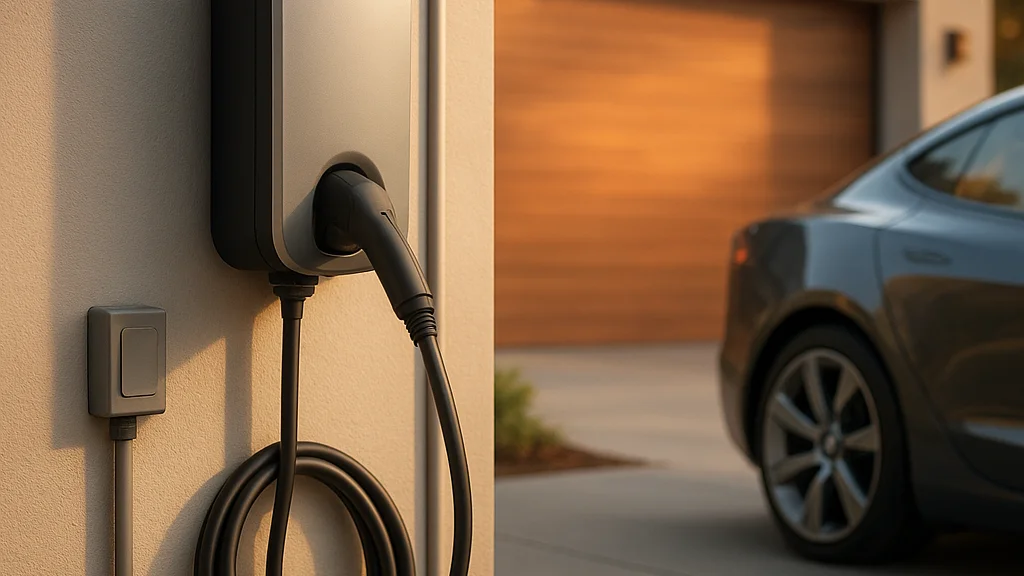
- Price home charging installation. A great-value EV can stop being great if your electrical setup is expensive to upgrade.
Actually, this is where many premium EVs lose their value case. They promise abundance, then ask you to pay extra for the wheel-and-tire package that quietly makes the battery work harder.
Brand drama, software promises, and resale risk distort judgment
EV buying has become weirdly tribal. Some people shop like they are joining a fandom, not making a five-figure capital decision. Founder drama, social-media wars, and software hype do not charge a battery or protect resale value. They just create noise.
Software does matter, but buyers often evaluate it backwards. They focus on flashy over-the-air update promises rather than current competence. A stable navigation system with accurate charging estimates is more valuable than a vague roadmap full of future features. Likewise, advanced driver assistance should be judged by present performance and subscription cost, not by a fan account’s thread claiming a revolution is always six months away.
Resale risk is tied closely to brand behavior. If an automaker has a record of sudden price cuts, inconsistent option packaging, or slow support for older models, used values can take a hit. Leasing can protect against some of that risk, especially in a market where battery technology and charging standards are still evolving. For buyers determined to purchase outright, residual trends and certified used demand deserve more attention than they usually get.
Three warning signs buyers should treat seriously:
- Unclear software support timelines. If the brand cannot explain update policy, assume uncertainty has value consequences.
- Frequent pricing volatility. Sudden new-car discounting can punish recent buyers and weaken residuals.
- Thin service networks. A cheap EV becomes expensive when body repairs or battery diagnostics require long waits.
This is where broad educational pieces such as Common Mistakes in Best Electric Vehicles for Range and Value and forward-looking analysis like The Future of Best Electric Vehicles for Range and Value in 2026 are useful complements. They push buyers to separate temporary hype from structural strengths like serviceability, charging access, and long-term cost predictability.
A contrarian but defensible point: the “safe” EV choice is not always the one with the loudest online community. It is often the one with the least drama, the most coherent charging strategy, and the smallest gap between what marketing promises and what owners actually experience.
What changed in 2026, and why old EV advice is aging badly
A lot of EV buying advice from even two or three years ago is already stale. In 2026, the market has shifted in ways that make old rules less reliable. Range leadership is more contested. Value competition is stronger. Charging access decisions are more strategic because connector standards and network partnerships now influence ownership more directly.
Several developments matter most. First, more automakers have broadened their EV lineups, creating real alternatives in mainstream segments. Second, charging compatibility has become a central shopping factor rather than an enthusiast concern. Third, buyers are more sensitive to depreciation after years of visible price adjustments across the market. Fourth, reviewers are paying closer attention to software maturity and charging performance, not just acceleration and interior design.
Mainstream best-of lists reflect this maturation. The Edmunds selections highlighted via MSN emphasize value rather than pure novelty. The Detroit News roundup points to a market where multiple brands can credibly compete. Auto Express, though focused on a different market, reinforces the same trend: EV excellence is now multidimensional. Buyers who still use 2022 logic — “just get the one with the biggest battery from the most famous brand” — are shopping with expired assumptions.
What has changed for disciplined buyers is actually good news:
- There are more efficient EVs at lower price points.
- Charging network access is becoming easier to compare and more consequential to own.
- Independent reviews now test route planning, charging curves, and winter performance more seriously.
- The market offers stronger lease opportunities in some segments as brands compete.
What has not changed is the need for skepticism. Advertised numbers still flatter ideal conditions. Premium branding still encourages overspending. And buyers still confuse “most talked about” with “best for me.” That is not a technology problem. It is a decision-making problem.
How to choose the right EV for range and value without fooling yourself
The smart way to buy an EV is not glamorous, which is probably why so many people avoid it. You need a use-case audit, not a vibes-based shortlist. Start with your weekly mileage, home charging situation, local climate, electricity rates, and longest common trip. Then compare three vehicles, not ten. More choice often produces fake sophistication and worse judgment.
A practical method works better than endless scrolling through hot takes:
- Define your real range need. Take your longest routine day and add a weather and detour buffer.
- Decide whether home charging is core or optional. If you rely heavily on public charging, prioritize network access and charging speed over maximum battery size.
- Estimate total monthly cost. Include payment, insurance, energy, tires, and likely depreciation or lease terms.
- Test the software. Navigation, charger routing, and app stability matter every week, not just on delivery day.
- Drive the efficient trim. Fancy wheels and performance packages can ruin the value case.
If two vehicles are close, choose the one with fewer ownership assumptions. That means better service access, stronger charging compatibility, clearer software support, and more predictable costs. The “best” EV is often the one that asks the least from your patience.
The larger lesson is simple. Range is important. Value is essential. But the common mistakes happen when buyers merge those ideas into one shallow metric and forget that an EV is an ecosystem purchase. Battery, software, charging, climate, resale, and routine all interact. Ignore one, and the whole value story can crack.
I will say the unpopular thing one more time: if a car only looks like a great EV on a spec sheet, it probably is not one. The best electric vehicles for range and value earn that label in the messy real world — in winter, on highways, at imperfect chargers, after insurance renewals, and before the second set of tires. That is where truth lives. Not in launch slides. Not in fan threads. And definitely not in the fantasy that the longest-range EV is automatically the smartest buy.

























Sign in to leave a comment.