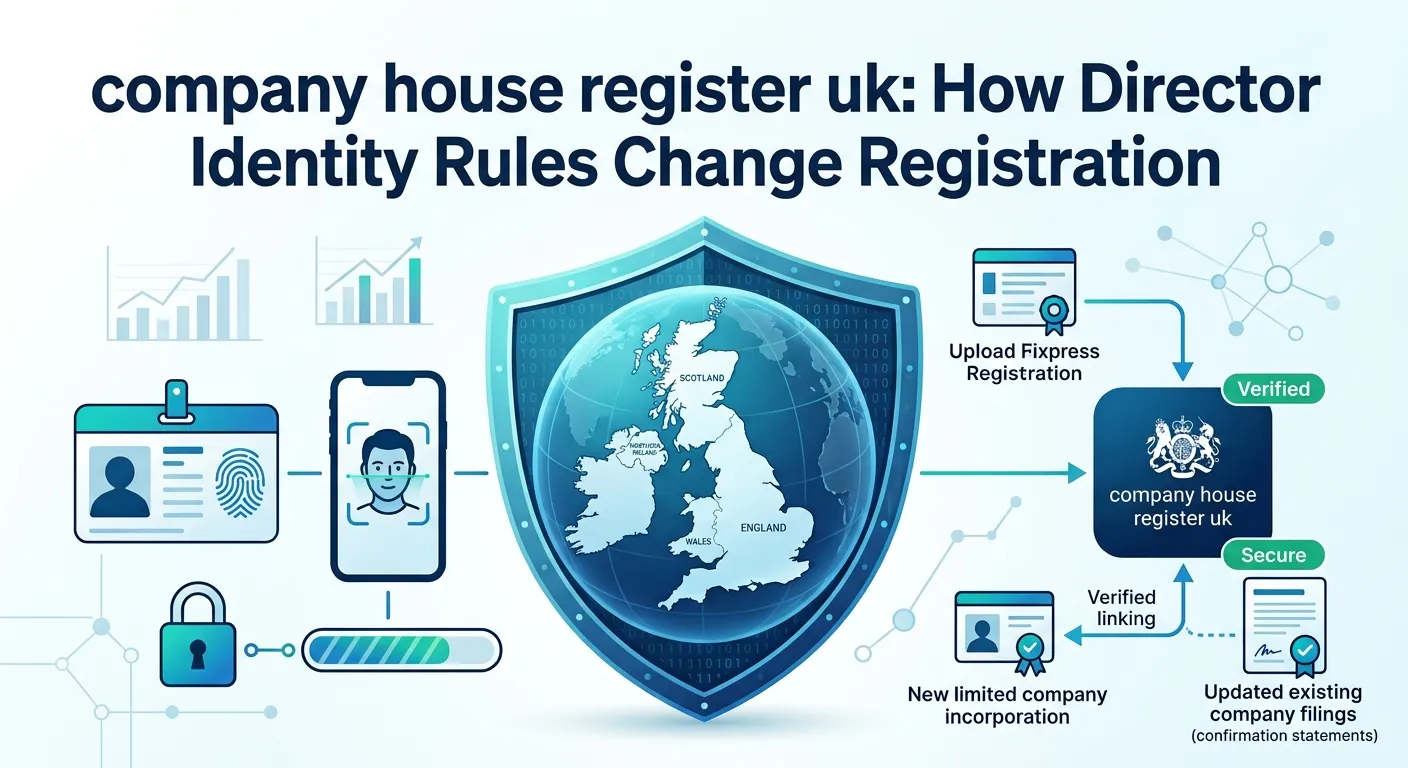


Setting up or managing a business in the UK involves crucial compliance updates. Under the Economic Crime and Corporate Transparency Act, the UK government introduced mandatory identity verification rules for directors, people with significant control (PSCs), and limited liability partnership (LLP) members. Every official record filed on the company house register uk must now tie back to a real, verified person.
If you plan to launch a startup or manage an existing corporate entity, navigating these checks is essential. Here is a simple, clear guide on how these director identity rules alter registration, why the changes exist, and how you can remain completely compliant.
Why Were These Verification Rules Introduced?
In the past, setting up a UK company was fast and simple—often too simple. Fraudulent users could occasionally create fake entities using stolen names or false details without showing any proof of identity.
To address this, Companies House gained broader powers to verify people before their names appear on official filings. The core goals are simple:
- Prevent Fraud: Prevent fake company setups and protect legitimate business owners.
- Boost Transparency: Keep information on the company house register uk accurate, honest, and reliable.
- Ensure Accountability: Guarantee that everyone operating a business is legally traceable.
Who Needs to Verify Their Identity?
The rules cover almost everyone leading or controlling a UK business entity. You must complete identity verification if you are:
- A new director being appointed or registering a new startup.
- An existing director running an active UK enterprise.
- A Person with Significant Control (PSC) holding major voting rights or shares.
- An LLP member in a limited liability partnership.
Key Rule: You only need to verify your identity once. After completing the check, you receive a unique personal code. You then link this single code across all your current and future directorships on the public register.
How Does Identity Verification Work?
Completing your identity check takes just a few minutes, and you can choose the path that suits you best:
- GOV.UK One Login App (Fastest Method): Scan a biometric photo ID—such as a passport or photocard driving licence—using your smartphone app.
- Online via GOV.UK: Answer secure identity questions online if you prefer not to use the phone app.
- In-Person at a UK Post Office: Enter your details online, then present your physical ID at a local post office branch.
- Authorised Corporate Service Providers (ACSPs): Use an authorised agent—such as a registered accountant or solicitor—to verify your identity for you.
How the Changes Affect Registrations and Filings
These identity checks directly alter how you set up new companies and manage ongoing administrative tasks.
1. Registering New Companies
You cannot register a brand-new business without completing verification first. Every appointed director and PSC listed on incorporation forms must supply their verified personal code. Companies House will automatically reject filings with unverified officers.
2. Updating Existing Companies
Existing directors must link their personal code when submitting their annual confirmation statement. Once linked, your verified status displays clearly on the company house register uk.
3. Submitting Official Documents
Third parties filing documents on behalf of companies must also be verified or registered as an ACSP to submit valid filings.
What Happens If You Do Not Comply?
Skipping identity verification causes immediate operational and legal hurdles:
- Rejected Filings: Companies House will reject your paperwork, leading to overdue accounts or missed confirmation statements.
- Public Flagging: Unverified directors face public markers on the main company house register uk.
- Fines and Penalties: Serving as a director without completing verification is an offense that can lead to civil fines or court action.
Simple Steps to Keep Your Business Compliant
To keep your corporate records running smoothly without unexpected delays:
- Audit Your Officers: Create a full list of all directors, PSCs, and team members who handle official company filings.
- Verify Early: Ask all officers to complete their GOV.UK verification well before upcoming filing deadlines.
- Secure Your Personal Codes: Keep your unique personal code safe so you can add it to your annual confirmation statements or new appointment forms.
- Partner with Experts: Work with trusted corporate service providers to handle your ongoing compliance. Choosing a reliable post completion solution helps ensure your business meets every Companies House rule cleanly and accurately.
Final Thoughts
While these verification rules add a short extra step to setting up and running a business, they create a safer, far more transparent environment for everyone. By completing your ID check early and keeping your records current on the company house register uk, you can avoid administrative delays and focus on growing your business with peace of mind.


























Sign in to leave a comment.