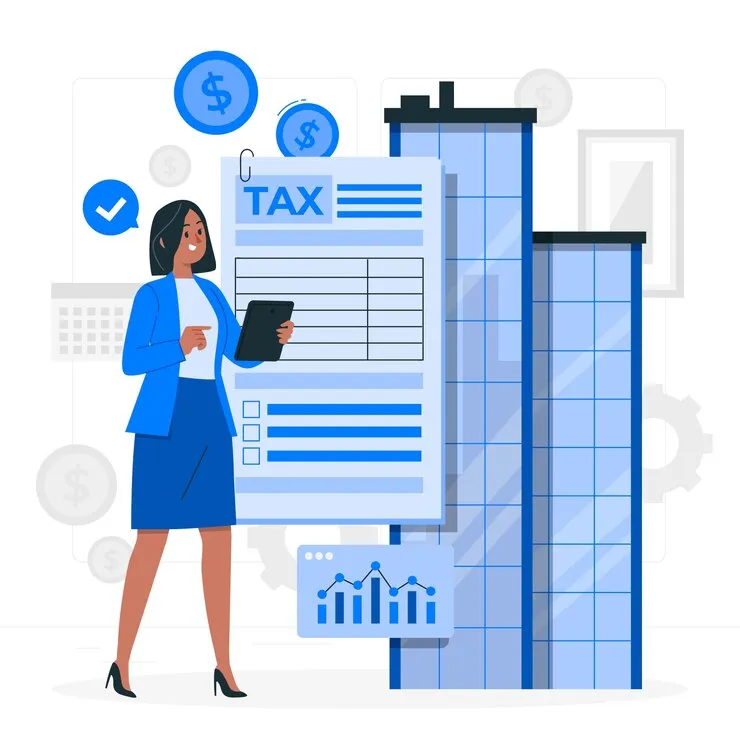

For businesses in Singapore, tax and accounting management entails maintaining correct financial records, submitting corporate income tax returns to IRAS, preparing GST reports where applicable, and meeting statutory compliance deadlines throughout the year. Businesses will have to comply with the Companies Act and IRAS guidelines such as bookkeeping, payroll, annual returns and audits.
For most SMEs and growing businesses in Singapore, staying on top of tax and accounting services is less about paperwork and more about financial survival. Miss a filing deadline, misclassify an expense, or underreport revenue — and you're looking at penalties, audits, and unnecessary stress. This guide breaks down every core area your business needs to manage, and how to do it right.
Why Accounting and Tax Compliance Matter More Than You Think
IRAS (Inland Revenue Authority of Singapore) and ACRA (Accounting and Corporate Regulatory Authority) require timely and accurate filings. And not just a fine for dropping back. It can impact your ability to get loans, attract investors or even renew business licenses.
Singapore has one of the most competitive corporate income tax rates in Asia at 17%, capped by IRAS. But to get partial tax exemptions and startup schemes, you need clean, well-kept books from day one.
Core Components of Business Accounting in Singapore
Business Accounting is more than simply recording transactions. It’s a structured system that supports decision making, compliance and growth planning. This is what it usually entails.
Bookkeeping and Financial Records
Section 199 of the Companies Act requires all companies incorporated in Singapore to keep proper accounting records. This involves keeping a record of every transaction, retaining source documents (e.g. invoices, receipts, contracts), and storing those records for a minimum of 5 years.
With good bookkeeping, you get a real-time view of your cash flow, profit margins and outstanding receivables – information that every SME owner needs to make smart decisions.
Financial Statement Preparation
Most companies in Singapore are required to prepare financial statements annually. These include:
- Profit and Loss Statement
- Balance Sheet
- Cash Flow Statement
- Notes to the Financial Statements
The financial statements are to be prepared in accordance with Singapore Financial Reporting Standards (SFRS). Small companies may be exempted from audit requirements, but they are still required to prepare unaudited statements.
Payroll Management
Payroll in Singapore is more than just paying salaries. It covers CPF (Central Provident Fund) contributions, itemized payslips and accurate reporting through the IR8A form at year-end. The CPF Board penalizes mistakes in CPF calculations or late contributions.
Understanding Corporate Tax in Singapore
Singapore operates under a territorial tax system, whereby only income earned in or derived from Singapore is subject to tax. This is a huge advantage for businesses that work regionally.
Key Corporate Tax Deadlines
| Filing Requirement | Deadline | Governing Body |
|---|---|---|
| Estimated Chargeable Income (ECI) | Within 3 months of financial year-end | IRAS |
| Form C-S / Form C | 30 November (paper) / 15 December (e-filing) | IRAS |
| Annual Return Filing | Within 5 months of AGM (private companies) | ACRA |
| GST Returns (if registered) | One month after end of accounting period | IRAS |
Tax Exemptions Available to SMEs
Startups and SMEs in Singapore can benefit from significant tax relief:
- Startup Tax Exemption (SUTE): First S$100,000 of chargeable income is 75% exempt for the first three years of incorporation.
- Partial Tax Exemption (PTE): For companies that no longer qualify for SUTE, 75% of the first S$10,000 and 50% of the next S$190,000 are exempt.
- Corporate Income Tax Rebate: IRAS periodically offers rebates; businesses should review each year's Budget announcements.
These exemptions are only accessible when your financial statements are accurate and filings are submitted on time.
GST Registration and Compliance
Your business is required to register for GST with IRAS if your taxable turnover in any 12-month period exceeds S$1 million. GST in Singapore is currently at 9% (effective from January 2024).
The advantages of registering voluntarily before you reach the threshold – you can reclaim input tax on your purchases. But it also adds a layer of compliance. Quarterly GST returns, proper tax invoices, and accurate record keeping are non-negotiable.
Common Accounting Mistakes Singapore Businesses Make
Even experienced business owners slip up. Here are the most frequent issues that surface during IRAS audits or ACRA reviews:
- Mixing personal and business expenses
- Failing to retain source documents for five years
- Incorrect CPF contribution rates for different employment types
- Claiming GST input tax on disallowed expenses (e.g., entertainment, motor vehicles)
- Late ECI submissions leading to composition penalties
- Not updating ACRA on changes to company particulars
Most of these errors are avoidable with proper systems or the right professional support in place.
When Should You Outsource Accounting Services?
Outsourcing accounting services makes financial and operational sense for most SMEs. Here's a practical way to assess your readiness:
| Situation | In-House | Outsourced |
|---|---|---|
| Early-stage startup with simple transactions | Possible | Cost-effective option |
| Growing SME with multiple revenue streams | Complex, error-prone | Recommended |
| Business with GST and payroll obligations | High compliance risk | Strongly recommended |
| Company approaching audit requirements | Requires specialist | Essential |
Outsourced providers also keep up to date on regulatory changes – such as the phased GST rate increases or revised SFRS standards – so you don’t have to.
What a Complete Tax and Accounting Service Should Cover
When evaluating providers, look for end-to-end coverage, not just bookkeeping. A robust engagement should include:
- Monthly or quarterly bookkeeping and reconciliation
- Preparation of annual financial statements (SFRS-compliant)
- Corporate tax filing (ECI, Form C-S or Form C)
- GST registration, filing, and compliance advisory
- Payroll processing and CPF contributions
- XBRL financial data filing with ACRA (for applicable companies)
- Director and shareholder tax advisory
Having all services under one roof also reduces the risk of gaps between service providers, which is often the cause of compliance errors for growing companies.
This is exactly the integrated support that Tn Corporate Management Pte Ltd’s tax and accounting team provides to help SMEs and established businesses in Singapore meet their compliance requirements and stay focused on growth.
Frequently Asked Questions
What are the mandatory accounting requirements for companies in Singapore?
Companies incorporated in Singapore are required under the Companies Act to maintain proper accounting records and to prepare annual financial statements in accordance with SFRS and to file corporate tax returns with IRAS. Records are to be kept for at least five years.
When does a Singapore business need to register for GST?
You must register for GST if your taxable turnover exceeds S$1 million in any 12 months. Voluntary registration below this threshold can also be done to claim input tax credits on business purchases.
What is the corporate tax rate in Singapore for SMEs?
The headline corporate tax rate in Singapore is 17%. Qualifying SMEs and start-ups may get partial or full tax exemptions on their first $100,000 to $200,000 of chargeable income, significantly lowering their effective tax rate.
What is the difference between Form C and Form C-S?
Form C-S is a simple corporate tax return for companies with an annual turnover of S$5 million or less and simple tax positions. Form C is the full filing for larger or more complicated businesses.




















Sign in to leave a comment.